
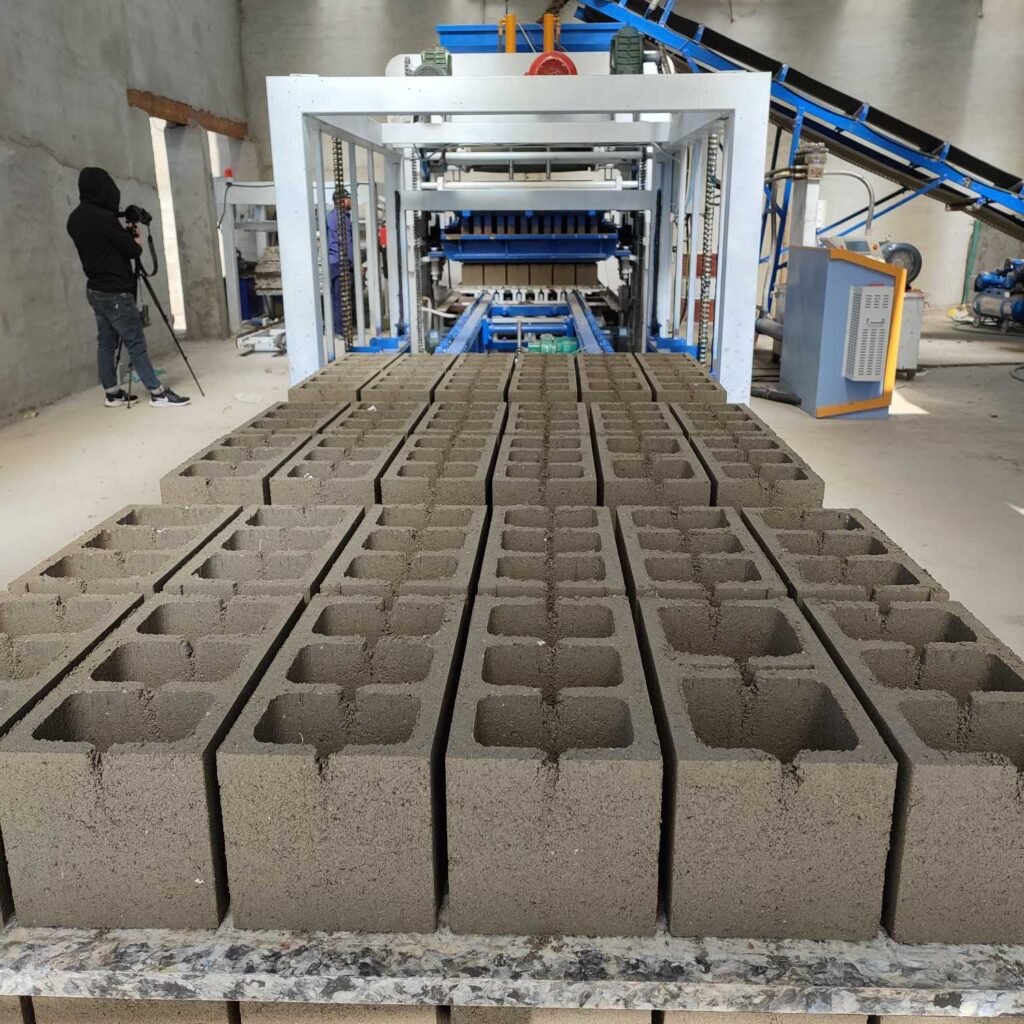
The Evolution of Efficiency in Brick Manufacturing Technology
A Historical and Technological Examination of Efficiency Gains
The efficiency of brick making machinery can be assessed across several interdependent domains: production throughput and yield, energy consumption per unit, labor dependency, material versatility, and overall equipment effectiveness (OEE). The advancements in each area have collectively revolutionized the economics of brick production.
1. The Foundational Shift: From Intermittent to Continuous Production
The earliest significant efficiency leap was the transition from static, batch-processing machines to continuous production systems.
- The Limitation of Static Presses: Early mechanical and hydraulic presses operated on a single-mold, batch-cycle principle. The process—filling, pressing, ejecting—involved significant downtime between cycles. Labor was intensively required for feeding, mold changes, and product removal, capping output and creating bottlenecks.
- The Advent of Automated Feed and Ejection: The first major automation wave introduced synchronized feeders and mechanical ejectors. This reduced manual handling at the machine interface, increased cycle speed, and improved operator safety, directly boosting output per hour and per worker.
- The Revolution of Continuous Circulation Systems: The development of pallet circulation systems and linear or rotary production lines marked a watershed moment. Raw material is continuously fed, molded bricks are automatically transferred onto curing pallets, and these pallets circulate through curing chambers before returning for reuse. This created a true flow-line, minimizing idle time and enabling a single machine to serve as the heart of a continuous, high-volume plant. The efficiency metric shifted from cycles per hour to pallets or tonnes per shift.
2. The Power of Precision: Advancements in Molding and Compression Technology
The core act of forming the brick has seen dramatic improvements in precision, directly impacting product quality, material use, and energy input.
- Evolution of Vibration and Compaction: Early vibratory tables were simple, single-frequency systems. Modern machines employ multi-directional, high-frequency vibration combined with controlled hydraulic or mechanical pressure. This dual-action ensures optimal particle packing and air removal at significantly lower moisture content, which is a critical efficiency driver.
- High-Pressure, Low-Moisture Compaction: The ability to form bricks and blocks from semi-dry mixes under extreme pressure (e.g., 150-300+ kg/cm²) represents a pinnacle of process efficiency. This technology drastically reduces or eliminates the need for energy-intensive drying and sintering in kilns. The bricks gain immediate “green strength,” slashing thermal energy consumption by up to 80% compared to traditional fired clay processes and dramatically shortening the production cycle from days to hours.
- Precision Mold Engineering and Quick-Change Systems: CNC-machined molds from hardened steels provide exceptional dimensional accuracy and longevity, reducing product variance and mold replacement frequency. Coupled with rapid mold-change mechanisms (hydraulic clamping, cassette systems), this allows a single machine to produce a vast array of product types—solid, hollow, paving, interlocking—with changeover times measured in minutes rather than hours. This flexibility maximizes asset utilization and enables efficient, small-batch production for specialized markets.
3. The Intelligence Inflection: Process Control and Automation
The integration of electronics and software has transformed machine control from manual estimation to automated optimization.
- Programmable Logic Controllers (PLCs) and Touchscreen HMIs: Replacing relay logic and manual dials, PLCs allow for the storage of precise “recipes” for different products. Parameters like vibration duration, pressure profile, feed depth, and stroke length are consistently and automatically executed, eliminating human error and variability. This ensures every unit meets specification, reducing waste and rework.
- Sensor Integration and Closed-Loop Control: Modern machines are equipped with networks of sensors monitoring hydraulic pressure, oil temperature, mold position, and material level. This data feeds back to the PLC in a closed-loop system, allowing for real-time adjustments. For instance, the system can automatically compensate for slight variations in raw material consistency, maintaining product density and strength without operator intervention.
- Robotic Handling and Palletizing: Post-molding processes have been streamlined by robotics. Robots with advanced grippers can gently handle delicate green bricks, stack them with perfect alignment on curing racks or pallets, and even assemble mixed product loads. This eliminates breakage from manual handling, optimizes space utilization in curing areas, and further reduces labor costs, contributing to a higher net yield of sellable product.
4. The Drive for Economy: Energy and Resource Efficiency
Efficiency improvements extend deeply into the consumption of energy and raw materials, directly affecting production costs and environmental footprint.
- Hydraulic System Advancements: The shift from constant-speed, fixed-displacement hydraulic pumps to variable-speed drives (VFD-driven pumps) is a major energy-saving innovation. The hydraulic system delivers power on-demand, matching the precise flow and pressure needed for each stage of the cycle, and idling at minimal consumption between cycles. This can reduce the hydraulic system’s energy use by 40-60%.
- Heat Recovery and Thermal Management: In plants requiring curing, advanced systems capture waste heat from compressors or other processes and redirect it to curing chambers. Insulated chambers and optimized air-flow designs reduce total thermal energy requirements. This turns a waste product into a valuable resource, improving the overall energy balance of the plant.
- Optimization of Raw Material Input: Precision in feeding and compaction minimizes spillage and overfilling. More importantly, the enhanced technical capabilities allow for the reliable use of high percentages of alternative, often lower-cost, materials like fly ash, slag, quarry dust, and recycled construction aggregates. This improves the efficiency of material cost without compromising product integrity, turning waste streams into revenue streams.
5. The Systemic View: Overall Equipment Effectiveness (OEE) and Connectivity
The latest frontier of efficiency focuses on maximizing the productive time of the entire system through data and connectivity.
- IoT and Predictive Analytics: Industrial Internet of Things (IIoT) platforms collect operational data from the machine and transmit it to cloud-based dashboards. Key performance indicators (KPIs) like Availability, Performance, and Quality Rate—the components of OEE—are tracked in real time. More importantly, algorithms analyze trends to predict component wear (e.g., a hydraulic seal, a bearing) before failure, enabling predictive maintenance.
- Minimizing Unplanned Downtime: Predictive maintenance transforms efficiency by scheduling service during planned pauses, preventing catastrophic failures that halt production for days. This directly maximizes machine Availability, the first and most critical factor in OEE.
- Remote Monitoring and Support: Distributors and technicians can access machine data remotely, diagnose issues, and even guide on-site personnel through corrective procedures using augmented reality tools. This slashes mean time to repair (MTTR), getting the client’s production line back to peak efficiency faster than ever before.
Conclusion
The efficiency journey of brick making machinery is a compelling chronicle of industrial progress. It has evolved from a singular focus on mechanical output to a sophisticated, multi-variable optimization of the entire production value chain. For today’s B2B professional, this history underscores that contemporary efficiency is a composite metric. It is no longer sufficient to evaluate a machine based on a single brochure specification for cycles per hour. True efficiency is now measured in kilowatt-hours per thousand bricks, in the percentage of alternative materials reliably incorporated, in the OEE percentage visible on a plant manager’s dashboard, and in the agility to switch product lines with near-zero downtime. The most advanced machines are not just makers of bricks; they are intelligent, connected, and economical generators of profit. For distributors and procurement experts, championing this comprehensive view of efficiency—encompassing energy, labor, materials, data, and time—is essential to providing clients with solutions that deliver superior, sustainable, and defensible competitive advantage in an increasingly demanding global market.
Frequently Asked Questions (FAQ)
Q1: How do modern machines achieve higher output with seemingly smaller or similar-sized hydraulic systems?
The increase is due to vastly improved system design and control. The use of high-pressure, low-volume hydraulic circuits, combined with variable-speed pump drives, delivers power more efficiently. Advanced valve technology directs flow with minimal losses. Furthermore, optimized mechanical leverage and vibration systems work in concert with hydraulics, meaning less brute force is wasted. The result is more productive work (compaction) per unit of hydraulic energy input.
Q2: Has the push for efficiency made the machines more complex and difficult to maintain?
While the core technology is more advanced, the design philosophy for top-tier equipment strongly emphasizes serviceability and user-friendliness. Centralized lubrication points, easy-access panels, modular components, and intuitive diagnostic displays on the HMI are standard. The predictive analytics enabled by IoT actually simplify maintenance planning by moving from reactive, panic-driven repairs to scheduled, proactive service. Proper training is key, but overall system reliability and uptime are significantly higher.
Q3: Can older brick making plants be retrofitted to achieve some of these modern efficiency gains?
Yes, to a significant degree. Retrofits are a major market. Common upgrades include: replacing old hydraulic pumps with VFD-driven systems, installing new PLC control panels with recipe management, adding sensor packages for basic monitoring, and integrating robotic palletizers at the end of the line. While a retrofit may not achieve the full efficiency of a ground-up new machine, it can deliver substantial improvements in energy use, control consistency, and labor productivity, often with a compelling return on investment.
Q4: Is the efficiency of a machine dependent on the quality and type of raw materials?
Modern high-efficiency machines are generally more tolerant of material variation due to their precise sensor-based controls and adjustable parameters. However, they perform optimally with consistent, properly graded raw materials. The key advancement is their ability to be precisely tuned via digital recipes to different material mixes (e.g., clay vs. concrete vs. fly-ash blends), extracting the best possible performance and product quality from each mix. Inefficiency often arises from an inconsistent feedstock that the control system must constantly compensate for.
Q5: What is the single most impactful efficiency improvement for a client focused on reducing operational costs?
The answer depends on the client’s specific cost structure. For a plant with high energy costs, a high-pressure, curing-free machine or a retrofit with VFD hydraulics offers the fastest saving. For a labor-intensive operation, automation via robotic handling provides the clearest benefit. For a business struggling with waste and rework, a modern machine with precise PLC and sensor control will have an immediate impact. A comprehensive audit of the client’s current production costs is the essential first step to identifying the highest-ROI efficiency upgrade.
