
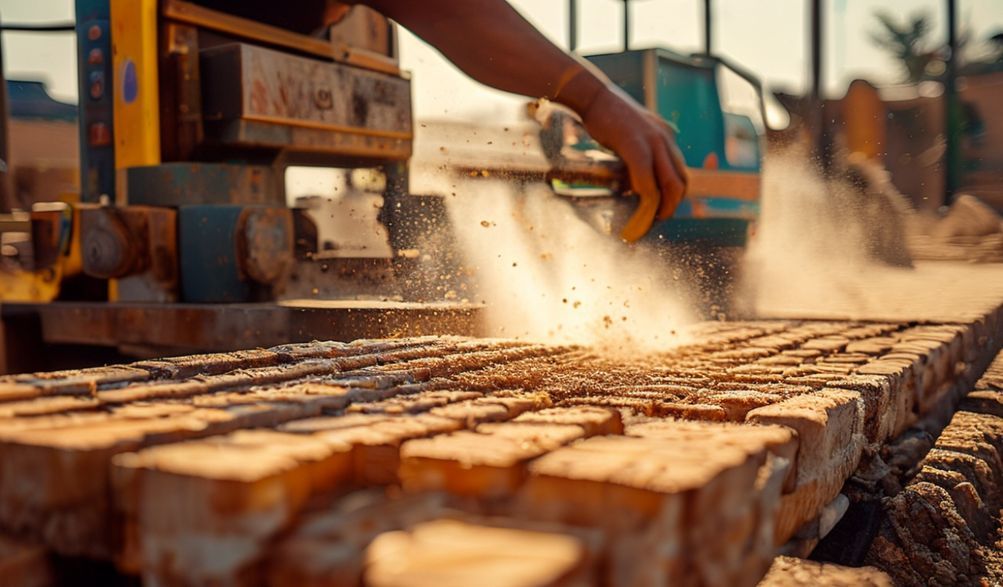
How Much is a Block Moulding Machine in Nigeria? (2026 Price Guide & Buyer’s Advice)
Introduction
You’re standing on a plot of land, plans in hand, ready to build. Or perhaps you’ve seen the consistent demand for building materials and decided it’s time to start your own block production business. The vision is clear, but one critical question brings everything to a halt: how much is a block moulding machine in Nigeria?
The market is flooded with options—prices online seem too good to be true, while quotes from dealers vary wildly. The fear of overpaying for an underperforming machine or, worse, falling for a scam is real. This confusion can stall projects and shatter entrepreneurial dreams before they even begin.
This comprehensive guide is designed to cut through that noise. As industry professionals with years of direct market engagement, supplier analysis, and technical evaluation, we’ve compiled this 2026 price guide to give you transparent, expert-driven, and actionable information. Our goal isn’t just to list numbers but to empower you with the knowledge to understand Pourquoi machines cost what they do and how to match the right equipment to your specific budget and project scale. We promise to help you navigate this investment confidently, ensuring you find a machine that is a profitable asset, not a costly mistake.
Understanding Block Moulding Machines: Types and Capabilities
Before discussing naira and kobo, you must understand what you’re buying. The term “block moulding machine” covers a wide range of equipment, from simple manual tools to industrial factories on wheels. Knowing the types ensures you compare apples to apples and invest in a machine that fits your operational reality.
Machines de moulage manuelles de blocs
These are the most basic and entry-level machines. Operation relies entirely on human labor: manually filling the mould, compacting the mix (often by lifting and dropping a lever), and stripping the mould to release the block.
- Sortie typique : 500 – 1,500 blocks per 8-hour day, heavily dependent on worker stamina.
- Ideal User: Ideal for individuals building their own home, very small-scale contractors, startups with minimal capital, and projects in rural areas with unreliable or no electricity. It’s a test-the-waters option.
Moules à blocs semi-automatiques
This category is the sweet spot for most growing businesses in Nigeria. They mechanize the most labor-intensive part—compaction. Using a vibratory motor (powered by electricity or a diesel engine), they produce denser, stronger blocks with much less physical effort.
- Opération : Workers manually feed the mix into the hopper, but vibration and pressure are mechanically applied. The machine may be manually moved or have a hydraulic system for mould lifting.
- Ideal User: Small to medium-scale block industries, contractors undertaking multiple projects, and entrepreneurs serious about commercial production. They offer a significant upgrade in quality and output over manual machines.
Machines de moulage de blocs entièrement automatiques
These are the pinnacle of block production. They integrate mixing, conveying, moulding, and stacking into one seamless, computer-controlled system. Human intervention is minimal, primarily for supervision and maintenance.
- Sortie typique : Can run into thousands of blocks per hour.
- Ideal User: Large-scale commercial block factories, industrial construction projects, and government housing initiatives. The investment is substantial, but so is the output and consistency.
Machines à blocs mobiles vs machines à blocs stationnaires
This is a crucial distinction impacting price and utility:
* Machines à blocs mobiles : Mounted on a trailer or wheels. Perfect for producing blocks directly on a construction site, eliminating transport costs for the finished blocks. Popular for medium-scale projects.
* Machines à blocs stationnaires : Set up in a fixed location (a block industry). They are often more robust and can be part of a larger production line with separate mixers and conveyors.
Key Factors That Determine the Price of a Block Moulding Machine in Nigeria
The price tag is a sum of its parts—literally. Understanding these factors will make you an informed buyer who can decode a supplier’s quote.
Production Capacity (Blocks per Hour)
This is the primary driver of cost. A machine rated for 1,000 blocks per hour will cost significantly less than one rated for 3,000 blocks per hour. Higher capacity requires more powerful motors, heavier-duty steel frames, and larger moulds.
Level of Automation (Manual, Semi-Auto, Full-Auto)
As you move up the automation ladder, you’re paying for:
* Advanced engineering and design.
* Complex components (PLCs, hydraulic systems, sensors).
* Higher manufacturing precision.
The jump from manual to semi-automatic offers the most dramatic value in efficiency for most Nigerian businesses.
Marque et Pays d'Origine
Brand reputation and origin create distinct price brackets:
* Chinese Machines: Dominate the market due to competitive pricing. Quality can vary immensely from excellent to poor. Brands like Lontto, QGM, and Hongfa are well-known. Prices are generally lower.
* European/German Machines: (e.g., Zenith, Hess) Represent the premium tier. Known for exceptional durability, precision, and after-sales support. Prices are high and often include advanced technical support.
* Indian Machines: Offer a middle ground, often seen as a balance between affordability and reasonable durability. Brands like Apollo and Everon are present.
* Nigerian-Made/Assembled Machines: A growing segment. The key advantage is local support, easier spare parts sourcing, and machines sometimes adapted to local conditions. Prices are competitive.
Machine Features and Specifications
Look beyond the label. A “semi-automatic” machine can have different price points based on:
* Puissance du moteur vibrant : Measured in kW or HP. More power means better compaction.
* Système hydraulique : A machine with a full hydraulic system for mould lifting and block ejection is more expensive than one with partial hydraulics or manual levers.
* Panneau de configuration : Simple button panels vs. digital displays with frequency controls for the vibrator.
* Qualité de construction : Thickness of steel plate, quality of welding, and grade of electrical components.
Power Source (Electric, Diesel, or Dual-Power)
- Électrique : Most common for semi-automatic machines. Lower operational cost but reliant on grid/power.
- Diesel: Crucial for sites without power. The diesel engine adds significantly to the upfront cost.
- Dual-Power: Offers flexibility to switch between electric and diesel. This convenience comes at a premium.
Supplier Markup, Logistics, and Customs Duty
The factory price is just the beginning. The final cost in Nigeria includes:
* Shipping and Logistics: Cost from China or Europe to Lagos port.
* Customs Duty and Clearing Charges: A significant and often fluctuating cost component.
* Supplier Markup: Local dealers add a margin for their services: importation, storage, warranty, and after-sales support. This markup is what pays for local technical help when you need it.
Current Price Range of Block Moulding Machines in Nigeria (2026)
Avertissement critique : The following price ranges are estimates based on Q1 2026 market surveys. Prices are highly volatile and influenced by foreign exchange (FX) rates, shipping costs, and inflation. You must use this as a guide and obtain direct, itemized quotes from multiple suppliers before making any decision.
Manual Block Moulding Machine Prices
- Gamme de prix : ₦80,000 – ₦350,000
- Details: Basic single-mould manual machines start from ₦80k. More robust multi-mould manual machines (e.g., 3 or 4 blocks per cycle) can range from ₦200k to ₦350k.
Semi-Automatic Block Moulding Machine Prices
This is the most inquired-about category, with a wide range.
* Gamme de prix : ₦400,000 – ₦2,500,000
* Breakdown:
* Small-scale (e.g., 4-6 blocks per cycle): ₦400,000 – ₦900,000
* Medium-scale (e.g., 8-10 blocks per cycle, hydraulic): ₦1,000,000 – ₦1,800,000
* Large-scale / Mobile Machines: ₦1,800,000 – ₦2,500,000+
Fully Automatic Block Moulding Machine Prices
- Gamme de prix : ₦3,000,000 – ₦15,000,000+
- Details: Entry-level full automatic lines start around ₦3-5 million. High-capacity, European-brand systems can easily exceed ₦10-15 million. These are custom-quoted projects.
Price of Complementary Equipment
Budget for a complete setup:
* Concrete Mixer (500L): ₦450,000 – ₦800,000
* Block Conveyor/Cart: ₦150,000 – ₦400,000
* Pallets (Set of 100+): ₦80,000 – ₦200,000
Beyond the Price Tag: Total Cost of Ownership and ROI
The smartest buyers look at the total cost over 5 years, not just the purchase price.
Installation, Training, and Maintenance Costs
- Some suppliers include installation and basic training; others charge extra (₦50k – ₦200k).
- Factor in the cost of a technician’s first service.
Cost of Spare Parts and Local Availability
- Ask: “What are the most common parts to fail, and how much do they cost?” Vibration motors, bearings, and hydraulic seals are common.
- A machine with locally available parts saves you weeks of downtime.
Operational Costs (Power, Fuel, Labor)
- Électrique : Calculate based on the motor’s kW rating and your hours of operation.
- Diesel: A significant ongoing cost; factor in fuel consumption rates.
- Main-d'œuvre : Fewer workers are needed for semi-auto vs. manual machines.
Calculating Your Potential Return on Investment (ROI)
Use this simple framework:
1. Projected Daily Output: (e.g., 2,000 blocks)
2. Selling Price per Block: (e.g., ₦350)
3. Daily Revenue: (2,000 x ₦350 = ₦700,000)
4. Minus Daily Operational Costs (Raw materials, labor, fuel, maintenance, overheads).
5. The profit margin per day, multiplied by working days per month, gives you a picture of your payback period and profitability.
How to Buy Wisely: A Step-by-Step Procurement Guide
Step 1: Pre-Purchase Checklist
Answer these questions:
* What is my average daily block requirement?
* What is my total budget (machine + setup + 3-month operating capital)?
* What is the power situation at my site? (Grid, generator, none?)
* Do I have technically-inclined staff, or will I rely entirely on the supplier?
Step 2: Researching and Shortlisting Reputable Suppliers
- Verify: Company address, years in business, and factory/warehouse visits if possible.
- Check References: Ask for and actually call 2-3 past customers.
- Service après-vente : Do they have in-house technicians or just a phone number?
Step 3: Key Questions to Ask Before You Pay
- “What is the warranty period and what does it cover?”
- “How long does it take to get spare parts, and are they stocked in Nigeria?”
- “Do you provide installation and training? Is it free?”
- “Can I see a demo of this exact model working?”
Step 4: Inspecting the Machine (What to Look For)
- For New Machines: Check welding points, paint quality, and panel fit. Ensure all manuals and certificates are provided.
- For Used Machines: Run it! Listen for unusual noises from the motor or vibrator. Check for oil leaks in hydraulics. Inspect the mould for excessive wear.
Step 5: Negotiation and Payment Best Practices
- Get every promise (warranty, delivery time, support) in writing on a company letterhead.
- Avoid 100% upfront payments. A structured payment (e.g., 70% before delivery, 30% after installation and testing) is safer.
- Use secure, traceable payment methods.
Frequently Asked Questions (FAQ)
Q1: What is the cheapest functional block moulding machine I can get in Nigeria?
A basic, new manual block moulding machine can be found for ₦80,000 – ₦120,000. For a functional semi-automatic machine that can start a business, budget at least ₦500,000.
Q2: Are Chinese block moulding machines reliable for Nigerian conditions?
Many are reliable, but due diligence is key. Stick to established brands with a track record in Nigeria. The critical factor is not just the machine, but the local supplier’s ability to provide support and spare parts.
Q3: How much profit can I make from a block moulding business per month?
This varies enormously. A small semi-automatic operation can net ₦150,000 – ₦400,000 monthly after expenses, depending on efficiency, market prices, and sales volume. Scale increases profit potential.
Q4: Can I get a loan to buy a block moulding machine in Nigeria?
Yes. Some equipment financing companies, microfinance banks, and government entrepreneurship programs (like BOI) offer loans for productive equipment. A solid business plan is usually required.
Q5: What is the most important thing to check when buying a used block machine?
Operational history and reason for sale. Then, perform a full load test. Run it for at least 30 minutes to see if it overheats, leaks, or loses vibration power. Check the condition of the mould—it’s one of the costliest parts to replace.
Q6: How much does it cost to install and run a semi-automatic machine?
Installation can range from ₦0 (if included) to ₦150,000. Running costs are primarily raw materials (cement, sand, stone dust), electricity/fuel (approx. ₦5,000 – ₦15,000 per day for a generator), and labor (2-4 workers).
Conclusion
So, how much is a block moulding machine in Nigeria? As we’ve seen, the answer spans from under ₦100,000 for a manual starter to over ₦10 million for a fully automated plant. The true cost is determined by the type, capacity, brand, and the often-hidden factors of logistics and local support.
Remember the core principle of this guide: The right machine is a long-term asset that builds your wealth; the wrong one is a constant, draining expense. Your goal should be to find the optimal balance between upfront cost, operational efficiency, and reliable after-sales service.
Use this guide as your framework. Define your needs, research suppliers thoroughly, and always think in terms of Total Cost of Ownership. The Nigerian construction market is booming, and with the right equipment, you can build a solid foundation for your project or business—literally and figuratively.
Have a specific project in mind or need clarification on a machine type? Share your details in the comments below for more tailored community and expert advice. We are committed to updating this information quarterly to ensure it remains your most trusted resource in a dynamic market.
<