
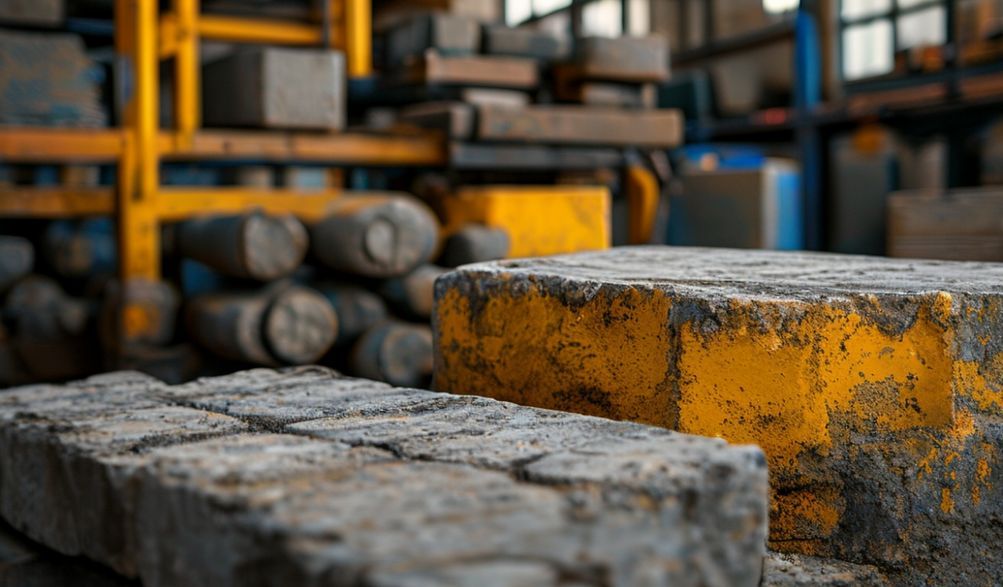
QT4-22 Cement Brick Block Making Machine Price: A Complete 2026 Buyer’s Guide
Finding the right cement block machine for your business is tough, but deciphering the true, total cost of a popular model like the QT4-22 can be even harder. You see one price online, get a different quote from a supplier, and are left wondering what hidden expenses will emerge later.
This guide cuts through the confusion. Our purpose is to provide you with a transparent, expert breakdown of the QT4-22’s price factors, moving far beyond the basic sticker price to analyze the total cost of ownership. We’ll cover detailed specifications, operational expenses, and a framework for evaluating suppliers—the critical knowledge you need to make a sound, profitable investment.
By understanding the complete picture of the cement brick block making machine price qt4-22, you’ll gain the ability to budget accurately, ask informed questions, and confidently avoid costly surprises, ensuring your investment builds a foundation for success, not stress.
Comprendre la machine à blocs QT4-22 : spécifications et capacités
Before we discuss dollars and cents, it’s essential to understand what you’re investing in. The QT4-22 is a versatile, medium-capacity, hydraulic and vibration block making machine. It’s renowned in the industry for its robust construction, reliability, and balance between output and affordability, making it a cornerstone for many growing businesses.
Spécifications techniques principales
The QT4-22’s performance is defined by its key technical specs. Knowing these inside and out is the first step in assessing its value for your specific needs.
- Capacité de sortie : This is its standout feature. The “4-22” in its name often refers to its ability to produce 4 pieces of 400x200x200mm standard hollow blocks per cycle. In an 8-hour shift, with good efficiency, it can produce approximately 2,000 to 3,000 blocks, depending on the block type and operator skill.
- Block Sizes & Mold Compatibility: Its versatility lies in its mold system. With a simple mold change, one machine can produce a wide array of products:
- Blocs solides
- Blocs creux (épaisseurs variées)
- Pavés autobloquants
- Bordure de trottoir
- Blocs de jardin et d'aménagement paysager
- Exigences en matière d'alimentation électrique : It typically operates on a standard 7.5kW to 11kW electric motor, suitable for most industrial power setups. A significant cost option is a Moteur diesel configuration, crucial for sites with unreliable or no grid power.
- Vibration & Pressure System: It employs a high-frequency vibration system combined with hydraulic pressure to compact the concrete mix thoroughly. This dual-action ensures high-density, strong, and dimensionally precise blocks with a good surface finish.
Ideal Applications and Production Scale
The QT4-22 is not a giant stationary plant, nor is it a tiny manual machine. It occupies a strategic middle ground.
- Target Users: It is the ideal workhorse for small to medium-sized construction projects, independent block manufacturing yards, entrepreneurs entering the construction materials market, and municipal development projects.
- Production Scale Context: Its output is substantial enough to supply several housing projects simultaneously but manageable without a massive workforce. It significantly outperforms smaller mobile machines (like the QT3-20) in volume, while being more affordable and flexible than large, fully automated lines (like the QT6-15 or QT8-15).
- Profitability Focus: It produces the block types most in demand for residential and light commercial construction—standard hollow and solid blocks—with the added potential for higher-margin products like pavers and interlocking blocks.
Breaking Down the QT4-22 Cement Block Machine Price in 2026
Now, let’s address the core question. The price you see advertised is rarely the price you pay to have the machine working at your site. Understanding the components of the cost is key to budgeting.
Factory Price vs. Landed Price: What’s the Difference?
This is the most critical distinction for any international buyer.
- Factory (FOB) Price: This is the cost of the machine loaded onto a ship at the Chinese port. It includes the machine, standard accessories, and export clearance. In 2026, for a standard configuration QT4-22, this price can range between $9,500 and $14,000 USD, depending on the factors below. This is the number most suppliers lead with.
- Landed (CIF/DAP) Price:C'est letrue starting figure for your budget. It includes the FOB price plus:
- Ocean Freight & Insurance: Varies by destination port and container rates.
- Customs Duties & Import Taxes: Set by your country’s government; can range from 5% to 25%+ of the machine’s value.
- Port Charges & Clearance Agent Fees: Handling, documentation, and local transport from the port to your warehouse.
Always ask suppliers for a detailed landed cost estimate to your nearest port.
Key Factors That Influence the Final Cost
Why is there a price range? Several variables directly impact the quote you receive.
- Configuration & Automation Level:
- Basic Manual: Manual feeding of raw material and manual removal of blocks. Lowest cost.
- Semi-Automatique : Includes a belt conveyor for feeding and/or a mechanical block stacker. Moderate price increase for significant labor savings.
- Fully Automatic Pallet System: Integrates a pallet feeder and stacker, maximizing output with minimal labor. Highest configuration cost.
- Mold Selection: The standard package may include 1-2 basic molds. Each additional mold (e.g., for pavers, interlocking blocks) adds $300-$800+ to the cost. Custom mold designs are more expensive.
- Source d'alimentation : Opting for a Moteur diesel instead of the standard electric motor can add $1,000 to $2,000 to the base price.
- Brand Reputation & Supplier Tier: Well-established manufacturers with proven track records, comprehensive warranties, and better after-sales support command a premium of 10-20% over newer, less-known factories. This is often a worthwhile investment for long-term reliability.
Beyond the Purchase: Calculating Total Investment & Operational Costs
A savvy buyer looks beyond the purchase invoice. The real test of your investment is the total cost of ownership and operation. Let’s break down these often-overlooked expenses.
Essential Auxiliary Equipment & Setup Costs
The QT4-22 cannot operate in isolation. To run a production line, you will need:
- Malaxeur à béton : A pan or planetary mixer (e.g., 300-500L capacity) is essential for consistent mix quality. Cost: $1,500 – $3,500.
- Convoyeur à courroie : Highly recommended to feed mixed concrete to the machine hopper, saving labor and time. Cost: $800 – $2,000.
- Pallets & Curing System: You’ll need a stock of steel or plastic pallets (hundreds) and space/racks for block curing. Cost: $2,000 – $5,000+ depending on scale.
- Site Preparation: A level, solid concrete foundation and a simple shelter or shed to protect the machine and operate in all weathers. Cost: Variable, but a significant consideration.
Ongoing Operational Expenses
Your daily profit is revenue minus these recurring costs.
- Matériaux bruts : This is your largest ongoing cost. It includes cement, sand, gravel, and water. The exact cost depends entirely on local material prices. A typical hollow block might be 1:6 cement-aggregate ratio.
- Main-d'œuvre : A semi-automatic QT4-22 line can be efficiently run by 2-3 opérateurs (for mixing, feeding, and handling finished blocks). Factor in local wage rates.
- Entretien et pièces de rechange : Budget annually for wear parts:
- Mold liners
- Vibration motor bearings
- Hydraulic seals and hoses
- Springs
A reasonable annual maintenance budget is 2-3% of the machine’s purchase price.
- Utilities & Fuel: For the electric version, calculate based on the motor’s kW rating and your local electricity tariff. For the diesel version, factor in fuel consumption (typically a few liters per hour).
How to Get the Best Value: Evaluating Suppliers & Quotes
The cheapest quote can become the most expensive mistake. Your relationship with the supplier is as important as the machine itself. Here’s how to separate the trustworthy from the troublesome.
Red Flags vs. Green Flags in Supplier Communication
Red Flags to Avoid:
* A quote that is just a total number with no itemized breakdown.
* No verifiable company history, physical address, or factory photos/videos.
* High-pressure sales tactics pushing for immediate payment.
* Unwillingness to provide customer references or details of past shipments.
* Vague or non-existent warranty terms.
Green Flags to Look For:
* A detailed, line-item proforma invoice (PI) specifying every component and its cost.
* Open invitation for a video call or factory tour.
* Clear, written warranty documentation (typically 12 months for core parts).
* Patient, knowledgeable staff who answer technical questions thoroughly.
* Evidence of after-sales support, like online spare parts catalogs or tutorial videos.
Critical Questions to Ask Before You Buy
Arm yourself with these questions during negotiations:
- “What is explicitly included in this quoted price? (Installation supervision? On-site training? A starter kit of spare parts?)”
- “What is the exact warranty period and what components does it cover? What is the process for a warranty claim?”
- “Can you provide contact information for 2-3 previous customers in my region or a similar market so I can learn about their experience?”
- “What is the typical lead time for shipping and for receiving critical spare parts if needed?”
QT4-22 Price vs. Competitors & Alternatives
The QT4-22 exists in a competitive landscape. Understanding its position helps you confirm it’s the right choice.
Comparing QT4-22 to Similar Models
- QMJ4-45 : Often a more basic, vibration-only (no hydraulic pressure) machine at a slightly lower price point. May have lower block density and finish quality. Good for very budget-conscious buyers focused on simple blocks.
- LMT4-40 / QMY4-30: These are often very similar machines from different manufacturers. The price and quality are comparable; the differentiation comes down to specific design features, supplier reputation, and local agent support.
When to Consider a Different Machine
- Consider a Smaller Model (e.g., QT3-20): If your projected daily demand is consistently below 1,500 blocks, your capital budget is very tight, or space/power is extremely limited.
- Consider a Larger Model (e.g., QT6-15): If you need to produce 4,000+ blocks daily, supply large commercial projects, or want a higher degree of automation with pallet circulators and robotic stackers. The investment will be significantly higher, but the per-block cost can be lower at scale.
FAQ Section
Q1: What is the approximate price range for a new QT4-22 machine in 2026?
A: Depending on configuration (manual to semi-automatic), power source, and supplier tier, expect a factory (FOB) price between $9,500 and $14,000 USD. Remember, the landed cost to your country, including shipping, insurance, and duties, will be 15-40% higher. Always budget based on the landed cost estimate.
Q2: Can the QT4-22 produce interlocking blocks?
A: Yes, absolutely. The production of interlocking blocks is determined by the mold, not the machine’s core mechanism. Interlocking block molds are a common and popular optional extra you can order with the machine.
Q3: What is the typical return on investment (ROI) period for this machine?
A: ROI is highly dependent on your local market block selling price, material costs, operational efficiency, and machine utilization. As a general example, with consistent single-shift operation and decent market conditions, many small business owners report recovering their initial investment within 12 to 24 months.
Q4: Is technical training provided with the machine?
A: Reputable suppliers should provide basic operational guidance. This is typically in the form of detailed video manuals, wiring diagrams, and parts catalogs. On-site installation and training by a factory engineer is usually an optional, paid service that is highly recommended for first-time buyers to ensure optimal setup.
Conclusion
The true value of a QT4-22 cement block making machine is a composite of its purchase price, its proven reliability, the supplier’s support, and its total operational cost. Focusing solely on the lowest initial quote is the fastest way to jeopardize your investment’s success.
Use this guide as a practical checklist. Invest your time in thorough supplier due diligence and meticulous total cost calculation. Before finalizing your decision, take the final, trust-building step: consult with a local industry expert or, if possible, speak directly with an existing machine owner in your area. Their ground-level insights on performance, challenges, and local supplier support will be the most valuable research you can do. Make your investment an informed one.
<