
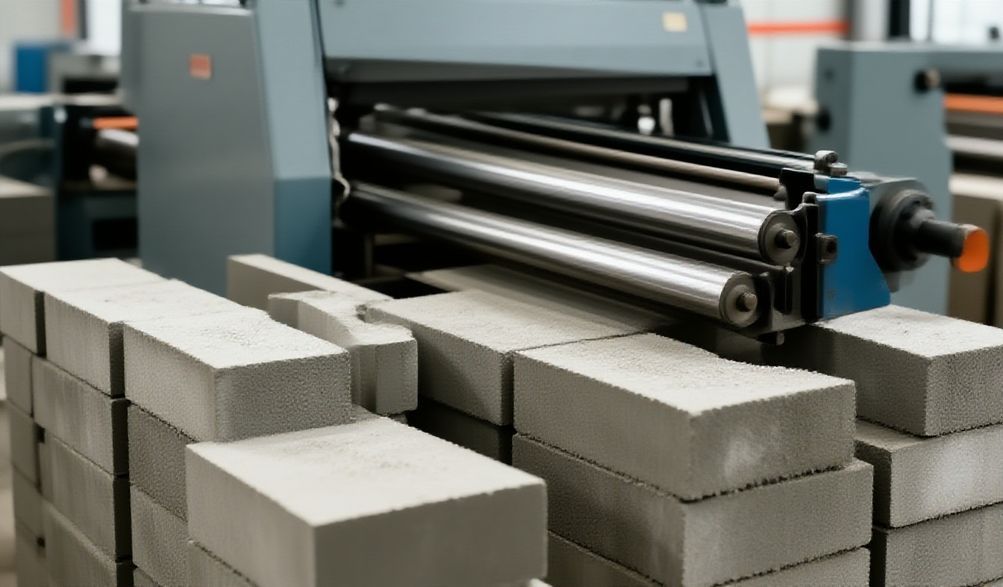
Guide complet sur les petites machines à fabriquer des briques en Chine : qualité, coût et comment choisir
Imaginez que vous êtes un entrepreneur qui vient de décrocher une série de petits projets de construction résidentielle. Ou peut-être êtes-vous un entrepreneur dans une région en développement, repérant une opportunité évidente dans le boom local de la construction. Le défi commun ? Le coût élevé et l'approvisionnement irrégulier des briques grèvent vos marges et vos délais. Et si vous pouviez produire vos propres briques, à la demande, et transformer un centre de coûts en flux de profits ? C'est précisément ce scénario qui pousse des milliers de constructeurs astucieux et de propriétaires d'entreprise à travers le monde à explorer une solution puissante : laMachine à fabriquer de petites briques en Chine.
Depuis plus d’une décennie, j’analyse le paysage des équipements industriels, visitant des salons professionnels de Guangzhou à Las Vegas, m’entretenant directement avec les fabricants, et surtout, suivant la performance à long terme des machines sur le terrain. Ce guide est bâti sur cette base d’observation et de retours pratiques, pas seulement sur la théorie. Mon objectif est de couper à travers le bruit et de vous fournir une feuille de route complète et impartiale. Nous disséquerons la proposition de valeur réelle, naviguerons à travers les pièges critiques, et vous armerons des connaissances nécessaires pour prendre une décision d’achat confiante et éclairée, alignée avec votre budget et vos objectifs de production.
Pourquoi envisager une petite machine à fabriquer des briques en provenance de Chine ?
Le marché mondial des machines de fabrication de briques et de blocs est vaste, mais le segment chinois est devenu une force dominante pour les opérateurs de petite à moyenne échelle. Les raisons vont bien au-delà d’un simple prix bas et témoignent d’un alignement stratégique avec les besoins des startups et des PME.
RentabilitÉ Imbattable pour les Startups et PME
Let’s address the primary driver: cost. A semi-automatic brick making machine from a reputable Chinese manufacturer can often be priced at 30% to 50% less than a comparable model from European or American brands. When compared to other major manufacturing hubs like India, Chinese machines frequently maintain a 15-25% price advantage for similar specifications.
This isn’t just about being “cheap.” It’s about accelerating your Return on Investment (ROI). For a small business, the lower capital outlay means you can start generating revenue and recoup your investment much faster. This value-for-money equation allows you to allocate funds to other critical areas like raw material stock, site preparation, or marketing. The initial savings can be the difference between a project being viable or not.
Remarkable Diversity in Models and Capabilities
One of China’s greatest strengths in this sector is its staggering variety. Whatever your specific need, there is likely a machine designed for it.
- By Operation Type: From purely manual presses to fully automated production lines.
- Sortie : Machines producing 800 blocks per day to those producing 10,000+.
- By Product: Equipment specialized for hollow blocks, solid bricks, interlocking pavers, curb stones, and even fancy landscape bricks.
- Par matériau : Versatile designs that work with concrete, cement, clay, fly ash, and even soil-stabilized mixtures.
This diversity means you can find a machine that fits your exact niche, rather than forcing your process to adapt to an expensive, over-engineered solution.
Modern Manufacturing and Improving Quality Standards
The outdated stereotype of Chinese manufacturing producing only low-quality goods is just that—outdated. Leading manufacturers in this sector have invested heavily.
- Certifications : Many top factories now hold ISO 9001 quality management certifications and adhere to international CE standards for safety.
- Matériaux : The use of high-grade manganese steel for molds, reinforced steel frames, and reliable brand-name hydraulic components (like Rexroth or Yuken) is increasingly common.
- Contrôle de la qualité : Modern CNC machining centers ensure precision parts, while improved QC processes involve multiple stage inspections before shipping.
The focus has shifted from being the cheapest to offering the best valeur, which includes dependable quality and better after-sales support.
Key Types of Small Brick Making Machines in the Chinese Market
Understanding the categories is your first step toward a smart choice. Here’s a breakdown of the most common types you’ll encounter.
Manual Press Machines (Most Economical)
These are the simplest and most affordable entry point into brick production.
- Cas d'utilisation idéaux : Extremely low-volume production, community self-help projects, NGOs in remote areas with limited or no electricity.
- Comment ils fonctionnent : Raw material is manually fed into a mold, and a lever-operated mechanism applies pressure to form the brick.
- Avantages : Very low cost, no power required, simple maintenance, portable.
- Inconvénients : High labor intensity, very low output (200-500 bricks per day), inconsistent brick density if not operated carefully.
Semi-Automatic Machines (The Sweet Spot for Many)
This category represents the most popular choice for small businesses worldwide, offering the perfect balance.
- Comment ils fonctionnent : These are often vibration-powered machines. An operator feeds the mixed material into the hopper, but the compaction (via a powerful vibrating table), molding, and ejection are machine-driven. Some models include a simple conveyor for brick removal.
- Parfait Pour : Small to medium construction firms, block yards, and entrepreneurs aiming for steady, daily production of 1,000 to 5,000 blocks on a single shift.
- Avantage clé : They significantly reduce labor while keeping the machine cost and complexity manageable. Based on feedback from numerous operators, mastering the raw material mix is the key to unlocking their full potential.
Machines de fabrication de blocs entièrement automatiques
When your business plan demands higher volume with minimal manual labor, fully automatic models are the answer.
- Core Features: These machines integrate a PLC (Contrôleur Logique Programmable) system, automatic material batching and mixing, robotic brick stacking, and pallet return systems.
- Capacité de sortie : Designed for serious production, they can output 8,000 to 20,000+ blocks per 8-hour shift with a crew of just 2-3 people.
- Considération : The investment is higher, and they require a stable power supply and more sophisticated foundation and installation planning.
Mobile Brick Machines (Versatility on Site)
A specialized and highly valuable type for certain businesses.
- Primary Benefit: They can be towed directly to a construction site, enabling you to produce bricks exactly where they are needed. This eliminates transport costs for finished bricks.
- Typical Design: Often a compact, semi-automatic machine mounted on a trailer chassis. They use locally sourced soil, cement, or other binders to produce compressed earth blocks or interlocking bricks.
- Ideal User: Construction companies undertaking large, remote projects or specializing in sustainable building with on-site materials.
Critical Factors for Choosing a Reliable Supplier
This is the most critical phase of your journey. Diligence here mitigates nearly all the perceived risks of importing from China.
Verifying Manufacturer Credentials (Beyond the Website)
Anyone can build a shiny website. Your job is to verify the reality behind it.
- Permis d'exploitation : Request their official Business Registration License. A legitimate factory will provide it.
- Usine contre Négociant : Determine if they are a true manufacturer or a trading company. Ask for video tours of the production floor and assembly area. Traders often hesitate or show generic footage.
- Années d'exploitation : A company with 10+ years of history typically has more experience and a reputation to uphold. Check their Alibaba or Made-in-China store start date.
- Recherche et développement interne : Ask if they design and engineer their own machines. Manufacturers with R&D teams are better equipped to offer technical support and part upgrades.
The Non-Negotiable: Requesting and Assessing Product Videos
Never buy based on photos or catalog specs alone.
- Demand a Live Video: Insist on a real-time video call (via WhatsApp or Zoom) to see the exact machine model you’re interested in running. Ask them to show specific components.
- What to Look For in the Video:
- Smooth Operation: The machine cycle should be fluid, without jarring vibrations or loud, abnormal noises.
- Brick Quality: Ask them to eject a few bricks, break one open to show compaction, and measure its dimensions for consistency.
- Build Detail: Zoom in on welds (they should be clean and even), the paint finish, and the quality of hoses and electrical panels.
Decoding Communication and After-Sales Support
Your pre-sale communication is a preview of post-sale support.
- Evaluate Responsiveness: Do they answer technical questions clearly and promptly, or are they evasive?
- Ask Key After-Sales Questions:
- Garantie : What is covered (parts, labor)? For how long (12 months is standard)? What is the process for a claim?
- Pièces de rechange : Do they provide a list of common spare parts with prices? Are parts readily available for shipment?
- Documentation: Do they provide clear English operation manuals, electrical diagrams, and installation guides?
- Installation Support: Do they offer remote video guidance for installation and commissioning?
Navigating the Purchase Process: A Step-by-Step Guide
Follow this structured approach to navigate the purchase smoothly.
Step 1: Define Your Exact Needs (Output, Brick Type, Budget)
Be specific. “I need a machine to produce 2,000 solid concrete blocks (200x100x60mm) per 8-hour day, with a budget of approximately $8,000 FOB.”
Step 2: Shortlist 3-5 Suppliers and Conduct Deep Due Diligence
Use B2B platforms and search engines to find potential suppliers. Apply the verification steps above to each. Contact past customers if references are provided.
Step 3: Get Detailed Quotations & Negotiate (FOB, CIF, etc.)
Request a Proforma Invoice (PI) that details the machine model, specifications, price terms (FOB Shanghai, CIF Durban, etc.), payment terms, warranty, and delivery time. Negotiate on price, but also on warranty extension or inclusion of essential spare parts.
Step 4: Secure Payment Terms (Use Escrow like Alibaba Trade Assurance)
Never use wire transfer (T/T) for 100% upfront payment. Use secure payment methods. Alibaba Trade Assurance is highly recommended—it holds your payment until you confirm satisfactory delivery. A common safe term is 30% deposit, 70% before shipment or via Trade Assurance.
Step 5: Pre-Shipment Inspection & Logistics Arrangements
For significant orders, consider hiring a third-party inspection company (like SGS, BV) to check the machine at the factory before shipping. Coordinate with a freight forwarder for shipping, customs clearance, and delivery to your site.
Maximizing Your Investment: Installation, Operation & Maintenance
Your relationship with the supplier doesn’t end at payment; your partnership with the machine is just beginning.
Planning for Installation and Foundation Requirements
A solid, level concrete foundation is non-negotiable for stable operation. Request the foundation drawing from the supplier early. Ensure you have the correct power supply (voltage, phase) and any necessary air compressor or water supply connections ready.
Routine Maintenance Schedules for Longevity
Based on field reports, the first 50 hours of operation are a critical “bedding-in” period. Adhere strictly to the manual’s guidance.
* Daily: Clean the machine thoroughly, check hydraulic oil levels and for leaks, inspect mold and core wear.
* Weekly: Tighten all bolts and nuts (vibration can loosen them), check electrical connections.
* Monthly: Change hydraulic oil filters, grease all bearings and pivot points, perform a full system check.
Sourcing Raw Materials and Optimizing the Mix Design
The machine is only half the equation. Brick quality depends on your raw material mix. Conduct small batch tests to find the optimal ratio of cement, sand, aggregate, and water for your local materials. Consistency in the mix is key to consistent brick strength and appearance.
Troubleshooting Common Operational Issues
- Bricks Breaking Easily: Usually indicates insufficient cement, too much water, or inadequate compaction/vibration time.
- Sticky Molds: Caused by a wet mix or worn mold surfaces. Ensure proper mix and apply a recommended mold release agent.
- Machine Vibrating Excessively: Check for loose bolts, an uneven foundation, or an unbalanced load on the vibration table.
FAQ Section
Q1: What is the average price range for a small brick making machine from China?
Prices vary widely. Manual presses start from $800 – $2,500. Semi-automatic machines range from $3,500 – $15,000. Fully automatic models begin around $18,000 and can go up to $50,000+ for high-capacity lines. Mobile machines are typically in the $7,000 – $20,000 range.
Q2: How can I ensure the machine quality without visiting the factory?
A: Combine multiple methods: 1) Insist on a live video call showing your specific machine running. 2) Hire a pre-shipment inspection service (e.g., SGS). 3) Ask for and actually contact customer references from your region. 4) Use secure payment terms that protect you.
Q3: What are the shipping costs and import duties for my country?
A: Shipping costs depend on machine size, weight, and destination port. A 20ft or 40ft container is common. You must consult a local freight forwarder or customs broker for accurate estimates on sea freight, insurance, port fees, and most importantly, the import duty and tax rates specific to your country. They vary significantly.
Q4: Do Chinese suppliers provide English operation manuals and video guides?
Most reputable suppliers do provide English manuals, parts lists, and electrical diagrams. It is a critical question to ask during negotiation. Many now also create basic operation and maintenance video guides in English.
Q5: How do I handle machine breakdowns and get spare parts overseas?
A: First, utilize the warranty. Document the issue with photos/video and contact the supplier immediately—remote troubleshooting is common. For spare parts post-warranty, you can order from the original supplier (air freight for urgent parts). For common wear parts like mold liners or hydraulic seals, you can often find local equivalents by sharing the part’s specifications with a local engineering shop.
Conclusion
Navigating the world of China small brick making machines presents an exceptional opportunity for cost-effective, self-sufficient brick production. The journey, however, hinges on replacing guesswork with diligent research. By focusing on verifiable supplier credibility, insisting on transparent proof of performance, and securing your financial transaction, you can successfully tap into this market’s value.
Proceed with cautious optimism. The guidelines outlined here are designed to be your practical checklist, transforming a complex international purchase into a manageable, step-by-step process. The goal is not just to buy a machine, but to invest in a reliable partner for your business growth.
Have a specific scenario or a lingering question about choosing the right machine? Share your thoughts in the comments below—I’m here to provide further insights based on real-world industry experience. For those ready to start supplier evaluations, consider downloading our detailed supplier verification checklist to keep your search organized and effective.
<