
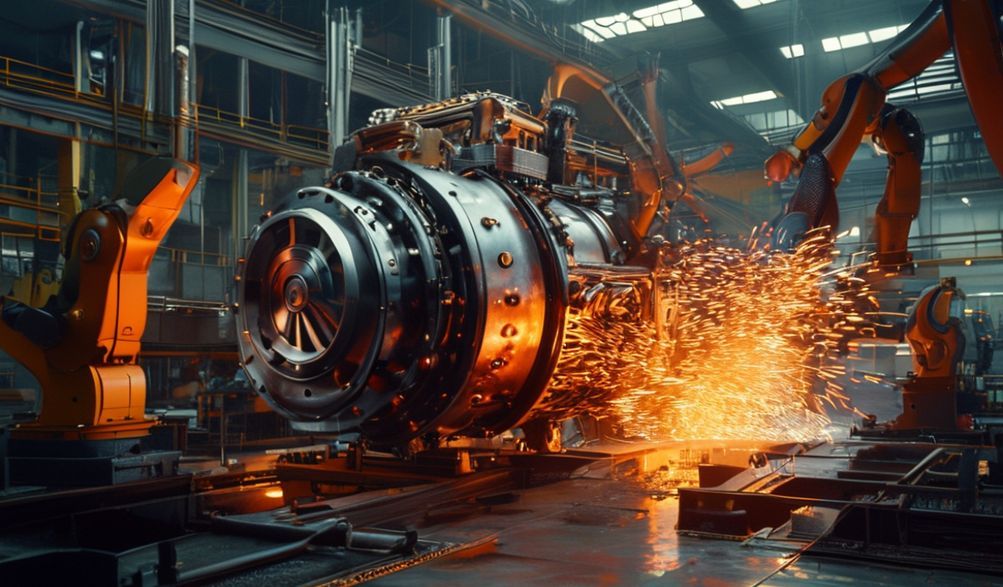
The Complete Guide to Diesel Engine Block Making Machines | FUDA Factory Expertise
In the world of diesel power, the engine block is more than just a component; it is the foundational bedrock, the architectural spine upon which every ounce of performance, durability, and efficiency is built. This single, complex casting houses the cylinders, supports the crankshaft, and endures immense thermal and mechanical stresses. Consequently, its quality is non-negotiable. For manufacturers, the challenge is clear: how to consistently produce engine blocks that meet exacting standards of precision, material integrity, and structural soundness, all while maintaining cost-effectiveness in high-volume production.
The answer lies in specialized, sophisticated machinery. The process of creating a diesel engine block is a symphony of metallurgy, precision engineering, and automated manufacturing, conducted by a diesel engine block making machine. This article serves as an authoritative guide to these critical production systems. Drawing on the deep-seated industry expertise of the Usine de fabrication de blocs FUDA, we will explore the technology, processes, and considerations essential for making informed purchasing and operational decisions. Whether you are looking to establish a new line or upgrade existing capabilities, understanding the machinery behind the machine is your first critical step.
What is a Diesel Engine Block Making Machine?
A diesel engine block making machine is not a single device but an integrated production system designed for the complete or near-complete manufacture of engine cylinder blocks. Its core function is to transform raw metal alloys into a precise, high-strength casting, ready for final assembly or requiring minimal secondary machining.
Fonction principale et importance
The primary role of this machinery is to execute the casting and primary machining operations that define an engine block’s geometry and critical tolerances. This includes forming the cylinder bores, coolant jackets, oil galleries, and mounting surfaces.
Specialized machinery is imperative because diesel engines operate under extreme conditions—high compression ratios, significant cylinder pressures, and intense thermal cycles. The block must possess exceptional strength, wear resistance, and dimensional stability. Only purpose-built equipment can achieve the micron-level precision and consistent material properties required to prevent engine failure, ensure longevity, and meet modern emissions standards.
Key Components and Systems
A comprehensive block making line integrates several key subsystems into a cohesive workflow:
- Molding & Core Making: This system creates the mold cavity (the negative shape of the block) and the internal sand cores that form passages for coolant and oil. Modern systems use highly automated sand mixing, molding, and core shooting machines.
- Melting and Pouring: A furnace (often induction or cupola) melts the iron alloy, which is then transferred and poured into the molds with controlled temperature and speed to ensure optimal metallurgy.
- Cleaning and Finishing: After casting and cooling, the rough block (or “casting”) undergoes shakeout to remove sand, followed by shot blasting to clean surfaces and cut-off operations to remove excess material (gates and risers).
- Precision Machining Centers: This is where the casting becomes a precision component. Transfer lines or CNC machining centers perform operations like milling the deck and pan rails, drilling and tapping all holes, and most critically, boring the cylinders and machining the main bearing caps to exact specifications.
The seamless integration of these systems, often orchestrated by automated conveyors and centralized PLC control, is what defines a true turnkey production line.
Types of Engine Block Manufacturing Processes
The choice of casting process fundamentally shapes the required machinery and the capabilities of the final product. Here are the primary methods used in diesel engine block manufacturing.
Sand Casting Process
Sand casting is the most prevalent method for diesel blocks, especially for medium to high volumes of gray iron or compacted graphite iron (CGI).
- Processus : A reusable pattern creates an impression in specially bonded sand to form the mold. Sand cores are inserted to create internal cavities. Molten metal is poured into the assembled mold, solidifies, and is then removed.
- Avantages :
- Excellent flexibility for complex geometries and large parts.
- Lower tooling costs compared to permanent molds, ideal for prototypes and shorter production runs.
- Suitable for a wide range of ferrous alloys.
- Limitations :
- Generally offers a poorer surface finish than die casting.
- Dimensional tolerances are wider, necessitating more subsequent machining.
- The process is less efficient for extremely high volumes compared to automated die casting.
Permanent Mold / Gravity Die Casting
This process uses reusable metal molds (dies), offering a middle ground between sand and high-pressure die casting.
- Processus : The molten iron is poured by gravity into a pre-heated steel or cast iron mold. The metal mold allows for faster cooling, which refines the grain structure of the metal.
- Avantages :
- Superior surface finish and dimensional accuracy compared to sand casting.
- Improved and more consistent mechanical properties due to controlled solidification.
- Higher production rates for suitable part designs.
- Considérations : Tooling costs are higher, and the process is less suitable for extremely intricate internal geometries that require complex sand cores.
High-Pressure Die Casting (For Specific Applications)
While predominantly used for aluminum blocks in gasoline engines, HPDC sees some application for smaller or specific diesel engine components and, increasingly, for aluminum diesel blocks.
- Processus : Molten metal is injected under high pressure (hundreds to thousands of psi) into a precision steel die cavity at high speed.
- Discussion: This process enables very high production rates, exceptional dimensional repeatability, and excellent surface finish. However, it requires massive, high-pressure machines and expensive dies. For ferrous metals, the technology is more challenging due to the higher melting temperatures, but advancements are being made.
Critical Features of a High-Quality Block Making Machine
Investing in block production machinery requires a focus on features that directly impact output quality, operational cost, and long-term reliability.
Precision and Tolerance Control
The hallmark of a superior machine is its ability to hold extreme tolerances consistently.
* Cylinder Bores: Must be perfectly round, straight, and have precise surface finishes for optimal piston ring sealing.
* Deck Flatness: Critical for ensuring a perfect seal with the cylinder head gasket.
* Main Bearing Bore Alignment: Essential for smooth crankshaft rotation and minimizing wear.
Machinery must incorporate rigid construction, high-precision spindles, and advanced in-process measurement systems to compensate for thermal growth and tool wear automatically.
Automation and Production Efficiency
Modern foundries and machining lines thrive on automation.
* Automated mold handling, pouring, and casting extraction reduce labor costs and human error.
* Integrated palletized transfer lines or robotic part handling between machining stations maximize uptime and throughput.
* At FUDA, automation systems are engineered for seamless integration, ensuring consistent quality and achieving the high output rates necessary for profitable production.
Durability and Foundry-Grade Construction
This machinery operates in one of the most punishing industrial environments: the foundry. It must withstand:
* Thermal Cycling: From ambient temperature to proximity with molten metal.
* Abrasive Contaminants: Sand, dust, and scale are ever-present.
* Heavy Loads: The weight of molds, cores, and castings is significant.
FUDA machines are built with this in mind, utilizing reinforced frames, hardened ways, protective bellows on critical components, and foundry-duty electrical enclosures to ensure decades of service.
Flexibility for Different Block Designs
Market demands change. A versatile machine is a protected investment.
* Quick-Change Tooling: Allows for faster changeovers between different block models.
* Modular Fixturing: Permits the same machining base to accommodate different block families.
* Contrôleurs Logiques Programmables (CLP) : Enable the storage of multiple part programs, allowing operators to switch production with minimal downtime.
The FUDA Block Making Factory Advantage
Choosing a machinery supplier is as important as choosing the machine itself. Here’s what sets the FUDA factory apart.
Decades of Engineering Experience
With a legacy spanning over several decades, FUDA’s expertise is not theoretical—it’s forged on the factory floor. Our engineers have designed, built, and optimized block making lines for a global clientele, tackling challenges from compact automotive diesel blocks to massive industrial and marine engine platforms. This deep, practical expérience is embedded in every system we design.
Integrated In-House Design and Build
Unlike assemblers, FUDA maintains complete vertical integration. From initial CAD modeling and finite element analysis (FEA) to fabrication, assembly, and testing, every step is controlled within our facility. This allows for unparalleled quality control, faster iteration during design, and the ability to offer truly customized solutions without relying on external subcontractors, establishing our Autoritésur le terrain.
Focus on Innovation and Technology
We invest in the future of manufacturing. Our machines incorporate:
* Proprietary sand-bonding and core-making technologies for superior core strength and dimensional stability.
* Advanced simulation software for predicting mold filling and solidification to prevent casting defects.
* IoT-enabled sensors for predictive maintenance, monitoring machine health, and optimizing production data in real-time.
Comprehensive Support and Training
Our relationship with clients begins at the sale, it doesn’t end there. To build fiabilité, we provide:
* On-Site Supervision: Expert engineers assist with installation, commissioning, and first-part approval.
* Extensive Training: Programs for maintenance technicians, machine operators, and production managers, conducted both on-site and at the FUDA facility.
* Global Support Network: A dedicated supply chain for genuine spare parts and 24/7 remote technical support to maximize your line’s uptime.
Selecting the Right Machine for Your Factory
Making the correct investment requires a thorough internal and external analysis.
Évaluation de votre volume et de votre échelle de production
- Low to Medium Volume (Prototypes, Niche Markets): A semi-automatic sand casting line with standalone CNC machining centers may offer the needed flexibility.
- High-Volume Mass Production: A fully automated, high-pressure molding line (like DISAMATIC) coupled with a dedicated transfer machining line is essential for achieving required outputs and lowest cost-per-part.
Material Considerations: Gray Iron vs. Compacted Graphite Iron (CGI)
- Gray Iron (GI): The traditional, cost-effective workhorse with good machinability and damping properties.
- Compacted Graphite Iron (CGI): Offers significantly higher strength, stiffness, and fatigue resistance, allowing for lighter, more powerful engines. However, it requires tighter process control during melting and pouring, and its machining demands different tooling and parameters. Your machine supplier must understand these nuances.
Total Cost of Ownership (TCO) Analysis
Look beyond the initial purchase price (CAPEX). Consider:
* Consommation d'énergie : Efficiency of melting furnaces, hydraulic systems, and motors.
* Tooling and Consumable Life: Cost of molds, cores, and cutting tools.
* Maintenance Costs and Uptime: A robust, reliable machine with high availability saves far more over its lifespan.
* Floor Space and Utility Requirements.
Questions to Ask Your Machine Supplier
- What is the depth and geographic reach of your after-sales service network?
- Can you provide complete technical drawings and documentation for long-term maintenance?
- What are the specific terms and duration of the warranty?
- Can you connect us with existing clients who have similar production requirements for a reference?
- What is your process for handling custom engineering modifications?
Foire aux questions (FAQ)
Q1: What is the typical lead time for a diesel engine block production line from FUDA?
A : Lead times typically range from 6 to 12 months for a complete, customized line. This timeframe accounts for detailed engineering design, procurement of long-lead items, manufacturing, assembly, and factory acceptance testing (FAT). The exact duration depends on the line’s complexity and our current production schedule. We provide transparent project timelines from the outset.
Q2: Can FUDA machines produce blocks for both automotive and industrial/marine diesel engines?
A : Absolutely. Our expérience encompasses the full spectrum. Our systems are scalable and adaptable. We engineer solutions for small-displacement automotive blocks as well as for the large, heavy-duty blocks used in industrial generators, locomotives, and marine propulsion. The core principles of precision and durability remain, applied to different size classes.
Q3: How does FUDA ensure the machining accuracy of the finished blocks?
A : We integrate multi-layered quality control. Our machining centers feature in-process probing and automatic tool wear compensation. Final validation is performed using high-precision Coordinate Measuring Machines (CMMs) to verify all critical dimensions. Furthermore, we implement Statistical Process Control (SPC) methodologies to monitor production trends and prevent deviations before they occur, demonstrating our technical expertise.
Q4: What kind of training and documentation is provided with the machine?
A : We provide comprehensive, multilingual documentation, including detailed mechanical, hydraulic, pneumatic, and electrical schematics, plus full PLC software backups. Our training program includes both theoretical classroom instruction and hands-on practice at the machine. Training covers safe operation, routine maintenance, troubleshooting, and basic programming, ensuring your team is fully confident and self-sufficient.
Q5: How energy-efficient are modern block making machines from FUDA?
A : Energy efficiency is a key design priority. Our systems incorporate regenerative drives on axes that capture braking energy, high-efficiency servo motors and pumps that reduce idle consumption, and optimized thermal management for melting furnaces. These features significantly reduce operational expenditure (OPEX) and environmental impact over the machine’s lifetime.
Conclusion
Selecting a diesel engine block making machine is a strategic decision that forms the very foundation of your engine manufacturing capability. It is an investment in precision, quality, and future competitiveness. This guide has outlined the complexities involved, from casting processes to critical machine features.
Partnering with a manufacturer that possesses proven experience, authoritativeness, and trustworthiness is the most effective way to mitigate risk and ensure a successful outcome. The Usine de fabrication de blocs FUDA brings decades of integrated engineering expertise to the table, offering not just machinery, but a complete production solution backed by unwavering support.
The right machine is far more than a capital expense; it is a capability multiplier, empowering you to produce superior engine blocks that define performance in the marketplace.
Ready to build the backbone of your next-generation diesel engines?
* Primary CTA: Contact FUDA’s engineering team today for a confidential consultation and a customized proposal for your engine block production needs.
* Secondary CTA: Request a virtual tour of the FUDA factory to see our manufacturing expertise and technology in action.