
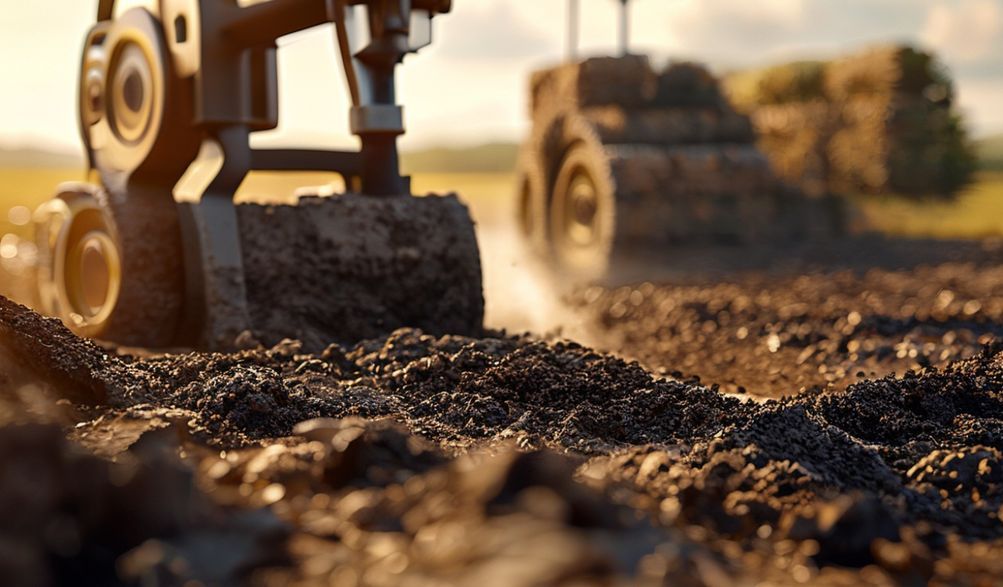
The Complete Guide to Earth Block Machines: Building a Sustainable Future
The global construction industry faces a dual crisis: the urgent need for affordable housing and the undeniable environmental toll of conventional building materials. Concrete and fired brick production are colossal contributors to carbon emissions and resource depletion. Yet, the solution to building our future may lie in one of humanity’s oldest and most abundant resources—the earth beneath our feet. Enter the earth block machine, a transformative piece of technology that bridges ancient wisdom with modern engineering.
This guide serves as your comprehensive, expert resource on compressed earth block (CEB) machines. Whether you’re a builder, architect, DIY enthusiast, or developer, we’ll provide the foundational knowledge and practical insights needed to understand, choose, and utilize this sustainable technology. We’ll demystify the machine itself, explore its profound benefits, walk you through the building process, and equip you with a checklist for making an informed purchase. By the end, you’ll see how the humble earth block machine is a powerful tool for constructing a more resilient and sustainable world.
What is an Earth Block Machine? Understanding the Technology
An earth block machine, often called a compressed earth block (CEB) press or soil block machine, is a device that transforms raw, subsoil into precise, high-density building blocks. It represents a paradigm shift from energy-intensive firing to efficient mechanical compression.
Principe fondamental : Compression plutôt qu'allumage
Unlike fired bricks, which require temperatures over 1,000°C, CEB machines use sheer mechanical force. Damp soil is compacted under extreme pressure—anywhere from 500 to over 2,000 PSI. This pressure aligns the clay platelets and eliminates air pockets, creating a block that is strong, stable, and ready to use after a short curing period. The process consumes a fraction of the energy.
A Brief History: From Ancient Adobe to Modern Engineering
Building with earth is as old as civilization itself, seen in adobe, cob, and rammed earth. The modern CEB machine evolved in the mid-20th century, with innovations like the Cinva Ram (developed in Colombia in the 1950s) bringing standardization and efficiency. Today’s machines offer hydraulic power, interchangeable molds, and high-output automation, making earth construction faster and more precise than ever before.
Key Components of a Modern Earth Block Machine
Understanding the machine’s parts clarifies its operation:
* Hopper : The chamber where the prepared soil mix is loaded.
* Chambre de compression et moule/matrice : The cavity that gives the block its shape (typically rectangular, but interlocking shapes are common).
* Mécanisme de presse The heart of the machine. This can be a manual lever, a mechanical flywheel, or (most commonly) a hydraulic ram that delivers consistent, high pressure.
* Système d'éjection : Once compressed, a mechanism pushes the finished block out of the mold, ready for stacking.
Types of Earth Block Machines: Choosing the Right Press for Your Project
Selecting the correct machine hinges on your project’s scale, budget, and location.
Manual Earth Block Presses (e.g., Cinva Ram style)
- Idéal pour : Small-scale projects, DIY enthusiasts, community builds, workshops, and low-budget initiatives.
- Opération : Human-powered via a lever. Requires significant physical effort but is simple to maintain and operate.
- Sortie : Typically 40-80 blocks per hour, depending on the crew’s efficiency.
- Avantages : Very low cost, no power required, highly portable, excellent for skill-building.
- Inconvénients : Labor-intensive, lower block density compared to hydraulic presses, not suitable for large-scale projects.
Mechanical/Hydraulic CEB Machines
- Idéal pour : Professional builders, medium to large-scale home construction, commercial projects, and social housing initiatives.
- Opération : Powered by electric motors, diesel engines, or tractor PTOs. They use hydraulic systems to automate the compression and ejection cycle.
- Sortie : Can range from 200 to over 1,000 blocks per hour.
- Avantages : High, consistent block quality and density, significant labor savings, scalable production.
- Inconvénients : Higher initial investment, requires a power source, less portable than manual presses.
Mobile vs. Stationary Block Plants
- Machines mobiles : Mounted on a trailer for easy transport. The ultimate solution for on-site production, eliminating block transportation costs entirely. Ideal for remote builds.
- Machines stationnaires : Set up in a central “block yard.” Best for producing blocks for multiple projects in a localized area or for urban sites with limited space for soil processing and block curing.
The Compelling Benefits of Building with Compressed Earth Blocks
The advantages of CEB construction extend far beyond simple cost savings, touching on environmental, performance, and health factors.
Unmatched Sustainability and Low Environmental Impact
- Matériaux locaux : Soil can often be sourced directly from the build site or locally, slashing transportation emissions.
- Énergie intrinsèque ultra-faible : The production process uses less than 1/10th the energy of fired bricks or concrete blocks.
- Carbon Sequestering: The process avoids the chemical release of CO2 associated with cement production.
- Fully Recyclable: At end-of-life, earth blocks can simply be moistened and re-compressed, or returned to the landscape.
Superior Thermal Mass and Energy Efficiency
CEB walls have high thermal mass. They absorb heat during the day and release it slowly at night, naturally regulating indoor temperatures. This can drastically reduce reliance on mechanical heating and cooling systems, leading to decades of lower energy bills.
Cost-Effectiveness and Material Affordability
The primary material—soil—is often free or very low-cost. Savings compound through reduced transportation, minimal waste, and the potential for owner-builder labor. While the machine is an investment, the per-block material cost is minimal.
Durability, Fire Resistance, and Pest Resistance
- Durabilité : Properly stabilized and protected CEB walls can last for centuries, as evidenced by ancient earthen structures worldwide.
- Résistance au feu : Earth does not burn. CEB walls have an excellent fire rating, providing superior safety.
- Pest Resistance: Unlike wood, earth is not a food source for termites or rodents.
Aesthetic Versatility and Healthy Indoor Air Quality
- Aesthetics: CEBs offer a beautiful, natural texture and warmth. They can be left exposed, plastered, or painted with breathable finishes.
- Healthy Air: Earth blocks contain no volatile organic compounds (VOCs), plastics, or chemical treatments. They naturally regulate humidity, contributing to excellent indoor air quality.
The Essential Soil Mix: Recipe for Perfect Earth Blocks
The quality of your block is 90% dependent on your soil mix. Getting this right is non-negotiable.
The Three Key Components: Clay, Silt, and Sand
- Argile : Acts as the natural binder. It provides cohesion and strength when compressed.
- Sable: The aggregate. It provides compressive strength and reduces shrinkage and cracking.
- Silt: Fine particles that can be problematic. Too much silt reduces strength and increases shrinkage. It needs careful management.
A general target is 30% clay, 70% sand/silt aggregate, but this varies.
How to Test Your Soil Suitability
- Jar/Sedimentation Test: Fill a clear jar 1/3 with soil, 2/3 with water, shake, and let settle for 24 hours. Layers will form (sand at bottom, silt, then clay). Measure the percentages.
- Ribbon Test: Moisten a handful of soil and roll it into a ribbon. The longer it holds before breaking, the higher the clay content.
- Drop Test: Make a trial block. Drop it from waist height onto a hard surface. If it shatters, it needs more clay or stabilizer; if it dents, it may have too much clay.
Stabilizers: When and How to Use Them
Stabilizers are added (typically 5-10% by volume) to improve strength and water resistance.
* Ciment Portland : The most common stabilizer. It chemically bonds with the soil, creating a strong, weather-resistant block suitable for most climates.
* Citron vert A more traditional, breathable stabilizer. Good for historic restoration or in specific soil conditions.
Moisture Content: The Critical Factor for Compression
Soil must be “damp earth” consistency—moist enough to bind, but dry enough to hold its shape when squeezed. Too dry, and the block won’t bind; too wet, and it will deform. Optimal moisture is usually between 10-15%.
How to Choose the Best Earth Block Machine: A Buyer’s Checklist
Assess Your Project Scale and Required Block Output
- Garden Wall/Small Shed (Under 500 blocks): Manual press.
- Single-Family Home (10,000-20,000 blocks): Mid-range hydraulic machine.
- Multiple Homes/Commercial Project: High-output hydraulic machine, possibly mobile.
Key Machine Specifications to Compare
- Pression : Measured in PSI or tons. Higher pressure generally means denser, stronger blocks (aim for 1,000+ PSI for structural blocks).
- Block Dimensions: Standard sizes are similar to concrete blocks (e.g., 10″x14″x4″). Ensure the size fits your design.
- Cycles Per Hour: The theoretical production rate.
- Source d'alimentation : Electric (clean, quiet), Diesel (powerful, mobile), PTO (for farm/remote use).
- Qualité de construction : Look for heavy-duty steel frames and hardened steel wear parts (molds, rams).
Source Quality Soil and Consider Stabilization Needs
Crucial Advice: Test your soil avant buying a machine. If your local soil is unsuitable, you’ll need to plan for importing or amending it, which affects logistics and cost.
Budgeting: Initial Investment vs. Long-Term Value
- Presses manuelles :500 $ – 3 000 $.
- Hydraulic Machines: $8,000 – $50,000+.
Consider ROI: For a single home, the machine cost is often offset by the total material savings compared to conventional building.
Vendor Reputation and Support (Critical for E-E-A-T)
Choose a manufacturer or supplier with:
* Proven industry experience.
* Clear operation and maintenance manuals.
* Readily available spare parts.
* Accessible technical support.
This support is invaluable and a key marker of a trustworthy vendor.
The Building Process: From Soil to Structure
Step 1: Site Preparation and Soil Processing
- Source and stockpile soil.
- Screen it to remove rocks, roots, and debris.
- Thoroughly mix soil with stabilizer (if using) and water to achieve uniform moisture. A rotary tiller or mortar mixer works well.
Step 2: Block Production and Curing
- Feed the mix into the machine hopper.
- Produce blocks and stack them on pallets in a shaded, covered area.
- Curing is critical: Keep blocks moist (by misting and covering with plastic) for 7-14 days. This allows stabilizers to gain strength. After curing, let them dry fully for 2-4 weeks before building.
Step 3: Mortar and Wall Construction Techniques
- Use a soil-cement mortar (similar to your block mix) for laying courses.
- Follow standard masonry practices: maintain level courses, stagger joints.
- For seismic zones, integrate reinforced concrete bond beams and vertical rebar as specified by a structural engineer.
Step 4: Protective Plasters and Finishes
Earth buildings need “good boots and a hat”:
* Boots: A high, moisture-proof foundation (stone, concrete plinth) to protect walls from ground splash.
* Hat: Large roof overhangs (at least 18-24 inches) to shield walls from rain.
* Finish: Apply breathable plasters—earthen or lime-based—to protect the wall while allowing moisture vapor to escape.
Frequently Asked Questions (FAQ) About Earth Block Machines
Q: How strong are compressed earth blocks compared to fired bricks or concrete blocks?
A : Properly made and stabilized CEBs typically achieve a compressive strength between 2 MPa (290 PSI) and 10 MPa (1450 PSI). This meets or exceeds the requirements for single and two-story residential construction in many international building codes. While high-strength concrete blocks are stronger, CEB strength is more than sufficient for load-bearing walls in most homes.
Q: Are earth block homes suitable for wet or cold climates?
A: Yes, with proper design. In wet climates, stabilization with cement is essential, along with large overhangs, proper site drainage, and moisture-resistant foundations. In cold climates, the high thermal mass is a benefit, but walls must be insulated (externally or with insulated interior furring) to meet modern energy codes. The block itself is frost-resistant once stabilized and protected.
Q: Can I build a house with earth blocks myself, or do I need special skills?
A : The process is very DIY-friendly, particularly with a manual press. The skills are learnable. However, there is a learning curve for perfecting the soil mix and block production. We highly recommend starting with a small garden wall or shed. For a full-scale home, consulting or hiring a professional with earth-building experience for the structural aspects is strongly advised.
Q: Do earth block buildings meet modern building codes?
A : Increasingly, yes. Standards like ASTM E2392 / E2392M (Standard Guide for Design of Earthen Wall Building Systems) provide a basis for engineering. Success depends on your local jurisdiction. The key is to engage with your local building department early, provide engineering calculations from a qualified professional, and often, build a test wall for inspection.
Q: What is the maintenance like for an earth block machine?
A : Maintenance is generally straightforward. For all machines: clean thoroughly after use to prevent soil from hardening in the mechanism, and lubricate all moving parts regularly. For hydraulic machines, check fluid levels and watch for hose wear. The main wear parts are the mold/die and the ram face, which may need replacement after years of heavy use. Manual presses require minimal maintenance.
Conclusion: Building Responsibly with Earth
The earth block machine is more than just a tool; it’s a gateway to a more conscious and resilient form of construction. It empowers individuals and communities to build beautiful, healthy, and affordable shelters using the most local of materials. The path to mastery involves understanding the technology, respecting the material science of soil, and adhering to sound building principles.
We encourage you to deepen your knowledge. Seek out hands-on workshops, connect with networks of experienced natural builders, and always consult with engineering professionals for structural projects. By choosing to build with earth, you’re taking a practical, powerful step towards reducing the construction industry’s carbon footprint and creating legacy buildings that are in harmony with the planet.
Ready to start your journey? Share your project ideas or questions below. For those looking to take the next step, explore our further resources on specific machine models, workshop listings, and detailed case studies of successful earth block homes.
<