
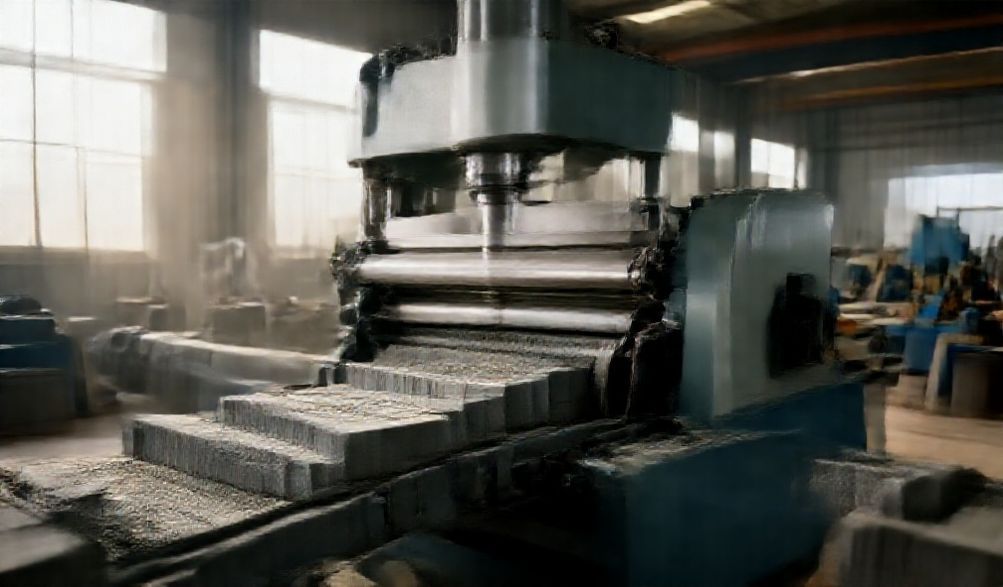
Le Guide Ultime des Machines à Fabriquer des Briques de Ciment à Hyderabad (2026)
Introduction
Naviguer dans le paysage de construction animé d'Hyderabad exige non seulement de l'ambition, mais aussi les bons outils pour le travail. Pour les constructeurs, les entrepreneurs et les chefs d'entreprise, le choix d'une machine à fabriquer des briques de ciment est l'un des investissements les plus critiques que vous puissiez faire. Ce guide complet est fondé sur des années d'expérience directe dans l'industrie et d'expertise technique au sein du marché du Telangana. Nous fournissons des informations faisant autorité et dignes de confiance pour percer à travers le bruit.
La ligne d'horizon d'Hyderabad témoigne d'une croissance incessante. Pour suivre le rythme, les projets de construction exigent une production de briques efficace, de haute qualité et constante. La bonne machine est le moteur de cette productivité, influençant directement vos délais de projet, l'intégrité structurelle et votre rentabilité. Ce guide servira de feuille de route pour le marché spécifique d'Hyderabad—en explorant les types de machines, en analysant les coûts, en identifiant les principaux fournisseurs et en détaillant le savoir-faire opérationnel nécessaire pour réussir. Posons ensemble des bases solides pour votre décision.
Comprendre les machines de fabrication de briques en ciment
Avant d'investir, il est crucial de comprendre la technologie que vous intégrez à vos opérations. Ces machines sont conçues pour remplacer le travail manuel inconstant par la précision et la puissance.
Comment fonctionnent les machines à fabriquer des briques de ciment ?
Au cœur de leur fonctionnement, ces machines automatisent et perfectionnent l'ancien procédé de formation des briques grâce à une force et des vibrations contrôlées.
- Le Processus :Un mélange précis de matières premières—ciment, sable (souvent du sable Robo d'origine locale) et poussière de pierre ou granulats—est introduit dans un moule.
- Compactage et Façonnage :La machine utilise ensuite une combinaison de vibrations haute fréquence et d'une pression hydraulique immense (mesurée en tonnes) pour compacter le mélange. Cette double action élimine les poches d'air et assure une densité uniforme dans toute la brique.
- Éjection :La brique fraîchement formée et solide est ensuite éjectée du moule, prête pour le séchage. Ce procédé mécanisé garantit que chaque brique possède des dimensions identiques et une résistance à la compression supérieure par rapport aux méthodes traditionnelles.
Types de machines disponibles sur le marché de Hyderabad
Les pôles industriels de Hyderabad, tels que Jeedimetla et Balanagar, abritent des fournisseurs qui proposent une gamme de machines adaptées à toutes les échelles d'opération.
- Machines à fabriquer des briques manuelles :Ce sont des machines à levier ou hydrauliques simples qui nécessitent un effort humain important pour le mélange et le moulage. Elles constituent le point d'entrée le plus rentable, adapté aux projets de très petite envergure ou aux besoins de construction rurale.
- Machines semi-automatiques :Le point idéal pour de nombreuses entreprises basées à Hyderabad. Ces machines électriques gèrent automatiquement le compactage et le moulage critiques, mais peuvent nécessiter un alimentation manuelle de la matière première ou le retrait des briques finies. Elles offrent un excellent équilibre entre la production (généralement 800 à 2500 briques par heure) et l'investissement.
- Usines de fabrication de briques entièrement automatiques :Ce sont des chaînes de production conçues pour la fabrication de briques commerciales à grande échelle. Elles automatisent l'ensemble du processus, de l'alimentation et du mélange des matières premières jusqu'au moulage, à l'empilage et parfois même à la cuisson. L'investissement est considérable, mais les gains en production et en main-d'œuvre sont transformateurs.
- Machines à briques mobiles :Une option polyvalente pour les grands chantiers de construction. Ces unités peuvent être remorquées sur le lieu du projet, permettant une production sur site qui réduit considérablement les coûts de transport et les délais logistiques.
Principaux avantages de l'utilisation d'une machine à briques de ciment à Hyderabad
Investir dans cette machinerie ne se résume pas à l'achat d'équipement ; il s'agit d'acquérir un avantage concurrentiel adapté au marché dynamique de Hyderabad.
Cohérence et résistance inégalées
La production manuelle de briques est sujette aux erreurs humaines, entraînant des variations de taille et de densité. Une machine élimine ce problème.
- Il produit des briques de forme et de dimensions uniformes, ce qui accélère les travaux de maçonnerie et réduit l'utilisation de mortier.
- La pression hydraulique contrôlée garantit que chaque brique répond ou dépasse les exigences requises.IS codes (like IS 2185 for concrete masonry units), providing the structural strength essential for Hyderabad’s multi-story buildings and infrastructure.
Significant Cost and Time Savings
Time is money, especially in a fast-growing city.
- Réduction de la dépendance à la main-d'œuvre One semi-automatic machine can replace a large team of manual laborers, mitigating rising labor costs and availability issues.
- Faster Construction Cycles: With a reliable supply of bricks on-demand, your projects face fewer delays. You control your production schedule, not external suppliers.
Eco-Friendly and Sustainable Production
Align your operations with modern green building practices.
- These machines can efficiently utilize local industrial by-products like fly ash (from thermal plants) and stone crusher dust.
- The process minimizes material waste through precise batching.
- It supports sustainable construction initiatives in Telangana by reducing the environmental degradation associated with traditional clay brick kilns.
How to Choose the Right Machine in Hyderabad
This decision hinges on a clear assessment of your needs and a sharp eye for quality. Here’s a practical, unbiased framework.
Évaluation de vos besoins de production
Start by asking yourself these key questions:
- What is my required daily or monthly brick output? (e.g., for a single project vs. running a commercial brick yard).
- Is this for personal construction use or a commercial business?
- What types of bricks do I need? Solid, hollow, paver blocks, or interlocking blocks?
- What is my available space and power connection? (3-phase vs. single-phase).
Spécifications techniques clés à évaluer
Don’t get lost in jargon. Focus on these core specs:
- Brick Output per Hour: The primary capacity indicator. Be realistic about your needs.
- Pressure (Tonnes): Directly correlates to brick strength. For strong, load-bearing bricks, higher pressure (e.g., 60-100+ tonnes) is vital.
- Motor Power (HP): Indicates the machine’s power consumption and capability.
- Polyvalence : Can the machine produce different brick sizes and types by changing molds? This adds long-term value.
Evaluating Machine Build Quality and After-Sales Support
This is where many buyers in Hyderabad face challenges. The machine on the shop floor must endure years of tough use.
- Qualité de construction : Look for robust, fabricated steel frames and high-quality hydraulic components. Thicker steel and reputable brand hydraulics mean less downtime.
- Critical Local Support: A machine is a long-term asset. The availability of reliable local service, easy access to genuine spare parts, and comprehensive operator training in Hyderabad is non-negotiable. A supplier without a strong local service network can become a major liability.
Top Features to Look for in a Hyderabad Supplier
Your supplier is your long-term partner. Their credibility is as important as their product catalog.
Proven Local Track Record and Showroom
- Prioritize suppliers with a physical workshop or showroom in Hyderabad’s industrial areas.
- Insist on visiting. Seeing machines assembled and even operational in their facility demonstrates their capability and transparency.
Transparent Pricing and Comprehensive Quotations
- A trustworthy quote should be detailed, breaking down:
- Machine base price.
- Cost of optional molds for different brick types.
- Installation and commissioning charges.
- Training costs.
- GST and transportation.
- Beware of vague, all-in-one prices that hide future costs.
Client Testimonials and Site Visits
- Ask for a list of previous customers, preferably within Telangana.
- If possible, request permission to visit an existing client’s site to see the machine in operation and hear about their experience with service and support.
Investment and Cost Analysis for Hyderabad Buyers
Let’s translate this into financial planning. (Note: Prices are approximate and subject to market change. Always get current quotations.)
Price Range of Machines in the Hyderabad Market
- Machines manuelles : ₹ 1.5 Lakhs to ₹ 4 Lakhs.
- Machines semi-automatiques : ₹ 4 Lakhs to ₹ 15 Lakhs (widely varied based on capacity and automation level).
- Plantes entièrement automatiques : ₹ 20 Lakhs to several crores, depending on capacity and sophistication.
Calculating Return on Investment (ROI)
A simple framework to justify the investment:
- Calculate Your Current Cost: Cost of purchasing bricks + transportation + storage + wastage.
- Calculate Machine Production Cost: (Cost of raw materials per brick + electricity + labor for operation + machine depreciation/maintenance).
- Compare & Project: The savings per brick, multiplied by your annual production volume, will give you a clear picture of payback period and long-term profit.
Potential Government Subsidies or Schemes
- Investigate schemes for MSMEs or specific industrial promotion policies offered by the Government of Telangana.
- Check with organizations like the Telangana State Industrial Infrastructure Corporation (TSIIC) or local District Industries Centres for potential incentives on capital investment in manufacturing equipment.
Maintenance and Operational Best Practices
Protect your investment with disciplined care. A well-maintained machine lasts decades.
Routine Maintenance Checklist
- Daily: Clean the machine thoroughly after use, check hydraulic oil levels, inspect for loose bolts or nuts.
- Weekly: Grease all moving parts (pivots, bearings), check hydraulic hoses for wear, and inspect mold liners.
- Monthly: Change or filter hydraulic oil as per manufacturer guidelines, perform a detailed inspection of the electrical system.
Sourcing Quality Raw Materials in Hyderabad
Consistent bricks require consistent raw materials.
- Establish relationships with reliable local suppliers for cement, sand (River or Robo), and stone aggregates.
- The quality of sand (gradation and silt content) is especially critical. Test your raw material mix periodically to ensure the correct cement-sand-aggregate ratio.
Troubleshooting Common Issues
- Brick Cracking: Often caused by incorrect water-cement ratio, poor-quality sand with high silt, or insufficient curing.
- Poor Compaction/Weak Bricks: Check if hydraulic pressure is adequate, vibration motors are working, or if the raw material mix is improper.
- Machine Jamming: Usually due to overfilling the mold, foreign objects in the mix, or misalignment of components.
Frequently Asked Questions (FAQ)
What is the average production capacity of a semi-automatic machine in Hyderabad?
Typically, semi-automatic machines popular in the Hyderabad market range from 800 to 2,500 bricks per hour. The exact output depends on the model, brick size, and the efficiency of the operating crew.
Can I get a demonstration before purchasing?
Absolutely, and you should. Any reputable supplier in Hyderabad should offer a live demonstration at their workshop or a client’s site. Seeing the machine produce actual bricks is the best way to judge its performance and build quality.
Are the bricks produced strong enough for Hyderabad’s construction standards?
Yes. Machines using proper hydraulic pressure (generally above 60 tonnes) produce bricks with compressive strength that easily exceeds standard IS codes. These bricks are fully suitable for load-bearing walls in residential, commercial, and infrastructure projects across the city.
What is the expected lifespan of a brick making machine?
With proper maintenance and operation, a well-built machine from a quality supplier can have a productive lifespan of 10 to 15 years or more. The key factor is the initial build quality—thicker steel and branded components last significantly longer.
Do suppliers provide installation and training?
Reputable suppliers in Hyderabad always provide installation, commissioning, and hands-on training for your operators as part of the purchase. Confirm this explicitly in your agreement. Lack of training is a red flag.
Conclusion
Investing in a cement bricks making machine in Hyderabad is a strategic move that places control, quality, and profitability directly in your hands. It’s a decision that aligns with the city’s ambitious growth trajectory. Success hinges on thorough research, a clear understanding of your production needs, and, most importantly, partnering with a credible supplier known for robust machinery and unwavering after-sales support within the Telangana region.
Ready to Explore Your Options? We recommend shortlisting 2-3 established suppliers with a strong Hyderabad presence. Visit their facilities, witness live demonstrations, and ask detailed questions about capacity, warranty, and the structure of their service support. This due diligence is the final, crucial step in securing not just a machine, but a valuable business asset that will deliver returns for years to come.
<