
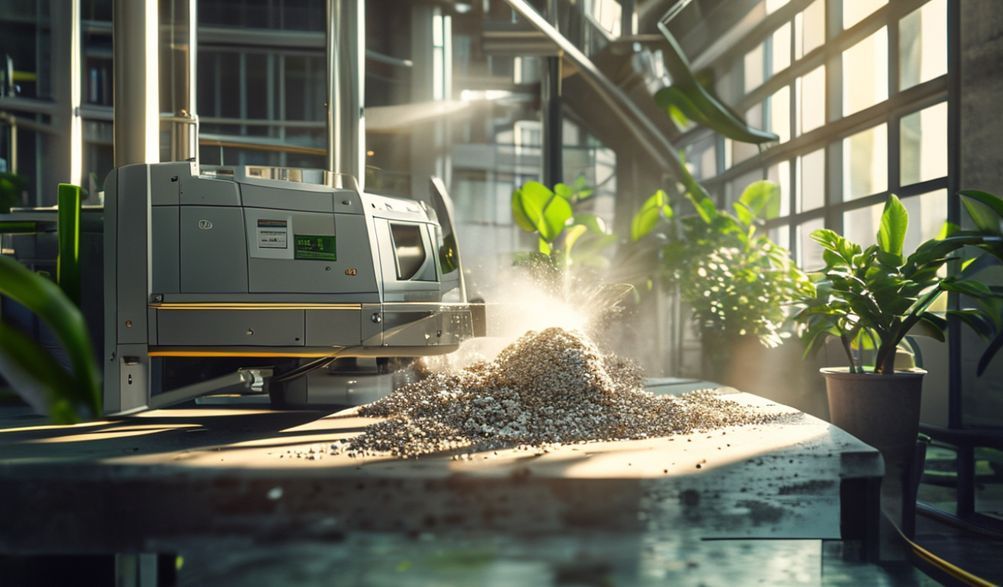
Le Guide Ultime des Machines à Blocs Écologiques : À l'Intérieur de l'Usine de Fabrication de Blocs FUDA
Introduction
L'industrie mondiale de la construction se trouve à un carrefour décisif. Alors que les villes s'étendent et que les demandes en infrastructures montent en flèche, le coût environnemental des méthodes de construction traditionnelles—caractérisées par de fortes émissions de carbone et une consommation vorace de ressources vierges—est devenu insoutenable. Cette réalité pressante provoque un virage profond vers la construction écologique, où chaque composante, de la conception au matériau, est scrutée pour son impact écologique. Au cœur de cette révolution se trouve un produit simple mais transformateur : le bloc de béton écologique.
Mais comment ces blocs de construction durables sont-ils créés ? La réponse se trouve dans des machines avancées, conçues spécifiquement.Machine à fabriquer des blocs écologiquesest une pièce sophistiquée d'équipement industriel conçue spécifiquement pour fabriquer des blocs de construction en utilisant un pourcentage élevé de matériaux recyclés et de sous-produits industriels, tels que les cendres volantes, le laitier et les déchets de construction broyés. Elle représente un bond en avant technologique, alliant une capacité de production robuste à un engagement environnemental.
À la tête de cette charge technologique se trouveUsine de fabrication de blocs FUDAAvec plus de deux décennies d'expérience dédiée, FUDA s'est établie comme une autorité dans la conception, l'ingénierie et la fabrication de machines à blocs de haute performance. Notre parcours a été axé sur un seul objectif : fournir à l'industrie de la construction des solutions de production fiables, efficaces et durables qui ne compromettent pas la qualité.
Ce guide est votre ressource complète. Nous démystifierons la technologie derrière les machines à blocs écologiques, détaillerons leurs avantages indéniables, offrirons un aperçu rare des opérations et de la philosophie de l'usine FUDA, et fournirons un cadre appuyé par des experts pour choisir la machine adaptée à vos besoins. Ce n'est pas seulement théorique ; c'est une sagesse pratique tirée de l'atelier de production.
Aperçus compilés par notre équipe d'ingénierie et d'applications, forte de plus de 20 ans d'expérience pratique dans la conception de machines durables, la production et le soutien à la clientèle chez FUDA.
Qu'est-ce qu'une machine à fabriquer des blocs écologiques ? Expertise en technologie durable
Contrairement aux fabricants de blocs conventionnels qui se concentrent uniquement sur la production, une machine à blocs écologique est conçue avec une mission à double objectif : produire des blocs de construction à haute résistance et contribuer activement à une économie circulaire. C'est une machine fondée sur les principes de la science des matériaux et du génie environnemental.
Technologie de base et principe de fonctionnement
Le génie d'une machine à blocs écologiques réside dans son adaptation d'une ingénierie éprouvée pour traiter des matériaux non traditionnels.
- Compactage Hydraulique à Haute Pression :Le cœur du processus repose sur un système hydraulique puissant et précisément calibré. Ce système applique une pression immense et uniforme à un mélange de matériaux recyclés et d’une petite quantité de liant (comme du ciment). Cette force de compactage est cruciale : elle élimine les vides, crée des liaisons moléculaires denses et garantit que le bloc final acquiert une intégrité structurelle sans nécessiter un excès de ciment.
- Utilisation de matières premières recyclées :C'est ici que la durabilité se concrétise. La machine est conçue pour manipuler et compacter de manière optimale les déchets industriels granulaires.
- Cendres volantes :Une poudre fine récupérée des centrales électriques au charbon, agissant comme un excellent matériau de remplissage et pouzzolanique.
- Laitier de haut fourneau :Un sous-produit de la production d'acier qui améliore la durabilité et la longévité.
- Déchets de construction et de démolition (C&D) concassés :Le béton traité, les briques et les tuiles reçoivent une nouvelle vie en tant que granulats primaires.
- Processus de durcissement :Les blocs écologiques utilisent souvent des méthodes de durcissement efficaces. Bien que certains puissent recourir à un durcissement à la vapeur à basse pression pour accélérer le gain de résistance, de nombreuses formulations sont conçues poursans produits chimiques, affinage naturelréduisant considérablement l'empreinte énergétique et l'utilisation des ressources par rapport à la cuisson traditionnelle des briques d'argile ou aux tunnels de séchage à haute énergie.
Principales différences par rapport aux machines traditionnelles de fabrication de blocs
Choisir une machine éco n'est pas seulement une déclaration environnementale; c'est une mise à niveau technique.
| Aspect | Machine traditionnelle à blocs | Machine à fabriquer des blocs écologiques |
| :— | :— | :— |
| Entrée de matières premièresPrincipalement des agrégats vierges (sable, gravier) et du ciment. | 60 à 90 % de matériaux recyclés/sous-produits (cendres volantes, laitier, déchets de construction et de démolition).
| Consommation d'énergiePeut être élevé, surtout pour les briques d'argile cuites ou le béton autoclavé. | Généralement plus faible en raison de systèmes hydrauliques efficaces et souvent d'un durcissement naturel.
| Environmental Output | High carbon emissions, depletion of natural resources. | Drastically reduced carbon footprint, waste diversion from landfills. |
| Final Product | Good compressive strength. | Comparable or superior compressive strength, with often better thermal insulation and fire resistance due to the material matrix. |
Why Choose an Eco Block Machine? The Trustworthy Case for Sustainability
The decision to invest in an eco block making machine is a powerful alignment of ecological responsibility, economic intelligence, and forward-thinking business strategy.
Environmental Benefits (Backed by Data & Experience)
The environmental argument is compelling and quantifiable. Based on lifecycle assessments and our project data:
* Réduction de l'empreinte carbone : Manufacturing blocks with high fly ash content can reduce associated CO2 emissions by up to 40-50% compared to ordinary Portland cement-based blocks, as it directly replaces a carbon-intensive material.
* Conservation des ressources Every ton of fly ash or slag used prevents a ton of virgin material from being quarried. It also provides a valuable, safe outlet for industrial by-products, closing the material loop.
* Waste Minimization: These machines are a direct solution to the global C&D waste problem, turning a disposal headache into a valuable resource.
Economic & Operational Advantages (Proven at FUDA Factory)
Sustainability drives profitability. Our clients consistently report tangible benefits:
* Lower Material Costs: Recycled aggregates and industrial by-products like fly ash are often significantly less expensive than virgin sand and gravel, directly reducing the cost per block.
* Incentives & Certification: Producing green building materials can qualify your business or your clients’ projects for tax benefits, grants, and crucial points in green building certification systems like LEED (Leadership in Energy and Environmental Design)ouBREEAM, creating a competitive market advantage.
* Lifecycle Value: Buildings constructed with eco-blocks benefit from excellent thermal mass and insulation properties, leading to lower energy costs for heating and cooling over the decades-long life of the structure.
Market Demand and Future-Proofing Your Business
Regulatory and consumer trends are unmistakable. Governments worldwide are implementing stricter building codes favoring sustainable materials. Developers and homeowners are increasingly seeking out green buildings for their lower operating costs and healthier environments. By adopting this technology now, you position your business as a leader, not a follower, in the future of construction.
Inside the FUDA Block Making Factory: A Showcase of Authority and Experience
At FUDA, we believe that exceptional machines are born from a culture of precision, innovation, and relentless quality assurance. Our factory is not just a manufacturing site; it’s the operational heart of our expertise.
FUDA’s Manufacturing Philosophy and Quality Assurance
Our philosophy is simple: build machines that last, perform consistently, and make our clients’ operations seamless. This is enforced through:
* Recherche et développement dédiée : A significant portion of our revenue is reinvested into research and development. We continuously test new material mixes, hydraulic configurations, and control software to improve efficiency and block quality.
* Rigorous Protocols: Every critical component, from hydraulic cylinders to PLC (Programmable Logic Controller) boards, undergoes stringent incoming quality checks. Every assembled machine goes through a minimum 72-hour continuous test run under load before it is approved for shipment. Our processes are aligned with international standards, including ISO 9001 for quality management systems.
A Walkthrough of the Production Line
A tour of our facility reveals a symphony of precision engineering:
1. Material Preparation & Mixing Station: We design systems for precise, automated batching of diverse raw materials, ensuring mix consistency—the foundation of block quality.
2. The Press Heart: Here, our proprietary hydraulic systems and meticulously machined molds operate. We use high-grade steel for molds and frames to withstand years of high-pressure cycling with minimal wear.
3. Intelligent Control Hub: Modern FUDA machines feature user-friendly, color touch-screen PLC interfaces. Operators can store hundreds of block design recipes, monitor production statistics, and diagnose issues in real-time.
4. Palletizing & Curing: Automated stackers and conveyors organize the green blocks for efficient movement to the curing area, minimizing handling damage and labor.
Real-World Applications and Project Portfolio
FUDA machines are at work globally, contributing to sustainable infrastructure. Our equipment has been pivotal in:
* Supplying blocks for affordable, green housing projects in Southeast Asia.
* Producing interlocking paving blocks for eco-friendly commercial landscapes in the Middle East.
* Enabling municipal waste recycling programs in Europe by processing local C&D waste into new building products.
Key Features to Look for in a High-Quality Eco Block Machine (Expert Buying Guide)
Selecting the right machine is critical. Based on thousands of client interactions, here are the non-negotiable features to evaluate.
Capacité de production et niveau d'automatisation
- Plage de sortie : Define your needs. Machines can range from semi-automatic models producing 1,000 blocks per 8-hour shift to fully automatic lines producing over 20,000. Be realistic about your growth projections.
- Automation Benefits: A Système de contrôle par API is essential for repeatability and reducing human error. Look for features like automatic pallet feeders, stackers, and mixers—they dramatically increase output per operator and improve workplace safety.
Versatility in Block Design and Raw Materials
- Variété de blocs : Ensure the machine can produce the block types your market demands: standard hollow blocks, solid blocks, interlocking bricks for dry-stack construction, and various paving stones. Quick-change mold systems are a valuable feature.
- Flexibilité des matériaux : The best machines are not fussy. Verify that the machine can handle a wide range of recycled material gradations and moisture contents with minimal adjustment. Ask about the maximum recommended percentage of specific wastes like fly ash or rubber crumb.
Machine Durability and After-Sales Support
- Qualité de construction : Inspect the frame construction (reinforced steel is best), the quality of the hydraulic hoses and fittings, and the machining tolerance of the mold. This dictates longevity.
- The FUDA Support Difference: A machine is a long-term partnership. We build fiabilité into our service model:
- Garantie complète : Clear terms on parts and labor.
- Global Parts Network: Strategically located warehouses ensure you get critical spare parts quickly, minimizing downtime.
- On-Site & Remote Support: We provide detailed installation manuals, video guides, and 24/7 remote troubleshooting. For larger installations, our engineers can supervise commissioning and operator training on-site.
Implementing Your Eco Block Production: Practical Steps from FUDA’s Expertise
Success depends on preparation. Here’s a roadmap drawn from our experience helping hundreds of clients start production.
Site and Utility Requirements
- Espace : You need ample, level ground for the machine, raw material storage (covered bays for fly ash/cement), block curing yard, and finished product storage. A standard setup for a medium-sized plant requires at least 2,000-3,000 sq. meters.
- Utilities: Stable, industrial-grade 3-phase electrical power is mandatory. Access to a reliable water source for mixing is also crucial, though eco blocks typically use less water than conventional concrete.
Raw Material Sourcing and Mix Design
- Sourcing: Establish relationships with local power plants (for fly ash), steel mills (for slag), and C&D recycling centers. Reliable, consistent supply is key.
- Conception du mélange: This is both an art and a science. We provide baseline mix formulas (e.g., 50% fly ash, 30% crushed sand, 20% cement) as a starting point. Critical Step: You doit create test batches and have them lab-tested for compressive strength, water absorption, and density to meet your local building codes before full-scale production.
Operational Best Practices for Efficiency
- Maintenance préventive : Adhere strictly to the lubrication and inspection schedule for hydraulics and vibrators. This is the single biggest factor in avoiding costly breakdowns.
- Formation des opérateurs : Invest time in training. A skilled operator who understands material consistency, machine settings, and basic troubleshooting is invaluable for quality and output.
- Contrôle de la qualité : Implement simple, daily checks: measure block dimensions, weigh samples, and periodically crush samples for strength verification. Keep a production log.
Frequently Asked Questions (FAQ) About Eco Block Making Machines
Q1: Are blocks from eco machines as strong as conventional concrete blocks?
A : Absolutely. When produced correctly on a quality machine like FUDA’s, eco-blocks routinely meet and exceed international standards (such as ASTM C90 or IS 2185). The high-pressure compaction ensures excellent density, often resulting in compressive strengths ranging from 7 MPa to 20 MPa and higher, suitable for load-bearing walls.
Q2: What is the typical return on investment (ROI) for an eco block making machine?
A : ROI depends on scale, local material costs, labor costs, and block selling price. A key driver is the low cost of recycled inputs. Many of our clients report a payback period of 1.5 to 3 years for a medium-sized operation. We provide financial modeling tools to help you calculate a realistic projection based on your specific local conditions.
Q3: Can I use 100% recycled materials in an eco block machine?
A : In practice, achieving optimal strength and durability usually requires a binder. While you can use a very high percentage (up to 90%) of recycled aggregates and fly ash, a small portion (typically 10-20%) of cement or lime is necessary to initiate the pozzolanic reaction that gives the block its permanent strength. Our engineers can help you maximize recycled content while meeting strength targets.
Q4: How does FUDA ensure the reliability and longevity of its machines?
A : Reliability is engineered in. We use CNC machining for critical parts, source hydraulic components from tier-one suppliers, and subject every machine to a prolonged, full-load test run. Our robust design philosophy prioritizes over-engineering for durability in demanding industrial environments, backed by a transparent warranty.
Q5: What support does FUDA provide after purchase?
A : Our partnership begins at delivery. We offer:
* Detailed installation drawings and manuals.
* On-site or online operator and maintenance training programs.
* A dedicated support hotline and remote desktop assistance.
* A guaranteed supply of genuine spare parts through our global logistics network.
* Periodic service check-ins.
Conclusion
The transition to sustainable construction is not a passing trend; it is the new foundation upon which our future built environment will stand. Eco block making technology is a powerful, practical, and profitable tool to build that future. It represents a convergence of environmental ethics and industrial innovation, turning waste into worth and ambition into durable reality.
Choosing your technology partner is the most critical decision in this journey. The FUDA Block Making Factory brings more than just machinery to the table; we bring over twenty years of focused experience, a deep well of engineering expertise, and an unwavering commitment to our clients’ success. We don’t just sell a machine; we enable a sustainable business.
Ready to build your future on a solid, sustainable foundation?
- Primary CTA: Contact FUDA’s expert engineering team today for a personalized consultation and a detailed quote tailored to your production goals and local market.
- Secondary CTA: Download our comprehensive technical specification portfolio for our latest series of fully automatic eco block making machines.
- Tertiary CTA: Schedule a virtual tour of the FUDA factory to see our precision manufacturing and quality control processes in real-time.