
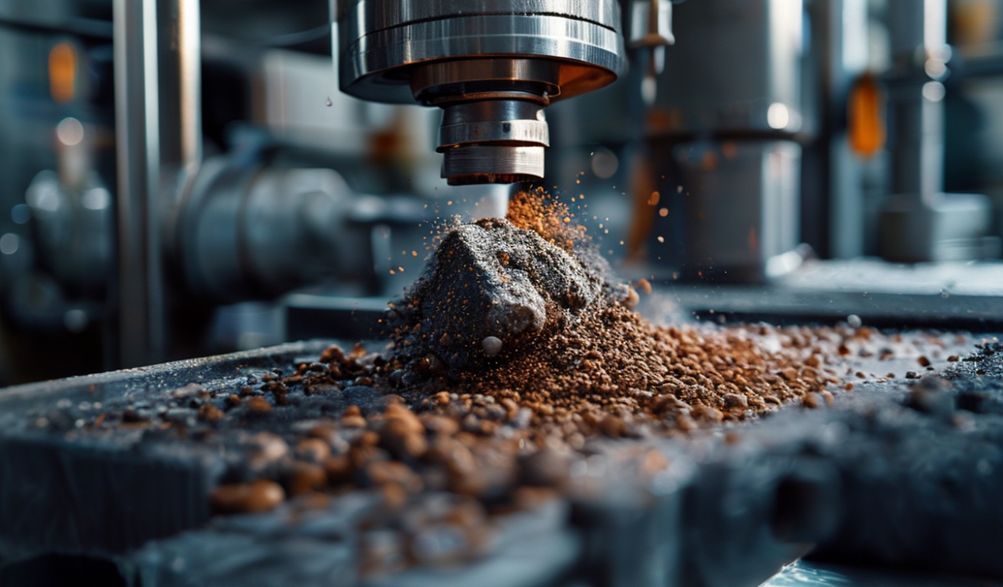
The Ultimate Guide to Hydraulic Clay Block Making Machines: Efficiency, Quality, and ROI
Introduction
The global construction industry is at a crossroads, grappling with the dual demands of rapid urbanization and the urgent need for sustainable, durable, and affordable building materials. Amidst this challenge, clay blocks have re-emerged as a premier solution, offering natural thermal insulation, fire resistance, and structural integrity. However, the quality and economic viability of these blocks hinge on the technology used to produce them. This is where the hydraulic clay block making machine transforms the landscape.
As a guide rooted in mechanical engineering principles, manufacturing best practices, and decades of industry observation, this article is designed for the astute professional. Whether you are a business owner scaling a block manufacturing yard, a construction firm looking to backward-integrate, or an investor evaluating a lucrative opportunity, you are researching a significant capital expenditure. Your decision requires clarity, not sales pitches.
This comprehensive guide serves as your unbiased manual. We will dissect how these powerful machines work, quantify their tangible benefits, outline critical selection criteria, share operational wisdom for longevity, and provide a transparent financial analysis. By the end, you will possess the knowledge to make an informed investment that delivers both superior blocks and a robust return.
What is a Hydraulic Clay Block Making Machine? The Core Technology Explained
At its essence, a hydraulic clay block making machine is a precision industrial press that uses fluid power to compact prepared clay into dense, uniform blocks. It represents a significant evolution from manual molding or even mechanical stamping presses, offering unparalleled control over the production process. The core innovation lies in its use of a hydraulic system to apply immense, consistent pressure, ensuring every block meets exacting specifications.
From Raw Clay to Finished Block: The Production Cycle
The machine orchestrates a seamless, integrated production cycle:
- Alimentation et mélange : Raw clay, often screened and sometimes mixed with a minimal amount of water or stabilizer (like cement), is loaded into a hopper. An internal mixer ensures a homogeneous consistency, which is critical for uniform compaction.
- Transmettre : The prepared material is then conveyed—via an auger or belt system—into the feeding chamber of the pressing unit.
- Pressage : This is the heart of the operation. A precise amount of material is deposited into a mold (die). The hydraulic ram then applies tremendous pressure, compressing the clay particles together and forcing out air pockets.
- Éjection et durcissement : The newly formed, high-density block is ejected from the mold onto a pallet or conveyor. It is then moved to a drying area for curing, where it gains strength before being used in construction.
The Heart of the System: Understanding the Hydraulic Press
The hydraulic system is what differentiates this technology. Here’s how it creates an advantage:
- Hydraulic Pump & Motor: This is the power source. The electric motor drives a hydraulic pump, which pressurizes specialized hydraulic oil, creating the potential energy for the press.
- Cylinders (Rams): The pressurized oil is directed into heavy-duty hydraulic cylinders. The force generated here is a function of the oil pressure and the piston area, allowing for the generation of hundreds of tons of force from a relatively compact system.
- Control Valves: Sophisticated solenoid valves precisely control the flow and direction of the hydraulic oil. This allows for programmable press cycles: a fast approach, a controlled pressing stage, a dwell time for optimal compaction, and a smooth retraction.
The key advantage over older methods is control. Mechanical lever presses deliver impact force, which can be inconsistent and cause more wear. Hydraulic pressure is smooth, adjustable, and uniformly applied across the entire block face, resulting in superior density and fewer defective products.
Composants clés et leurs fonctions
- Mold/Die System: The interchangeable cavity that defines the block’s size, shape (solid, hollow, interlocking), and surface texture. Made from high-hardness steel for durability.
- Alimenteur et Mélangeur : Ensures a consistent volume and composition of material enters the mold every cycle.
- Unité d'alimentation hydraulique (HPU) The assembly containing the pump, motor, oil reservoir, filters, and cooling system.
- Panneau de configuration : The user interface, often featuring a Programmable Logic Controller (PLC) for setting pressure, cycle time, and automation sequences.
- Cadre: A robust, welded steel structure that must withstand constant high-pressure cycles without deformation.
Top Advantages of Using a Hydraulic Clay Block Machine
Investing in this technology is not merely about automation; it’s about fundamentally upgrading the quality, economics, and capability of your block production.
Unmatched Block Quality and Consistency
- High Density & Strength: Controlled hydraulic pressure compacts clay particles more thoroughly than any other method, resulting in blocks with higher compressive strength. This translates to safer, more durable buildings.
- Dimensions uniformes : Every block is an exact replica of the mold. This dimensional accuracy simplifies bricklaying, reduces mortar use, and creates aesthetically pleasing, straight walls.
- Sharp Edges & Smooth Surfaces: The clean, powerful ejection produces blocks with defined geometry, enhancing the professional finish of construction projects.
Exceptional Production Efficiency and Output
- High-Speed Cycling: Modern hydraulic machines can produce a block every 10-30 seconds, depending on size and complexity.
- Capacity for Automation: From automatic material feeding to block stacking and palletizing, these machines can be integrated into production lines that run with minimal human intervention over extended shifts.
- Scalable Volume: Outputs can range from 1,500 to 15,000+ blocks per 8-hour shift, allowing businesses to scale production to match market demand efficiently.
Remarkable Material and Operational Efficiency
- Low Waste Rates: Precision feeding and molding minimize spillage and overfilling. The high first-pass quality means a drastically reduced number of cracked or malformed blocks to discard.
- Optimal Raw Material Use: The efficient compaction process ensures maximum yield from your clay input, lowering material costs per block.
- Réduction de la dépendance à la main-d'œuvre While skilled oversight is still needed, the machine does the heavy, repetitive work. One semi-automatic line may only require 2-3 operators, significantly lowering per-unit labor costs.
Polyvalence de la gamme de produits
Market demands change. A key advantage is the ability to pivot your product line by simply changing the mold. One machine can produce:
* Various sizes (e.g., standard, jumbo)
* Different shapes (solid blocks, hollow blocks for insulation, interlocking blocks for dry-stacking)
* Textured or faced blocks for architectural appeal
This flexibility allows you to cater to multiple construction segments without investing in entirely new equipment.
Critical Factors When Choosing Your Machine
Selecting the right machine is a strategic decision. Use these criteria as your evaluation checklist to avoid costly mismatches.
Évaluation de vos besoins de production
Begin with a clear business plan:
* Daily Output Target: How many blocks do you need to produce to meet your orders and growth goals? Be realistic about your market.
* Mélange de produits : Will you focus on one standard block or offer a catalog of options? This affects how often you’ll need to change molds.
* Espace et Infrastructure : Do you have a suitable shed or factory space with a strong, level floor? What is your available electrical power supply (typically three-phase)?
Plongée approfondie dans les spécifications des machines
Don’t just look at the price tag; understand the specs that drive performance:
* Capacité de pression (Tonnage) : This is paramount. Higher tonnage (e.g., 150 tons vs. 80 tons) compacts clay more densely, producing stronger blocks. Match the tonnage to your target block type and quality.
* Temps de cycle : The time to produce one block. A faster cycle (e.g., 15 seconds) directly increases your hourly output and revenue potential.
* Puissance du moteur : Correlates with the machine’s force and speed. A more powerful motor supports higher pressure and faster cycles but consumes more energy.
* Niveau d'automatisation : Semi-automatic machines require an operator to initiate each cycle or handle blocks, offering a lower entry cost. Fully automatic machines, controlled by PLC, run continuous cycles with automated material handling, maximizing output with minimal labor.
Quality of Build and Supplier Reputation
The machine is a long-term asset. Its construction and the company behind it matter immensely.
* Qualité de construction : Inspect the frame (thick steel plates, reinforced welding), the quality of hydraulic components (reputable brands like Bosch, Rexroth, or Parker are a good sign), and the robustness of the electrical cabinet.
* Supplier Vetting: Conduct due diligence:
* Expérience : How long has the manufacturer been in business?
* Portfolio: Can they provide videos or references from clients with similar operations?
* Support: Do they offer installation supervision, comprehensive operator training, and a clear warranty?
* Disponibilité des pièces : Is there a reliable supply chain for wear parts like seals, mold liners, and hydraulic hoses?
A reputable supplier is a partner for the lifespan of your machine.
Operating and Maintaining Your Machine for Longevity
A machine is only as good as its care. Proper operation and maintenance are non-negotiable for protecting your investment.
Best Practices for Daily Operation
- Préparation des matériaux : The clay’s moisture content is critical. Too dry, and it won’t bind; too wet, and blocks will deform. Aim for a consistent, “plastic” consistency (typically 10-15% moisture, but soil testing is advised).
- Consistent Feeding: Ensure the feeder delivers a uniform volume of material to the mold every cycle to prevent under- or over-filled blocks.
- Pre-Start Checks: Before each shift, visually inspect for loose bolts, check hydraulic oil levels, and ensure the mold and feeder are clean.
Essential Preventive Maintenance Schedule
Adhering to a schedule prevents 90% of major breakdowns.
| Frequency | Key Tasks |
| :— | :— |
| Daily | Check hydraulic oil level & temperature; clean mold surfaces; inspect for leaks; tighten visible frame bolts. |
| Weekly | Clean dust from electrical components; check all fluid lines for wear; inspect hydraulic filters. |
| Monthly | Test safety interlocks; change hydraulic oil and filters as per manufacturer specs (not just when dirty); thoroughly inspect and grease all bearings. |
| Annually | Perform a comprehensive system check by a qualified technician, including pressure testing and cylinder seal inspection. |
Troubleshooting Common Issues
- Blocks Sticking in Mold: Likely caused by a worn mold, insufficient mold release agent, or overly wet clay. Check and address each.
- Low Pressure/Weak Blocks: Could be a worn hydraulic pump, internal seal leakage, or a faulty pressure relief valve. Check oil level and system for leaks first.
- Oil Leaks: Identify the source (hose, fitting, cylinder seal). Never ignore leaks—they lead to system failure and environmental hazards.
- Dimensional Inaccuracies: Usually points to a worn mold/die, misalignment of the press head, or inconsistent material feed.
Cost Analysis and Return on Investment (ROI)
Let’s translate technical advantages into financial reality. A clear ROI model is your final validation.
Understanding the Initial Investment
The purchase price is just one part. Budget for:
* Machine Price: Varies widely ($25,000 to $150,000+) based on capacity, automation, and brand.
* Shipping & Installation: Includes freight, customs (if importing), and foundation preparation.
* Training & Commissioning: Factor in costs for technician travel and site time.
* Initial Spare Parts Kit: A prudent investment to minimize early downtime.
Calculating Operational Costs
Your ongoing expenses determine profitability:
* Energy: Hydraulic pumps and motors are the primary consumers. Calculate based on your local electricity tariff and expected running hours.
* Main-d'œuvre : Wages for your operators and maintenance staff.
* Matériaux bruts : Cost of clay, water, and any stabilizers.
* Entretien : Annual budget for oils, filters, seals, and other wear parts (typically 2-5% of the machine’s initial cost per year).
Projecting Your Revenue and Payback Period
Simple ROI Model Example:
* Machine Output: 2,000 blocks/day (semi-automatic operation)
* Selling Price: $0.50 per block (market-dependent)
* Daily Revenue: 2,000 x $0.50 = $1,000
* Daily Operational Cost (Materials, Labor, Power): $400
* Daily Gross Profit: $600
* Initial Total Investment: $60,000
Période de récupération : $60,000 / $600 = ~100 working days (approx. 5 months).
After the payback period, the daily gross profit contributes directly to your business’s bottom line. This model highlights the compelling economics of efficient, high-quality production.
Frequently Asked Questions (FAQ)
Q1: What is the typical production capacity of a standard hydraulic clay block machine?
A : Capacity varies significantly. A small semi-automatic machine may produce 1,000-3,000 blocks per 8-hour shift, while a large, fully automatic line can exceed 10,000-15,000 blocks. The key variables are block size, cycle time, and the level of automation integrated.
Q2: Can this machine use different types of soil or clay?
A : It is designed primarily for clayey soils. The ideal soil has sufficient plasticity to bind under pressure. Many machines can also process soils stabilized with a small percentage of cement or lime. We strongly advise conducting a soil test with your potential supplier to confirm compatibility and optimize mix design.
Q3: How much manpower is required to operate it?
A :Pour unsemi-automatique machine, expect to need 2-3 persons: one to feed material/monitor, and one or two to handle and stack the green blocks. A entièrement automatique system with integrated conveyors and stackers may only require 1-2 persons for supervision and pallet handling.
Q4: What is the expected lifespan of a well-maintained machine?
A : With strict adherence to the preventive maintenance schedule outlined earlier, a high-quality hydraulic block making machine can have a productive lifespan of 15 to 20 years or more. The frame and core components are built to last, though wear parts like seals and molds will need periodic replacement.
Q5: Do you offer training and technical support?
A : Any reputable supplier must provide comprehensive support. This should include installation supervision by a technician, hands-on training for your operators and maintenance staff, detailed manuals, and access to a responsive technical support team (via phone, email, or remote access). Always confirm the warranty period and the availability of spare parts before purchasing.
Conclusion
The hydraulic clay block making machine stands as a cornerstone technology for modern, profitable, and quality-conscious construction material production. It masterfully combines the timeless benefits of clay with precision engineering to deliver blocks of exceptional strength, consistency, and versatility. The journey from raw earth to a premium building product becomes efficient, scalable, and economically compelling.
Let this guide serve as your benchmark. The decision to invest should be informed by a clear understanding of your production needs, a meticulous evaluation of machine specifications and build quality, and a realistic financial projection. Most importantly, remember that you are not just buying a machine; you are entering a partnership. Choosing a credible, experienced supplier who offers robust training and unwavering after-sales support is perhaps the most critical factor for long-term success.
Your Next Step: Armed with this knowledge, contact your shortlisted suppliers. Request detailed quotations, ask for video evidence of their machines in operation, and seek client references. If possible, propose sending a sample of your local clay for a trial production run. Due diligence today paves the way for a profitable and sustainable business tomorrow.
<