
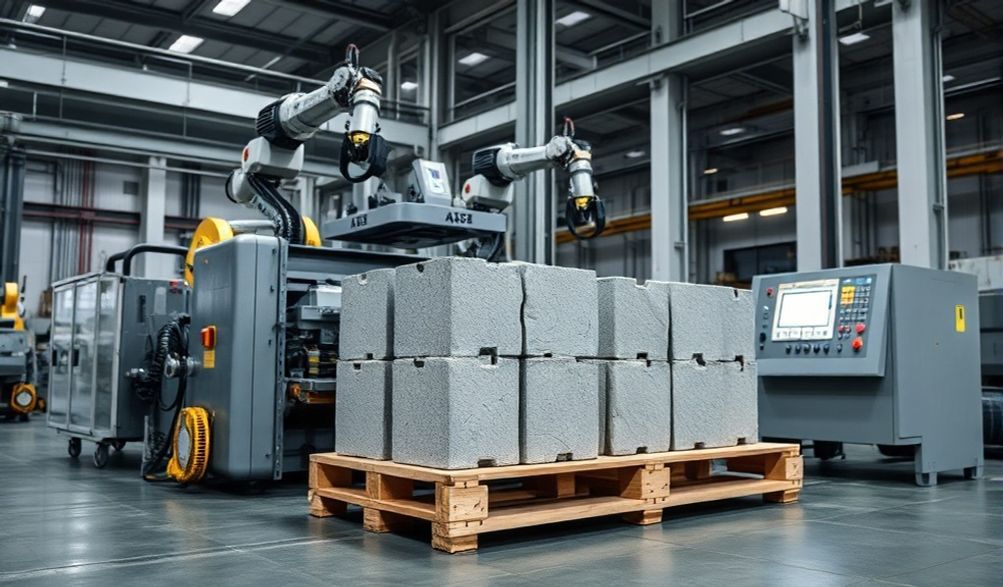
Votre guide ultime pour choisir un fournisseur de machine à blocs en promotion en 2026
Les secteurs mondiaux de la construction et du bâtiment préfabriqué ne font pas que croître ; ils évoluent à un rythme effréné. Des villes intelligentes aux logements durables, la demande de blocs de béton, de pavés et de briques à emboîtement de haute qualité n'a jamais été aussi élevée. Dans ce paysage, votre machinerie n'est pas simplement un atout ; elle est la pierre angulaire même de votre productivité, de votre rentabilité et de votre avantage concurrentiel.
Pourtant, un écueil critique guette de nombreux propriétaires d'entreprise et chefs de projet ambitieux : l'erreur coûteuse de choisir le mauvais partenaire en équipement. Les histoires de machines qui tombent en panne en quelques mois, de soutien technique qui ne se matérialise jamais et de coûts cachés qui érodent les marges sont, malheureusement, monnaie courante. Choisir un fournisseur uniquement sur la base d'une brochure clinquante ou du prix le plus bas peut faire dérailler toute votre opération.
Ce guide est votre plan stratégique. Nous allons au-delà du marketing superficiel pour offrir un processus complet et dirigé par des experts afin d'évaluer et de sélectionner un partenaire véritablement fiable.Fournisseur de machines à blocs en vente chaude.Synthétisant des années d'expérience dans l'industrie, d'analyse technique et de connaissances en approvisionnement, notre objectif est de vous permettre de réaliser un investissement à long terme éclairé, assuré et rentable pour votre entreprise.
Que signifie vraiment « Hot Sale » dans le domaine des machines à blocs ?
Dans les marchés en ligne animés et les catalogues de fournisseurs, l'étiquette « vente chaude » est omniprésente. Mais que signifie-t-elle réellement ? Est-ce un indicateur authentique de performance supérieure et de préférence du marché, ou simplement un slogan marketing vide de sens ? Discerner la différence est votre première étape cruciale.
Décoder les tendances du marché par rapport au battage marketing
Un modèle de machine à blocs véritablement « à la mode » est généralement celui qui correspond parfaitement aux besoins actuels et futurs de l’industrie. Sa popularité est motivée par une valeur tangible, et non simplement par une publicité agressive.
- Facteurs réels de la demande :Recherchez des machines qui offrentefficacité énergétique(réduction des coûts opérationnels à long terme), avancéautomatisation(minimisation de la main-d'œuvre et des erreurs humaines), etpolyvalence(production de plusieurs types de blocs avec des changements de moule rapides). Machines conçues pourentretien réduitet construit aveccomposants durableségalement monter naturellement au sommet.
- Signes avant-coureurs d'emballement :Méfiez-vous si la « vente chaude » est l'argument principal sans justification substantielle. Un fournisseur incapable de détailler...PourquoiUn modèle est populaire, fournit des données de performance ou affiche un historique d'installations peut utiliser le terme comme un slogan creux. Les véritables leaders du marché sont définis par leurs caractéristiques et leurs résultats, pas seulement par des étiquettes.
Caractéristiques clés stimulant la demande sur le marché actuel
Les machines « tendance » de 2026 se définissent par un mélange de technologie intelligente, de conception robuste et de soutien complet. Lors de l'évaluation, priorisez ces caractéristiques :
- Automatisation intelligente :Les opérations rentables modernes reposent surSystèmes de contrôleurs logiques programmables (CLP)Elles assurent une qualité de produit constante, un fonctionnement précis et un dépannage plus facile. Les interfaces à écran tactile deviennent la norme.
- Multi-Functional & Quick-Change Systems: The ability to produce hollow blocks, solid blocks, pavers, and curbstones on one machine maximizes your market adaptability. Look for suppliers with engineered quick-mold-change systems to minimize downtime.
- The Support Behind the Steel: Today, a machine’s value is inextricably linked to the after-sales service and parts ecosystem that supports it. A “hot sale” model from a reputable supplier means readily available spare parts, detailed manuals, and accessible technical knowledge.
Essential Criteria for Evaluating a Block Machine Supplier
Moving from product features to partner evaluation is where the real due diligence begins. Your supplier is a long-term partner. Assess them across these four critical dimensions.
Manufacturer Reputation and History
A company’s past is a reliable predictor of your future with them.
- Historique des performances : Research their years in business. A decade or more of operation often indicates stability and accumulated experience. Look for their presence at major international industry exhibitions (like bauma or BIBM), which signals serious industry engagement.
- Vérification d'usine : Whenever possible, arrange a factory visit. For overseas suppliers, insist on a comprehensive virtual tour. This allows you to see welding quality, assembly lines, and quality control processes firsthand.
- Certifications : Valid international certifications (like ISO 9001 for quality management and CE for European market safety standards) are non-negotiable baselines. They demonstrate a commitment to standardized manufacturing processes.
Technical Expertise and Product Quality
The engineering prowess behind the machine determines its lifespan and performance.
- Assess the Team: Inquire about the size and experience of the R&D and engineering team. Do they have mechanical, hydraulic, and electrical specialists? A strong team can also assist with future customizations.
- Intégrité des matériaux Specifically ask about the steel grade used for molds and core components. High-wear parts should be made from hardened, high-chromium steel for longevity. Request material certification if available.
- Request Proof:Demanderproduct test reports, vibration analysis data, or energy consumption metrics. A confident supplier will have this documentation. Also, ask for high-resolution videos of the machine in operation under full load.
Comprehensive After-Sales Support
This is the single most critical differentiator between a vendor and a true partner.
- Breakdown of Services: Ensure the offering includes:
- On-site installation supervision by a factory engineer.
- Comprehensive operator and maintenance training.
- Clear, fair warranty terms (typically 12 months for the whole machine, longer for key components).
- A local or well-established spare parts depot to ensure swift delivery.
- Response Time: Ask pointed questions: “What is your guaranteed response time for a technical support query?” and “How are spare parts shipped for urgent breakdowns?”
Transparent Pricing and Value Proposition
The cheapest quote is often the most expensive long-term investment.
- Coût total de possession (CTP) : Calculate beyond the invoice. Include estimated costs for energy consumption, routine maintenance parts, potential downtime, and training. A slightly more expensive, robust, and efficient machine often has a lower TCO.
- Quote Clarity: Compare what is included in the price (FOB/CIF costs, insurance, basic toolset, initial spare parts package). A transparent supplier provides a detailed, itemized quotation.
A Step-by-Step Process to Source Your Ideal Supplier
Turn these criteria into an actionable, step-by-step sourcing strategy.
Step 1: Define Your Precise Business Requirements
You cannot find the right solution without knowing your exact problem. Document:
* Sortie requise : Blocks per hour/shift (e.g., 5,000 standard blocks per 8-hour shift).
* Mélange de produits : Specific block types, sizes, and desired finishes.
* Niveau d'automatisation : Fully automatic, semi-automatic, or manual?
* Contraintes du site : Available space, power supply (voltage/phase), and local raw material (aggregate) characteristics.
Step 2: Create a Longlist and Conduct Initial Screening
- Where to Look: Use reputable global B2B platforms (like Alibaba.com’s Verified Suppliers), industry-specific directories, and referrals from trade associations. Note which suppliers are consistently featured.
- Initial Filters: Apply immediate filters: valid ISO/CE certifications, a product range that matches your needs, and prompt, professional, and technically proficient communication in your initial inquiries.
Step 3: Deep Dive Evaluation and Due Diligence
- Detailed RFQ: Send a structured Request for Quotation. It should demand technical specifications, a detailed commercial offer, a list of included services, and references.
- Check References: Request contact information for 2-3 past clients in your region or a similar climate. Call them. Ask about machine performance, reliability, and the quality of after-sales support.
- Third-Party Inspection: For large orders, consider hiring a third-party inspection company (like SGS or Bureau Veritas) for a Pre-Shipment Inspection (PSI). They verify quality, quantity, and function before payment.
Step 4: Negotiation and Final Decision
- Contract Focus: Pay close attention to:
- Payment Terms (e.g., 30% deposit, 70% against copy of Bill of Lading).
- Delivery Schedule with a defined penalty clause for delays.
- Warranty Activation (starts upon installation, not shipment).
- Scope of After-sales Support in explicit detail.
- Final Checklist: Before signing, confirm you have: all technical drawings, a finalized spare parts list, training curriculum, and all previous communication in writing.
Red Flags: How to Spot an Unreliable Supplier
Protect yourself by recognizing these common warning signs:
* Vague Technical Knowledge: Inability to answer detailed questions about hydraulic pressure, cycle time, or control systems.
* No Verifiable Proof: Lack of factory videos, refusal to provide client references, or only offering stock photos.
* Pressure & Pricing: Use of high-pressure sales tactics or a price that seems too good to be true (often indicating substandard materials or hidden costs).
* Ghost Support: No clear plan for installation, training, or spare parts supply. The conversation ends at the sale.
Foire aux questions (FAQ)
Q1: Is it better to buy from a manufacturer or a local dealer?
A : It depends. Manufacturers typically offer better pricing, direct technical knowledge, and customization options. Authorized local dealers provide faster on-ground service, local parts inventory, and may handle import logistics. Assess the manufacturer’s direct support strength in your region versus the dealer’s reputation and technical capability.
Q2: What is the typical lead time for a hot sale block machine?
A : For standard models, expect 30 to 60 days after order confirmation. For highly customized or large, fully automatic production lines, lead times can extend to 90-120 days. A reliable supplier provides a realistic, written production schedule with progress updates.
Q3: Can I get a customized machine for my specific block design?
A : Reputable suppliers with strong R&D departments often offer mold customization as a standard service. Customizing the machine’s core parameters (pressure, vibration) is more complex. Discuss your specific design early, provide detailed drawings, and get all customization costs, drawings, and timelines in a formal addendum to the contract.
Q4: What are the most important spare parts to keep in stock?
A : Your supplier should provide a recommended critical spare parts list. This almost always includes high-wear items like mold liners, seal kits for hydraulic cylinders, vibration motor bearings, and specific electrical components (like proximity sensors). Stock based on your projected usage and local delivery times.
Q5: How do I verify the supplier’s past project claims?
A : Go beyond the testimonial page. Ask for specific project case studies with contactable clients. Request to see production videos from the client’s factory, not staged marketing clips. Search for the supplier’s name on independent industry forums and review their transaction history and feedback on B2B platforms.
Conclusion
Finding the right hot sale block machine supplier is a strategic decision that extends far beyond comparing price tags on a website. It is an investment in a partnership that will directly impact your operational efficiency, product quality, and bottom line for years to come.
The core takeaway is this: In 2026, true value is defined not by a “hot sale” sticker, but by demonstrable expertise, transparent operations, and an unwavering commitment to after-sales support. The most reliable suppliers act as partners, invested in your success. They have the authoritative standing in the industry, proven by a history of successful global projects and satisfied clients.
Use this guide as your actionable checklist. Conduct thorough due diligence, ask the hard questions, and prioritize suppliers who demonstrate a customer-centric, long-term approach. Your future productivity and ROI depend on the foundation you build today.
Ready to start your search? Begin by defining your requirements, then reach out to shortlisted suppliers with the informed, detailed inquiries outlined here. Your ideal partner is waiting for a professional like you.
<