
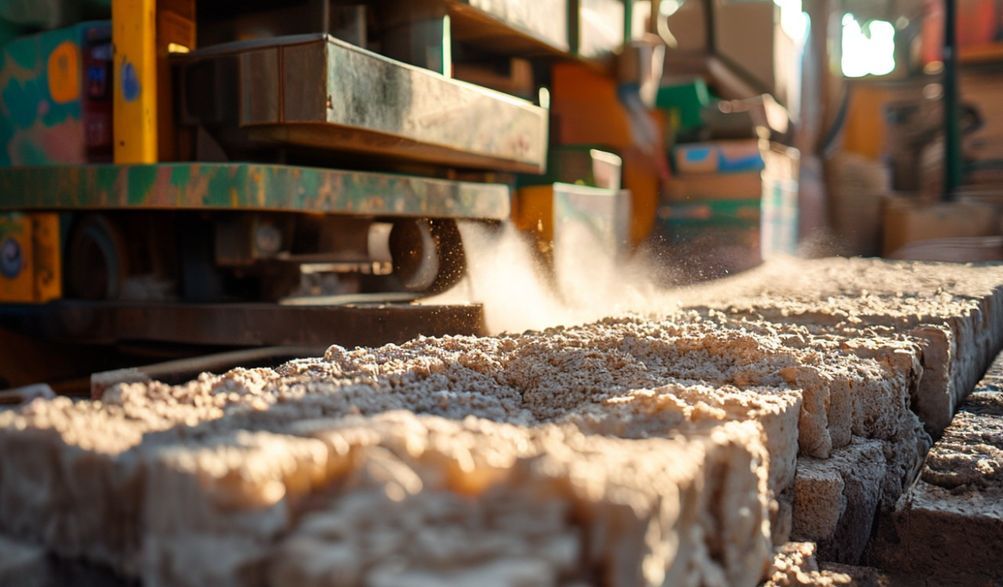
Votre guide des machines à fabriquer des blocs abordables dans les usines ghanéennes (2026)
Introduction
Le paysage urbain du Ghana est en pleine transformation. De l'effervescence d'Accra aux capitales régionales en pleine croissance, l'industrie de la construction est un moteur clé du développement national. À la base de cette croissance — littéralement — se trouvent les blocs de béton. Ils constituent les éléments essentiels de l'avenir du pays. Pour les entrepreneurs, les contracteurs et les promoteurs communautaires, cela représente une occasion en or. Cependant, le premier obstacle majeur est souvent la machinerie : comment trouver un équipement fiable etmachine à fabriquer des blocs bon marché au Ghanasans compromettre la qualité ?
Le défi est bien réel. Vous faites face à un investissement crucial, où la tentation d’un prix bas peut entrer en conflit avec la peur d’une machine qui tombe en panne en quelques mois, paralysant votre production et épuisant vos finances. Le marché regorge d’options, mais toutes ne se valent pas.
Ce guide est conçu pour couper à travers le bruit. Nous ne parlons pas seulement de trouver le prix le plus bas. Nous nous concentrons à vous aider à trouver le meilleurvaleur—des machines durables et efficaces provenant de fabricants réputésusines and suppliers right here in Ghana. Our goal is to equip you with the knowledge to make an informed, confident purchase that supports your business for years to come. Built on industry insights and practical local market knowledge, this is your roadmap to a smart investment.
Comprendre les machines de fabrication de blocs : types et applications
Before discussing price, it’s crucial to understand what you’re buying. The right machine type depends entirely on your scale, budget, and goals.
Machines à blocs manuelles
- Description et fonctionnement : These are the most basic, human-powered machines. They typically consist of a steel mould that you fill with concrete mix. You then use a lever to compress the mix and eject the finished block. All processes—filling, compacting, and removal—are done by hand.
- Sortie typique : Low volume, usually between 100-500 blocks per 8-hour day, heavily dependent on operator skill and stamina.
- Idéal pour : Absolute startups, very small-scale personal projects, community-led builds, or businesses with extremely limited initial capital. It’s a low-risk way to enter the market.
Machines à fabriquer des blocs semi-automatiques
- Description et fonctionnement : This category offers the best balance for most small to medium businesses. They use an electric or diesel engine to power a vibration system that compacts the concrete mix thoroughly and efficiently. While loading and block removal may still be manual or semi-assisted, the core compaction process is mechanized.
- Sortie typique : Significantly higher than manual machines, ranging from 800 to 2,500+ blocks per day, depending on model and crew size.
- Idéal pour : Growing businesses looking to scale production reliably. They offer a substantial upgrade in output and block consistency without the complexity and cost of a fully automated system.
Machines de fabrication de blocs entièrement automatiques
- Description et fonctionnement : These are industrial production lines. They automate the entire process: feeding raw material, mixing, conveying, compacting, curing, and stacking. They often include palletizing systems and require minimal human intervention.
- Sortie typique : Very high volume, capable of producing thousands of blocks per hour.
- Idéal pour : Large-scale commercial block factories and major construction firms supplying big projects. The investment is substantial, both in machinery and required infrastructure.
Key Machine Specifications to Know
Understanding these terms will help you compare models effectively:
- Output per Hour/Day: The theoretical production capacity. Real-world output is often 10-20% lower.
- Block Size Compatibility: What moulds are included? Can it produce standard 4″, 5″, 6″ blocks, hollow blocks, or interlocking paving stones?
- Exigences en matière d'alimentation électrique : Does it run on a single-phase or three-phase electric motor? Is there a diesel engine option, crucial for areas with unstable grid power?
- Mécanisme de vibration : The heart of the machine. Look for details on the vibration motor’s power (in kW or HP) and frequency. A strong, balanced vibration is key for dense, strong blocks.
The Real Meaning of “Cheap” in the Ghanaian Market
In the context of machinery, “cheap” must be redefined from “lowest price” to “best long-term value.” A smart purchase in Ghana considers the total ecosystem of cost, durability, and support.
Cheap Price vs. Total Cost of Ownership
The sticker price is just the beginning. The true cost includes:
* Coût initial :Le prix d'achat.
* Operating Cost: Fuel/electricity consumption.
* Maintenance Cost: Routine servicing, lubrication, and part replacements.
* Coût d'immobilisation The lost revenue when the machine is broken. This is often the highest hidden cost of a “cheap” machine.
* Disponibilité et coût des pièces : How easily and affordably can you get a replacement vibration table or hydraulic seal?
A machine that costs GHS 5,000 more upfront but runs for 5 years with minimal downtime is far “cheaper” than one that fails after 12 months and requires costly, hard-to-find repairs.
Common Pitfalls of Extremely Low-Cost Machines
Be wary of prices that seem too good to be true. They often signal compromises in:
* Construction : Thin, low-grade steel frames that warp under stress; poor-quality welds that crack.
* Composants de base : Weak, unbranded vibration motors that burn out; substandard engines.
* Parts: Non-standard fittings that are impossible to source locally, forcing you back to the original supplier at inflated prices.
* Support: Little to no after-sales service, warranty, or operator training.
Identifying Value-for-Money Machines
Look for these signs of a quality build:
* Construction robuste : Thick steel plates and square tubing; clean, consistent welds.
* Reputable Components: Recognizable brands for engines (e.g., Lister, Honda) and vibration motors.
* Supplier Reputation: A company with a physical location, a history of service, and willing client references.
Navigating Ghana’s Block Machine Factory & Supplier Landscape
Knowing where and how to look is half the battle. Ghana has a vibrant local industry for construction machinery.
Local Ghanaian Manufacturers vs. Imported Machines
- Local Factories/Assemblers (Pros):
- Easier after-sales support and service calls.
- Faster availability of spare parts.
- Understanding of local conditions and material specifications.
- Potential for negotiation and relationship building.
- Direct Import (Pros & Cons):
- Potential for lower initial price (but beware of shipping, customs, and taxes).
- Major Cons: No local support, complex logistics for repairs, potential mismatch with local power standards or raw materials.
For most buyers seeking a machine à fabriquer des blocs bon marché au Ghana, a reputable local supplier offers the best balance of value and security.
Key Industrial Hubs for Machinery in Ghana
Focus your search in these industrial clusters:
* Accra (Industrial Area, particularly around the Neoplan Station area): A major hub for machinery dealers, fabricators, and parts suppliers.
* Tema (Community 1 & Heavy Industrial Area): Home to many manufacturing and assembly workshops.
* Kumasi (Suame Magazine): One of West Africa’s largest informal industrial technology hubs, known for fabrication and repair.
* Takoradi: A growing center supporting the construction and oil/gas industries.
How to Vet a Factory or Supplier
Don’t just call—investigate. Use this checklist:
1. Request a Factory/Workshop Visit: A legitimate operation will welcome this. See their production capability firsthand.
2. Ask for Client References: Get 2-3 contacts of recent buyers and call them. Ask about machine performance and supplier responsiveness.
3. Inspect the Physical Premises: Do they have a showroom? A workshop for repairs? This indicates stability.
4. Verify After-Sales Service: Do they have dedicated service technicians? What is their typical response time? Is training provided?
Essential Checklist Before Buying Your Machine
Arm yourself with this practical list before making any payments.
Site & Production Assessment
Answer these questions first:
* What is my available workspace and foundation like?
* Do I have reliable single-phase or three-phase electricity, or will I need a diesel option?
* What is my realistic target output per day (e.g., 1,000 blocks)?
* What block types do my customers demand? (Solid, hollow, interlocking paving stones?).
Machine Inspection Points
When you see a potential machine:
* Physical Check:
* Tap the frame—does it sound solid or tinny?
* Inspect weld points for consistency and lack of cracks.
* Check the thickness of the mould walls and the overall structure.
* Note the brands of the engine, motor, and bearings.
* The Live Test (CRUCIAL):
* Insist on a demonstration using materials you bring or that are typical in Ghana (local sand and gravel).
* Observe the vibration: it should be powerful and even, not shaky or noisy.
* Examine the finished block: it should be dense, have sharp edges, and release cleanly from the mould.
Supplier Service Agreement
Negotiate and get these terms in writing:
* Garantie : A minimum of 6-12 months on major parts.
* Pièces de rechange : Guarantee of availability for critical components (vibration motor, moulds, shafts) for at least 3-5 years.
* Formation : At least half a day of on-site training for your operators.
* Service Response Time: A clear agreement (e.g., “within 48 hours in Greater Accra”).
Maximizing Your Investment: Tips for Operation & Maintenance
Your relationship with the machine begins after purchase. Proper care determines its lifespan.
Proper Setup and Operator Training
- Ensure the machine is placed on a perfectly level, solid concrete foundation to prevent stress and misalignment.
- Invest time in training your operators on safe and correct procedures. A knowledgeable operator can prevent most breakdowns.
Routine Maintenance Schedule
- Daily: Clean the machine thoroughly at the end of each shift. Check for loose bolts and nuts.
- Weekly: Lubricate all moving parts as per the manual. Inspect moulds for wear or damage.
- Monthly: Tighten all major bolts and fasteners. Check the tension of belts and the condition of the vibration springs.
Sourcing Quality Raw Materials
- The machine can only produce blocks as good as the mix. Use well-graded, clean sand and gravel.
- Impurities or oversized stones can damage the mould and affect block consistency.
- Consistent cement quality is non-negotiable for structural integrity.
Foire aux questions (FAQ)
Q1: What is the actual price range for a good, cheap block making machine in Ghana?
A : As of 2026, for a quality machine that offers true value, expect these realistic ranges:
* Machines manuelles : GHS 3,500 – GHS 8,000.
* Semi-Automatic Machines (the sweet spot for value): GHS 15,000 – GHS 45,000, depending on output capacity and configuration.
A “good and cheap” machine falls within these ranges—significantly lower should raise immediate questions about quality.
Q2: Can I get a reliable automatic block making machine at a cheap price?
A : Truly reliable, fully automatic block making plants represent a major industrial investment, often starting from GHS 150,000 and going far higher. Machines marketed as “cheap automatics” often have high hidden costs in maintenance, complex operation, and part scarcity. For most businesses, a high-quality semi-automatic machine offers the best balance of output, reliability, and value.
Q3: How do I handle repairs if my machine breaks down?
A : This underscores the importance of your supplier choice. Prioritize suppliers with a proven local service network. For minor issues, a well-trained operator can perform basic troubleshooting. For major repairs, your service agreement should kick in. Always insist on using genuine or recommended spare parts.
Q4: Are there any financing options available from Ghanaian suppliers?
A : Some established and reputable suppliers do offer flexible payment plans or installment options to help with cash flow. Others may have partnerships with financial institutions. This is not universal, so it’s a key question to ask during your vetting process. Be prepared to discuss a down payment.
Conclusion
Finding a machine à fabriquer des blocs bon marché au Ghana is ultimately a exercise in smart, informed sourcing. It’s about looking beyond the initial price tag to evaluate durability, service, and the total cost of ownership. By focusing on reputable usines and suppliers who stand behind their products, you invest not just in a piece of equipment, but in the foundation of your business’s productivity and reputation.
Use the checklists and insights in this guide as your toolkit. Visit multiple suppliers in Accra, Tema, or Kumasi. Prioritize the machine that promises—and demonstrates—reliable performance. Your goal is a profitable, sustainable block production business, and that starts with the right partner and the right machine.
Ready to start your search? Bookmark this guide, use our vetting checklist, and take the first step towards building a profitable block production business. For more in-depth guides on machinery maintenance or optimal block mix designs, explore our other resources.
<