
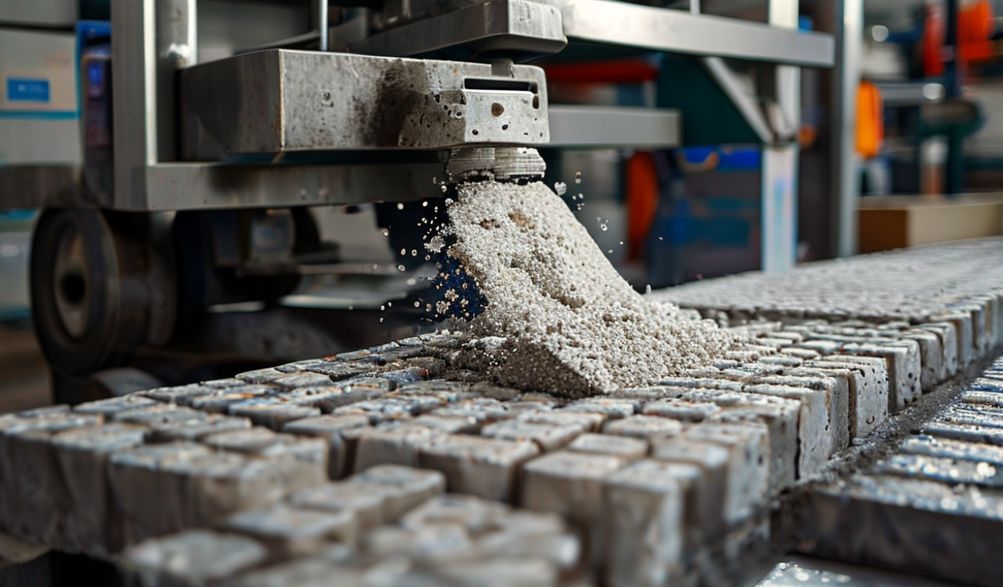
Votre guide pour trouver la meilleure machine à fabriquer des blocs de béton en vente à Lagos | Focus sur l'usine FUDA
Introduction
Lagos est une ville en perpétuelle construction. Du projet ambitieux d'Eko Atlantic City aux vastes domaines résidentiels de Lekki, en passant par les projets d'infrastructure essentiels sur le continent, la demande en matériaux de construction de haute qualité est insatiable. Au cœur de ce boom de la construction se trouve un équipement crucial : la machine à fabriquer des blocs de béton. Pour les entrepreneurs, les promoteurs et les chefs d'entreprise, choisir la bonne machine n'est pas simplement un achat ; c'est un investissement commercial décisif qui dicte la capacité de production, la qualité des produits et la rentabilité à long terme.
Dans ce marché dynamique, des noms commeFUDAapparaissent fréquemment parmi les options de machinerie pour la fabrication de briques et de blocs. En tant que fabricant notable avec une présence mondiale, l'équipement de FUDA fait partie des discussions pour de nombreux acheteurs basés à Lagos. Mais comment naviguer cet investissement important avec sagesse ?
Ce guide constitue votre ressource experte et complète. Fondé sur l'analyse des pratiques du secteur, des spécifications techniques et des réalités uniques d'exploitation à Lagos, il vise à vous doter de connaissances pertinentes. Nous détaillerons les types de machines, les critères à rechercher sur le marché local, nous examinerons objectivement FUDA comme option possible, et vous fournirons une liste de contrôle pratique pour garantir que votre investissement serve votre entreprise et non vos soucis. Notre objectif n'est pas de vous vendre une marque spécifique, mais de vous offrir le cadre nécessaire pour prendre une décision éclairée et en toute confiance.
Comprendre vos besoins : Types de machines à fabriquer des blocs de béton
Avant même de regarder un nom de marque ou une étiquette de prix, vous devez définir vos besoins. La « meilleure » machine est celle qui correspond parfaitement à l'échelle de votre projet, à votre budget et à votre capacité opérationnelle.
Manuel vs Semi-Automatique vs Entièrement Automatique - Machines à Blocs
Le niveau d'automatisation est le principal facteur de différenciation, influençant directement la production, la main-d'œuvre et les coûts.
-
Machines manuelles pour la fabrication de blocs :
- Opération :Entièrement actionné par la main-d’œuvre. Les opérateurs remplissent manuellement le moule, compriment le mélange (souvent à l’aide d’un levier) et démoulent le bloc.
- Production et main-d'œuvreTrès faible rendement (généralement 100 à 500 blocs par quart de 8 heures). Travail intensif et physiquement exigeant.
- Idéal pour :Micro-entreprises, projets à très petite échelle, ou comme machine de démarrage pour les entrepreneurs avec un capital extrêmement limité. C'est un outil de validation de concept plutôt qu'un actif de haute production.
-
Machines à fabriquer des blocs semi-automatiques :
- Opération :Un modèle hybride. Les processus clés comme la vibration et la compression sont mécanisés (alimentés à l'électricité ou au diesel), mais les tâches telles que l'alimentation en matière première et le retrait des blocs finis sont souvent manuelles.
- Production et main-d'œuvreProduction moyenne (peut varier de 800 à 3 000+ blocs par quart de 8 heures, selon le modèle). Nécessite moins de travail physique mais requiert toujours plusieurs opérateurs.
- Idéal pour :Les cours de production de blocs de petite à moyenne taille, les entreprises de construction en croissance et les entrepreneurs qui ont besoin d’une production fiable et constante sans l’investissement en capital requis pour une automatisation complète. C’est souvent le « point idéal » pour de nombreuses entreprises basées à Lagos.
-
Machines à fabriquer des blocs entièrement automatiques :
- Opération :Lignes de production commandées par ordinateur ou automatisées par API. Elles automatisent le dosage, le mélange, le moulage, la cuisson et l'empilage. Incluent souvent des circulateurs de palettes et des empileurs.
- Production et main-d'œuvreProduction élevée à très élevée (4 000 à 20 000+ blocs par quart de 8 heures). Nécessite un travail manuel minimal, principalement pour la supervision et la maintenance.
- Idéal pour :Les usines de fabrication de grands blocs, les projets à l'échelle industrielle et les investisseurs visant à dominer la chaîne d'approvisionnement. Le fort investissement initial est justifié par une échelle massive et un coût de main-d'œuvre par unité réduit.
Spécifications clés de la machine à décoder
Lorsque vous comparez des modèles, vous rencontrerez une liste de spécifications. Voici ce qu'elles signifient réellement pour votre entreprise :
- Capacité de production (blocs/heure) :La production théorique maximale dans des conditions idéales.La production réelle est souvent inférieure de 15 à 25 %.Prévoyez du temps d'arrêt pour les changements de moule, l'entretien et le chargement des matériaux.
- Temps de cycle : The time it takes to produce one cycle of blocks (e.g., 15-20 seconds). A shorter cycle time means higher potential output.
- Dimension de la palette : The metal plate the blocks are formed on. Standard sizes exist, but ensure the machine’s pallet size matches the block sizes you intend to produce.
- Mold Types: This defines your product range. Most machines support interchangeable molds for:
- Hollow Blocks (6″, 9″)
- Blocs pleins
- Interlocking Blocks (for mortar-less construction)
- Paving Slabs / Kerbstones
- Puissance du moteur : Measured in kW or HP. Determines the machine’s vibration force and compression strength, which directly affects block density and quality. Ensure your power source can handle it.
The Lagos Market: What to Look for When Buying Locally
Buying heavy machinery in Lagos requires a blend of technical knowledge and street-smart diligence. The market is a mix of genuine opportunities and potential pitfalls.
Navigating Suppliers, Dealers, and Factories in Lagos
You’ll typically encounter three main channels:
- Direct Factory Sales: Some international manufacturers, like FUDA, may have local representatives or sell directly to large clients. This can sometimes mean better pricing but requires thorough verification of the local contact’s legitimacy.
- Authorized Local Dealers: These are companies officially appointed by the manufacturer to sell, install, and service machines. This is often the safest route for after-sales support.
- Independent Equipment Suppliers/Used Market: A vast arena with varying levels of reliability. You might find good deals on used or new machines, but the risk is higher.
Verification Tips:
* Ask for Proof: Request a letter of authorization from the manufacturer if they claim to be a direct dealer.
* Visit Their Showroom/Warehouse: A legitimate business has a physical location you can visit.
* Check Track Record: Ask for references from past clients in Nigeria or West Africa and actually call them.
* Search Online Reviews & Complaints: Look beyond the company’s own website.
Critical Factors for Lagos-Based Operations
Your machine doesn’t operate in a vacuum. These local factors are as important as the machine specs.
- Compatibilité de l'alimentation électrique : Lagos’s power grid is unpredictable.
- Electric Machines: Cheaper to run but vulnerable to outages. A robust inverter or generator backup is non-négociable.
- Diesel-Powered Machines: Higher fuel cost but offer independence from the grid. Ideal for areas with chronic power issues.
- Modèles hybrides : Some machines offer dual power options (electric/diesel), providing valuable flexibility.
- Disponibilité des matières premières : Your machine is only as good as the concrete mix you feed it.
- Test the machine with local sand and aggregates during a demonstration. The particle size and quality in Lagos can differ from what the machine was tested with in the factory.
- Ensure the machine’s mixer can handle the consistency and moisture content of your locally sourced materials.
- After-Sales Support & Service: This is the #1 deal-maker or breaker.
- Support technique local : Is there a trained engineer based in Lagos or at least in Nigeria? How quickly can they respond to a breakdown?
- Spare Parts Inventory: Are common wear-and-tear parts (like springs, seals, mold liners) stocked locally? If not, what is the lead time for ordering from abroad?
- Warranty Terms: Get the warranty in writing. Understand what it covers (parts, labor) and the process for making a claim.
An In-Depth Look at FUDA Brick Making Machines
Let’s apply a balanced, analytical lens to FUDA as an example of a manufacturer you might encounter in your search.
Overview of FUDA as a Machinery Manufacturer
Based on publicly available information from their corporate channels, FUDA is a Chinese machinery manufacturing company that produces a range of construction equipment, including concrete block making machines, brick presses, and mixers. They have been exporting machinery internationally for years, including to markets in Africa and potentially Nigeria.
It’s important to state clearly: This analysis is based on general industry knowledge and publicly available data about such manufacturers, not on a paid promotion or exclusive partnership. Any buyer must conduct their own due diligence on the specific supplier they are engaging with.
Common FUDA Machine Models & Their Suitability for Lagos
While specific availability in Lagos must be confirmed with local sellers, manufacturers like FUDA typically offer a range. Here’s a generalized analysis of what such models might entail:
-
Model Example: Semi-Automatic Block Machine (e.g., a model producing 4-6 blocks per cycle)
- Avantages : Lower capital investment, simpler mechanics that local technicians may find easier to repair, good output for a small-to-medium yard. Often more adaptable to variable power and raw materials.
- Inconvénients : Higher manual labor requirement than automatic models, output is limited by operator speed.
- Best for Lagos Profile: The growing contractor starting their own block yard, or a small-scale manufacturer supplying a local community.
-
Model Example: Fully Automatic Block Production Line
- Avantages : Very high, consistent output with minimal labor. Produces high-density, commercial-grade blocks. Can be a major competitive advantage.
- Inconvénients : High initial investment. Complex electronics and software require specialized (and reliably available) technical support. Absolutely dependent on stable power or a large-capacity generator.
- Best for Lagos Profile: The established block factory owner looking to scale up significantly, or a large real estate developer producing blocks for their own projects.
Considération clé : For any international brand like FUDA, the local dealer or representative is more critical than the brand itself in Lagos. A great machine with poor local support is a bad investment. A good machine with exceptional local service is gold.
Making a Smart Investment: The Buyer’s Checklist
Arm yourself with this actionable checklist before you sign any contract or make a payment.
Pre-Purchase Inspection and Questions to Ask
The Inspection:
* Demand a Live Demo: See the machine run. Feed it with a mix similar to what you’ll use.
* Inspect Build Quality: Look at the thickness of steel frames, the quality of welds, and the robustness of the vibration table and mold assembly.
* Check Critical Components: Identify the brand of the motor, hydraulic pump, and PLC controller. Are they reputable, known brands (e.g., Siemens, Schneider) or generic?
The Questions:
1. “Can you provide contact details for 2-3 clients in West Africa who have bought this model in the last 2 years?”
2. “What is included in the delivery price? (FOB? CIF? Installation? Training?)”
3. “How long is the warranty and what exactly does it cover? What is the process if a covered part fails?”
4. “Who is your local service engineer? Can I meet them? Where is your spare parts warehouse?”
5. “Do you offer operator and maintenance training? Is it on-site?”
Total Cost of Ownership (Beyond the Sticker Price)
The purchase price is just the entry fee. Calculate these ongoing costs:
* Installation et mise en service : Fees for technicians to set up and calibrate the machine.
* Foundation & Site Prep: Many machines require a solid, leveled concrete foundation.
* Consommation d'énergie : Calculate the cost of diesel or electricity per month based on your planned production hours.
* Routine Maintenance: Budget for regular lubrication, part replacements, and servicing.
* Pièces de rechange : Set aside a capital reserve for unexpected breakdowns.
* Formation des opérateurs : The cost of inefficient or damaging operation is high.
Remember: The machine with the lowest sticker price but high maintenance costs and frequent downtime will ultimately be more expensive than a slightly pricier, more reliable machine.
Foire aux questions (FAQ)
Q1: What is the approximate price range for a concrete block making machine in Lagos?
A : Prices vary dramatically. A basic manual machine can start from ₦500,000. A quality semi-automatic machine might range from ₦3 million to ₦10 million. Fully automatic production lines can start from ₦15 million and go upwards of ₦50 million or more. Always get detailed quotations and compare the total package—price, specs, and support.
Q2: Can FUDA machines produce different types of blocks (interlocking, hollow, etc.)?
A : Typically, yes. Most modern block machines from major manufacturers use a system of interchangeable molds. The critical question for the seller is: “Which specific molds are included in the quoted price, and what is the cost and lead time for additional molds (e.g., for interlocking blocks)?”
Q3: How do I ensure I get genuine spare parts and service in Lagos?
A : Purchase through the manufacturer’s verifiably authorized dealer. Insist on a written service-level agreement (SLA) that outlines response times. Before buying, visit the dealer’s proposed workshop to assess their technical capability and parts inventory.
Q4: Are there financing options available for such machinery in Nigeria?
A : Yes, options exist. Inquire directly with the equipment supplier, as some have partnerships with finance houses. Many Nigerian banks offer equipment leasing or loan facilities for SMEs. Additionally, explore programs from the Bank of Industry (BOI) or other government initiatives designed to support capital acquisition for small and medium businesses.
Conclusion
Choosing the right concrete block making machine in Lagos is a multi-layered decision. It begins with a clear-eyed assessment of your business needs and scale, followed by a technical understanding of the machinery itself. Navigating the local market demands diligence—verifying suppliers, prioritizing after-sales support, and planning for Lagos-specific challenges like power and materials.
While brands like FUDA represent one option in a global marketplace, your ultimate success hinges less on the logo on the machine and more on the quality of the local partnership backing it up. A reliable, capable, and trustworthy local support system is an asset more valuable than any single machine feature.
Use this guide as your framework. Take your time. Contact multiple reputable suppliers, request detailed demonstrations and quotations, and never underestimate the power of speaking to a past customer. By investing this effort upfront, you invest in the long-term productivity and profitability of your business, building a stronger foundation for your success in Lagos’s ever-growing construction landscape.
<