
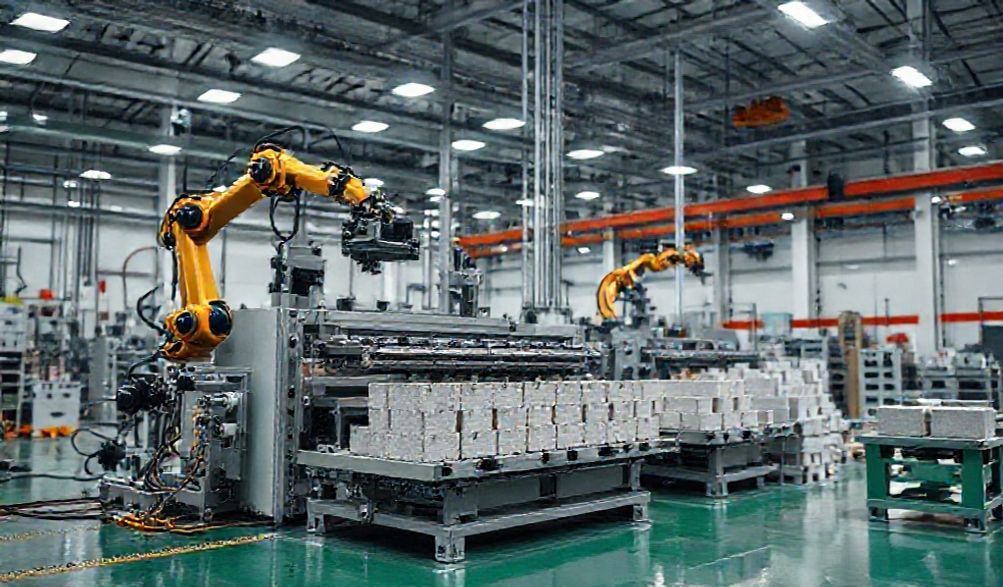
Your Ultimate Guide to China Block Making Machine Factories: A Deep Dive into FUDA Block Machine Factory
Introduction
The global construction industry is a relentless engine of growth, demanding ever-more efficient and reliable machinery to build our cities and infrastructure. At the heart of this progress lies a critical piece of equipment: the block making machine. For decades, China has solidified its position as the world’s manufacturing powerhouse, and this is profoundly true for construction machinery. For any business looking to source this essential equipment, navigating the vast landscape of Chinese manufacturers can be a daunting task of separating market leaders from the rest.
This guide zeroes in on that challenge, focusing on the specialized world of block making machine factories in China. We will use Usine de machines à blocs FUDA as a detailed case study—a prominent name that exemplifies the strengths of China’s top-tier manufacturers. Our goal is to provide you with more than just a supplier profile; we aim to equip you with a framework for evaluation and the critical questions to ask, transforming a complex sourcing decision into a strategic, informed process.
This analysis is built on a foundation of industry research, a review of technical specifications and manufacturing trends, and an understanding of international procurement and supply chain best practices, designed to guide you toward a trustworthy partnership.
Why China is the Global Hub for Block Making Machinery
Understanding why China dominates this sector is the first step in making a smart sourcing decision. The reasons are multifaceted, stemming from decades of focused industrial development.
Échelle et Écosystème de Fabrication
China’s advantage begins with its unparalleled industrial ecosystem.
* Industrial Clusters: Regions like Fujian, Shandong, and Guangdong host dense clusters of machinery manufacturers, component suppliers, and raw material providers. This concentration drastically reduces logistics costs and lead times for factories.
* Chaines d'approvisionnement intégrées : A block making machine requires everything from high-grade steel and hydraulic systems to precision molds and electrical panels. In China, these supply chains are deeply integrated and highly competitive, allowing factories to source quality components efficiently and cost-effectively.
* Bassin de main-d'œuvre qualifiée : Decades of focus on manufacturing have cultivated a vast and skilled workforce, from welders and assemblers to mechanical and electrical engineers specialized in heavy machinery.
Avancement technologique et innovation
The narrative of Chinese manufacturing as purely low-cost is outdated. The industry has undergone a significant transformation.
* De l'imitation à l'innovation : Leading factories have moved far beyond reverse engineering. They now invest heavily in in-house R&D to develop proprietary control systems, more efficient vibration technologies, and smarter, more durable machine designs.
* Automation and Smart Features: Modern Chinese block machines often feature fully automated production lines, robotic pallet handling, and PLC (Programmable Logic Controller) systems from global leaders like Siemens or Schneider. IoT integration for remote monitoring and diagnostics is becoming a standard offering from top manufacturers.
* Focus on Sustainability: Energy efficiency is a key selling point. Innovations in hydraulic systems and motor designs aim to reduce power consumption without compromising output, aligning with global environmental and operational cost concerns.
Rentabilité et Tarification Compétitive
This remains a fundamental driver, but it’s crucial to understand its source.
* Économies d'échelle : The massive domestic and international demand allows factories to achieve production volumes that lower per-unit costs significantly.
* Efficacité de la chaîne d'approvisionnement : As mentioned, localized clusters reduce intermediate costs. This efficiency, rather than a compromise on quality, is a primary source of the competitive pricing.
* Proposition de valeur : The market offers a wide spectrum. While budget options exist, the real value lies in factories that balance advanced technology, reliable construction, and robust service with a competitive price—a balance that defines the best manufacturers.
Key Factors When Choosing a Block Machine Factory in China
Selecting the right partner requires a due diligence checklist that goes beyond a website or Alibaba storefront. Here are the critical pillars to evaluate.
Évaluation de l'expertise technique et de la capacité de R&D
A factory’s engineering prowess dictates the machine’s performance and longevity.
* Équipe d'ingénierie : Inquire about the size and qualifications of the in-house engineering and R&D team. Do they have the capability to modify standard designs?
* Personnalisation : Can they adapt machines for unique block sizes, shapes (e.g., interlocking, grass pavers), or specific local raw materials (e.g., fly ash, crushed aggregate)?
* Patent Portfolio: The presence of registered patents for machine components or control systems is a strong indicator of genuine innovation and technical depth.
Quality Control and Manufacturing Standards
This is non-negotiable for heavy machinery that must operate under constant stress.
* Certifications : Look for international quality management system certifications like ISO 9001. This indicates a systematic, documented approach to quality.
* Component Brands: Reputable factories proudly specify the brands of core components. Premium hydraulic systems, renowned PLCs (Siemens, Mitsubishi), and reliable electrical parts (Schneider, Omron) are markers of quality intent.
* In-House Testing: Ask about their testing protocols. Do they conduct full assembly and test runs before disassembly for shipping? Is there a quality inspection checklist for each production stage?
Production Capacity and Lead Times
Your project timeline depends on their operational reliability.
* Factory Tour (Virtual or Physical): Assess the size and organization of the production floor. A busy, orderly factory is a good sign.
* Realistic Schedules: A trustworthy factory will provide a realistic production timeline, accounting for component sourcing and assembly. Be wary of promises that seem too good to be true.
* Capacity Transparency: They should be able to tell you their current capacity and queue, ensuring they can handle your order without overextending.
After-Sales Service and Support
For international buyers, this is arguably the most critical factor. The machine’s value is only realized when it’s running smoothly at your site.
* Installation et formation : Will they send engineers to supervise installation and conduct comprehensive training for your operators? What are the cost terms for this service?
* Garantie : Scrutinize the warranty terms. What is covered (parts, labor)? What is the duration (typically 12-18 months)? What are the procedures for a claim?
* Politique relative aux pièces de rechange : How quickly can they ship common wear-and-tear parts? Do they maintain a recommended inventory list for buyers? Is there an online portal for parts ordering?
Spotlight on FUDA Block Machine Factory: An In-Depth Analysis
Let’s apply the above framework to a concrete example. FUDA Block Machine Factory represents the caliber of manufacturer that has evolved to meet global standards.
Company Profile and Legacy
Established with a focus on construction machinery, FUDA has built its reputation over years of operation in China’s industrial landscape. The company operates from a sizable manufacturing facility, housing dedicated workshops for fabrication, assembly, painting, and testing. This vertical integration allows for greater control over the production process. Their longevity in the market suggests resilience, accumulated experience, and an established supply chain network.
Core Product Range and Technical Specifications
FUDA’s catalog typically encompasses the range needed for a modern block production yard:
* Machines à fabriquer des blocs entièrement automatiques : These are the flagship products, often featuring computer-controlled, synchronized operations from material feeding to curing rack stacking. Output capacities can range significantly, catering to both medium and large-scale projects.
* Concrete Paver and Interlocking Block Machines: Specialized machines designed for producing high-precision paving stones, curb stones, and interlocking landscape blocks.
* Machines à blocs creux : Focused on producing standard and customized hollow blocks for construction, a staple in many markets.
* Machines à blocs mobiles : Offering flexibility for on-site production, though with generally lower output than stationary plants.
Technically, their machines are known to incorporate:
* Robust structural frames made from reinforced steel.
* High-efficiency vibration systems for optimal material compaction.
* PLC control systems for ease of operation and troubleshooting.
* Options for various mold configurations.
FUDA’s Commitment to Quality and Innovation
FUDA positions itself on a foundation of quality control. This is demonstrated through:
* A stated adherence to ISO quality management principles in their manufacturing process.
* The use of standardized, quality component brands in critical systems, which they are typically transparent about in their specifications.
* A final comprehensive testing protocol where each machine is assembled and test-run before shipment to ensure all systems are functional.
Their innovation is often showcased in their machine designs aimed at improving user-friendliness, reducing maintenance points, and enhancing the overall durability of the equipment.
Portée mondiale et portefeuille de projets
A key trust signal is a factory’s export experience. FUDA, like its peers, has cultivated a client base across diverse regions, including:
* Africa
* Southeast Asia
* The Middle East
* South America
This global footprint indicates an ability to handle export documentation, logistics, and, importantly, an understanding of different market requirements and material conditions. They often showcase a portfolio of project case studies—such as supplying equipment for large-scale housing developments, infrastructure projects, or commercial block yards—which serves as tangible proof of their machines’ capabilities in real-world conditions.
The Procurement Process: From Inquiry to Delivery
Navigating the procurement journey methodically minimizes risk and sets the stage for a successful partnership.
Making an Effective Inquiry
A vague inquiry leads to an inaccurate quote. Provide a detailed project brief:
* Desired block types, sizes, and required output (blocks per hour/day).
* Available raw materials (cement type, aggregate size, potential additives like fly ash).
* Level of automation required (manual, semi-automatic, fully automatic).
* Your local power supply specifications (voltage, phase).
* Target budget range and intended project timeline.
Negotiation and Contract Clarity
The contract is your safeguard. Ensure it explicitly details:
* Payment Terms: Common structures are T/T (Telegraphic Transfer) with a deposit (e.g., 30%), balance before shipment, and possibly a retention percentage. Letters of Credit (L/C) are also common for larger orders.
* Incoterms: Clearly define responsibilities. FOB (Franco à bord) is standard, where your responsibility and risk begin once the goods are loaded on the ship at the Chinese port. CIF (Coût, assurance et fret) means the supplier arranges and pays for shipping to your port.
* Garantie : As discussed, include full terms, scope, and claim process.
* Penalty Clauses: For significant delays in delivery, there should be predefined penalties.
Pre-Shipment Inspection and Factory Audit
Never skip this step. Options include:
* Hiring a Third-Party Inspection Company: (e.g., SGS, Bureau Veritas) to conduct a pre-shipment inspection against agreed-upon standards and the purchase order.
* Sending Your Own Representative: To audit the factory, check the machine’s test run, and verify the packing for ocean freight.
* Virtual Audit: If travel isn’t possible, request a live video walkthrough of the completed machine, its test run, and the packing process.
Logistics, Shipping, and Customs Clearance
- Freight Forwarder: It is highly advisable to engage a reliable freight forwarder with experience in heavy machinery. They handle booking, documentation, and customs brokerage.
- Documentation: The factory must provide a clean set of shipping documents: Commercial Invoice, Packing List, Bill of Lading, and Certificate of Origin.
- Customs Clearance: Your local agent will handle this using the provided documents. Ensure you understand any import duties, taxes, or certifications required for machinery in your country.
Maximizing Your Investment: Operation and Maintenance
Your relationship with the factory continues long after delivery. Proper operation and maintenance are key to ROI.
Best Practices for Machine Operation
- Proper Foundation: Ensure the machine is installed on a level, reinforced concrete foundation as per the factory drawings to prevent stress and misalignment.
- Material Consistency: Maintain a consistent mix design. Fluctuations in raw material quality or moisture content are a primary cause of production issues.
- Formation des opérateurs : Leverage the training provided. Well-trained operators can identify minor issues before they become major breakdowns.
Routine Maintenance Schedules
Follow the factory’s maintenance manual diligently. A basic preventive schedule includes:
* Daily: Lubricate all moving parts as per the lubrication chart. Check hydraulic oil levels and for leaks. Clean the machine.
* Weekly/Monthly: Tighten bolts and check for wear on high-stress components like molds, vibration shafts, and conveyor belts.
* Annually: Consider a comprehensive check, potentially with guidance from the supplier, including hydraulic oil replacement and system pressure checks.
Sourcing Genuine Spare Parts
Always source spare parts, especially for critical components, directly from the original factory like FUDA.
* Compatibility: OEM parts are engineered for your specific machine model.
* Warranty Protection: Using non-genuine parts can void your remaining warranty.
* Fiabilité : It ensures performance and longevity, preventing costly downtime from part failure.
Foire aux questions (FAQ)
Q1: What is the typical price range for a block making machine from a Chinese factory like FUDA?
A : Prices vary dramatically based on automation, output (from 1,000 to over 20,000 blocks per 8-hour shift), and configuration. A small manual machine may start around $15,000, while a large, fully automatic production line can exceed $150,000. Always request a detailed, itemized quotation based on your specific needs.
Q2: How can I verify the credibility of a factory like FUDA before visiting?
A : Cross-reference their business license on platforms like Alibaba’s Verified system. Ask for 2-3 client references in a region similar to yours and actually contact them. Request detailed case studies with photos/videos of installed machines. Verify any claimed certifications by asking for the certificate number.
Q3: Do factories provide installation and training services overseas?
A : Reputable factories do. This is usually a separate service line. The contract must specify the number of engineer-days provided, who covers their airfare, accommodation, and daily allowance, and the scope of the training. Never assume it’s free unless explicitly stated.
Q4: What are the most common challenges when importing heavy machinery from China?
A : Key challenges include: logistical delays at ports, navigating complex customs clearance in your country, potential language barriers during technical discussions, and cultural differences in business communication. Mitigate these by using an experienced freight forwarder and maintaining clear, written communication.
Q5: Can factories customize machines for specific block types or raw materials?
A : Yes, leading factories with strong R&D teams regularly perform customizations. This can include special mold designs, adjustments to vibration frequency and pressure for different material mixes, or modifications to handling systems. Provide as much technical detail as possible during the inquiry stage.
Conclusion
Sourcing a block making machine from China is a significant investment that, when done correctly, can provide a formidable competitive advantage. The journey requires moving beyond a simple price comparison to a holistic evaluation of a factory’s technical expertise, quality ethos, and—most importantly—its commitment to long-term after-sales support.
As our analysis shows, factories like Usine de machines à blocs FUDA embody the advanced manufacturing capabilities, scale, and global mindset that define China’s leading exporters. They represent the viable, professional end of the market. Your success, however, will hinge on your own due diligence: clear communication, meticulously defined contracts, and a proactive approach to logistics and maintenance.
Use this guide as your foundational checklist. Then, take the next step: conduct direct research, prepare your detailed project requirements, and start conversations with potential partners. The right machine and the right factory are out there, ready to build the foundation of your next project.
<