
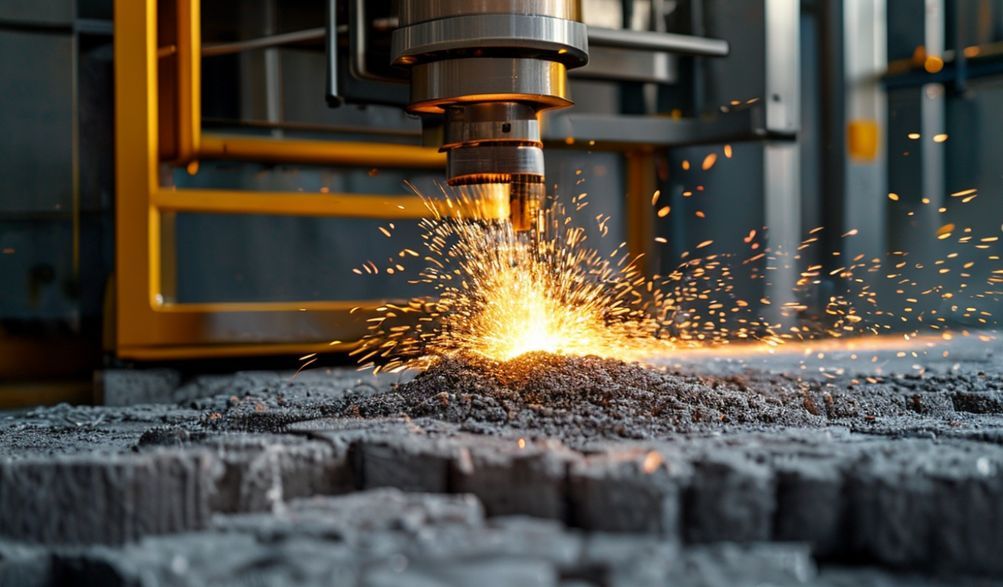
Le Guide Ultime des Machines à Fabriquer des Blocs de Dalle en Béton : Types, Avantages et Comment Choisir
Introduction
L'industrie mondiale de la construction est engagée dans une course perpétuelle contre le temps et le budget. Au cœur d'innombrables projets—des revêtements de sol résidentiels et des pavages urbains aux cours industrielles et aux murs de clôture—se trouve un composant fondamental : la dalle et le bloc de béton. Les méthodes traditionnelles de coulage manuel de ces éléments essentiels sont de plus en plus intenables, entravées par une production lente, des coûts de main-d'œuvre élevés et des incohérences frustrantes dans la qualité. Pour les entrepreneurs, les constructeurs et les chefs d'entreprise, ce goulot d'étranglement représente un défi majeur pour la rentabilité et l'évolutivité.
Voici la solution moderne : leMachine à fabriquer des blocs de dalle en bétonCet équipement ingénierisé transforme le mélange de béton brut en éléments de construction précis et à haute résistance avec une efficacité remarquable. Il constitue la pierre angulaire de la production de béton préfabriqué, répondant à la demande de rapidité, de cohérence et de maîtrise des coûts.
Ce guide complet est conçu pour aller à l'essentiel. S'appuyant sur les meilleures pratiques du secteur et des connaissances techniques, il offre des conseils d'experts et fiables à toute personne souhaitant investir dans cette technologie transformative. Que vous soyez un entrepreneur cherchant à internaliser la production, un chef d'entreprise lançant une activité de fabrication de blocs, ou un chef de projet en quête d'équipements, vous découvrirez :
- Ce que sont ces machines et comment elles fonctionnent.
- Les avantages indéniables qu'ils procurent.
- Les différents types disponibles sur le marché.
- Une liste de contrôle détaillée et actionnable pour choisir le bon modèle.
- Conseils essentiels pour l'exploitation et la maintenance.
Construisons une base de connaissances pour votre prochain investissement intelligent.
Qu'est-ce qu'une machine à fabriquer des blocs de dalle en béton ?
À son cœur, uneMachine à fabriquer des blocs de dalle en bétonest un système mécanisé conçu pour automatiser et optimiser la fabrication de produits en béton. Il utilise une combinaison de vibrations et de haute pression pour compacter un mélange de béton semi-sec dans un moule, produisant des dalles, des blocs, des pavés, des bordures et d'autres éléments préfabriqués uniformes.
Le processus, bien que sophistiqué dans son exécution, suit une séquence logique :
- Alimentation :Le mélange de béton brut (ciment, granulats, sable et eau minimale) est chargé dans une trémie.
- Moulage :Le mélange est transféré dans un moule ou une cavité de forme et de taille spécifiques.
- Compactage :C'est la phase critique. Des moteurs vibrants puissants tassent le mélange, éliminant les poches d'air, tandis qu'une presse hydraulique ou mécanique exerce une force descendante substantielle (mesurée en tonnes). Cette double action garantit une densité et une résistance maximales.
- Éjection :Le bloc fraîchement formé et compacté est soulevé ou poussé hors du moule sur une palette ou au sol.
- Guérison :Les blocs sont ensuite déplacés vers une zone de cure, où ils gagnent en résistance au fil du temps grâce à une hydratation contrôlée, souvent facilitée par de la vapeur ou des pulvérisations d'eau.
Applications principalescar ces machines sont immenses :
* Construction :Production de blocs pour murs, de blocs creux pour la construction renforcée et de grandes dalles pour les systèmes de plancher.
* Infrastructure & Aménagement Paysager :Fabrication de pavés, de dalles imbriquées pour les allées et les trottoirs, de bordures et d'éléments de murs de soutènement.
* Production Commerciale :Servant d'équipement principal pour les usines dédiées à la fourniture de produits en béton préfabriqué standardisés pour l'industrie de la construction.
Principaux avantages de l'utilisation d'une machine à fabriquer des blocs
Investir dans une machine à fabriquer des blocs n'est pas simplement un achat ; c'est une décision stratégique qui impacte toute votre opération. Voici les avantages fondamentaux qui motivent cet investissement.
Efficacité et Productivité Inégalées
- Vitesse :Les machines accomplissent un cycle de production (remplissage, compactage, éjection) en quelques secondes, produisant en une heure ce qui pourrait prendre une journée entière à une équipe manuelle.
- Volume :Conçues pour fonctionner en continu, ces machines peuvent produire des milliers de blocs uniformes par poste, vous permettant de respecter les délais des grands projets ou de développer votre activité d'approvisionnement sans effort.
Qualité Supérieure et Cohérence
- Uniformité :Chaque bloc produit a des dimensions, un poids et une densité identiques. Cette précision est impossible à atteindre de manière constante avec un travail manuel.
- Haute résistance :La compaction contrôlée à haute pression produit des blocs dotés d'une excellente résistance à la compression, répondant ou dépassant les normes industrielles (telles que les codes ASTM ou IS) pour les applications porteuses.
- Réduction des déchets :La mesure précise des matériaux et une production constante minimisent les rebuts et les déversements de matières.
Significant Cost Reduction
- Optimisation de la main-d'œuvre : One machine operated by a small team replaces a large manual workforce, drastically reducing long-term labor costs and dependency.
- Efficacité des Matériaux : Optimized mix designs and reduced waste lower raw material costs per block.
- Lower Rework: Consistent quality means fewer call-backs, repairs, or replacements on-site, protecting your project’s bottom line.
Operational Versatility
- Gamme de produits : With interchangeable molds, a single machine can often produce a variety of products—from solid and hollow blocks to interlocking pavers and slabs of different thicknesses.
- Scale Adaptation: Machines are available for every scale, from small, mobile units for on-site projects to fully automated production lines for industrial plants.
Types de Machines à Fabriquer des Blocs de Béton
Understanding the classifications is crucial to narrowing your search. Machines are typically categorized by their level of automation, mobility, and output.
Par opération : Manuel, Semi-automatique et Entièrement automatique
- Machines manuelles : Require significant human effort for feeding, compaction (often via a lever), and ejection. They are low-cost and suitable for very small-scale or start-up ventures with minimal output needs (e.g., a few hundred blocks per day).
- Machines semi-automatiques : The most common choice for small to medium businesses. Key processes like vibration and compaction are powered (electric or diesel), but mold filling and block removal may require operator intervention. They offer an excellent balance of output, affordability, and control.
- Machines entièrement automatiques : These are computer-controlled production lines. They feature automated material batching, feeding, compaction, block ejection, stacking, and pallet return. While representing a higher initial investment, they maximize output (thousands of blocks per hour) with minimal labor and unparalleled consistency.
By Production Method: Stationary vs. Mobile
- Machines à fabriquer des blocs stationnaires : These are fixed installations, typically found in a factory or dedicated production yard. They are designed for high-volume, continuous output and are often the core of semi- or fully-automatic production lines.
- Mobile Block Making Machines (Egg-Laying Type): These self-contained units can produce blocks directly on the ground at a construction site. As they move forward, they “lay” cured blocks behind them, eliminating the need for block transportation. This is a game-changer for large, remote projects, saving substantial logistics costs.
By Block Type: Slab, Paver, Hollow Block, and Interlocking Block Machines
While many machines are multi-purpose with mold changes, some are optimized for specific products:
* Slab Making Machines: Designed for larger, flatter products like paving slabs or flooring panels, often with larger mold tables and specific vibration systems.
* Machines à fabriquer des pavés : Focus on producing smaller, high-density paving stones, frequently with color feeder attachments for surface coloring.
* Machines à Blocs Creux : Feature mold cores to create the hollow cavities in blocks used for reinforced construction, offering material savings and insulation properties.
* Interlocking Block Machines: Produce blocks with designed tongues and grooves that fit together without mortar, ideal for dry-stack walls and paving systems.
How to Choose the Right Machine: A Buyer’s Checklist
Making the wrong choice can be a costly mistake. Use this expert checklist to guide your evaluation and ensure your investment aligns perfectly with your goals.
Assess Your Production Requirements
Start by asking the fundamental questions:
* What is my required daily or hourly output (e.g., 2,000 blocks/day)?
* What specific products do I need to make (size, type, thickness)?
* Is this for a single projectoucontinuous commercial production?
* What is the available space for the machine and curing area?
Evaluate Machine Specifications & Features
Look beyond the marketing and scrutinize the technical details:
* Force de Pression (Tonnage) : Higher tonnage (e.g., 150 tons vs. 50 tons) generally means higher block density and strength.
* Système de Vibration : Consider the power (kW/HP) and frequency. A dual vibration system (both vertical and horizontal) often yields better compaction.
* Temps de cycle : How many seconds for one complete production cycle? This directly dictates maximum output.
* Mold Compatibility & Changeover Time: Can it accept the molds you need? How quickly and easily can molds be swapped?
* Caractéristiques principales : Look for automation aids like automatic feeders, concrete mixers, and block stackers, which significantly boost productivity.
Consider Power Source & Infrastructure
- Source d'alimentation : Electric motors are cleaner and cheaper to run in fixed locations with grid access. Diesel engines offer mobility and independence from the power grid, ideal for remote sites.
- Site Needs: Ensure your location has the necessary space, a level and strong concrete foundation, and the required electrical connection (voltage, phase) for the machine.
Factor in Total Cost of Ownership
The purchase price is just the beginning. Consider:
* Installation & Commissioning costs.
* Regular Maintenance and the cost/availability of spare parts (wear parts like mold liners, springs, and hydraulic seals).
* Energy Consumption (electricity or diesel).
* The quality and cost of supplier support (training, service visits).
Vet the Manufacturer for Reliability
This is perhaps the most critical step for long-term success.
* Reputation & History: Research the manufacturer’s track record. How long have they been in business? Look for customer testimonials and case studies.
* Garantie : What is covered and for how long? A comprehensive warranty indicates confidence in product quality.
* Service après-vente : Is there local or readily available technical support? Can they provide timely spare parts? Will they offer proper installation and operator training?
* Conformité : Does the machinery meet relevant safety and quality standards?
Essential Tips for Operation and Maintenance
To protect your investment and ensure peak performance, proper operation and maintenance are non-negotiable.
Best Practices for Optimal Operation
- Mix Design is Key: Use a consistent, semi-dry concrete mix with the correct ratio of cement, sand, and aggregates (e.g., a standard 1:3:5 ratio is a starting point). The mix must be just wet enough to bind but dry enough to hold its shape immediately after ejection.
- Proper Curing: Do not neglect this step. Freshly ejected blocks are fragile. They must be kept moist (via water spraying or steam curing) for several days to achieve their design strength.
- Follow the Manual: Adhere strictly to the manufacturer’s recommended procedures for machine setup, operation, and safety.
Routine Maintenance Schedule
A small amount of preventative care prevents major downtime.
* Daily: Clean the mold, hopper, and feed system thoroughly after each shift. Check for loose bolts and nuts. Inspect hydraulic hoses for leaks.
* Weekly: Lubricate all moving parts as specified. Check the vibration motors and electrical connections.
* Monthly: Inspect wear parts like mold liners, springs, and pressure heads. Check hydraulic oil levels and filters.
Troubleshooting Common Issues
- Poor Surface Finish/Sticking Blocks: Often caused by a worn mold, insufficient vibration, or an incorrect (too wet) concrete mix.
- Low Block Density/Strength: Usually due to insufficient compaction pressure, a short vibration time, or an improper mix design with too much water or insufficient cement.
- Block Breaking During Ejection: Can be caused by a misaligned mold, damaged pallets, or, again, a mix that is too wet.
Foire aux Questions (FAQ)
Q1: What is the average production capacity of a standard block making machine?
A: Capacity varies enormously. A small manual machine may produce 800-1500 blocks in an 8-hour shift. A semi-automatic model can produce 2000-5000 blocks, while a fully automatic line can exceed 10,000 blocks per shift. The specific block size, machine model, and cycle time are the determining factors.
Q2: Can one machine produce different sizes of blocks and slabs?
A: Yes, in most cases. The key is interchangeable molds. When evaluating a machine, confirm that the manufacturer offers a range of compatible molds for the products you need and that the mold changeover process is manageable for your operation.
Q3: What is the typical cost range for a concrete slab block making machine?
A: Prices can range from a few thousand dollars for a basic manual machine to tens or even hundreds of thousands for a high-output, fully automatic production line with auxiliary equipment. It is essential to get detailed quotes based on your specific required specifications and features.
Q4: How important is after-sales service when purchasing?
A: It is absolutely critical. A machine is a long-term asset. Reliable after-sales service—including installation guidance, operator training, readily available spare parts, and responsive technical support—is what ensures your machine runs smoothly for years, protecting your return on investment and business continuity.
Q5: What raw materials are needed besides the machine?
A: The primary materials are Portland cement, fine aggregate (sand), coarse aggregate (gravel or crushed stone), and water. For colored products, you will need concrete color pigments (iron oxide pigments are common). Some operations also use plasticizers or other admixtures to enhance mix workability or block properties.
Conclusion
LeMachine à fabriquer des blocs de dalle en béton stands as a transformative force in construction and manufacturing, decisively solving the age-old problems of inefficiency, inconsistency, and high cost associated with manual block production. By automating the core process of compaction, it unlocks new levels of productivity, quality, and profitability.
Your path to success lies in making an informed, strategic choice. Avoid the temptation to simply select the cheapest model. Instead, rigorously apply the buyer’s checklist provided in this guide—aligning the machine’s capabilities with your specific production needs, budget, and operational context. Remember, partnering with a reputable, supportive manufacturer is just as important as the technical specifications of the machine itself. Invest in proper training for your team and commit to a disciplined maintenance routine.
Ready to take the next step? We recommend contacting several trusted suppliers with your detailed requirements to obtain comparative quotes and, if possible, arrange live demonstrations. This due diligence is the final, crucial step in securing the right equipment to build the foundation for your future growth.
<