
Le Guide Pratique de la Fabrication Manuelle de Briques en Ciment : Du Mélange au Chef-d'Œuvre
Dans le monde de la construction, les briques de ciment sont les héros méconnus—durables, abordables et d'une polyvalence infinie. Pour les projets commerciaux à grande échelle, le grondement des machines automatisées est la bande-son standard. Mais il existe une autre voie de production, plus silencieuse : la machine manuelle de fabrication de briques en ciment. Cet outil intemporel est l'épine dorsale des petites entreprises, des initiatives communautaires et des projets de bricolage à travers le monde, offrant une indépendance inégalée et un fonctionnement à faible coût.
Ce guide complet est votre manuel de référence. Nous dépasserons la théorie de base pour aborder une expertise concrète et progressive, couvrant le fonctionnement, les avantages et les meilleures pratiques du secteur. Que vous lanciez une micro-entreprise ou construisiez un mur de jardin, maîtriser cette machine est une compétence fondamentale. Bâtissons vos connaissances depuis les fondations.
Comprendre les Machines à Fabriques de Briques en Ciment Manuel
Qu'est-ce qu'une machine manuelle à fabriquer des briques en ciment ?
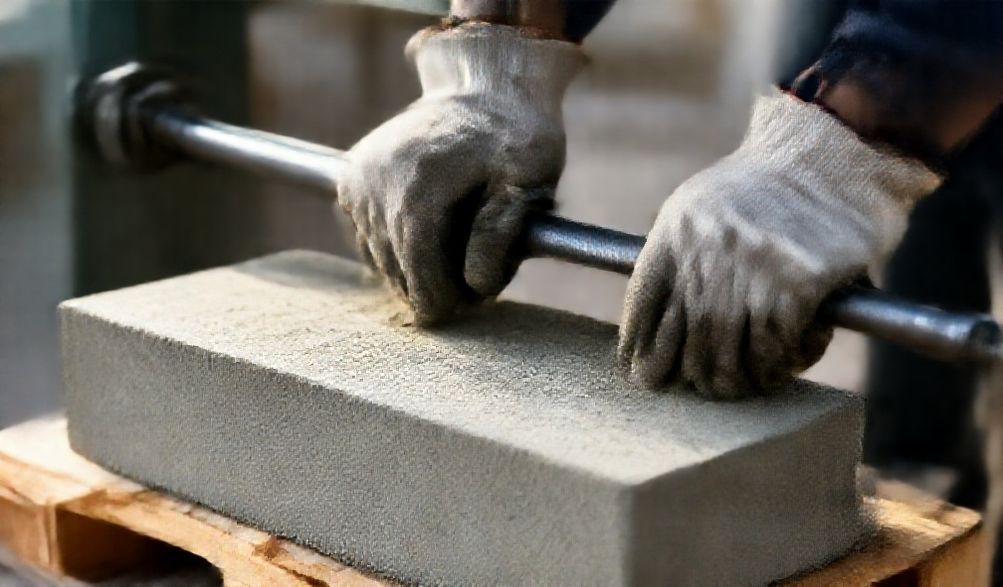
Une machine manuelle à fabriquer des briques en ciment est un dispositif actionné par la force humaine, conçu pour comprimer un mélange spécifique de ciment, de sable et de granulats en une brique solide et façonnée, grâce à un système de levier mécanique. Elle ne nécessite ni électricité, ni diesel, ni hydraulique. La force physique de l'opérateur, amplifiée par le système de levier, fournit toute la compression nécessaire. Cela rend la machine intrinsèquement portable, économique et idéale pour les sites non raccordés au réseau.
Composants clés et leurs fonctions
Comprendre l'anatomie de votre machine est la première étape vers la maîtrise. Chaque pièce joue un rôle essentiel.
- Cadre:L'ossature en acier robuste qui assure la stabilité et abrite tous les autres composants. Elle doit résister à des forces répétitives importantes.
- Moule/Chambre :Le cœur de la machine. Cette cavité définit la forme finale, la taille et le design de la brique (pleine, creuse, à emboîtement). Elle est généralement fabriquée en acier trempé pour la durabilité.
- Levier/Poignée de CompressionLe long bras qui vous donne un avantage mécanique. En appuyant sur ce levier, vous multipliez votre force pour compacter le mélange brut de manière approfondie.
- Tête de Frappe:La plaque fixée au mécanisme de compression qui appuie directement sur le mélange de béton à l'intérieur du moule.
- Mécanisme d'éjection :Un levier ou une plaque séparée qui pousse soigneusement la "brique crue" fraîchement formée hors de la cavité du moule sans l’endommager.
- Plaque de base :La surface plane et stable où se déroulent les processus de moulage et d'éjection. Elle garantit que la brique est formée sur un plan horizontal.
Types de Briques Que Vous Pouvez Produire
La polyvalence d'une machine manuelle réside dans les moules interchangeables. Vous pouvez produire divers types de briques pour différentes applications.
- Blocs de béton pleins :Le standard, le cheval de bataille dense pour les murs porteurs et non porteurs généraux.
- Blocs creux :Caractéristique des cavités qui réduisent le poids et l'utilisation de matériaux tout en améliorant l'isolation thermique et acoustique. Courant pour les cloisons de séparation.
- Briques à Emboîtement :Conçus avec des rainures et des saillies pour s'emboîter sans mortier. Idéaux pour le pavage, les murs de soutènement et certains systèmes muraux, accélérant ainsi la construction.
- Pavés autobloquants :Briques plus petites, plus épaisses et souvent décoratives, conçues pour une haute résistance à la compression. Utilisées pour les allées, les chemins piétonniers, les patios et l'aménagement paysager.
Manuel d'utilisation étape par étape
Le succès repose sur un processus méticuleux et reproductible. Suivez ces phases dans l'ordre.
Phase 1: Preparation & Setup
Selecting the Right Location
Choose a site that is:
* Flat and Level: Critical for producing uniform bricks and for machine stability.
* Solid Ground: Soft or uneven ground will wobble, affecting compaction.
* Spacious: You need dedicated zones for material storage, concrete mixing, brick formation, and curing. Plan for efficient workflow.
Preparing the Raw Materials
Quality in equals quality out. Never compromise on materials.
- Ciment : Use fresh, high-quality Ordinary Portland Cement (OPC) or Portland Pozzolana Cement (PPC). Check the manufacturing date and store bags off the ground in a completely dry place.
- Sable: Use clean, sharp, well-graded river sand or machine-made crushed stone sand. It must be free of silt, clay, and organic matter. Dirty sand drastically reduces brick strength.
- Agrégat : For higher-strength bricks, incorporate a small, clean aggregate (like 6-10mm stone chips). This adds density and compressive strength.
- Eau : Always use clean, potable water. Impurities can interfere with the cement hydration process.
Determining the Mix Ratio
The ratio is the recipe for your brick’s strength. A standard, reliable mix for general-purpose bricks is:
1 part cement : 6 parts combined sand/aggregate blend (by volume).
- For higher strength (e.g., for pavers or load-bearing walls), use a richer mix like 1:4 or 1:5.
- Crucial Tip: Always conduct a small test batch first. Local material characteristics can vary, so adjust slightly if needed.
Mixing the Concrete
Proper mixing ensures uniform strength throughout every brick.
- Dry Mixing: On a clean, hard surface or in a mixing tray, thoroughly combine all dry materials (cement, sand, aggregate) until the color is completely uniform. No streaks of pure cement should be visible.
- Adding Water: Create a crater in the center of your dry pile. Gradually add clean water while turning the mix over. The goal is a “moist” consistency—the mixture should hold its shape firmly when squeezed in your hand without water dripping out. Too wet weakens the brick; too dry prevents proper bonding.
Phase 2: The Brick Making Process
Loading the Mold
- Prepare the Mold: After the last brick, always clean the mold cavity. Before loading, lightly coat all interior surfaces with a release agent (used motor oil diluted with diesel, or a commercial mold oil). This prevents sticking.
- Fill in Stages: Do not dump the entire mix in at once. Fill the mold cavity in two or three layers. Slightly overfill each layer.
Compacting the Mix
This is the most critical step for strength.
- Pré-compaction : For each layer, use the tamper head or a hand trowel to initially press the material down, ensuring it spreads into all corners of the mold.
- Final Compression: Engage the main compression lever. Apply firm, steady, and full pressure. You should feel significant resistance. Consistent, high compaction is non-negotiable for producing dense, durable bricks. Ensure the lever is fully engaged to its end point.
Ejecting the Green Brick
- Gentle Ejection: Carefully operate the ejection mechanism. The freshly formed brick, now called a “green brick,” should slide out smoothly onto a prepared, level pallet or plywood sheet.
- Handle with Care: Green bricks have only “green strength.” They are incredibly fragile. Move the pallet, not the individual brick, to the curing area.
Phase 3: Curing and Drying
Curing is not merely drying; it’s the chemical process that gives the brick its strength. Neglecting this ruins good work.
Initial Setting
Allow the green bricks to remain untouched on their pallets in a shaded, protected area for 24-48 hours. This lets them gain enough strength to be handled.
The Curing Process
For optimal strength development, bricks require moisture for an extended period. The target is 21-28 days of controlled curing.
- Méthode : Stack the bricks and cover them completely with damp burlap sacks, tarps, or plastic sheeting. The goal is to trap moisture.
- Maintenance: Check the covers at least twice daily. They must remain damp. Sprinkle water as needed. This slow, moist environment allows cement to fully hydrate, maximizing final strength and weather resistance.
Final Drying
After the curing period, remove the covers and allow the bricks to air-dry completely in a shaded, well-ventilated space. Only then are they ready for construction use.
Advantages of Using a Manual Machine
Why choose a manual machine in an automated world? The benefits are compelling for the right user:
Rentabilité et Faible Investissement
The upfront cost is a fraction of that for electric or hydraulic machines. With no fuel or power bills, the operational overhead is virtually zero, offering an exceptionally low barrier to entry for entrepreneurs.
Portability and Independence from Power
Carry it in a pickup truck or trailer. Operate it in a remote village, a backyard, or a site without grid connection. This independence is its superpower.
Ideal for Small-Scale Production and DIY Projects
It’s the perfect tool for on-demand production. Whether you’re building a home extension, a garden shed, a community toilet block, or a landscape wall, it puts control directly in your hands.
Essential Maintenance & Troubleshooting Guide
A well-maintained machine lasts for years and produces consistent results.
Daily and Weekly Maintenance Checklist
- After Each Use: Clean the mold, tamper head, and base plate with water and a stiff brush to remove concrete residue.
- Weekly Inspection: Check for wear on the mold edges, lever pivot points, and the tamper head. Look for cracks or bends in the frame.
- Lubrication : Apply a few drops of light oil to all moving joints, pivots, and the ejection mechanism. Lightly oil the mold surface before storage to prevent rust.
Common Problems and Solutions
-
Problem: Bricks break when ejected.
- Solution: The concrete mix is too dry, or compaction was insufficient. Increase water slightly to the “moist” consistency and ensure you apply full lever pressure every time.
-
Problem: Bricks stick to the mold.
- Solution: The mold was not properly oiled, or the mix is too wet. Clean the mold thoroughly, apply fresh release agent, and reduce the water in your mix.
-
Problem: Bricks are weak or crumbly.
- Solution: Likely causes are an incorrect mix ratio (too little cement), poor curing (drying out too fast), or contaminated sand. Re-check your measurements, and be religious about the 21-day moist curing process.
-
Problem: Brick dimensions are inconsistent.
- Solution: This points to a worn mold or inconsistent filling/compaction technique. Inspect the mold for damage. Follow a strict, repeatable process for loading and compacting each layer.
Maximizing the Lifespan of Your Machine
Store it under cover, protected from rain and direct sun. Never use excessive, jarring force or try to modify the levers. Respect the machine’s design limits.
Safety Protocols for Operators
Safety is paramount when working with heavy materials and mechanical force.
Personal Protective Equipment (PPE)
Always wear:
* Sturdy Gloves: To protect hands from abrasion and cement.
* Safety Glasses: To shield eyes from flying debris or cement dust.
* Dust Mask/Respirator: Essential when handling and dry-mixing cement to prevent inhalation of fine particles.
* Steel-Toe Boots: To protect feet from dropped materials or the machine itself.
Safe Operating Procedures
- Ensure the machine is on stable, level ground before starting.
- Keep hands and fingers clear of the mold cavity, tamper head, and compression lever’s path during operation.
- Use proper lifting techniques—bend your knees, keep your back straight—when handling bags of cement or stacks of cured bricks.
Handling Cement and Raw Materials
- Avoid prolonged skin contact with dry cement mix, as it can cause irritation, dryness, or dermatitis.
- Work in a well-ventilated area, especially during the dry-mixing phase.
FAQ: Your Questions Answered
Q1: What is the typical production output of a manual machine?
A: Output depends heavily on operator skill, brick size, and workflow efficiency. A skilled, organized operator can typically produce between 80 and 120 standard bricks in an 8-hour workday.
Q2: How long must the bricks cure before they can be used?
A: For structural applications, a minimum moist curing period of 21 to 28 days is essential. Bricks can be carefully moved after 48 hours of initial setting but will only reach a fraction of their design strength. Full strength develops over the full curing timeline.
Q3: Can I use a manual machine to make interlocking bricks for walls?
A: Yes, absolutely. Many manual machines offer specialized interlocking block molds. These are excellent for constructing mortar-less garden walls, sheds, boundary walls, and other structures where a rustic or efficient design is desired.
Q4: What is the main difference in strength between manual and hydraulic machine bricks?
A: Hydraulic machines apply immense, calibrated pressure (measured in tons), producing bricks with very high density and uniform compressive strength. Manually made bricks, when produced with perfect technique and curing, are entirely suitable for low-rise residential, agricultural, and landscaping applications. The difference is in the consistency and upper limit of strength achievable.
Q5: Where can I buy a reliable manual brick making machine?
A: Seek out reputable local construction equipment dealers or established online marketplaces and manufacturers. Prioritize suppliers with positive customer reviews, clear warranty terms, and ready availability of spare parts (especially molds). Always ask for detailed specifications and, if possible, request a live demonstration or video of the machine in operation.
Conclusion
Mastering the manual cement brick making machine is more than learning a process; it’s embracing a philosophy of self-reliance and practical craftsmanship. By meticulously following the steps outlined in this guide—respecting the science of mix ratios, the art of compaction, and the discipline of curing—you transform raw materials into building blocks of lasting value.
This machine represents a gateway to sustainable, small-scale enterprise and empowered DIY construction. Remember, your success is built on the details: the consistency of your mix, the patience of your curing, and the care of your maintenance. Start with small test batches, apply these expert principles diligently, and you will lay a solid foundation for your projects, one perfectly formed brick at a time.
Authoritative Note: This guide synthesizes standard construction material practices and small-scale manufacturing principles. For critical structural projects, always consult a civil engineer and adhere to local building codes and material standards.
<