
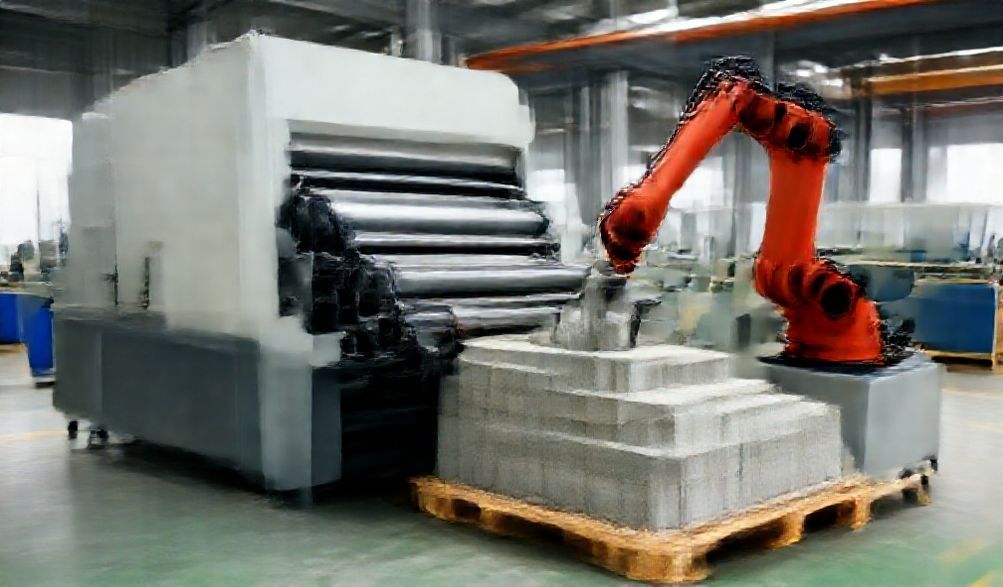
Your Ultimate Guide to Finding a Reliable China Brick Making Machine Supplier
Introduction
The global construction industry runs on efficiency and affordability. From ambitious infrastructure projects to essential housing developments, the demand for high-quality building materials is insatiable. At the heart of this production are brick and block making machines, the workhorses that transform raw materials into the very foundations of our built environment. For decades, China has stood as the world’s undisputed manufacturing hub for this critical machinery, offering an unparalleled combination of scale, technology, and value.
However, navigating this vast and complex marketplace can be a daunting task. The sheer number of China brick making machine supplier options can overwhelm even seasoned buyers. Common concerns about product quality, communication barriers, the authenticity of certifications, and long-term after-sales support are not just worries—they are legitimate business risks. A poor sourcing decision can lead to costly downtime, substandard production, and logistical nightmares.
This definitive guide is designed to cut through the noise. Leveraging deep industry expertise and a clear, actionable framework, we will equip you with the knowledge to identify, evaluate, and ultimately partner with a reputable and reliable Chinese supplier. Our approach is built on the principles of E-E-A-T (Expérience, Expertise, Autorité et Fiabilité), ensuring you have a trustworthy roadmap to secure an investment that delivers profitability and peace of mind for years to come.
Pourquoi se procurer des machines à fabriquer des briques en provenance de Chine ?
Before diving into the “how,” it’s crucial to understand the “why.” The global preference for Chinese machinery is not an accident; it’s the result of concrete, competitive advantages.
Rentabilité et Prix Compétitifs
The most immediate advantage is cost. Chinese manufacturers benefit from massive economies of scale, highly developed industrial clusters, and efficient domestic supply chains for raw materials like steel, hydraulics, and electrical components. This ecosystem allows them to produce robust machinery at a fraction of the cost seen in many other regions. For you, the buyer, this translates directly into a faster return on investment (ROI) and a more competitive cost-per-block in your own market.
Extensive Manufacturing Experience and Scale
China’s manufacturing prowess is built on decades of specialization. Regions like Fujian, Shandong, and Guangdong host concentrated industrial clusters dedicated to construction machinery. This environment fosters deep technical knowledge, continuous process improvement, and a vast pool of skilled engineers. You’re not dealing with a nascent industry, but a mature, sophisticated manufacturing base with a proven track record of supplying projects worldwide.
Diverse Product Range and Customization
Whether you need a small, manual interlocking brick press for a community project or a fully automated, robot-handled production line capable of 50,000 blocks per day, you will find a supplier in China. The range is staggering:
* Par opération : Manual, semi-automatic, fully automatic.
* Sortie : Stationary machines, mobile block makers, pallet-free systems.
* By Product: Concrete hollow blocks, paving slabs, curbstones, aerated blocks.
Furthermore, reputable suppliers offer significant customization. They can adapt machine designs to work optimally with your specific raw materials—be it fly ash, cement, soil, or recycled aggregates—and tailor output to your exact production goals.
Key Criteria for Evaluating a Chinese Supplier
This section forms the core of your due diligence. Moving beyond glossy brochures and website claims, these criteria will help you assess a supplier’s true Expertise and Trustworthiness.
Verifiable Manufacturing Expertise and Experience
A supplier’s history is a strong indicator of stability and capability.
* Historique de l'entreprise Seek suppliers with a proven track record of 8-10+ years. This suggests they have navigated market cycles and retained clients.
* Technical Team: Inquire about the qualifications and size of their in-house engineering and R&D team. This is crucial for customization and troubleshooting.
* Portefeuille de Projets : Request detailed case studies or a client list (with permission). Look for projects similar in scale and complexity to yours. Photos and videos of machines in operation are more valuable than studio renders.
Assessing Product Quality and Certifications
Certificates are a starting point, not the finish line.
* Normes internationales : Legitimate certifications like CE (for the European market) and ISO 9001 (Quality Management) indicate a commitment to standardized manufacturing processes. Verify these certificates are authentic and current.
* Composants de base : Ask specifically about the brands and origins of critical parts. High-quality hydraulic systems (like Parker or Yuken), reliable PLCs (Siemens, Mitsubishi), and durable steel frames are non-negotiable for long-term performance.
* Factory Audits: Request reports from recent third-party factory audits. Better yet, ask for a live video tour to see the production floor, quality control checks, and assembly processes in real-time.
Transparency and Communication Capability
Smooth communication prevents a multitude of problems.
* Professional Contacts: Your primary sales and engineering contacts should be responsive, professional, and technically proficient in English. Slow, unclear communication during the sales process is a major red flag.
* Clear Quotations: A professional quotation should be detailed and transparent, including:
* Exact machine model and technical specifications.
* A clear Incoterms rule (e.g., FOB Shanghai, CIF Durban).
* Itemized pricing for the machine, spare parts, shipping, and duties.
* Detailed warranty terms and payment schedule.
Comprehensive After-Sales Service and Support
The relationship begins when the machine ships.
* Garantie : Standard warranties are typically 12-18 months for the machine and 3-6 months for wear parts like molds. Understand exactly what is covered.
* Documentation: Ensure they provide comprehensive English manuals, electrical diagrams, parts catalogs, and video guides for installation and maintenance.
* Support Structure: How will they support you post-installation? Do they offer 24/7 remote support via video call? What is the process and cost for dispatching an engineer to your site?
* Pièces de rechange : Confirm they maintain an inventory of critical spare parts and can ship them expediently. Ask for a recommended spare parts list for the first year of operation.
A Step-by-Step Sourcing Process
Follow this Expérience-based roadmap to navigate your procurement journey methodically and minimize risk.
Phase 1: Research and Shortlisting
- Leverage B2B Platforms Wisely: On sites like Alibaba and Made-in-China, use filters strategically. Prioritize suppliers with:
- “Verified Supplier”ou“Gold Supplier” status.
- “Trade Assurance” (a payment protection service).
- “Onsite Check” reports conducted by the platform.
- Attend Industry Exhibitions: Events like Bauma China or the China Import and Export Fair (Canton Fair) are invaluable for meeting suppliers face-to-face, seeing machines in person, and gauging their professionalism.
- Vérifier la légitimité d'une entreprise : Use Chinese business license check platforms or request the supplier’s official Licence Commerciale to confirm their legal registration and scope of business.
Phase 2: In-Depth Inquiry and Quotation
- Prepare a Detailed RFQ (Request for Quotation): Send identical, highly detailed inquiries to your shortlisted suppliers. Include:
- Desired block type, size, and compressive strength.
- Target daily output (in 8-hour or 24-hour shifts).
- Details of your local raw materials (provide samples if possible).
- Local voltage and power supply.
- Any specific automation requirements.
- Analyze Quotes Holistically: Don’t just compare the bottom-line price. Compare the technical specifications, component brands, warranty terms, and shipping costs to calculate the Coût Total de Possession.
- Request References: Ask for 2-3 contactable international clients who have purchased similar equipment. A confident supplier will provide them.
Phase 3: Due Diligence and Final Verification
- Mandate a Pre-Shipment Inspection (PSI): This is your single most important quality control step. Hire a reputable third-party inspection company (e.g., SGS, BV, Intertek) to visit the factory before payment is finalized. The PSI should verify:
- Material quality and construction.
- Assembly and workmanship.
- A full performance test run producing sample blocks.
- Proper packing for ocean freight.
- Finalize a Robust Contract: The contract must be detailed and include:
- Annex A: Detailed technical specifications list.
- Clear payment terms (e.g., 30% deposit, 70% against copy of Bill of Lading).
- Delivery timeline and penalties for delays.
- Warranty, liability, and dispute resolution clauses.
- Understand Logistics: Clarify responsibilities for shipping, insurance, and customs clearance based on your agreed Incoterms. Work with a reliable freight forwarder.
Common Pitfalls and How to Avoid Them
The “Too Good to Be True” Price Trap
An offer significantly lower than the market average is a major warning sign. This often indicates the use of substandard materials, counterfeit components, omitted safety features, or a lack of proper testing. The hidden costs of breakdowns, low output, and short machine lifespan will far outweigh the initial “savings.” Stick to the middle of the price range for the specifications you need.
Inadequate Technical Specifications
A vague contract with phrases like “standard configuration” is a recipe for conflict. Every critical parameter must be specified in writing within the contract annex:
* Cycle time (seconds per block).
* Vibration motor power and frequency.
* Hydraulic system working pressure.
* Electrical power consumption.
* Mold precision and tolerance levels.
* Dimensions and weight of the finished machine.
Overlooking Local Adaptation Needs
A machine designed for conditions in one country may not perform optimally in another. Proactively discuss:
* Voltage & Phase: Ensure the electrical system matches your local grid (e.g., 415V/3Phase/50Hz).
* Climat : Discuss extreme heat, cold, humidity, or dust, and necessary protections.
* Matériaux bruts : The supplier must test your material samples to recommend the right mix design and machine settings.
* Soutien Local : Assess if you have local technicians who can perform basic maintenance, or if you will rely entirely on the supplier’s remote support.
FAQ: China Brick Making Machine Supplier
Q1: What is the typical lead time for a brick making machine from China?
A: Lead times vary. For a standard model from stock, it can be 15-30 days. For customized or large automated lines, production typically takes 30-60 days, plus shipping time (20-45 days by sea, depending on destination). Always confirm this in your contract.
Q2: How do I handle machine installation and operator training?
A: Reputable suppliers offer several options: 1) Detailed installation manuals and video guides for self-installation. 2) Remote video guidance via WhatsApp or Zoom during your installation. 3) Sending their technicians to your site for installation and training (you typically cover flight, accommodation, and a daily fee). Factor this cost into your initial budget planning.
Q3: What are the standard payment terms?
A: The most common structure is 30% deposit via T/T (bank transfer) and 70% balance against copy of shipping documents. Letters of Credit (L/C) are also used for larger orders. Using Alibaba Trade Assurance provides a layer of protection by holding payment in escrow until you confirm satisfactory delivery.
Q4: Can the machine be customized for my specific raw materials?
A: Absolutely. This is a key strength of experienced suppliers. They have R&D teams to adapt mold design, vibration parameters, and pressure settings. Your role is critical: you must provide them with sufficient samples and a detailed analysis of your local materials (clay, sand, cement, fly ash, etc.) for them to engineer the right solution.
Q5: How do I ensure the quality of the machine before it ships?
A: Insist on a Third-Party Pre-Shipment Inspection (PSI). Do not skip this step. The inspector will check material certificates, assembly quality, run a performance test to produce blocks that meet your spec, and verify that the machine is packed securely for its overseas journey. The inspection report is your final quality gate before release of payment.
Conclusion
Sourcing a brick making machine from China is a significant investment that, when executed correctly, can dramatically enhance your construction business’s productivity and profitability. The journey requires moving from seeing China as a monolithic “factory” to identifying a specific, trustworthy partner. By understanding the market advantages, applying a rigorous evaluation framework based on verifiable expertise, and following a meticulous step-by-step sourcing process, you transform risk into opportunity.
The key lies in diligent research, crystal-clear communication, and unwavering commitment to due diligence—especially the pre-shipment inspection. Armed with the checklist provided in this guide, you are now equipped to engage with China brick making machine supplier options from a position of knowledge and confidence.
Your Next Step: Begin by compiling your detailed Technical Requirement Sheet. This document alone will immediately separate serious, high-quality suppliers from the rest, setting the stage for a successful and rewarding partnership.
<