Introduction
Le marché mondial des machines de fabrication de briques et de blocs est un écosystème dynamique et complexe, offrant à la fois des opportunités significatives et des défis considérables pour les distributeurs, les concessionnaires et les responsables des achats. La simple requête de recherche "à vendre" masque le processus complexe d'identification, d'évaluation et d'acquisition d'équipements qui constitueront la pierre angulaire d'une entreprise rentable et durable. Ce paysage est peuplé d'une vaste gamme d'options, allant des presses manuelles rudimentaires aux lignes de production entièrement automatisées et intelligentes. Le succès dans ce domaine exige plus que la simple recherche d'un fournisseur ; il nécessite une approche stratégique de l'approvisionnement qui équilibre les spécifications techniques, l'investissement financier et la viabilité opérationnelle à long terme.
Decoding the Market: A Taxonomy of Available Machinery
The first step in effective sourcing is understanding the fundamental categories of machines available. Each type represents a different value proposition, investment level, and target market.
Classification by Operational Methodology
This is the primary differentiator, directly impacting labor costs, output, and price point.
- Machines Manuelles et Semi-Automatiques : These units represent the entry-point of the market.
- Caractéristiques clés : Manual machines require significant physical labor for feeding, compressing, and ejecting blocks. Semi-automatic models incorporate a hydraulic or mechanical press activated by the operator, but still rely on manual material feeding and block removal.
- Public cible : Small-scale entrepreneurs, community-led projects, and markets with very low labor costs. They are ideal for producing specialized or niche products in lower volumes.
- Commercial Consideration: While the initial capital outlay is low, the cost-per-block in terms of labor is high. Their value proposition lies in accessibility and simplicity, not efficiency.
- Machines entièrement automatiques : These form the core of the modern construction industry’s supply chain.
- Caractéristiques clés : These are integrated systems where a single operator, via a Programmable Logic Controller (PLC), can manage the entire process: raw material feeding, mixing, conveying, compression, ejection, and sometimes stacking. They operate on a continuous cycle.
- Public cible : Medium to large-scale construction companies, dedicated block yards, and public works contractors requiring high, consistent output.
- Commercial Consideration: The higher initial investment is offset by dramatically reduced labor costs and superior production speed, leading to a lower cost-per-block and higher overall profitability for the end-user.
- Mobile Brick Making Plants: This is a specialized and rapidly growing segment.
- Caractéristiques clés : These are self-contained, automatic machines mounted on a trailer chassis. They integrate a power source (diesel or generator), mixer, and block press into a single mobile unit.
- Public cible : Infrastructure projects (road building, dams), disaster relief operations, and developers working on large, remote sites where transporting raw materials or finished blocks is cost-prohibitive.
- Commercial Consideration: Their value is not just in block production, but in the radical elimination of logistics costs. The ROI is driven by savings on transportation rather than just labor.
Classification by Output and End-Product
The machine’s capability to produce different types of bricks and blocks opens up various market segments.
- Standard Solid Brick Machines: The workhorse of the industry, producing ubiquitous building blocks.
- Machines à Blocs Creux : Essential for creating lighter, more insulating blocks that reduce the overall weight and material cost of structures.
- Interlocking Block Machines: A innovative segment gaining traction for their ability to be laid without mortar, significantly speeding up construction time and reducing skilled labor requirements.
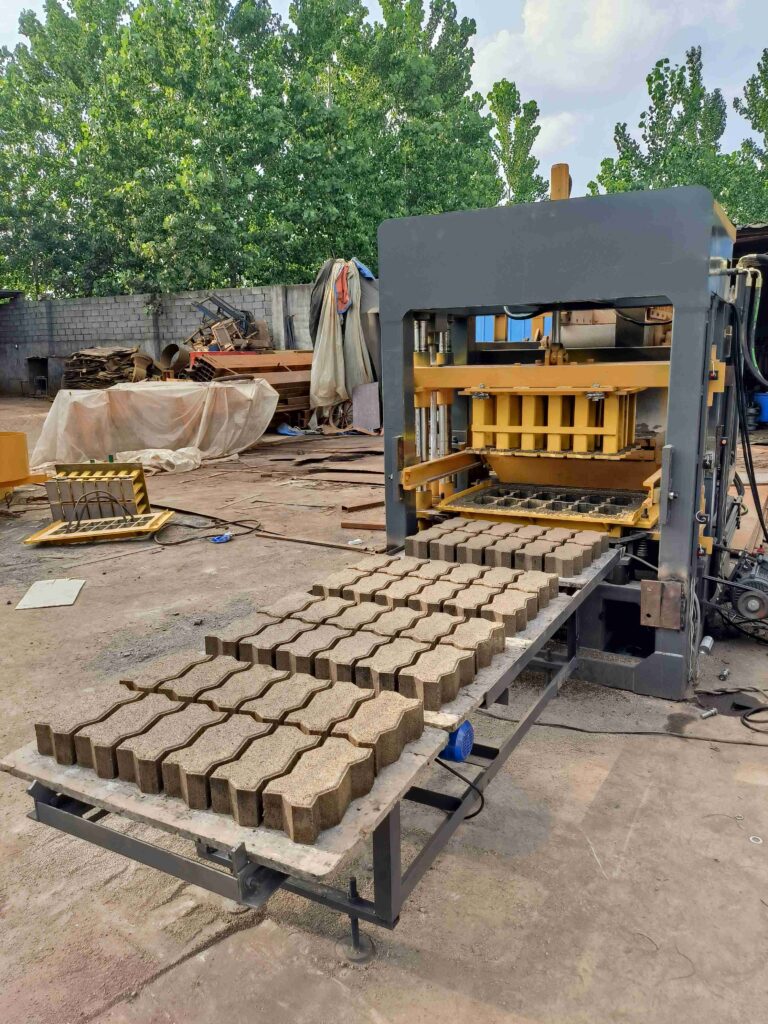
- Pavers and Kerbstone Machines: These serve the landscaping and civil engineering markets, often requiring higher pressure and specialized molds for textured finishes and high durability.
The Strategic Sourcing Evaluation Framework
Once the categories are understood, a systematic approach to evaluating specific “for sale” listings is critical.
Technical Specification Scrutiny
Moving beyond marketing language to hard data is essential.
- Capacité de production : Do not rely solely on “bricks per day” claims. Analyze the temps de cycle (seconds per cycle) and the number of bricks produced per cycle. A machine with a 20-second cycle time producing 4 bricks per cycle has a clear, verifiable output.
- Pression nominale : The hydraulic system’s pressure (in tons or MPa) is the primary determinant of the block’s final compressive strength, a non-negotiable quality metric for structural applications. Ensure the rating is certified and appropriate for the local building codes.
- Exigences en matière d'alimentation électrique : Assess the compatibility with the target market’s infrastructure. Is it electric, diesel, or hybrid? What is the power consumption per hour? This directly impacts the client’s operating costs.
- Système de Contrôle de la Sophistication : A PLC is standard, but its capabilities vary. Look for features like fault diagnostics, production data logging, and password-protected parameter settings, which aid in maintenance and quality control.
Quality and Durability Assessment
The machine is a long-term asset; its construction quality dictates its lifespan and total cost of ownership.
- Intégrité Structurelle : Inquire about the grade and thickness of the steel used in the frame and vibration table. Reinforced, heavy-duty frames are necessary to withstand the constant, high-impact forces.
- Critical Component Sourcing: The origin and brand of key components like hydraulic pumps, PLCs, and electrical motors are a proxy for reliability. While brand names may be avoided, knowing they are sourced from reputable industrial regions is a positive indicator.
- Mold (Die) Quality: The mold is a high-wear part. Molds should be made from hardened, high-chromium steel, precision-machined to ensure dimensional accuracy and long life. The availability and cost of replacement molds are a key after-sales consideration.
Commercial and Logistics Analysis
The transaction terms are as important as the machine itself.
- Incoterms et Logistique : Clearly define responsibilities. Is the price FOB (Free on Board, meaning you handle main shipping) or CIF (Cost, Insurance, and Freight, to a port of your choice)? Each has implications for cost, control, and risk.
- Emballage : Heavy machinery must be crated in robust, weather-proof wooden cases mounted on skids for easy handling. Request packaging specifications.
- Payment Terms: Standard terms range from a 30-50% deposit with the balance paid before shipment. Letters of Credit (LC) offer more security for both parties in large transactions.
Building a Profitable Portfolio and Partnership
Your goal is not to buy a single machine, but to establish a supply line for a successful product portfolio.
Market Segmentation and Product Alignment
Match the machines you source to the specific needs of your regional market.
- Urban Construction Boom: Focus on high-output, fully automatic stationary plants that produce hollow blocks and pavers.
- Rural and Developing Areas: A mix of robust semi-automatic machines and mobile plants may be more appropriate, catering to lower capital availability and decentralized projects.
- Specialized Niche Markets: Consider sourcing machines for interlocking blocks or specific architectural finishes to capture high-margin, low-competition segments.
The Supplier as a Strategic Partner
View the manufacturer not as a vendor, but as a partner in your business growth.
- After-Sales Service Capability: Probe deeply into their support structure. What is the warranty period and scope? How is technical support delivered (phone, remote access)? What is the lead time for spare parts?
- Customization and Flexibility: Can the supplier adapt a standard model to a unique local requirement, such as a specific raw material mix? This flexibility can be a significant competitive advantage.
- Sales and Marketing Support: A strong partner will provide high-quality marketing assets—photos, videos, 3D models, technical data sheets—and may even offer co-op advertising support to help you build your brand.
Conclusion
Navigating the “brick and block making machines for sale” market is a multifaceted strategic exercise. It requires a disciplined approach that moves beyond initial price tags to a comprehensive analysis of technical merit, operational efficiency, and long-term partnership potential. By applying the structured framework outlined in this guide—categorizing the machinery, scrutinizing specifications, assessing quality, and aligning your portfolio with market demands—you transform from a passive buyer into an astute sourcing expert. The right machines, sourced from the right partners, will not only generate immediate sales but will also build your reputation as a trusted provider of quality and value, ensuring your sustained leadership in the construction equipment distribution industry.
Foire aux Questions (FAQ)
Q1: What is the realistic payback period our clients can expect on an automatic machine?
A: The payback period is highly variable, typically ranging from 12 to 36 months. It depends on local block prices, production utilization rate, cost of raw materials, and labor savings. A detailed pro-forma financial model should be developed for each client, but promoting a concept of “return on investment” rather than just “cost” is crucial.
Q2: How do we handle installation and commissioning for our clients?
A: Options vary. The factory may provide technicians for a fee (covering their travel and accommodation), your company may develop its own technical team, or you may partner with local industrial engineers. The cost and responsibility for commissioning must be clarified with the supplier before purchase.
Q3: What are the most common wear parts we should stock as a distributor?
A: A starter inventory should include hydraulic seals and hoses, vibration motor bearings, conveyor belts, and the most common mold liners. The frequency of replacement depends on production volume and material abrasiveness.
Q4: Can one machine produce multiple types of blocks, and how complex is mold changing?
A: Most machines are versatile, but each block type requires a specific mold. Changing a mold is a mechanical process that can take a trained crew from 30 minutes to a few hours. It involves unbolting the existing mold and carefully aligning the new one. Quick-change mold systems are a premium feature on some advanced models.
Q5: What kind of raw material preparation equipment is required?
A: This is a critical ancillary investment. Clients will typically need a pan mixer or compulsory mixer, a conveyor system (often integrated into automatic machines), and potentially a crusher or sieve if processing raw, unrefined soil.
Q6: How do we verify the credibility of a new supplier we find online?
A: Conduct rigorous due diligence: request a business license, ask for and independently contact client references from your region, insist on a live video tour of their factory and a running machine, and consider using a third-party inspection service for a pre-shipment quality check, especially for large orders.