1. Introduction
Pour les distributeurs, revendeurs et acheteurs dans les secteurs de la construction et des machines, comprendre la machine à briques de terre n'est pas seulement une question de saisir les opportunités du marché, mais aussi un moyen de répondre aux besoins évolutifs des clients. Cet article vise à fournir une analyse détaillée et approfondie des machines à briques de terre, couvrant leurs principes de fonctionnement, leurs types, leurs avantages, les considérations clés pour leur sélection, les tendances du marché, l'entretien, et plus encore. À la fin de cet article, vous aurez une compréhension complète des machines à briques de terre, vous permettant de prendre des décisions plus éclairées dans vos activités commerciales, que ce soit pour distribuer l'équipement, l'acheter pour la revente, ou sélectionner la machine adaptée à vos propres besoins de production ou à ceux de vos clients.
2. Corps principal
2.1 Qu'est-ce qu'une machine à briques de terre ?
Une machine à briques en terre est un équipement spécialisé conçu pour produire des briques en utilisant la terre comme matière première principale, souvent combinée à d'autres additifs tels que du sable, du ciment, de la chaux ou des matériaux organiques pour améliorer les performances du produit final. Contrairement aux méthodes traditionnelles de fabrication de briques qui reposent sur le travail manuel et la cuisson à haute température, les machines à briques en terre automatisent le processus de production, du mélange des matières premières au moulage des briques, et dans certains cas, jusqu'à la cure des briques.
La fonction principale d'une machine à briques en terre consiste à comprimer le mélange de terre préparé en briques de différentes formes et tailles, avec une densité et une résistance spécifiques. La machine y parvient grâce à une pression mécanique, garantissant que les briques en terre possèdent une intégrité structurelle suffisante pour répondre aux exigences de diverses applications de construction, telles que les bâtiments résidentiels, les infrastructures rurales et les bâtiments commerciaux de faible hauteur.
2.2 Principe de fonctionnement des machines à briques en terre
Pour bien comprendre la machine à briques de terre, il est essentiel de saisir son principe de fonctionnement, qui peut être divisé en plusieurs étapes clés :
2.2.1 Préparation des Matières Premières
La première étape du processus de production des briques en terre est la préparation des matières premières, et la machine à briques en terre fonctionne souvent en conjonction avec des équipements auxiliaires pour cette phase. La matière première principale est la terre, qui doit être tamisée pour éliminer les impuretés telles que les pierres, les racines et les mottes de terre de grande taille. La granulométrie de la terre est cruciale ; si les particules de terre sont trop grossières, cela affectera la densité et la résistance des briques, tandis qu'une terre trop fine peut entraîner une mauvaise perméabilité à l'eau et une tendance à la fissuration.
Après le tamisage, le sol est mélangé avec des additifs appropriés. Le type et la proportion des additifs dépendent des propriétés du sol et des performances souhaitées pour les briques. Par exemple, l'ajout de sable peut améliorer la perméabilité à l'eau et réduire le retrait des briques ; l'ajout de ciment ou de chaux peut augmenter la résistance et la durabilité des briques, en particulier dans les zones à forte humidité ou aux conditions climatiques difficiles. Certains fabricants ajoutent également des matériaux organiques tels que de la paille ou de la sciure de bois pour réduire le poids des briques et améliorer leurs performances d'isolation thermique. La machine à briques de terre peut être équipée d'un dispositif de mélange ou fonctionner avec un mélangeur séparé pour garantir que le sol et les additifs soient uniformément mélangés, formant ainsi un mélange homogène avec la teneur en humidité appropriée. La teneur en humidité du mélange est un facteur critique ; si elle est trop élevée, les briques auront tendance à se déformer pendant le moulage et la cure ; si elle est trop faible, le mélange n'aura pas une plasticité suffisante, rendant difficile la formation de briques avec la forme et la densité requises.
2.2.2 Façonnage des Briques
L'étape de moulage de la brique est la partie centrale du fonctionnement de la machine à briques en terre. Une fois le mélange de matières premières prêt, il est introduit dans le mécanisme de moulage de la machine. Il existe deux principaux types de mécanismes de moulage utilisés dans les machines à briques en terre : le moulage par pression hydraulique et le moulage par vibration mécanique.
Dans les machines de formage à pression hydraulique, le mélange de terre est placé dans une cavité de moule, et un vérin hydraulique applique une haute pression pour comprimer le mélange en la forme du moule. La pression appliquée peut varier de plusieurs centaines à plusieurs milliers de kilonewtons, selon la taille et la résistance requise des briques. La haute pression garantit que les particules de terre sont étroitement tassées, ce qui donne des briques à haute densité, à haute résistance à la compression et à bonne précision dimensionnelle. Les machines de formage à pression hydraulique sont adaptées à la production de briques en terre de haute qualité répondant à des normes de construction strictes, et elles peuvent produire des briques de formes et de tailles variées en changeant le moule.
Les machines de formage par vibrations mécaniques, quant à elles, utilisent des vibrations pour compacter le mélange de terre dans le moule. Le système vibratoire de la machine génère des vibrations à haute fréquence, ce qui provoque le réarrangement des particules de terre et remplit étroitement la cavité du moule. Simultanément, une certaine pression peut être appliquée pour aider au processus de compactage. Les machines de formage par vibrations mécaniques sont souvent plus adaptées à la production de grandes quantités de briques de terre de taille standard à un coût moindre. Elles offrent une efficacité de production supérieure à certaines machines hydrauliques, mais la résistance à la compression des briques produites peut être légèrement inférieure à celle des briques fabriquées par formage sous pression hydraulique, en fonction de la conception de la machine et de la qualité des matières premières.
Une fois le processus de moulage terminé, le moule s'ouvre et les briques de terre formées sont éjectées du moule par un mécanisme d'éjection. Les briques sont ensuite transférées à l'étape suivante pour le séchage.
2.2.3 Cure des Briques
Although the soil bricks machine’s main role ends at the forming stage, the curing process is closely related to the quality of the final product, and some soil bricks machines may be part of a complete production line that includes curing equipment. Curing is the process of allowing the formed soil bricks to gain strength and durability through a series of physical and chemical reactions.
The curing method depends on the type of additives used in the soil mixture. For soil bricks with cement or lime as additives, water curing is commonly used. The bricks are placed in a moist environment (such as a curing room with controlled temperature and humidity) and sprayed with water regularly to keep them moist. During the curing period (usually 7-28 days), the cement or lime reacts with water to form hydrated compounds, which bind the soil particles together, increasing the strength of the bricks.
For soil bricks without cement or lime additives, air curing is often used. The bricks are placed in a well-ventilated area away from direct sunlight and rain, and allowed to dry naturally. The drying process must be gradual to prevent the bricks from cracking due to rapid moisture loss. Some manufacturers may also use accelerated curing methods, such as steam curing, to shorten the curing time and improve production efficiency. Steam curing involves placing the bricks in a closed chamber and subjecting them to high-temperature steam, which speeds up the chemical reactions in the soil mixture and allows the bricks to gain strength in a shorter period (usually 1-3 days). However, steam curing requires additional equipment and energy, which may increase the production cost.
2.3 Types of Soil Bricks Machines
Soil bricks machines come in a variety of types, each with its own characteristics, advantages, and application scenarios. Distributors, distributors, and purchasers need to understand the different types to better meet the needs of different customers. The following are the main types of soil bricks machines classified based on different criteria:
2.3.1 Classification by Production Capacity
- Small-sized Soil Bricks Machines: These machines are designed for small-scale production, with a daily production capacity usually ranging from 500 to 5,000 bricks. They are compact in size, easy to move and install, and require less investment and labor. Small-sized soil bricks machines are suitable for rural areas, small construction projects, or small-scale brick manufacturers who have limited capital and low production demand. For example, in remote rural areas where the demand for bricks is not very large, a small-sized soil bricks machine can meet the local construction needs, and its low cost and easy operation make it popular among small business owners.
- Medium-sized Soil Bricks Machines: Medium-sized machines have a daily production capacity of 5,000 to 20,000 bricks. They are more advanced than small-sized machines, with higher automation and production efficiency. Medium-sized soil bricks machines are suitable for medium-sized brick factories or distributors who supply bricks to a wider range of customers, such as local construction companies and housing developers. These machines usually require a dedicated production site and a small team of operators, and they can produce a variety of brick types to meet different customer requirements.
- Large-sized Soil Bricks Machines: Large-sized soil bricks machines are designed for large-scale industrial production, with a daily production capacity of more than 20,000 bricks. They are highly automated, with integrated production lines that include raw material handling, mixing, forming, curing, and packaging. Large-sized machines require a large investment, a large production site, and a professional team of operators and maintenance personnel. They are suitable for large brick manufacturers who supply bricks to national or international markets, as well as for large construction projects such as highway construction, urban infrastructure development, and high-rise building construction.
2.3.2 Classification by Forming Method
- Hydraulic Soil Bricks Machines: As mentioned earlier, hydraulic soil bricks machines use hydraulic pressure to form bricks. They are known for producing bricks with high density, high compressive strength, and good dimensional accuracy. Hydraulic machines can be further divided into manual hydraulic machines, semi-automatic hydraulic machines, and fully automatic hydraulic machines. Manual hydraulic machines require manual feeding and operation, with low production efficiency, suitable for small-scale production. Semi-automatic hydraulic machines have automatic feeding or ejection mechanisms, reducing manual labor and improving production efficiency. Fully automatic hydraulic machines are part of integrated production lines, with fully automated processes from raw material feeding to brick output, suitable for large-scale production.
- Mechanical Vibration Soil Bricks Machines: Mechanical vibration soil bricks machines use vibration to compact the soil mixture. They are characterized by high production efficiency and low cost. Similar to hydraulic machines, mechanical vibration machines can also be divided into manual, semi-automatic, and fully automatic types. Manual mechanical vibration machines require manual feeding and mold handling, while semi-automatic and fully automatic machines have more automated functions. Mechanical vibration machines are widely used in the production of standard-sized bricks, such as solid bricks and hollow bricks, and are suitable for areas where the demand for bricks is large and the requirements for brick strength are not extremely high.
2.3.3 Classification by Mobility
- Fixed Soil Bricks Machines: Fixed machines are installed in a fixed location and cannot be easily moved. They are usually part of a permanent brick factory, with dedicated production lines and auxiliary equipment. Fixed soil bricks machines have high production efficiency and are suitable for large-scale, long-term production. They can be customized according to the specific production needs of the factory, such as the type and size of bricks to be produced. However, fixed machines require a large initial investment in site construction and equipment installation, and they are not flexible in terms of location.
- Mobile Soil Bricks Machines: Mobile soil bricks machines are designed to be portable, allowing them to be moved to different construction sites or production locations. They are compact in size, easy to transport, and can be set up and operated quickly. Mobile machines are suitable for on-site brick production, which can reduce the cost of transporting bricks from the factory to the construction site. For example, in large construction projects such as road construction or rural housing construction, a mobile soil bricks machine can be brought to the site to produce bricks on demand, saving time and transportation costs. Mobile soil bricks machines usually have a lower production capacity compared to fixed machines, but their flexibility makes them a good choice for certain applications.
2.4 Advantages of Soil Bricks Machines for Distributors, Distributors and Purchasers
Soil bricks machines offer a range of advantages that make them an attractive product for distributors, distributors, and purchasers. Understanding these advantages is crucial for promoting the machines, making purchasing decisions, and meeting customer needs.
2.4.1 Cost-Effectiveness
One of the most significant advantages of soil bricks machines is their cost-effectiveness, both in terms of equipment investment and brick production costs.
- Lower Raw Material Costs: Soil is the main raw material for soil bricks, and it is widely available in most regions, especially in rural and suburban areas. The cost of soil is much lower than that of traditional raw materials such as clay for fired bricks or cement for concrete blocks. In some cases, soil can be sourced locally at almost no cost, reducing the raw material procurement cost for brick production. This lower raw material cost translates to lower production costs for soil bricks, making them more competitive in the market compared to traditional building materials. For distributors and purchasers, this means that soil bricks produced by soil bricks machines can be sold at a more competitive price, attracting more customers and increasing market share.
- Lower Energy Consumption: Traditional fired clay bricks require high-temperature firing in kilns, which consumes a large amount of energy, such as coal, natural gas, or electricity. In contrast, soil bricks produced by soil bricks machines do not require firing (except for some special types), and the curing process consumes much less energy. For example, air curing requires no energy input other than the natural environment, and even water curing or steam curing consumes less energy than firing. Lower energy consumption not only reduces the production cost of soil bricks but also makes them more environmentally friendly, which is in line with the global trend of sustainable development. For purchasers who are concerned about energy costs and environmental impact, soil bricks machines are a more attractive option.
- Lower Labor Costs: Soil bricks machines automate the brick production process, reducing the need for manual labor. Compared to traditional manual brick-making methods, which require a large number of workers to mix soil, mold bricks, and fire them, soil bricks machines can complete the production process with a small team of operators. For example, a fully automatic soil bricks production line can be operated by 3-5 people, while a manual brick-making workshop of the same production scale may require 10-20 people. Lower labor costs not only reduce the production cost of soil bricks but also improve the production efficiency and reduce the risk of labor shortages. For distributors, this means that the soil bricks produced by the machines they distribute have a lower cost structure, allowing them to offer better prices to their customers.
2.4.2 Environmental Friendliness
In today’s world, environmental protection has become a global concern, and the construction industry is under increasing pressure to reduce its environmental impact. Soil bricks machines and the soil bricks they produce offer significant environmental advantages, which is a key selling point for distributors and a major consideration for purchasers.
- Reduced Carbon Emissions: Traditional fired clay bricks produce a large amount of carbon dioxide during the firing process, contributing to global warming. Soil bricks, on the other hand, do not require firing, so their production process emits little or no carbon dioxide. Even for soil bricks that require steam curing, the carbon emissions are much lower than those of fired clay bricks, especially if the steam is generated using renewable energy sources such as solar or wind energy. By promoting and using soil bricks machines, distributors and purchasers can contribute to reducing carbon emissions in the construction industry, in line with national and international environmental policies and goals.
- Conservation of Natural Resources: The production of traditional fired clay bricks requires the extraction of large amounts of clay from the earth, which can lead to soil erosion, destruction of farmland, and loss of natural habitats. Soil bricks, however, use soil that is not suitable for agriculture or other high-value uses, such as subsoil or soil from construction sites. This reduces the demand for clay and helps to conserve agricultural land and natural resources. In addition, soil bricks can be recycled and reused. At the end of a building’s life, soil bricks can be crushed and used as raw material for new soil bricks or as backfill material, reducing construction waste and promoting a circular economy.
- Reduced Air Pollution: The firing process of traditional clay bricks also releases harmful pollutants such as sulfur dioxide, nitrogen oxides, and particulate matter into the air, which can cause air pollution and have a negative impact on human health. Soil bricks machines do not produce such pollutants during the production process, making the production of soil bricks a clean and environmentally friendly process. This is particularly important in areas with strict air pollution control regulations, where the use of traditional fired clay bricks may be restricted or banned. For purchasers operating in such areas, soil bricks machines provide a viable alternative that complies with environmental regulations.
2.4.3 Versatility and Adaptability
Soil bricks machines are highly versatile and adaptable, allowing them to produce a wide range of soil brick types to meet different construction needs. This versatility is a major advantage for distributors, as it enables them to cater to a broader customer base, and for purchasers, as it allows them to produce bricks that are suitable for their specific projects.
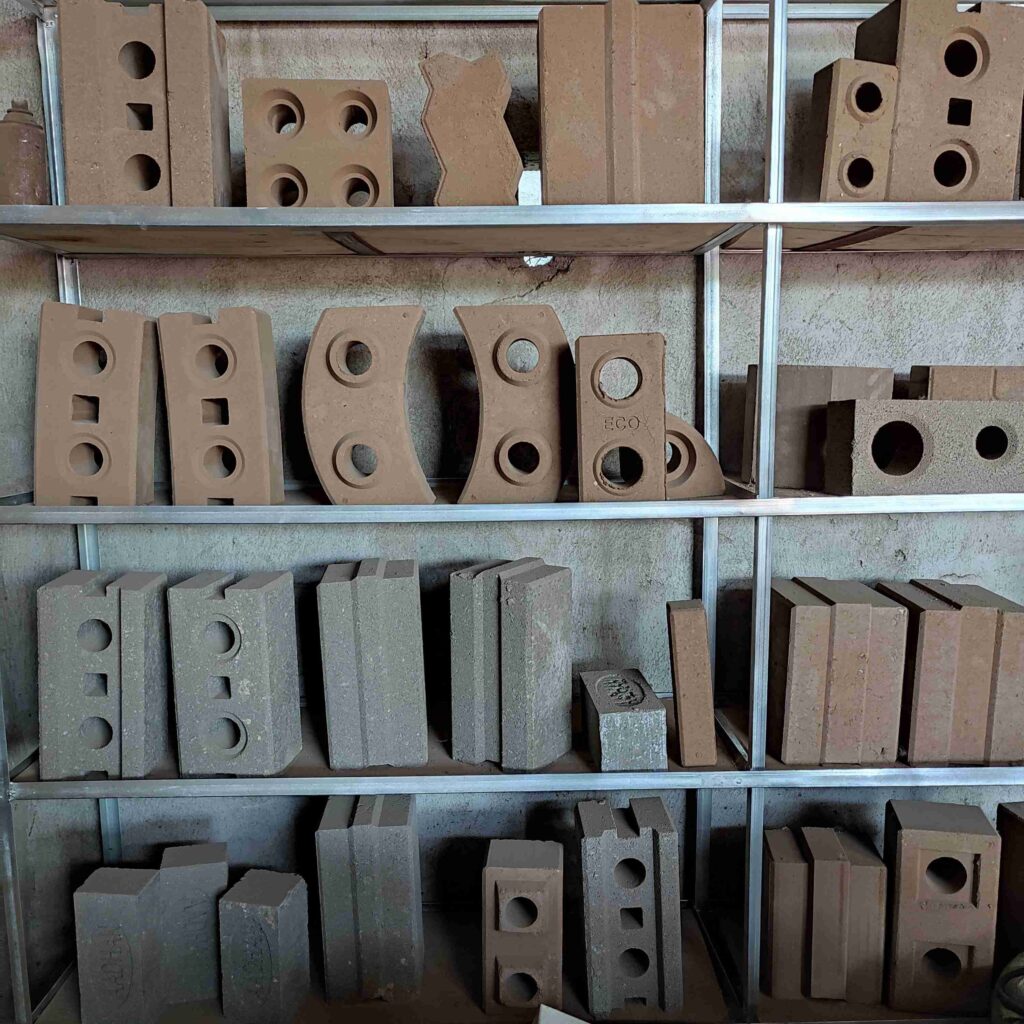
- Various Brick Shapes and Sizes: Soil bricks machines can be equipped with different molds to produce bricks of various shapes and sizes, such as solid bricks, hollow bricks, interlocking bricks, and paving bricks. Solid bricks are suitable for load-bearing walls, while hollow bricks are lighter and have better thermal insulation performance, making them suitable for non-load-bearing walls and partition walls. Interlocking bricks have a special design that allows them to be assembled without mortar, reducing construction time and cost, and are widely used in rural housing construction and road paving. Paving bricks are used for sidewalks, parking lots, and other outdoor paving applications. By changing the mold, a single soil bricks machine can produce multiple types of bricks, making it a flexible piece of equipment for brick manufacturers.
- Adaptability to Different Soil Types: Soil bricks machines can be adjusted to work with different types of soil, such as sandy soil, loamy soil, and clayey soil. By changing the proportion of additives and adjusting the machine’s parameters (such as pressure and vibration frequency), the machine can produce high-quality soil bricks from various soil sources. This adaptability is particularly important for distributors and purchasers operating in regions with different soil characteristics, as it ensures that the soil bricks machine can be used effectively regardless of the local soil type.
- Suitability for Different Construction Projects: The soil bricks produced by soil bricks machines are suitable for a wide range of construction projects, from small residential buildings to large-scale infrastructure projects. For example, solid soil bricks can be used for the load-bearing walls of houses, while hollow soil bricks can be used for the exterior walls to improve thermal insulation. Interlocking soil bricks are ideal for rural housing construction due to their easy installation and low cost, and paving soil bricks are suitable for urban sidewalks and parks. This wide range of applications means that soil bricks machines have a large market potential, and distributors can target different customer segments, such as small-scale builders, large construction companies, and government agencies.
2.4.4 High Production Efficiency and Quality
Modern soil bricks machines are designed to deliver high production efficiency and consistent product quality, which is essential for meeting the large demand for building materials in the construction industry.
- High Production Efficiency: With the advancement of technology, soil bricks machines have become increasingly automated, significantly improving production efficiency. Fully automatic soil bricks production lines can produce thousands of bricks per hour, and the entire production process, from raw material feeding to brick output, is controlled by a computer system, reducing human error and increasing production speed. For example, a large-sized fully automatic hydraulic soil bricks machine can produce up to 50,000 bricks per day, which is much higher than the production capacity of traditional manual methods. High production efficiency allows brick manufacturers to meet large orders in a short time, improving their competitiveness in the market. For distributors, this means that the soil bricks machines they distribute can help their customers increase production capacity and meet market demand, leading to higher customer satisfaction and repeat business.
- Consistent Product Quality: Soil bricks machines use precise mechanical and hydraulic systems to control the forming process, ensuring that each brick has consistent shape, size, density, and strength. The use of automated systems reduces the impact of human factors on product quality, such as variations in manual mixing or molding. In addition, soil bricks machines can be equipped with quality control devices, such as sensors and cameras, to monitor the production process and detect any defects in the bricks. For example, a sensor can measure the pressure applied during forming to ensure that each brick has the required density, and a camera can inspect the surface o