
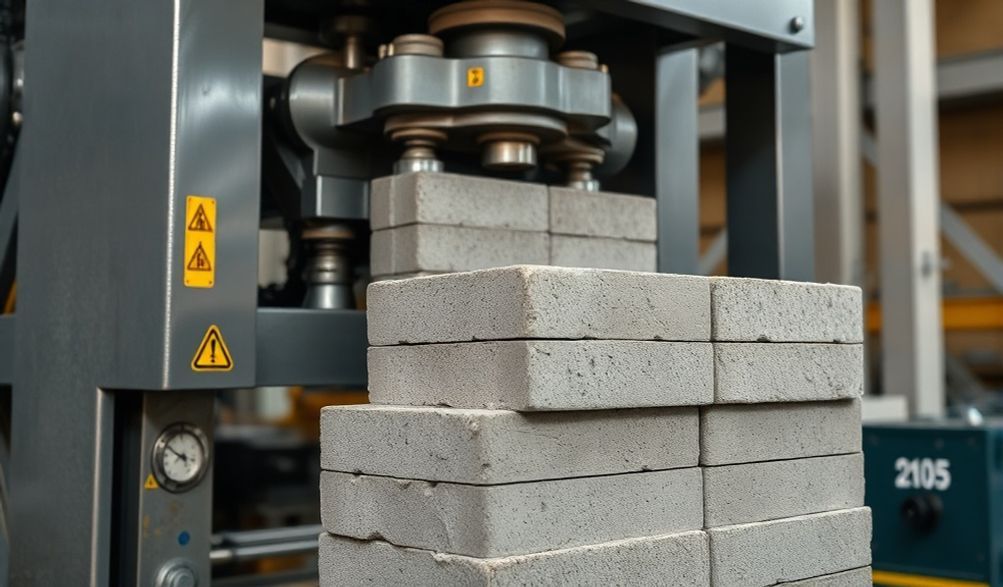
Your Ultimate Guide to Buying the Right Brick Making Machine for Sale in 2024
Introduction
Are you a construction business owner, entrepreneur, or ambitious DIY builder feeling overwhelmed by the countless “brick making machine for sale” listings online? You’re not alone. The sheer variety of options—from small manual presses to sprawling automated plants—can be paralyzing. Choosing the wrong equipment isn’t just a minor setback; it can cost you significant time, capital, and even the success of your project.
This comprehensive guide is designed to cut through the noise. Built on industry expertise and thorough research, we provide the trusted, detailed information you need to navigate the market with confidence. We’ll move beyond simple sales pitches to give you a foundational understanding of the machinery, the market, and the metrics that matter.
By the end of this article, you’ll have a clear framework for evaluating different types of brick making machines, understanding key cost factors, and asking the right questions before making your purchase. Let’s transform that uncertainty into a strategic, informed investment.
Comprendre les Machines à Fabriquer des Briques : Types et Technologies
Before diving into listings, it’s crucial to understand what you’re looking at. The technology behind a brick making machine defines its capabilities, output, and suitability for your specific needs.
Machines Manuelles vs. Semi-Automatiques vs. Entièrement Automatiques
The level of automation is the first major differentiator, directly impacting labor, output, and cost.
-
Machines à fabriquer des briques manuelles :
- Opération : Entirely human-powered. Operators manually fill molds, apply pressure via a lever, and remove finished bricks.
- Sortie : Low (typically 100-500 bricks per 8-hour shift).
- Travail : High. Requires constant physical effort from one or more workers.
- Idéal Pour : Very small-scale projects, DIY homesteaders, community initiatives, or producing specialty, artistic bricks where volume is not a priority. They are the most affordable entry point.
-
Machines semi-automatiques de fabrication de briques :
- Opération : A hybrid model. Core processes like mixing and compaction are mechanized (often using hydraulic power or vibration), but tasks like feeding raw material or removing bricks may require manual intervention.
- Sortie : Medium (500 – 2,500 bricks per day). A significant step up from manual models.
- Travail : Moderate. Requires oversight and some manual work, but not constant heavy labor.
- Idéal Pour : Small to medium-sized businesses, block yards, and contractors looking to supply their own projects. They offer an excellent balance between cost, output, and control.
-
Machines à fabriquer des briques entièrement automatiques :
- Opération : Computer-controlled systems handle the entire process—from raw material feeding and mixing to molding, compaction, curing, and even palletizing. They often feature conveyor belt systems.
- Sortie : High to very high (2,000 – 20,000+ bricks per day).
- Travail : Low. Primarily requires monitoring, maintenance, and supervision.
- Idéal Pour : Large-scale commercial production plants, industrial construction projects, and entrepreneurs aiming for a high-volume brick supply business. This represents a major capital investment with a focus on efficiency and scale.
Core Production Methods: Hydraulic, Vibratory, and Compression
How a machine forms the brick is key to the final product’s strength and consistency.
- Hydraulic Press Machines: These use immense, controlled hydraulic pressure to compact the raw material (concrete or soil) into a dense, solid brick. They produce extremely strong, uniform bricks with excellent dimensional accuracy and a smooth finish. Ideal for high-strength paving bricks, solid blocks, and kerbstones.
- Vibratory Compaction Machines: These machines use a combination of vibration and pressure to settle the concrete mix into the mold, removing air pockets. They are the most common type for producing hollow blocks, as the vibration ensures the mix flows into all parts of a complex mold. The resulting bricks are strong and well-formed.
- Compression Machines: Often used for clay brick production, these apply direct mechanical pressure to dry or semi-dry material. They are less common for concrete block production but are highly efficient for certain material types.
Stationary Plants vs. Mobile Brick Making Machines
Where will you produce your bricks?
-
Plantes Stationnaires : These are fixed installations, typically housed in a dedicated shed or factory. They are designed for high-volume, consistent production in a single location. They often integrate with batching plants and curing racks.
- Avantages : Higher capacity, easier to optimize workflow, more stable setup.
- Inconvénients : No mobility, higher initial setup cost for foundation and shelter.
-
Machines mobiles de fabrication de briques : Mounted on a trailer or skid frame, these units can be towed directly to a construction site.
- Avantages : Enables on-site production, eliminating transport costs for finished bricks. Perfect for large, remote projects.
- Inconvénients : Generally have lower output than large stationary plants and may have fewer automation features.
Facteurs clés à prendre en compte avant d'acheter
With a foundational understanding of types, you can now evaluate machines against your specific situation. This is where due diligence pays off.
Assessing Your Production Needs: Output Capacity & Brick Type
Don’t buy a machine based on its maximum theoretical output. Buy based on your realistic, sustained needs.
- Calculating Output: Estimate the bricks required for your project or weekly/monthly sales. Then, look for a machine whose realistic daily output (factoring in setup, maintenance, and breaks) meets or slightly exceeds that target. A machine running at 80% capacity is healthier than one perpetually strained at 100%.
- Brick Type & Mold Versatility:Que produirez-vous ?
- Blocs creux : For structural walls, reducing weight and material cost.
- Briques Pleines : For paving, heavy-duty walls, and landscaping.
- Pavés et blocs à emboîtement :Pour les allées, les chemins piétonniers et les terrasses.
- Formes Spécialisées : Curbs, grass blocks, etc.
Ensure the machine you choose is compatible with the mold system for your desired products. Some suppliers offer interchangeable molds, providing valuable flexibility.
Power Source and Operational Requirements
Your site’s infrastructure will dictate your options.
- Électrique : Clean, quiet, and efficient for locations with reliable grid power. Check the required voltage (e.g., 380V/3-phase is common for industrial machines) and ensure your electrical supply can handle the load.
- Diesel : Provides complete independence from the power grid. Essential for remote sites or areas with frequent outages. Factor in fuel costs, noise, and exhaust management.
- Hybrid (Electric/Diesel): Offers the most flexibility, allowing you to switch between power sources as needed. A premium feature that adds to the machine’s utility and resilience.
Machine Durability and Key Component Quality
This is the heart of the trustworthiness assessment. A cheap machine with poor components will cost you more in repairs and downtime.
- Cadre et Structure : Look for heavy-duty, welded steel frames. A flimsy frame will not withstand the constant stress of brick production and will lead to misalignment and breakdowns.
- Moississures : These are high-wear items. Check the steel grade and hardness. Quality molds are often made from hardened steel or have replaceable wear plates. Ask about mold availability and cost.
- Système Hydraulique : The powerhouse of many machines. Reputable brand-name pumps, valves, and cylinders (e.g., Bosch Rexroth, Parker, Eaton) are a sign of reliability. Ask about the system’s pressure rating and filtration.
- Système de Contrôle : In semi- and fully-automatic machines, a well-sealed, user-friendly PLC (Programmable Logic Controller) interface is crucial. It should be intuitive and protected from dust and moisture.
Navigating the Market: Costs and Suppliers
Understanding the financial landscape and how to vet suppliers will protect your investment.
Brick Making Machine Price Ranges: What to Expect
Prices vary wildly. Use these brackets as a guide, but always get detailed quotes.
- Machines manuelles : $1,000 – $5,000 USD. The simplest lever-operated models start very low.
- Machines semi-automatiques : $5,000 – $50,000+ USD. Price scales significantly with output capacity, power, and component quality. A robust medium-capacity model often falls in the $15,000-$30,000 range.
- Plantes entièrement automatiques : $50,000 – $300,000+ USD. These are major industrial investments where customization, output (bricks per hour), and level of automation (e.g., with robotic palletizers) define the final price.
New vs. Used Brick Making Machines: A Balanced View
A used machine can be a savvy purchase, but caution is paramount.
- Pros of Used: Lower upfront cost, potential for faster availability.
- Cons of Used: Unknown maintenance history, potential for hidden wear, limited or no warranty, possible obsolescence of parts.
- Red Flags & Inspection Checklist:
- Excessive Wear: Check for cracks in the frame, heavily worn mold surfaces, and leaking hydraulic cylinders.
- Operational Test: Toujours request a live demonstration making bricks.
- Documentation: Ask for maintenance logs, original manuals, and wiring diagrams.
- Disponibilité des pièces : Confirm that critical spare parts for that specific model are still available from the manufacturer or third parties.
Evaluating Manufacturers and Suppliers
Your relationship with the supplier is as important as the machine itself.
- Criteria for Evaluation:
- Expérience : How long have they been in business? Do they specialize in brick machinery?
- Portfolio & References: Ask for a list of previous clients, preferably in your region. Actually contact them. Ask about machine performance and after-sales support.
- Assistance technique : Do they offer installation supervision, operator training, and troubleshooting support?
- Pièces et Service : Is there a dedicated parts department? What is the typical lead time for common wear parts? A machine is useless if you can’t repair it.
- Garantie :Qu'est-ce qui est couvert (pièces, main-d'œuvre) ? Pour quelle durée ? Quelles sont les conditions ?
Maximizing Your Investment: Operation and ROI
A successful purchase is just the beginning. Proper operation and maintenance ensure longevity and profitability.
Essential Raw Materials and Mix Design
The machine is only as good as the mix you feed it.
- Core Materials: Cement, aggregates (sand, gravel, crushed stone), and water. Fly ash or other additives may be used.
- Conception du Mélange : There is no universal “perfect mix.” It depends on your raw material properties and the brick type. A standard starting point for hollow blocks might be a 1:6:4 ratio (cement:sand:gravel) by volume, but this requires testing and adjustment. Consult your machine supplier or a local concrete expert for guidance tailored to your materials.
Basic Maintenance Checklist for Longevity
Preventative care is cheap; major repairs are not.
- Daily: Clean the machine thoroughly at the end of each shift, especially the mold and feed hopper. Check for loose bolts and hydraulic leaks.
- Weekly: Lubricate all moving parts as per the manual. Inspect mold liners for wear. Check hydraulic fluid levels and cleanliness.
- Monthly: Perform a more thorough inspection of the electrical system, tighten major frame bolts, and check the alignment of moving parts.
Calculating Your Return on Investment (ROI)
A simplified framework to gauge profitability:
- Calculate Fixed Costs: Machine purchase price (amortized over its lifespan), installation, building/site costs.
- Calculate Variable Costs Per Brick: Cost of raw materials (cement, aggregate), labor, power/fuel, maintenance, and overhead.
- Determine Revenue Per Brick: Your selling price in the local market.
- Estimate Profit Per Brick: Revenue – Variable Cost.
- Calculate Payback Period: (Total Fixed Investment Cost) / (Profit Per Brick * Monthly Production Volume). This gives you the number of months to break even.
Exemple : If your machine costs $20,000, you make a $0.10 profit per brick, and produce 10,000 bricks a month, your simple payback period is $20,000 / ($0.10 * 10,000) = 20 months.
Frequently Asked Questions (FAQ) About Brick Making Machines
Q1: What is the average production output of a standard brick making machine?
There is no “standard.” Output ranges from 100-500 bricks per day for manual machines to over 20,000 per day for large fully automatic plants. A popular semi-automatic model might produce 2,000-3,000 solid bricks in an 8-hour shift.
Q2: Can one machine produce different types and sizes of bricks?
Yes, if it uses an interchangeable mold system. Most semi- and fully-automatic machines are designed for this. You purchase additional molds for different products (e.g., hollow block, paver, solid brick). Changing molds typically takes 30 minutes to a few hours.
Q3: How much space is needed to install and operate a brick making plant?
For a small semi-automatic operation, you need space for the machine itself (e.g., 4m x 6m), plus areas for raw material storage, mixing, and curing/drying bricks (which requires the most space). A total of 200-500 square meters is a common starting point for a functional small yard.
Q4: What is the typical lead time and process for delivery and installation?
For a stock model, lead time might be 4-8 weeks after payment, including shipping. For custom plants, it can be 3-6 months. The process usually involves: 1) Proforma Invoice & Deposit, 2) Manufacturing, 3) Pre-shipment testing, 4) Shipping & Customs Clearance, 5) Installation & Commissioning (often with a factory technician on-site for a fee).
Q5: Are there safety certifications or standards I should look for?
Look for machines that comply with international safety standards (like CE marking) which indicate design conformity with health, safety, and environmental protection standards. Also, ensure the electrical components have proper certifications. Always request the machine’s compliance documentation.
Conclusion
Choosing the right brick making machine is a strategic decision that hinges on clearly defining your production needs, understanding the technology, and conducting rigorous supplier due diligence. Remember, you’re not just purchasing a piece of equipment; you’re investing in a partnership with a manufacturer for support, parts, and expertise that will last for years.
Avoid the temptation to choose based on price alone. The true cost is measured in reliability, output consistency, and total lifespan. Use the frameworks in this guide—from assessing your capacity needs to calculating ROI—to make a confident, informed choice.
Ready to take the next step? Download our free, comprehensive buyer’s checklist to compare models and suppliers systematically, or contact our industry experts for a personalized consultation tailored to your specific project goals.
<