
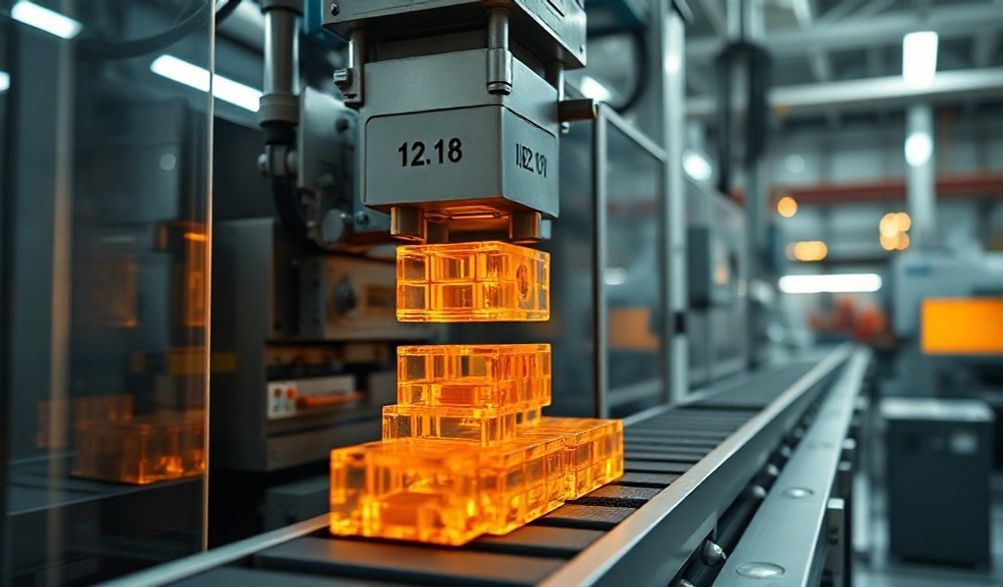
Le Guide Ultime des Machines à Blocs de Construction : Du Hobbyiste au Fabricant
Avez-vous déjà tenu une brique en plastique parfaitement formée, l'avez-vous emboîtée sur une autre, et vous êtes-vous émerveillé de la satisfaction que cela procure ?cliquezDes jouets emblématiques qui peuplent les chambres d'enfants aux maquettes complexes utilisées par les architectes, ces pièces emboîtables sont un pilier de la créativité et de l'ingénierie. Vous êtes-vous déjà demandé comment ces composants précis et uniformes sont réellement fabriqués ? La réponse réside dans une technologie sophistiquée : lemachine à blocs de construction.
Bien plus qu'un simple outil pour les usines de jouets, cette machine est une prouesse d'ingénierie qui fait le pont entre l'imagination et la réalité physique. Elle sert aussi bien les fabricants mondiaux que les amateurs spécialisés, et joue même un rôle dans la création de matériaux de construction durables. Ce guide s'appuie sur des principes d'ingénierie industrielle, des connaissances opérationnelles et des considérations pratiques. Que vous soyez un fabricant curieux, un entrepreneur explorant une idée commerciale ou un professionnel du secteur cherchant à approfondir vos connaissances, vous obtiendrez une compréhension claire des types de machines, des caractéristiques essentielles, des critères de sélection et de l'ensemble du processus de fabrication. Démystifions la technologie qui transforme les matières premières en éléments constitutifs d'innombrables projets.
Qu'est-ce qu'une machine à blocs de construction ? Explication de la technologie de base
Au cœur, une machine à fabriquer des briques est un type spécialisé de presse à injection. Son unique objectif est de produire en masse des composants en plastique avec les dimensions précises, la force d'emboîtement (la "prise" entre les briques) et la constance nécessaires pour les systèmes de construction emboîtables.
Principe de base : le moulage sous pression.
Le processus de base est d'une simplicité trompeuse dans son concept, mais complexe dans son exécution. La matière plastique brute, sous forme de granulés, est fondue et injectée de force dans une cavité de moule métallique conçue avec précision. Elle est maintenue sous haute pression pendant qu'elle refroidit et se solidifie, prenant ainsi la forme exacte du moule. Lorsque le moule s'ouvre, une pièce finie — ou plusieurs pièces — est éjectée, prête à être utilisée. Ce cycle se répète toutes les 15 à 60 secondes, selon la taille et la sophistication de la machine.
Composants clés d'une machine standard
Chaque machine, du bureau à l'industrie, est constituée de plusieurs systèmes clés fonctionnant de concert :
- Système de trémie et de séchage :C'est ici que les granulés de plastique brut (comme l'ABS ou le PP) sont chargés. De nombreux matériaux nécessitent un pré-séchage à ce stade pour éliminer l'humidité qui peut provoquer des défauts.
- Unité d'injection (vis et fourreau)Le cœur du processus de fusion. Une vis rotative à l'intérieur d'un cylindre chauffé transporte, comprime, fait fondre et homogénéise le plastique avant de l'injecter vers l'avant.
- Unité de serrage : This powerful system holds the two halves of the mold tightly shut against the immense pressure of the injected plastic (often hundreds of tons of force).
- Moisissure : The custom-made, hardened steel tool that defines the block’s shape, texture, and interlocking studs/tubes. It is the most critical and often most expensive part of the setup.
- Système de Contrôle : The machine’s brain. Ranging from simple programmable logic controllers (PLCs) to advanced computer numerical control (CNC) panels with touchscreens, it governs temperature, pressure, cycle times, and movements.
Types of Building Blocks Produced
While toy bricks are the most recognizable output, these machines are versatile:
* Standard Interlocking Toy Bricks: The classic small-scale bricks compatible with major brands.
* Large Hollow Construction Blocks: Often used for educational or oversized building sets, these are lighter and use less material.
* Specialized Architectural/Modeling Pieces: Including unique textures, technical beams, gears, minifigure parts, and custom-designed elements for specific model kits.
Types of Building Block Machines: Choosing the Right One
Selecting the right machine is your first and most crucial decision. The choice hinges primarily on your intended scale of production, budget, and desired level of automation.
By Scale & Output: From Desktop to Industrial
- Small-scale/Hobbyist & Desktop Machines: These are low-tonnage (5-50 ton), often manually operated or semi-automatic presses. Perfect for prototyping, producing very small batches, or educational purposes in makerspaces and universities. Output is limited, and cycle times are slower, but the upfront cost and footprint are minimal.
- Machines semi-automatiques : The workhorses for small to medium businesses (SMBs). An operator manually removes the finished parts and initiates each cycle, but the molding process itself is automated. This offers a excellent balance between output rate, cost, and flexibility for short-to-medium production runs.
- Fully Automatic Industrial Machines: Designed for mass production. These high-speed machines are completely computer-controlled, often integrated with robotic arms for part removal, conveyors, and automated packaging systems. They require a significant capital investment but offer the lowest cost-per-part at high volumes with minimal manual labor.
By Molding Process
- Injection Molding Machines: The undisputed standard for plastic building block production. They offer the best combination of speed, precision, surface finish, and ability to produce complex geometries with undercuts (like the tubes underneath a brick).
- Compression Molding Machines: Less common for standard blocks. They involve placing a charge of material into an open mold cavity, then closing the mold with heat and pressure. More suited for larger, less intricate parts or specific composite materials.
Specialized Machines for Unique Materials
The industry is evolving beyond virgin plastic:
* Eco-Block Machines: These are standard injection machines, often with enhanced filtration and screw/barrel materials, configured to process post-consumer recycled (PCR) plastic flakes or pellets.
* Bio-Composite Machines: Designed to handle materials mixed with organic fibers (like wood or bamboo), which may have different flow and abrasion characteristics.
* Machines à blocs de béton : A completely different technology (vibration and compression) for producing large-scale masonry or landscaping blocks, not to be confused with plastic interlocking block machines.
Critical Features to Evaluate When Buying a Machine
Looking beyond the basic type, savvy buyers dig into these specifications. In practice, overlooking these details is a common and costly mistake.
Production Capacity & Specifications
- Clamping Force (Tonnage): Measured in tons, this is the force that keeps the mold closed. Larger molds with more cavities or that produce bigger blocks require higher tonnage (e.g., 80-300+ tons). Too little force causes “flash” – thin webs of plastic leaking from the mold seams.
- Shot Size/Volume: The maximum amount of plastic the machine can inject per cycle. It must be sufficient to fill all the cavities in your mold, plus a small safety margin. It’s typically measured in ounces or grams.
- Temps de cycle : The total time for one complete molding cycle (clamp, inject, cool, open, eject). Faster cycles mean higher output. Cooling time is often the longest phase and depends on the thickness of the block.
Mold Compatibility & Design
The machine is just the press; the mold is the artist. They are a paired system.
* Mold Base Standard: Ensure the machine’s platen (the plate where the mold mounts) and tie-bar spacing can physically accommodate your chosen mold.
* Steel Quality & Cavities: Molds made from pre-hardened or hardened steel (like H13) last for millions of cycles. The number of cavities (e.g., a 4-cavity mold produces 4 bricks per cycle) directly multiplies your output but increases the mold’s cost and complexity.
* Custom vs. Standard: Purchasing a pre-existing, standard block mold is cheaper. A fully custom mold for your unique design is an investment in intellectual property but requires expert design to ensure proper cooling and ejection.
Control System & Automation Level
- Basic PLC vs. Advanced CNC: A simple PLC controls the sequence. An advanced CNC system with a graphical interface allows for precise control over injection speed/pressure profiles, temperature zones, and stores recipes for different products. This is key for consistency and quick changeovers.
- Intégration de l'Automatisation : Consider future needs. Does the machine have standard interfaces (I/O ports) to easily add a robotic sprue picker or conveyor? This foresight can save major headaches later.
Energy Efficiency & Total Cost of Ownership (TCO)
The purchase price is just the entry fee. Operators note that energy consumption is a major ongoing cost.
* Servo-Motor vs. Traditional Hydraulic: Servo-driven machines use energy only when performing an action (injecting, clamping), while traditional hydraulic systems run a constant pump. Servo systems can reduce energy consumption by 40-70%, offering a faster payback despite a higher initial price.
* TCO Analysis: Factor in costs for installation, utilities, preventative maintenance, spare parts (like heaters and screws), and required floor space. A cheaper machine with poor efficiency can become more expensive within a year or two of operation.
The Building Block Manufacturing Process: A Step-by-Step Look
Understanding the workflow from raw material to finished box highlights the precision required at every stage.
Step 1: Material Preparation & Feeding
- Sélection des matériaux : ABS (Acrylonitrile Butadiene Styrene) is the industry gold standard for high-quality toy bricks due to its excellent strength, dimensional stability, glossy finish, and superior clutch power.
- Séchage : Hygroscopic plastics like ABS must be dried in a hopper dryer for 2-4 hours at ~80°C (176°F) to remove moisture. Wet material causes splay marks (streaks) and weakens the final part.
- Coloring: Pre-colored granules can be used, or natural material can be mixed with precise percentages of color masterbatch (concentrated pigment) in the hopper or via a side-feeder on the barrel.
Step 2: The Injection Molding Cycle
This is the core automated sequence:
1. Clamping: The two mold halves are securely locked together by the clamping unit.
2. Injection: The screw moves forward as a plunger, injecting the molten plastic into the mold cavity at high speed and pressure.
3. Holding & Cooling: Pressure is maintained (“holding pressure”) to pack more material in and compensate for shrinkage as the plastic cools and solidifies.
4. Mold Opening: Once sufficiently cooled, the clamping unit opens the mold.
5. Éjection : Ejector pins built into the mold push the solidified block(s) and the attached sprue/runner (the waste plastic channels) off the mold core.
Step 3: Post-Processing & Quality Control
The ejected parts are not yet ready for packaging.
* De-spruing: The blocks, still attached to the runner system, are separated. This can be done manually, with a custom jig, or by an automated trim press.
* Tumbling (Optional): For premium finish, blocks may be tumbled in a large drum with mild abrasives to remove any minor burrs or sharp edges from the ejection points.
* Contrôle de la qualité : Every batch is sampled for rigorous checks: dimensional accuracy (using calipers and gauges), clutch power (measured with a force gauge), color consistency, and structural integrity. For toys, this includes safety tests for sharp edges and small parts.
Applications and Industries for Building Block Machines
The reach of this technology extends far beyond the toy aisle.
Toy and Educational Product Manufacturing
The primary application. It demands the highest standards for material safety (compliance with ASTM F963, EN71, etc.), clutch power consistency, and colorfastness. It includes everything from generic bricks to licensed character-themed sets.
Architectural and Engineering Modeling
Firms use custom block systems to create detailed, scalable physical models of buildings, bridges, and industrial plants. The blocks allow for easy reconfiguration and can represent different materials or structural elements.
Promotional and Custom Merchandise
Businesses produce branded blocks as unique corporate gifts, trade show giveaways, or educational marketing tools. A custom mold with a company logo can create a memorable and interactive product.
Niche DIY and Maker Communities
A growing sector where enthusiasts use small-scale machines to produce specialty parts not available commercially—custom minifigure accessories, unique texture plates, or specialized connectors for robotics projects.
FAQ: Your Building Block Machine Questions Answered
Q1: What is the approximate cost range for a building block machine?
A: The range is vast. A small, new desktop machine can start around $5,000-$15,000. A semi-automatic machine suitable for a small business may range from $30,000 to $80,000. A fully automatic industrial production line can easily cost $150,000 to $500,000+. Crucially, the mold cost is separate and can range from $10,000 for a simple single-cavity mold to over $100,000 for a complex, multi-cavity production mold.
Q2: What type of plastic is best for making durable building blocks?
A: ABS is the best and most common material for high-quality, durable blocks. It offers an ideal balance of strength, stiffness, excellent surface finish, and most importantly, consistent clutch power over time. Polypropylene (PP) is sometimes used for lower-cost or flexible parts but generally has weaker clutch power.
Q3: Can I start a building block business with one machine?
A: Yes, it’s possible, but temper your expectations. Many small businesses start with one semi-automatic machine. Your success will depend less on the machine and more on: 1) Your investment in high-quality custom molds for unique products, 2) Identifying a viable market niche, 3) A solid business and marketing plan, and 4) A commitment to meeting all relevant safety and regulatory standards for your target market.
Q4: How important is after-sales service and technical support from the supplier?
A: It is critical. A machine is a complex piece of industrial equipment. Prioritize suppliers who offer comprehensive installation guidance, operator training, detailed maintenance manuals, a readily available inventory of common spare parts (screws, heaters, seals), and—most importantly—responsive technical support, whether via phone, video, or on-site service contracts. This support is invaluable for minimizing costly downtime.
Q5: Are there machines for making eco-friendly or recycled plastic blocks?
A: Absolutely. Many standard injection machines can be configured to process recycled plastic granules (rABS, rPP). The key challenges are material consistency (recycled feedstock properties can vary) and potential contamination. You may need machines with robust filtration systems and screws/barrels made from wear-resistant materials to handle impurities. The market for eco-conscious blocks is growing steadily.
Conclusion
Choosing and operating a machine à blocs de construction is a significant technical and financial undertaking that sits at the intersection of mechanical engineering, materials science, and business strategy. The journey from a pile of plastic granules to a box of perfectly interlocking bricks is a testament to precision manufacturing.
As a final piece of expert advice, we encourage thorough due diligence. Go beyond brochures and websites. Request physical samples of blocks produced by a potential machine-and-mold supplier pair. If possible, visit a factory or attend a major plastics trade show (like NPE or Chinaplas) to see machines in operation and speak directly with engineers. For those seriously evaluating suppliers, the next logical step is to develop a rigorous checklist for vetting building block machine manufacturers, focusing on their engineering support, mold-making capability, and proven track record. Remember, the right machine is not an expense; it’s the foundational tool that turns your creative or commercial vision into a tangible, stackable reality.
<