
The Complete Guide to Bock Machines: Types, Uses, and How to Choose
Introduction
Picture this: Your craft brewery’s latest IPA is a runaway hit. Demand is soaring, but your manual bottling line is buckling under the pressure. Every hour spent hand-filling and capping is an hour of lost growth and a potential bottleneck threatening your hard-earned momentum. Or perhaps you manage a dairy plant, where consistency and hygiene are non-negotiable, and the slightest variance in fill level or cap seal can lead to costly waste and compliance headaches.
If these scenarios resonate, you’ve likely encountered the name Bock machine. More than just another piece of factory equipment, a Bock machine represents a strategic leap in packaging automation, engineered to solve these exact pain points of scale, precision, and reliability.
In this guide, we will demystify Bock machinery. We’ll define it as a premier line of German-engineered filling, capping, sealing, and packaging machines, renowned for their robust construction, hygienic design, and exceptional accuracy. Brands like Bock GmbH Füll- und Verschließtechnik have set industry benchmarks for decades, particularly in the beverage, dairy, food, and pharmaceutical sectors.
This resource is crafted for the decision-makers—operations managers, plant engineers, and business owners—who are evaluating capital equipment to enhance their production line. Our goal is to move beyond sales brochures and provide the practical, in-depth knowledge you need to make an informed choice, optimize operations, and justify a significant investment.
By [Author Name], with over 10 years in food & beverage packaging automation and direct experience specifying and integrating rotary filling systems into high-speed production environments.
What is a Bock Machine? Core Technology and Principles
At its heart, a Bock machine is a high-performance, often rotary-based, automated system designed to handle the critical tasks of filling containers with liquids or semi-viscous products and then hermetically sealing them. The name has become synonymous with durability and precision in packaging halls worldwide.
The Engineering Behind Bock Fillers & Cappers
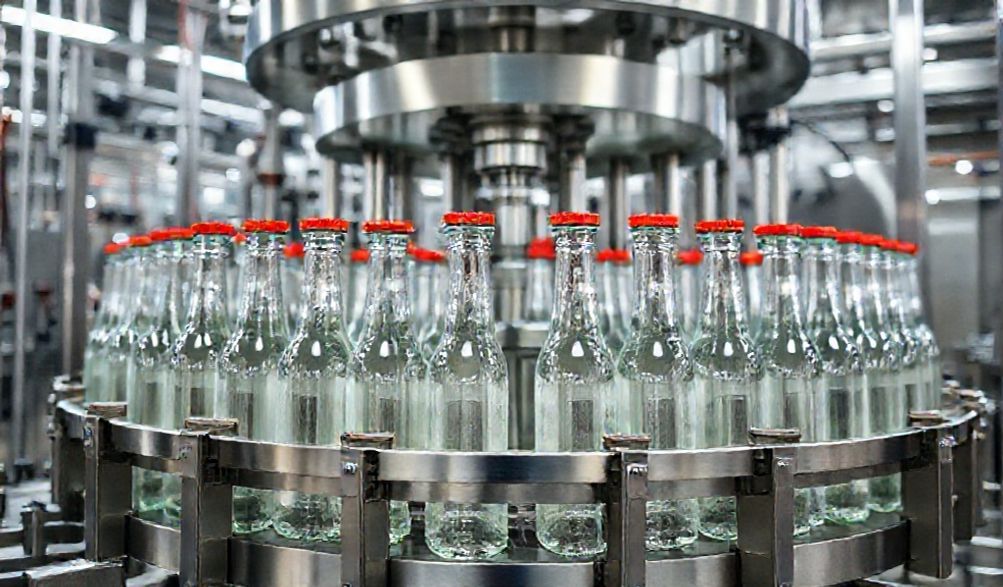
The hallmark of Bock engineering is a marriage of mechanical robustness and precise control. Most machines operate on a rotary indexing principle, where containers are transported in a circular motion via a carousel, passing through dedicated stations for each operation.
- Mécanisme central : For fillers, this often involves rotary piston filling. A piston draws a precise volume of product from a supply tank and injects it into the container. This method is ideal for maintaining accuracy regardless of product viscosity or temperature.
- Composants clés : The machine’s skeleton is a heavy-duty, stainless-steel frame and carousel. Critical working parts include the filling valves (often with anti-drip features), capping heads (spindles or presses), and sophisticated PLC controls. A central tenet of the design is hygiene: most models are designed for full Clean-in-Place (CIP) and sometimes Steam-in-Place (SIP) capability, with polished surfaces and minimal dead legs to prevent bacterial harborage.
Primary Industries and Applications
Bock machines are not a one-size-fits-all solution; they are tailored for demanding environments.
- Beverage Industry: The classic application. From bottling beer (both carbonated and still) and carbonated soft drinks to juices, watersetspirits.
- Dairy & Food: Handling products like milk, yogurt drinks, cream, edible oils, saucesetsoups. Their gentle handling is crucial for sensitive products.
- Pharmaceutical & Cosmetic: For sterile liquids, syrupsettopical solutions where accuracy and aseptic conditions are paramount.
They are built to handle a diverse range of container types: glass bottles, PET bottles, aluminum cans, jars, and even certain flexible pouches, with quick-change parts enabling line flexibility.
Key Types of Bock Machines and Their Specific Functions
Understanding the different machine types is the first step in matching technology to your product’s needs.
Bock Filling Machines
The filling technology is chosen based on the product’s physical characteristics.
- Piston Fillers: The workhorse for viscous and semi-viscous products. Think ketchup, mayonnaise, lotions, or pastes. They provide volumetric accuracy by displacing a set cylinder volume, unaffected by changes in flowability.
- Gravity Fillers: Used for free-flowing, non-foaming liquids like still water, wine, or spirits. Product flows from an elevated tank into the container by gravity, with the fill level often controlled by a vacuum or sensor. Simple and effective for the right application.
- Pressure Fillers: Essential for carbonated beverages like beer and soda. The filler and bottle are pressurized to match the product’s carbonation level, preventing CO2 breakout and excessive foaming during the fill. This preserves carbonation and ensures a consistent fill height.
Bock Capping Machines
A perfect fill is worthless without a perfect seal. Capping machines apply closures with precision.
- Spindle Cappers: The most common type for applying screw caps. Multiple rotating spindles descend onto the cap, applying a pre-set, consistent torque. This prevents under-tightening (leading to leaks) or over-tightening (which can damage threads or containers).
- Press-On Cappers: Apply non-threaded closures. This includes crown corks for beer bottles (applied with a crimping motion) and snap caps for dairy or juice bottles. They rely on precise mechanical pressure.
- ROPP (Roll-On Pilfer-Proof) Cappers: Used primarily for spirits and pharmaceuticals. They take a plain aluminum shell and mechanically roll it onto the bottle’s thread, creating a tamper-evident skirt that breaks away on first opening.
Integrated Monobloc Systems
For maximum efficiency and hygiene, Bock offers monobloc systems. These integrate the filler, capper, and sometimes a rinser or labeler into a single, synchronized unit.
- Avantages : Containers are transferred internally, reducing exposure to the open plant environment and minimizing the risk of contamination or container tipping. They save significant floor space and can boost overall line efficiency (OEE) by eliminating transfer delays.
Critical Factors for Selecting the Right Bock Machine
Choosing a Bock machine is a major capital decision. A thorough evaluation based on these factors will ensure your investment pays dividends for years.
Évaluation de Vos Besoins de Production
Start with a clear internal audit. Ask and answer these questions:
- Vitesse de sortie : What are your required bottles per hour (BPH)? Consider both current needs and projected growth for the next 5-7 years.
- Product Characteristics: Precisely define viscosity, temperature, acidity (pH), particulate content, and sensitivity (to oxygen, light, shear).
- Container Portfolio: What sizes and types (glass, PET, can) do you run? How often do you change over? Look for machines with quick-change parts for bottles and capping heads.
- Empreinte : Precisely measure your available floor space, including necessary access for maintenance and material handling.
Hygiene, Safety, and Compliance Standards
In food and pharma, the machine is part of your product safety plan.
- Matériaux : Insist on AISI 316L stainless steel for all product contact parts. Check surface finish standards (e.g., Ra < 0.8 µm for easy cleaning).
- Cleanability: Verify the CIP system design. Are spray balls provided? Does the design allow for complete drainage? Are there hidden cavities?
- Certifications : The machine must help you meet FDA 21 CFR, EHEDG, 3-A Sanitary Standards, or other relevant ISO standards. Demand documentation.
Total Cost of Ownership (TCO) Analysis
Look beyond the initial purchase price (CAPEX). The real cost is in operation.
- Efficacité énergétique : Compare the power draw of drives, pneumatics, and control systems.
- Changeover Time: How long to switch from one bottle size to another? Lost production time is a major hidden cost.
- Maintenance & Parts: What is the expected maintenance schedule? Are OEM parts readily available and reasonably priced? What is the historical machine reliability (MTBF)?
- Yield & Waste: A more precise filler reduces giveaway (overfilling) and underfill rejections, directly improving your bottom line.
Operational Best Practices and Maintenance
Proper operation and proactive care are what separate a reliable asset from a problematic cost center.
Daily Operation and Optimization Tips
Consistency in procedure prevents problems.
- Startup/Shutdown: Follow a locked sequence: power on, initialize PLC, perform air/water checks, start lubrication system, then begin slow jog before full speed. Reverse the process for shutdown, including a full purge of product lines.
- Changeover Mastery: Document and standardize every step. Use shadow boards for tools and parts. Time your team to foster continuous improvement.
- Fine-Tuning: Learn how to adjust fill height via the piston stroke or timing. Understand how to calibrate capping torque on spindle heads. Keep a log of optimal settings for each product SKU.
Essential Preventive Maintenance Schedule
Adhere to the manufacturer’s manual, but a general framework includes:
- Daily: Visual inspection for leaks, check lubricator levels, verify sensor alignment, clean exterior surfaces.
- Weekly: Inspect and clean filling valves and capping heads, check seal integrity, verify pneumatic pressure, test emergency stops.
- Monthly: Perform more thorough lubrication of bearings and gears, inspect drive chains/belts for wear, calibrate torque settings on cappers, run a full CIP cycle and inspect results.
- Critical Rule: Always use genuine OEM spare parts for seals, valves, and sensors. Third-party parts may seem cheaper but can cause machine misalignment, premature failure, and void warranties.
FAQ: Your Bock Machine Questions Answered
Q1: What is the typical output speed range for a mid-size Bock filler?
Speeds vary dramatically by model and application. A typical rotary piston filler for sauces might run 2,000-6,000 BPH. A high-speed pressure filler for beer on a 40-valve carousel can achieve 30,000+ BPH. The key is to specify based on your bottle size and product.
Q2: How does a Bock machine handle bottle variations or slight imperfections?
Modern machines use a combination of adjustable mechanical guidesetnon-contact sensors. Missing cap detectors, low-fill sensors, and bottle presence sensors will reject faulty containers. The machine’s robust construction also minimizes vibration, ensuring consistent handling even at high speeds.
Q3: Can Bock machines be integrated into existing production lines?
Yes, expertly. They are designed with integration in mind. Standardized conveyor heights, PLC communication protocols (like Profibus, Ethernet/IP), and the ability to sync with upstream rinsers or downstream labelers, pasteurizers, and case packers make them highly compatible. A site audit by an engineer is recommended.
Q4: What is the lead time for a new Bock machine and what support is offered?
For a custom-configured machine, lead times can range from 20 to 40 weeks, depending on complexity and current manufacturer backlog. Comprehensive support typically includes:
* Installation and commissioning by factory-trained technicians.
* On-site operational and maintenance training for your team.
* A standard warranty (often 12-24 months) on parts and workmanship.
* Access to technical documentation and remote support.
Q5: Where can I find reliable technical documentation or spare parts?
Your primary source should always be the official manufacturer or your authorized distributor. They provide authentic parts manuals, wiring diagrams, and PLC code. Using their portals ensures you get the correct, latest revision of parts and firmware updates. Avoid unauthorized third-party part suppliers for critical components.
Conclusion
Selecting and implementing a Bock machine is far more than a simple equipment purchase; it is a strategic investment in the future efficiency, quality, and scalability of your production line. From the precise volumetric fill of a gourmet sauce to the high-speed, foam-free bottling of a craft lager, these machines offer the engineering excellence to meet the most demanding challenges.
This guide, rooted in practical industry experience and technical knowledge, aimed to empower you with a clear understanding of the technology, its applications, and the critical factors for a successful investment. The goal is to move forward with confidence, asking the right questions and setting clear expectations.
Your logical next step is to translate this knowledge into a specification for your unique operation. For a personalized assessment of which Bock machine specifications best match your production line, consult with an authorized packaging automation specialist. They can provide detailed quotes, arrange factory visits, and help you build the business case for this pivotal piece of technology.
This guide was last updated on [Date] to reflect current machine specifications and industry standards.
<