
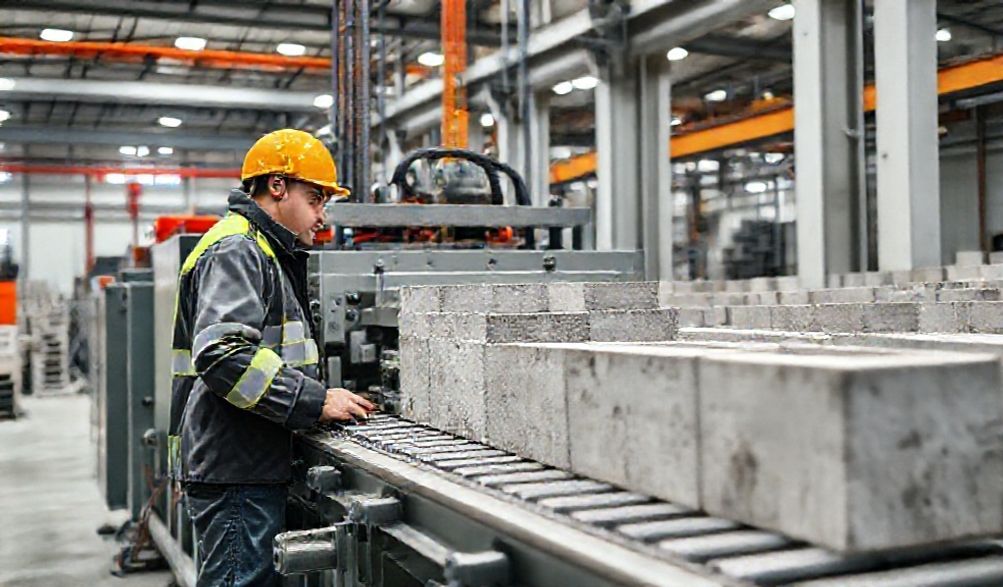
The Ultimate Guide to Sourcing a Reliable China Block Brick Making Machine
Introduction
The global construction industry runs on a fundamental building block: the humble brick. To meet soaring demand affordably, contractors and entrepreneurs worldwide are turning to one primary source for their machinery—China. As the undisputed manufacturing hub for block brick making machines, China offers an unparalleled combination of scale, technology, and value. Yet, navigating this vast market can be daunting, filled with both incredible opportunity and potential pitfalls.
This guide is built on a foundation of industry expertise, technical analysis, and real-world experience in heavy machinery sourcing. Our objective is not to sell you a machine, but to empower you with the knowledge to make an informed, confident purchase. We will demystify the entire process—from understanding the types of machines available and vetting reputable manufacturers, to managing logistics and calculating your true investment. Whether you’re a startup construction firm or a large-scale developer, this comprehensive resource will equip you to source a reliable China block brick making machine that becomes a cornerstone of your business growth.
Pourquoi la Chine est le pôle mondial des machines de fabrication de briques en blocs.
China’s dominance in this sector isn’t accidental. It’s the result of decades of focused industrial development, creating an ecosystem that is difficult to match. Understanding PourquoiLa Chine vous aide à exploiter efficacement ses atouts.
Échelle et Écosystème de Fabrication
Imagine an entire region dedicated to manufacturing construction equipment. In provinces like Shandong, Henan, and Fujian, you find concentrated clusters of factories specializing in hydraulic systems, steel fabrication, mold making, and control panels. This integrated supply chain means manufacturers have ready access to components, reducing lead times and costs. The sheer volume of production also fosters intense competition, driving innovation and keeping prices competitive on a global scale.
Cost-Effectiveness Without Sacrificing Capability
The phrase “cheap Chinese machinery” is an outdated stereotype. Today, it’s about valeur. Chinese manufacturers excel at producing tiered offerings:
* Economy Models: Perfectly functional for small-scale or entry-level projects.
* Mid-Range Workhorses: The sweet spot for most businesses, offering excellent durability and automation.
* High-End Automated Plants: Rivaling European counterparts in technology but at a significantly lower capital cost.
This range allows you to invest precisely according to your production needs and budget.
Avancement technologique et innovation
Chinese engineering has transitioned from imitation to innovation. Modern block making machines from leading Chinese suppliers now routinely feature:
* Advanced PLC Control Systems for precise, repeatable operation.
* Energy-Efficient Hydraulic Systems that reduce electricity costs.
* Innovative Vibration Technologies for higher density and stronger blocks.
* User-Friendly HMIs (Human-Machine Interfaces) that simplify operation and troubleshooting.
This commitment to R&D ensures you’re not buying obsolete technology but a machine capable of competing in today’s market.
Types of Block Brick Making Machines from China
Choosing the right type of machine is your first critical decision. Chinese suppliers offer a vast array, categorized by operation, output, and mobility.
Par opération : Manuel, Semi-automatique et Entièrement automatique
- Machines manuelles : Operated primarily by hand lever. Ideal for very small-scale, community-based projects or producing specialty bricks. They have low output but are extremely affordable and require no power.
- Machines semi-automatiques : The most popular choice for small to medium businesses. They use a hydraulic or mechanical system to compress the block, but mold filling and block removal may be manual. They offer a great balance of output (500-2,000 blocks per day) and investment.
- Machines entièrement automatiques : These are production lines. They automatically handle raw material feeding, mixing, molding, curing, and stacking. Controlled by PLC, they can produce 10,000 to over 30,000 blocks per shift with minimal labor. They represent a significant investment but offer the lowest cost per block at high volume.
By Output Product: Concrete Hollow Blocks, Solid Bricks, Pavers, Interlocking Blocks
The machine is defined by its mold and pressure system. Most machines are versatile, but you must specify your primary product.
* Concrete Hollow Block Machines: Designed to create standard hollow blocks for walls. They use core rods in the mold.
* Solid Brick & Paver Machines: Apply higher pressure to create dense, solid products for paving, flooring, and heavy-duty walls.
* Interlocking Block Machines: Produce bricks that lock together without mortar, popular for eco-friendly and rapid construction. These require precise mold engineering.
* Specialty Shape Machines: For curb stones, grass blocks, or custom designs. Often require custom-made molds.
By Mobility: Stationary Plants vs. Mobile Brick Making Machines
- Plantes Stationnaires : These are fixed installations, typically the semi- and fully-automatic models. They require a solid foundation, utility hookups, and are meant for long-term production in a dedicated yard. They offer higher stability and output.
- Machines mobiles de fabrication de briques : Mounted on a trailer, these units can be towed directly to a construction site. They enable on-site production, eliminating transport costs for finished blocks. They are usually smaller in scale (manual or semi-automatic) and perfect for remote projects or reducing a project’s carbon footprint.
Key Specifications to Analyze When Evaluating a Machine
Looking beyond the sales brochure is essential. These technical specifications are the true indicators of performance and longevity.
Indicateurs de Performance Clés
- Production Capacity (blocks/shift): Always clarify the block size this rating is based on (e.g., 400x200x200mm). A “2,000 blocks/day” claim for a small brick is very different than for a large hollow block.
- Temps de cycle : The time to complete one molding cycle (in seconds). Lower is faster, but must be balanced with pressure for quality.
- Pressure (Ton-force): The compaction force. Higher pressure (e.g., 150-300 tons) generally produces stronger, denser blocks, especially for solid bricks and pavers.
Power & Hydraulic Systems
- Motor Power (kW): Indicates the machine’s drive capacity. Under-powered motors will struggle and overheat.
- Hydraulic Pump & Valve Brand: Ask for the brand (e.g., Yuken, Rexroth, or a reputable Chinese brand). The quality of the hydraulic system is the heart of the machine and a major factor in reliability.
- Consommation d'énergie : Calculate the estimated hourly electricity cost based on motor power and your local utility rates.
Construction and Durability
- Frame Material: Look for high-grade, thick steel plate (e.g., Q235 or better). The frame should be welded, not bolted, at critical stress points.
- Mold Material & Hardening: Molds endure extreme wear. They should be made from high-chromium alloy steel and undergo heat treatment (hardening) to a specified HRC (Rockwell Hardness) value, often above 55 HRC.
- Cylinders and Seals: Hydraulic cylinders should be precision-machined. High-quality seals (like Parker or SKF) prevent leaks and extend service life.
Control System and Ease of Use
- PLC vs. Relay Controls: A Contrôleur Logique Programmable (CLP) is now standard on automatic machines. It allows for precise control, fault diagnostics, and easier automation integration. Relay systems are older, less reliable, and harder to troubleshoot.
- Interface: Request a photo of the control panel. It should be clearly labeled, logically organized, and in your language.
- Documentation: A professional supplier provides comprehensive manuals: electrical diagrams, hydraulic schematics, parts lists, and basic troubleshooting guides.
How to Identify and Vet Reputable Chinese Manufacturers & Suppliers
This is the most critical phase of your journey. Diligence here prevents immense headaches later.
Beyond Alibaba: Effective Sourcing Channels
While B2B platforms like Alibaba and Made-in-China are starting points, diversify your search:
* Industry-Specific B2B Platforms: Sites with a heavier machinery focus can have more specialized suppliers.
* The Canton Fair (China Import and Export Fair): Attending in person is invaluable. You can meet engineers, see machines operate, and gauge a company’s professionalism directly.
* Verified Supplier Directories: Some industry associations or trade agencies maintain lists of vetted manufacturers.
Critical Due Diligence Checklist
Do not skip these steps:
-
Business License & Factory Audit:
- Request a copy of their official Licence Commerciale.
- Insist on a factory audit. A third-party inspection report (from SGS, BV, etc.) is gold standard. At a minimum, demand a detailed, real-time video tour of the production floor, warehouse, and quality control area—not a glossy promotional video.
-
Technical Documentation & Certifications:
- DemanderCAD drawings of the machine and electrical/hydraulic schematics avant payment. A serious manufacturer will provide them.
- Check for certifications. CE marking (for Europe) indicates compliance with essential safety standards. ISO 9001 certification suggests a managed quality system. Understand that these are self-declarations for many Chinese machines, but the process still shows intent.
-
Client References and Project Portfolio:
- Ask for 2-3 contactable references in your region or a region with similar conditions. A phone call with a past client is worth a thousand sales pitches.
- Review their project portfolio for installations similar to your planned operation.
The Critical Role of Effective Communication
- Be Specific: Don’t just say “fully automatic machine.” Specify desired output, block sizes, raw materials, voltage, and any local safety standards.
- Use Visuals: Send pictures or diagrams. Mark up their drawings with your questions.
- The Proforma Invoice (PI) is a Contract: Ensure every agreed detail—model, specs, payment terms, Incoterms, packaging, warranty, spare parts list—is explicitly written in the PI before making any payment.
Navigating Logistics, Shipping, and After-Sales Support
Getting the machine to your door is a project in itself. Plan for it from the start.
Incoterms Clarification
These define risk and cost responsibility. For heavy machinery:
* EXW (Ex-Works) : You arrange and pay for everything from the factory gate onward. Only for experienced importers.
* FOB (Franco à bord) : The most common term. The supplier delivers the machine to the port and loads it on your chosen vessel. You handle sea freight, insurance, and destination port costs. You control the shipping.
* CIF (Coût, Assurance et Fret) : Supplier arranges and pays for shipping and insurance to your destination port. You handle import clearance and onward transport. Simpler, but you lose control over carrier choice and cost.
Packaging, Customs, and Import Duties
- Emballage : Machines must be mounted on a solid, wooden steel-frame skid (not just a pallet), with critical parts waterproofed and immobilized. Motors and PLCs should be removed and packed separately in crates.
- Documentation: You will need the supplier’s Commercial Invoice, Packing List, and Bill of Lading. For customs clearance in your country, you may need a Certificate of Origin and any supplied compliance certificates.
- Import Duties: This is your responsibility. Consult a local customs broker early to understand the HS code, duty rate, VAT, and any permits required for importing machinery into your country.
Securing Reliable After-Sales Service
Service is not an afterthought; it’s part of the purchase price.
* Garantie : Negotiate a standard 12-month warranty against manufacturing defects, starting from arrival at your port or after commissioning.
* Spare Parts Kit: Purchase a recommended “starter” spare parts kit (seals, filters, relays, etc.) with the machine to avoid minor downtime.
* Support Protocol: Confirm the availability of remote support via video call (WhatsApp, Zoom). For major issues, what are the terms and costs for a technician to be dispatched?
* Formation : Clarify what training materials are provided (videos, manuals) and if on-site training can be included or purchased.
Cost Breakdown and Investment Analysis
Understand the total financial commitment beyond the machine’s sticker price.
Machine Price vs. Total Landed Cost
The FOB price is just the beginning. A simplified breakdown:
| Cost Component | Approx. % of FOB Price | Notes |
| :— | :— | :— |
| Machine FOB Price | 100% (Base) | Quoted by the supplier. |
| Sea Freight & Insurance | 15% – 30% | Depends on container size (20ft/40ft) and destination. |
| Import Duties & Taxes| Varies by Country | Can range from 5% to 20%+ of CIF value. Must verify locally. |
| Local Port & Transport| 5% – 10% | Includes clearance agent fees, port charges, and trucking to your site. |
| Installation & Foundation| 5% – 15% | Cost for concrete foundation, electrical work, and assembly labor. |
Total Landed Cost can easily be 140-175% of the FOB price.
Calculating Your Return on Investment (ROI)
Create a simple projection:
1. Revenue: (Monthly Block Output) x (Selling Price per Block)
2. Coûts directs : (Raw Materials + Labor + Energy for production)
3. Gross Profit: (Revenue – Direct Costs)
4. Machine Cost Amortization: (Total Landed Cost) / (Estimated useful life in months)
A simplified break-even analysis: Break-Even Time (months) = Total Landed Cost / Monthly Gross Profit. Aim for a break-even point of 12-24 months for a healthy investment.
Common Hidden Costs to Avoid
- Substandard Spare Parts: Cheap, non-OEM parts failing quickly.
- Downtime from Poor Documentation: Engineers wasting days deciphering unclear manuals.
- Expedited Shipping for Missing Parts: Paying for air freight because a critical part was forgotten or wrong.
- Local Regulatory Non-Compliance: Fines or modifications because the machine didn’t meet local electrical or safety standards.
Foire aux Questions (FAQ)
Q1: What is the typical lead time for a brick making machine from China?
A: For standard models, expect 30 to 45 days after deposit receipt. For large, fully automatic plants or machines with custom features, lead time can extend to 60-90 days. Always confirm this in writing and note that shipping time is additional.
Q2: Can Chinese machines handle our local raw materials (e.g., specific soil/aggregate types)?
A: This is crucial. Chinese machines are typically calibrated for standard sand, cement, and aggregate mixes. You must send 20-50kg of your local raw materials to the manufacturer for testing. They can then advise on the ideal mix ratio and may adjust machine settings or recommend a different pressure system to ensure optimal block quality.
Q3: How do we handle machine installation and operator training?
A: You have three main options:
1. Self-Installation: Using the provided detailed manual and video guides. Suitable for semi-automatic machines if you have a skilled mechanic.
2. Local Engineer: Hire a local industrial mechanic or electrician familiar with hydraulic/PLC systems.
3. Supplier Technician Dispatch: Pay for the supplier’s engineer to travel to your site for commissioning and training. This is highly recommended for first-time buyers or fully automatic lines, despite the added cost.
Q4: Are spare parts readily available, and how long do they take to arrive?
A: Standard parts (common seals, standard bearings) are usually kept in stock and can be shipped by air in 7-10 days. For large, custom-made parts (like a main mold or hydraulic cylinder), you may face a 4-8 week lead time for manufacturing and sea shipping. This is why purchasing an initial spare parts kit is a wise investment.
Q5: What are the most common mistakes first-time buyers make?
A:
* Price-Only Focus: Choosing the cheapest quote without vetting quality.
* Vague Specifications: Not providing detailed requirements, leading to a mismatched machine.
* Skipping the Factory Audit: Buying from a trading company posing as a manufacturer.
* Ignoring Logistics: Not budgeting for or understanding shipping, duties, and installation costs.
* Poor Communication: Not confirming every detail in the Proforma Invoice.
Conclusion
Sourcing a block brick making machine from China is a significant but highly rewarding venture. The market offers a spectrum of machinery capable of transforming your construction business or project’s profitability. Success, however, hinges on a methodical approach: deep technical understanding, relentless supplier vetting, crystal-clear communication, and comprehensive total-cost planning.
View this not as a simple transaction, but as the beginning of a long-term technical partnership. A reliable machine is a multi-year asset. By investing time in the selection process, you build a relationship with a supplier who can support your growth for years to come.
Your final step before contacting suppliers: Create a detailed Project Requirement Sheet. Document your desired block types, daily output, raw material details, site power supply, and budget. Share this document uniformly with potential suppliers. This levels the playing field, ensures comparable quotes, and demonstrates your seriousness as a buyer. Finally, consult with a local freight forwarder or import agent at the very start of your journey—their advice will be invaluable.
<