
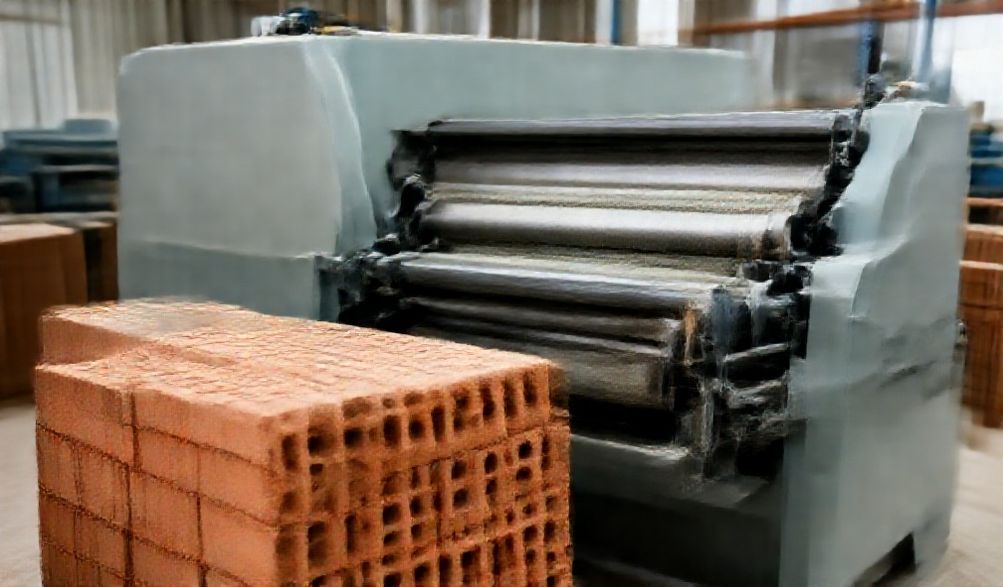
Prix de la Machine à Fabriquer des Briques de Ciment à Delhi 2026 : Guide Complet de l'Acheteur
Introduction
Imaginez que vous soyez un entrepreneur à Rohini ou un chef d'entreprise à Faridabad. Vous avez décroché quelques projets, et les fluctuations constantes du prix des briques grignotent vos marges. L'idée de produire vos propres parpaings en ciment est séduisante — elle promet le contrôle, la garantie de qualité et une meilleure rentabilité. Mais dès que vous commencez à chercher "le prix d'une machine à fabriquer des parpaings en ciment à Delhi", vous êtes confronté à une gamme vertigineuse d'options. Les devis varient de quelques lakhs à plusieurs crores, et chaque fournisseur prétend offrir "la meilleure affaire". Le sentiment d'être submergé est bien réel.
Ce guide est conçu pour couper court à ce bruit. Notre objectif est de vous fournir des informations transparentes, détaillées et exploitables sur les prix des machines à fabriquer des briques en ciment, spécifiquement pour le marché de Delhi/NCR. Cette analyse ne repose pas sur des spéculations ; elle est construite sur les tendances actuelles du marché, les spécifications directes des fabricants et une compréhension approfondie des exigences uniques de la construction dans la région, des défis climatiques et des réalités opérationnelles.
À la fin de ce guide, vous aurez une compréhension claire du paysage des prix, des principaux facteurs qui influencent les coûts et de l'économie opérationnelle. Plus important encore, vous saurez exactement quelles questions poser aux fournisseurs pour vous assurer que votre investissement bâtit votre entreprise, et pas seulement un tas de briques.
Comprendre le marché des machines à fabriquer des briques de ciment à Delhi
Delhi n'est pas seulement un marché pour les machines de construction ; c'est un centre dynamique et exigeant. Comprendre ce contexte est crucial pour faire un achat intelligent.
Pourquoi Delhi/NCR est un centre pour les machines de construction
La région de la capitale nationale de Delhi est perpétuellement en chantier. Des projets d'infrastructure à grande échelle comme les corridors de l'autoroute Delhi-Mumbai à la demande incessante de logements abordables et d'espaces commerciaux dans des zones en plein essor comme Noida et Gurugram, le besoin en matériaux de construction est insatiable. Cette demande constante crée un marché florissant pour les machines capables de produire ces matériaux localement et efficacement.
De plus, la position géographique de Delhi est stratégique. Elle se trouve aux portes des principaux clusters manufacturiers des États voisins—les ceintures industrielles de Faridabad et Ghaziabad, respectivement dans l'Haryana et l'Uttar Pradesh. Cette proximité signifie un accès plus facile aux fournisseurs, des coûts logistiques potentiellement réduits pour le transport des machines, et souvent des délais de réponse pour les services plus rapides.
Types de machines disponibles : du manuel au tout automatique
Le niveau d'automatisation est le facteur le plus déterminant pour façonner votre investissement. Voici un aperçu rapide :
- Machines manuelles :Fonctionnant principalement à l'aide de leviers manuels et d'une main-d'œuvre humaine pour le mélange, l'alimentation et l'éjection des briques. Ils constituent le point d'entrée le plus basique.
- Machines semi-automatiques :Ces systèmes intègrent des mécanismes mécaniques ou hydrauliques pour comprimer la brique. Les opérateurs alimentent le mélange et retirent les briques finies, mais le processus central de compactage est motorisé. Ils offrent un équilibre essentiel.
- Machines entièrement automatiques :Ce sont des lignes de production. Grâce à l'alimentation automatisée des matériaux, au mélange, au compactage, à l'empilage et parfois même au palettisation, elles nécessitent une intervention humaine minimale, souvent uniquement pour la supervision et la maintenance.
En passant du manuel au entièrement automatique, le prix augmente considérablement, mais il en va de même pour la production, la cohérence et l'efficacité opérationnelle.
Facteurs clés déterminant les prix des machines à fabriquer des briques de ciment
Le prix d'une machine est la somme de ses composants, de ses capacités et du support associé. Voyons en détail ce pour quoi vous payez réellement.
1. Niveau d'automatisation et capacité de production
C'est le principal déterminant du prix. La capacité de production, mesurée en briques par heure (BPH) ou en blocs par poste, est directement corrélée au coût.
- Machines manuelles (Tranche de prix la plus basse) :Idéal pour une production à très petite échelle ou de niche. La production est limitée par la main-d'œuvre.
- Machines semi-automatiques (Tranche de prix moyenne) :Le cheval de bataille pour la plupart des petites et moyennes entreprises (PME). Les capacités peuvent varier de 800 à 2 500 BPH, avec des prix évoluant en conséquence.
- Machines entièrement automatiques (Gamme de prix premium) :Conçu pour la production commerciale à grande échelle, avec des débits à partir de 4 000 BPH et bien au-delà. L'investissement est substantiel mais justifié par les volumes.
2. Type de Machine & Variété de Production de Briques
Quel type de briques souhaitez-vous fabriquer ? Le type de machine est spécialisé pour cela.
- Machines à blocs pleins :Pour les briques de construction standard.
- Machines à Blocs Creux :Pour des briques plus légères et isolantes utilisées dans les cloisons et les murs porteurs.
- Machines à pavés autobloquants et à blocs imbriqués :Pour l'aménagement paysager, les pavages et les techniques de construction modernes.
- Machines Polyvalentes :Celles-ci peuvent produire différents types en changeant les moules. Elles offrent une flexibilité mais peuvent exiger un prix plus élevé qu'une unité à usage unique de capacité similaire.
3. Marque, Qualité de Fabrication & Service Après-Vente
Dans l'environnement exigeant de Delhi – avec sa poussière, sa chaleur estivale et l'attente d'un fonctionnement continu – la qualité de construction n'est pas négociable.
- Qualité de construction :Recherchez des cadres robustes, des moteurs vibrants de haute qualité et des systèmes hydrauliques durables. Une machine moins chère avec des plaques métalliques minces vibrera excessivement et tombera souvent en panne, vous coûtant davantage en temps d'arrêt et en réparations.
- Marque et Service :Une marque réputée dotée d'un réseau de service après-vente solide et réactif dans la région de Delhi NCR est inestimable. Lorsqu'une machine s'arrête, votre production et vos revenus s'interrompent. Une équipe de service locale pouvant intervenir sur site en quelques heures est un élément essentiel de la proposition de valeur.
4. Additional Costs Beyond the Sticker Price
The machine’s invoice is rarely the final cost. Factor in these often-overlooked expenses:
- Installation et Mise en Service : Some suppliers include this, others charge extra.
- Moississures : The mold defines the brick’s shape and size. A standard mold may come with the machine, but additional designs (for different brick types or patterns) are an added cost.
- Formation : Proper training for your operators is essential for safety, efficiency, and brick quality.
- Logistics: Transportation from the supplier’s yard to your site in Delhi. This can be significant for larger machines.
- Spare Parts Kit: Purchasing a basic kit of commonly needed spares (like springs, seals, bolts) upfront can prevent future downtime.
Detailed Price Breakdown for Delhi Buyers (2026)
Disclaimer: The following price ranges are estimates for 2026 based on current trends, inflation, and market analysis. They are intended to provide a realistic budgetary framework. Always get detailed quotations from multiple suppliers.
Price Range of Manual Cement Brick Machines
- Estimated Range: ₹1.5 Lakhs – ₹4 Lakhs
- Idéal Pour : Micro-enterprises, startups with very low capital, NGOs, or for producing bricks for personal use on a farmhouse project.
- Avantages :
- Investissement initial le plus bas.
- Simple to operate with minimal technical knowledge.
- Low power consumption.
- Inconvénients :
- Very low output (200-500 BPH).
- Labor-intensive and physically demanding.
- Inconsistent brick quality due to human effort variance.
- Operational Cost: Primarily labor (2-3 persons) and raw materials. Electricity cost is negligible.
Price Range of Semi-Automatic Cement Brick Machines
- Estimated Range: ₹4 Lakhs – ₹15 Lakhs
- Idéal Pour : The “sweet spot” for most small and medium brick-making businesses, contractors looking to supply their own sites, and entrepreneurs targeting local housing projects.
- Avantages :
- Excellent balance of automation and cost.
- Good production capacity (800 – 2,500+ BPH).
- Consistent brick quality due to mechanical/hydraulic pressure.
- Can be operated with 2-4 personnel.
- Inconvénients :
- Investissement initial plus élevé que les machines manuelles.
- Requires reliable 3-phase power connection.
- Needs basic maintenance understanding.
- Operational Cost: Includes power for the motor (typically 5-15 HP), labor for feeding and stacking, and routine maintenance.
Price Range of Fully Automatic Cement Brick Machines
- Estimated Range: ₹15 Lakhs – ₹75+ Lakhs
- Idéal Pour : Large-scale commercial plants, B2B suppliers to major construction companies, and businesses aiming for high-volume production with minimal manual labor.
- Avantages :
- Very high, consistent output (4,000 – 10,000+ BPH).
- Minimal manual labor required (mostly supervision).
- Superior brick density and uniformity.
- Often include features like auto mixing, conveyor systems, and stackers.
- Inconvénients :
- Very high capital investment.
- Significant space requirement.
- Complex maintenance requiring trained technicians.
- High power consumption.
- Operational Cost: Significant electricity costs, skilled supervisor salary, and planned maintenance schedules are key components.
How to Get the Best Value for Your Investment in Delhi
Getting the right machine is a process, not an impulse buy. Follow this actionable advice.
Evaluating Suppliers & Manufacturers in Delhi NCR
Don’t just buy from a brochure. Your due diligence should include:
- Factory Visit: Insist on visiting the manufacturing unit, preferably in the NCR industrial belt. Assess their workshop quality and processes.
- Live Demonstration: See the machine running. Test it with a raw material mix similar to what you’ll use (ask if you can bring your own sand/aggregate).
- Références clients : Ask for a list of 3-4 customers in or around Delhi. Call them. Ask about machine performance, brick quality, and most importantly, the responsiveness of the after-sales service.
- Service Team Verification: Ask where their service engineers are based and what their typical response time is for a call in South Delhi or West Delhi.
Must-Ask Questions Before Purchasing
Arm yourself with this checklist when talking to suppliers:
- “What is the exact warranty period, and what components does it cover (e.g., motor, frame, hydraulics, electrical panel)?”
- “Where is your spare parts warehouse located for Delhi/NCR? What is the availability guarantee for critical spares?”
- “Can you provide guidance on the raw material mix ratio optimized for the locally available sand and aggregates in my area?”
- “Do you provide on-site installation and training? Is it included in the price?”
- “What is the power requirement (in KW/HP) for this model, and how will Delhi’s voltage fluctuations affect it?”
Calculating Your Return on Investment (ROI)
A simple ROI analysis brings clarity. Here’s a basic framework for a semi-automatic machine:
- Machine Cost: ₹8,00,000
- Daily Production (1 shift): 2,000 bricks
- Selling Price per Brick (Delhi Market): ₹8 (estimate)
- Daily Revenue: 2,000 x ₹8 = ₹16,000
- Daily Operational Cost (Power, Labor, Raw Materials): ~ ₹9,000 (estimate)
- Daily Profit: ₹16,000 – ₹9,000 = ₹7,000
- Monthly Profit (26 days): ₹1,82,000
- Simple Payback Period: ₹8,00,000 / ₹1,82,000 ≈ 4.4 months.
Note: This is a simplified example. Your actual raw material cost, selling price, and operational efficiency will vary. It also excludes fixed costs like land rent.
Common Pitfalls to Avoid When Buying in Delhi
Learning from others’ mistakes is cheaper than making your own.
Choosing Price Over Quality and Service
The cheapest machine often becomes the most expensive. Frequent breakdowns lead to:
* Lost production days.
* Costly emergency repairs.
* Missed project deadlines and loss of customer trust.
Invest in reliability from a supplier known for service.
Overestimating or Underestimating Production Needs
- Overestimating: You tie up excessive capital in a machine that sits underutilized.
- Underestimating: You buy a small machine and quickly outgrow it, facing the hassle of selling and upgrading.
Analyze your current orders and realistic 2-3 year growth projection. Choose a machine that can grow with you, perhaps by opting for a semi-automatic model with a higher capacity buffer.
Neglecting Operational Costs (Power, Labor, Maintenance)
The machine’s price is a one-time cost. Running it is continuous. Create a realistic monthly budget for:
* Pouvoir : Delhi’s industrial electricity rates apply. A 10 HP motor running 8 hours daily consumes significant units.
* Travail : Even semi-automatic machines need skilled, reliable operators.
* Maintenance Préventive : Regular greasing, part inspections, and minor repairs are essential to avoid major breakdowns. Budget for this.
Frequently Asked Questions (FAQ)
Q1: What is the cheapest cement brick making machine available in Delhi?
A: Manual machines are the entry point, with prices starting around ₹1.5 lakhs. However, be cautious. Their low output and high labor intensity make them unsuitable for any commercial-scale operation. They are best for very limited, personal-use projects.
Q2: Can I get a subsidy or financing for a brick machine in Delhi?
A: Yes, there are possibilities. Explore MSME (Micro, Small & Medium Enterprises) schemes offered by the Delhi government or central ministries. Many nationalized and private banks offer machinery loans under the CGTMSE scheme. It’s advisable to check with the Delhi State Industrial and Infrastructure Development Corporation (DSIIDC) or a local industry association for the most current information.
Q3: How much space is required to install and operate a semi-automatic machine in Delhi?
A: For a smooth operation, you should plan for approximately 2,000 to 3,000 square feet. This covers the machine’s footprint, raw material storage (sand, aggregate, cement), a mixing area, space for fresh bricks to be stacked for initial setting, and a dedicated curing area. Space constraints in urban Delhi make this a critical planning factor.
Q4: Which areas in Delhi/NCR have the highest concentration of machinery suppliers?
A: Key industrial hubs include Mayapuri, Lawrence Road, and Kirti Nagar in Delhi. For a wider variety and often better pricing, visit the major manufacturing clusters in Faridabad (Haryana)etGhaziabad/Meerut Road (Uttar Pradesh). Always prefer a personal visit over phone negotiations.
Q5: What is the typical payback period for a mid-range machine?
A: For a well-utilized semi-automatic machine with good market demand for its bricks, a typical payback period ranges from 12 to 24 months. This depends heavily on your operational efficiency, local brick selling prices, and your ability to manage raw material costs effectively.
Conclusion
Navigating the “cement brick making machine price in Delhi” landscape reveals a core truth: the right price isn’t the lowest price; it’s the one that aligns with your specific production needs, business scale, and long-term growth goals. A machine is a productivity engine, and its value is measured in the quality and quantity of bricks it reliably produces over its lifetime.
For most entrepreneurs and contractors in the Delhi NCR region, a robust semi-automatic machine from a reputable supplier with proven after-sales support offers the optimal balance. It provides the automation needed for quality and efficiency without the daunting capital outlay of a fully automatic plant.
Use this guide as your checklist. Shortlist 3-4 suppliers from the Delhi NCR industrial belt. Schedule live demonstrations. Calculate your ROI based on your numbers. And remember the most powerful due diligence tool: always ask for customer references in Delhi and speak to them directly about their real-world experience. Your informed decision today will lay a solid foundation for your business for years to come.
<