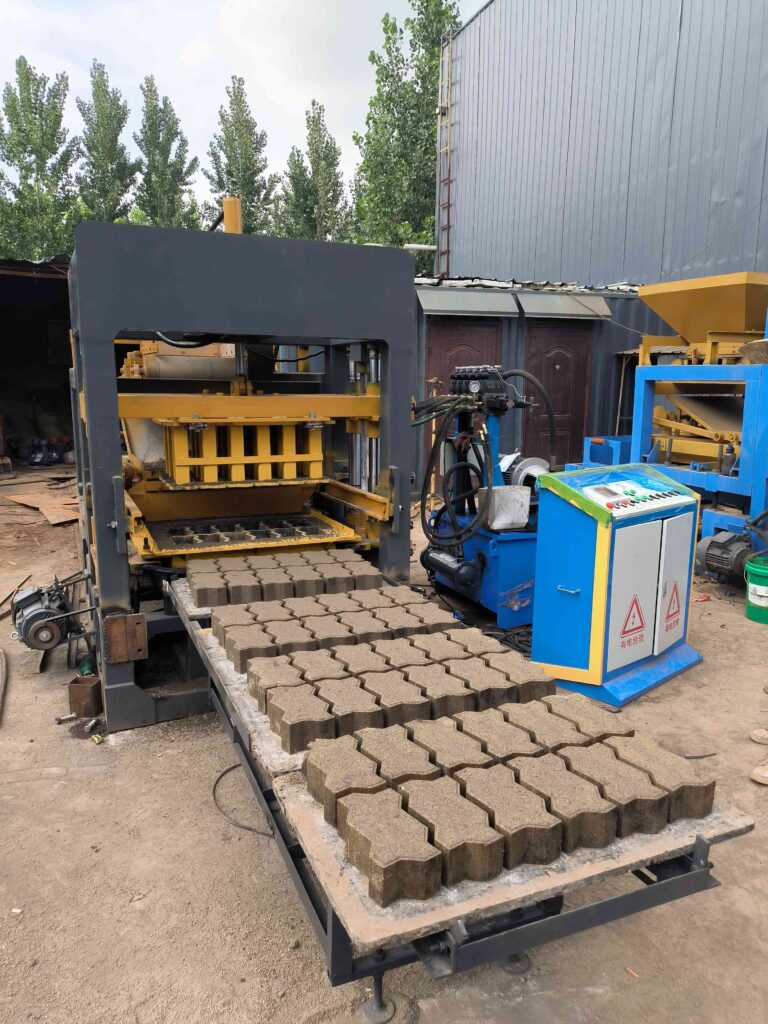
Plongée Technique : Le Système derrière la Solution
La machine à blocs de cendres volantes électrique est un système industriel spécialisé conçu pour traiter une matrice de matériaux unique. Sa philosophie de conception repose sur la précision, la cohérence et l'activation chimique des matériaux pouzzolaniques.
I. Science des Matériaux de Base : Le Rôle des Cendres Volantes
Comprendre la matière première est essentiel pour apprécier la conception de la machine.
- Composition des cendres volantes :Une poudre fine récupérée des gaz de combustion des centrales électriques au charbon. Elle est principalement composée de dioxyde de silicium, d'oxyde d'aluminium et d'oxyde de calcium, ce qui la classe soit en Catégorie F (faible teneur en calcium) soit en Catégorie C (teneur plus élevée en calcium).
- Propriétés pouzzolaniques :Lorsqu'elle est combinée à de l'eau et à une source d'hydroxyde de calcium (généralement provenant du ciment ou de la chaux), les cendres volantes subissent une réaction pouzzolanique, formant des composants cimentaires stables similaires à ceux du ciment Portland hydraté. Cela permet de remplacer une part importante du ciment dans le mélange.
- Prétraitement des Matériaux :Les performances optimales des machines nécessitent souvent des cendres volantes de qualité constante. Les systèmes peuvent intégrer ou présupposer un séchage préalable, une classification pour éliminer le carbone non brûlé, ainsi qu'un stockage et un transport précis afin d'assurer l'uniformité des lots.
II. Architecture des Machines et Flux de Processus Intégré
Contrairement aux fabricants de blocs standards, ces systèmes sont souvent des chaînes de production conçues pour des mélanges à base de cendres volantes, qui peuvent être moins granulaires et plus cohésifs que le béton standard.
A. Sous-système de Dosage et de Mélange de Précision
- Batching en Boucle Fermée:Doseuses automatiques pour les cendres volantes, les granulats (comme le sable ou les cendres de fond), les liants (ciment ou chaux en quantités réduites) et l'eau. La précision n'est pas négociable pour garantir des réactions chimiques constantes et une résistance finale uniforme.
- Mélangeurs à Panier à Cisaillement Élevé ou Mélangeurs à Double ArbreElles sont préférées aux mélangeurs à tambour simples. Elles assurent un mélange intense et homogène des mélanges souvent collants de cendres volantes, garantissant que chaque particule est enrobée d'activateur et que l'humidité est uniformément répartie, ce qui est essentiel pour la réaction pouzzolanique.
B. La Formation et la Compaction du Cœur
- Vibration Haute Fréquence, Multi-Directionnelle :La table de moule utilise des vibrateurs puissants et électroniquement contrôlés. La fréquence et l'amplitude sont réglées pour désaérer et compacter efficacement le mélange fin, riche en poudre, qui ne s'écoule pas comme le béton granulat traditionnel.
- Pressage Hydraulique Simultané :De nombreux systèmes avancés combinent les vibrations avec une pression hydraulique contrôlée appliquée depuis le haut. Cette méthode de compactage double (vibrations par le bas, pression par le haut) est essentielle pour atteindre la haute densité et la résistance initiale à l'état vert nécessaires à une manutention efficace des blocs de cendres volantes, qui peuvent initialement être plus fragiles.
- Gestion des Automates Programmables Industriels (API) : The entire forming cycle—vibration duration, pressure force, dwell time—is managed by a PLC. This ensures repeatability and allows storage of recipes for different product types and mix designs.
C. Curing Optimization for Pozzolanic Reactions
- Automated Handling Post-Ejection: Green blocks are gently transferred via cross-conveyors or lifters to curing racks or pallets, minimizing damage risk.
- Controlled Curing Environments: To accelerate the pozzolanic reaction and achieve early strength gain without excessive energy use, systems may be integrated with:
- Low-Pressure Steam Curing Chambers: Curing at 60-80°C for 8-12 hours dramatically increases early strength, allowing for faster pallet turnaround.
- Humidity-Controlled Curing Rooms: For ambient curing, precise control of humidity and temperature ensures optimal reaction conditions.
Market Drivers and the Compelling Value Proposition
The business case for this machinery is built on multiple, powerful pillars that resonate with end-users, policymakers, and financial stakeholders.
I. Regulatory and Environmental Drivers
- Waste Utilization Mandates: Governments worldwide are imposing strict regulations on fly ash disposal from thermal power plants, often incentivizing or mandating its utilization in construction. This creates a reliable, low-cost, or even negative-cost raw material stream.
- Certification Bâtiment Durable : Systems like LEED, BREEAM, and Green Star award significant points for using recycled content (fly ash) and regionally sourced materials. Blocks produced from high-volume fly ash content are a direct pathway for developers to achieve certification.
- Carbon Tax and Emissions Trading: Reducing the Portland cement content directly lowers the embodied carbon of the block. In jurisdictions with carbon pricing, this translates into tangible cost avoidance and a stronger environmental, social, and governance (ESG) profile.
II. Performance and Economic Advantages
- Superior Product Performance: Fly ash blocks often exhibit higher long-term ultimate strength, reduced permeability, improved resistance to sulfate attack, and better workability (in the green state) compared to ordinary concrete blocks.
- Dramatic Reduction in Production Costs: Cement can constitute 40-60% of the raw material cost for a conventional block. Replacing 40-70% of it with fly ash creates an immense and direct saving in the bill of materials.
- Energy Efficiency of Production: The electric system, when combined with ambient or low-temperature steam curing, has a significantly lower thermal energy footprint compared to fired clay brick production. The machinery itself, being electrically driven, offers precise power control and often lower operational energy costs than equivalent diesel-hydraulic systems in grid-stable regions.
- Supply Chain Security and Localization: Production can be established near power plants, securing raw material supply and serving regional construction markets, reducing logistics costs and vulnerability to distant cement price fluctuations.
Strategic Considerations for Distribution and Implementation
For distributors, succeeding with this technology requires a consultative, solution-oriented approach.
I. Partner and Machine Selection Criteria
- Manufacturer Expertise in Material Science: The ideal partner has a deep, demonstrable understanding of fly ash chemistry and mix design, not just mechanical engineering. They should provide full technical back-up for client mix optimization.
- System Robustness and Adaptability: The machine must be built to handle abrasive materials with hardened steel wear parts. It should offer flexibility in mix ratios and final product specifications (solid, hollow, insulated blocks).
- Integration and After-Sales Support: Evaluate the supplier’s ability to provide a complete solution, including batching, mixing, and curing advice. A comprehensive parts guarantee and technical training focused on the unique aspects of fly ash processing are critical.
II. Building a Successful Market Entry Strategy
- Identify Symbiotic Partners: Target areas with large thermal power plants seeking fly ash offtake solutions. Collaborate with environmental agencies and green building consultants.
- Develop a Master Business Plan for Clients: Go beyond selling the machine. Help prospective buyers develop a full business model, including raw material sourcing agreements (with power plants), cost projections, and marketing strategies targeting green builders and government infrastructure projects.
- Create Certification and Compliance Support: Assist clients in getting their fly ash blocks tested and certified by local building standards authorities. This validation is essential for market acceptance and commanding a premium price.
- Demonstrate Lifecycle Value: Use tools like Life Cycle Assessment (LCA) to quantify and market the reduced carbon footprint of the blocks, providing clients with a powerful sales tool for their own customers.
Conclusion
The electric fly ash block making machine is a paradigm-shifting technology that turns an environmental liability into a construction-grade asset. For the strategic distributor, it represents a high-value entry into the sustainable construction ecosystem. This is not a commodity sale but a partnership in building circular economies and compliant, future-ready businesses. Success requires moving beyond equipment specifications to master the narrative of resource efficiency, regulatory compliance, and superior building science. By providing this integrated solution, distributors position themselves as indispensable allies in their clients’ profitability and sustainability journeys, securing a competitive advantage in the evolving global market for construction materials.
FAQ (Frequently Asked Questions)
Q1: What is a typical fly ash-to-cement ratio in these blocks, and how does it affect strength gain?
A common range is 40% to 70% fly ash replacement by mass of the total cementitious material (cement + fly ash). While early strength (7-day) may be slightly lower than a 100% cement block, the long-term strength (28 days and beyond) often surpasses it due to the continued pozzolanic reaction. With proper curing and potential use of accelerators, early strength requirements for handling and shipping can be easily met.
Q2: Are there limitations on the type or quality of fly ash that can be used?
Machine and mix design must be matched to the ash. Class C ash, with its self-cementing properties, is often easier to utilize in high volumes. Class F ash requires more precise activation, usually with cement or lime. High LOI (Loss on Ignition, indicating unburnt carbon) can affect air entrainment and strength; some processing or beneficiation might be needed. A reputable machinery supplier will conduct lab trials with the client’s specific ash source.
Q3: How does the electrical power requirement and operating cost compare to a traditional diesel-powered block machine?
Electrically driven vibration and hydraulic systems, when connected to a stable grid, offer highly efficient power transfer and lower noise/emissions. The operational cost per block is typically lower, as electricity is cheaper than diesel per unit of work output in most industrial settings, and maintenance on electric motors is less intensive than on diesel engines. The initial grid connection cost must be evaluated but is offset by long-term savings and cleaner operation.
Q4: What are the key maintenance concerns specific to handling fly ash?
Fly ash is a fine, abrasive powder. Key maintenance focuses on:
- Pièces d'usure : Molds, pallets, and mixer blades experience abrasion and require hardened steel or special coatings.
- Dust Sealing and Filtration: Ensuring seals on conveyors and mixers are intact to prevent dust leakage, protecting both equipment and the work environment.
- Regular Cleaning: Preventing buildup in hoppers, mixers, and on vibratory tables, as cured fly ash mix can be difficult to remove.
Q5: Can these machines produce only standard blocks, or also more complex products like interlocking pavers or insulated blocks?
A well-designed electric fly ash block machine is highly versatile. By changing the mold and potentially adjusting vibration/pressure parameters, it can produce a wide array of products: solid and hollow blocks in various thicknesses, interlocking paving stones for hardscaping, and even insulated blocks (like twin-layer blocks with an insulation insert) which are highly valued for their thermal performance in green buildings. The flow characteristics of the mix are the primary factor in determining design complexity.