
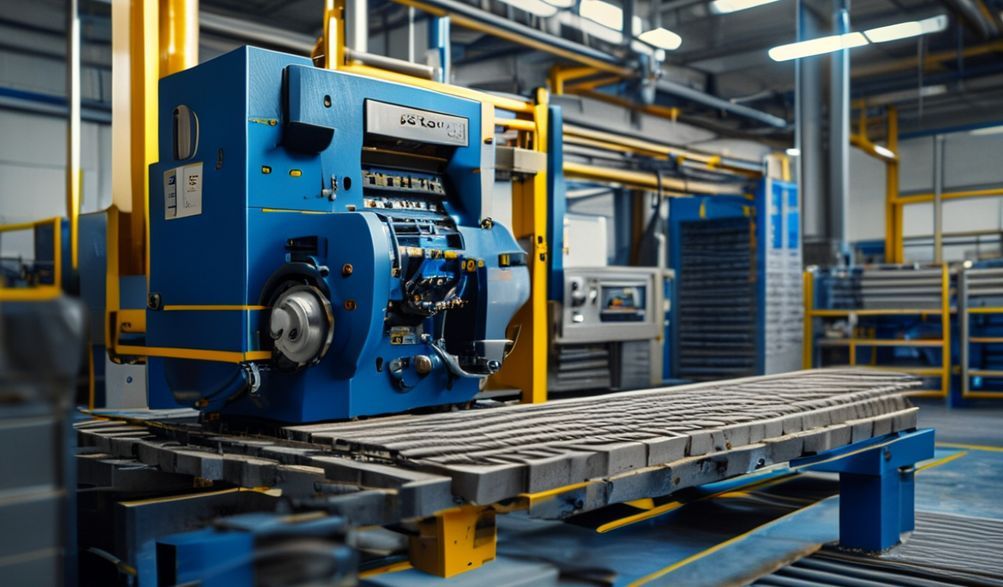
Hollow Bricks Machine Price: 2026 Cost Analysis & Buying Guide from FUDA Factory
Introduction
Navigating the market for a hollow bricks machine can feel overwhelming. Quotes vary wildly, specifications are confusing, and the fear of making a costly mistake is real. As the engineering and sales team at Usine de fabrication de briques FUDA, we bring over 15 years of direct, global experience to this guide. We’ve not only designed and built these machines but have also worked alongside our clients to install, operate, and optimize them in the field.
This hands-on expertise forms the foundation of our advice. We understand that the “hollow bricks machine price” is not merely a purchase figure—it’s the gateway to your project’s viability, efficiency, and long-term profitability. A cheap machine can become an expensive liability, while a wisely chosen investment can fuel growth for decades.
In this authoritative guide, we will demystify the pricing structure for 2026. We’ll move beyond sticker prices to explore total cost of ownership, break down the factors that truly influence cost, and provide a transparent framework for evaluating value. Our goal is to equip you with the knowledge to make a confident, financially sound decision for your business.
Understanding Hollow Brick Making Machines: Types and Applications
Before discussing price, it’s crucial to understand what you’re buying. A hollow brick making machine is a precision piece of industrial equipment designed to compress raw materials (like concrete, fly ash, or cement) into hollow blocks under high pressure and vibration.
These blocks are fundamental to modern construction, offering benefits like:
* Isolation Thermique et Acoustique : The hollow cores trap air, improving energy efficiency.
* Efficacité des Matériaux : Use less raw material than solid blocks, reducing cost and weight.
* Structural Benefits: Lighter weight eases handling and reduces load on foundations.
What is a Hollow Brick Making Machine? Core Function and Benefits
At its core, the machine automates and standardizes the production of high-quality, consistent hollow blocks. It replaces slow, labor-intensive manual methods with a reliable process that controls density, strength, and dimensions. The primary benefit is scalable, profitable production.
Primary Machine Types and Their Price Segments
The level of automation is the single biggest driver of both price and production philosophy.
-
Machines Manuelles/Semi-Automatiques : The entry-point.
- Opération : Require significant manual labor for feeding material, handling blocks, and pallet movement.
- Sortie : Lower (e.g., 500-1500 blocks per 8-hour shift).
- Price Segment: Coût initial le plus bas ($3,000 – $20,000 range). Suitable for very small-scale projects or startups testing the market.
-
Machines Stationnaires Entièrement Automatiques : The industrial workhorse.
- Opération : Integrated systems for feeding, compacting, ejecting, and stacking. Often use a pallet circulation system. Operated via a Programmable Logic Controller (PLC).
- Sortie : High and consistent (e.g., 1,000 – 5,000+ blocks per hour).
- Price Segment: Mid to High investment ($25,000 – $150,000+). Ideal for established block yards and medium-to-large scale construction projects.
-
Fully Automatic Mobile Block Machines (“Egg Layers”): Premium productivity.
- Opération : The machine moves on wheels, depositing cured blocks directly onto a level casting bed. Eliminates the need for pallets and complex transfer systems.
- Sortie : Very high, designed for large-scale, on-site production.
- Price Segment: Premium investment ($80,000 – $300,000+). Used for massive infrastructure projects or high-volume commercial plants.
Key Components That Define Machine Performance & Cost
The quality of these components directly dictates price, durability, and output quality:
* Moisissure : The heart of the machine. High-chrome steel molds for longevity and precise block dimensions cost more. Complex shapes (decorative blocks) increase mold price.
* Système de Vibration : High-frequency, dual-vibration systems ensure optimal compaction and block strength. Superior systems use balanced vibrators.
* Système Hydraulique : Brand and quality of pumps, valves, and cylinders determine pressure, speed, and reliability. Reputed brands (e.g., Bosch Rexroth, Yuken) add cost but reduce failure risk.
* Système de Contrôle : A modern PLC touchscreen offers precision, diagnostics, and easier operation versus basic manual controls.
* Cadre et Structure : Heavy-duty, welded steel frames resist the immense forces of operation, preventing misalignment and ensuring long-term stability.
Key Factors Determining Hollow Bricks Machine Price in 2026
Why does one machine cost $30,000 and another $130,000? Here are the definitive factors.
1. Level of Automation (Manual vs. Semi-Auto vs. Full-Auto)
Automation is the primary cost driver. A fully automatic machine incorporates conveyors, stackers, mixers, and advanced PLCs, which represent significant engineering and component costs. However, this higher initial investment slashes long-term labor costs and boosts output consistency, offering a faster return on investment (ROI) for serious producers.
2. Capacité de production (Blocs par heure)
Capacity scales with price. A machine designed for 2,000 blocks per hour will have a more powerful motor, a larger feed hopper, a faster hydraulic system, and a sturdier frame than one rated for 800 blocks per hour. It’s critical to match capacity with your realistic market demand.
3. Machine Model and Technical Specifications
- Polyvalence du Produit : Can it produce only 4-inch hollow blocks, or can it switch to pavers, interlocking blocks, and curb stones with a mold change? Multi-purpose machines command a higher price.
- Pression nominale : Higher compaction pressure (measured in tons or MPa) produces stronger, denser blocks, requiring more robust hydraulics.
- Source d'alimentation : Diesel-powered options for areas with unreliable electricity add cost.
- Taille de la palette : Standard vs. oversized pallets for larger blocks affect the machine’s size and cost.
4. Raw Material Compatibility
Machines can be optimized for different mixes:
* Standard Concrete: Most common.
* Fly Ash/Eco-Friendly Mixes: May require adjustments in vibration and compaction profiles.
* Clay or Stabilized Soil: Require different mold designs and pressure systems.
Ensure the machine you quote is configured for your locally available materials.
5. Brand Reputation and Manufacturing Origin
An established brand like FUDA invests in:
* R&D: For more efficient, reliable designs.
* Contrôle de la qualité : Using certified materials and rigorous testing.
* Support après-vente : A global network for service.
This inherent value often justifies a price premium over lesser-known manufacturers, where hidden costs in downtime and repairs can emerge.
6. After-Sales Service and Warranty
A machine is a long-term partner. A comprehensive package including:
* On-site installation & commissioning
* Operator training
* Garantie (typically 12-24 months on core parts)
* Guaranteed spare parts availability
This is a critical part of the value proposition, not an optional extra. It directly protects your investment.
Hollow Bricks Machine Price Ranges: A Realistic Market Overview
Note: The following are indicative price ranges for the machine itself (FOB price) as of early 2026. Final costs vary dramatically with configuration and logistics.
Entry-Level Machines (Manual/Semi-Auto)
- Indicative Range: $3,000 – $20,000
- Profil : Ideal for entrepreneurs, very small community projects, or ancillary production. Labor costs per block will be higher.
Mid-Range Production Machines (Fully Automatic, Stationary)
- Indicative Range: $25,000 – $120,000
- Profil : This is the most common range for profitable block manufacturing businesses. Machines here offer strong automation, outputs from 1,000 to 3,500 blocks/hour, and good versatility. FUDA’s best-selling models typically fall here.
High-Capacity Industrial Plants (Fully Automatic Lines)
- Indicative Range: $120,000 – $300,000+
- Profil : For large-scale commercial plants and major infrastructure projects. Includes high-output stationary lines, mobile “egg layer” machines, and fully integrated plants with automated batching and curing systems.
Important Disclaimer on “Price Tags”
The prices above are ballpark figures. A responsible manufacturer like FUDA does not have a one-price-fits-all catalog. The final quotation is personnalisé based on:
* Your chosen specifications (model, capacity, mold types).
* Shipping terms (FOB, CIF, etc.) and destination port.
* Local taxes and import duties in your country.
* Selected after-sales service package.
Always request a formal, detailed, itemized quotation.
Beyond the Sticker Price: Calculating Your Total Investment (TCO)
The smartest buyers evaluate Coût Total de Possession (CTP), not just purchase price.
Initial Purchase Price vs. Lifetime Cost
The machine’s price is just the first chapter. Over a 10-year lifespan, operational costs can dwarf the initial outlay.
Hidden Costs to Consider
- Shipping & Insurance: Can range from 5% to 15%+ of the machine cost.
- Droits de douane et taxes : Vary by country. Must be researched locally.
- Installation & Foundation: Requires a level, reinforced concrete base. Factor in local labor and material costs.
- Initial Spare Parts Kit: A prudent investment to minimize early downtime.
Operational Costs: Power, Labor, and Maintenance
- Consommation d'énergie : A more efficient hydraulic system may cost more upfront but save thousands in electricity over its life.
- Travail : A fully automatic machine may require only 2-3 operators, while a semi-auto might need 6-8 for the same output.
- Maintenance: High-quality components fail less often and are cheaper in the long run. Regular maintenance costs (oil, filters, wear parts) are a given.
The High Cost of Downtime: Why Quality Matters
If your $50,000 machine breaks down and you lose production of 5,000 blocks/day at a $0.50 profit per block, you’re losing $2,500 per day in gross profit. Quality, reliability, and accessible service are direct profit-protection measures.
How to Get the Best Value: A Buyer’s Checklist from FUDA Experts
Step 1: Pre-Purchase Self-Assessment
Answer these questions honestly:
* What is my realistic daily/weekly block requirement?
* Who is my target market (local builders, large contractors, government projects)?
* What is my total available budget (machine + shipping + installation + working capital)?
* What raw materials are reliably and cheaply available locally?
Step 2: Vetting Manufacturers and Requesting Quotes
When contacting suppliers (including FUDA), ask:
* “Can I visit your factory or speak to a past client in my region?”
* “What is included in your standard warranty and service package?”
* “What is the lead time for critical spare parts?”
* “Do you provide installation supervision and training?”
Step 3: Analyzing and Comparing Quotations
Don’t just compare the bottom line! Compare line-by-line:
* Are the technical specs (pressure, cycle time, motor power) identical?
* Does one quote include training and installation while the other doesn’t?
* Is the warranty duration and coverage the same?
The cheapest quote often excludes critical services.
Step 4: Planning for Installation and Future Growth
- Formation : Ensure your team is trained to operate and perform basic maintenance.
- Évolutivité : Consider if the machine model allows for easy upgrades (e.g., adding an automatic feeder or stacker later) as your business grows.
Frequently Asked Questions (FAQ) About Hollow Bricks Machine Price
Q1: What is the cheapest hollow bricks machine I can buy?
A: The lowest upfront cost would be a basic manual press. However, you must factor in high per-block labor costs and inconsistent quality. For automatic machines, be extremely wary of prices that seem “too good to be true.” They often indicate substandard components, poor engineering, and zero meaningful after-sales support, leading to high lifetime costs.
Q2: Does FUDA factory offer financing or payment plans?
A: Yes. FUDA understands this is a major capital investment. We work with reputable international trade finance partners and can often structure flexible payment terms, such as phased payments or letters of credit (LC), to facilitate your purchase. Discuss your specific needs with our sales team for tailored options.
Q3: How much does shipping and installation cost?
A: Shipping costs depend entirely on machine size, weight, destination port, and current freight rates. Installation costs depend on your local labor rates and site preparation. FUDA provides a detailed, transparent pre-shipment quote that breaks down all foreseeable costs (CIF to your port). We also offer optional on-site installation supervision by our engineers for a fixed fee.
Q4: Can the machine produce other products besides hollow bricks?
A: Absolutely. Most of FUDA’s automatic machines are designed for multi-functionality. By using interchangeable molds, the same machine can typically produce solid blocks, paving stones, interlocking blocks, kerbstones, and garden slabs. This versatility maximizes your return on investment by allowing you to respond to diverse market demands.
Q5: What is the typical payback period for this investment?
A: This varies widely based on your local block selling price, operational efficiency, and market demand. As a generalized example: A $70,000 machine producing 2,000 blocks per hour at a net profit of $0.30 per block could theoretically pay for itself in 4-6 months of sustained operation. However, a detailed business plan factoring in all your local costs is essential for an accurate projection.
Conclusion
Choosing a hollow bricks machine is a pivotal decision that will shape your business’s productivity and profitability for years. As we’ve detailed, the initial price is just one part of a complex equation where machine quality, operational efficiency, and manufacturer support are equally critical.
At FUDA Brick Making Factory, we leverage our 15+ years of engineering and field experience to build more than just machines—we build reliable, value-driven production solutions. We believe in transparent partnerships, where you understand every aspect of your investment, from the steel in the frame to the scope of our service support.
Ready to Get a Transparent, Custom Quote?
Contact the FUDA sales engineering team today for a free, no-obligation consultation. Share your production goals, target output, and location details. We will provide a detailed proposal that clearly outlines machine specifications, a fair and comprehensive price, and a full breakdown of the support you will receive. Let’s build a solid foundation for your success, together.