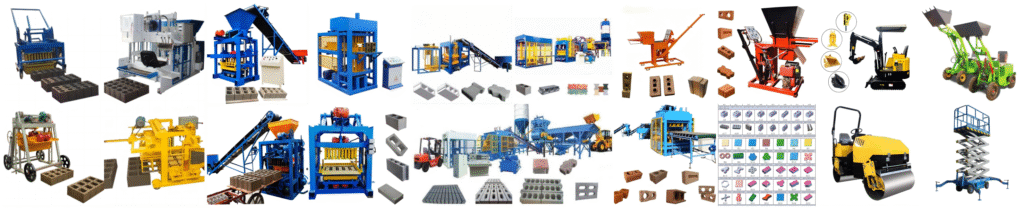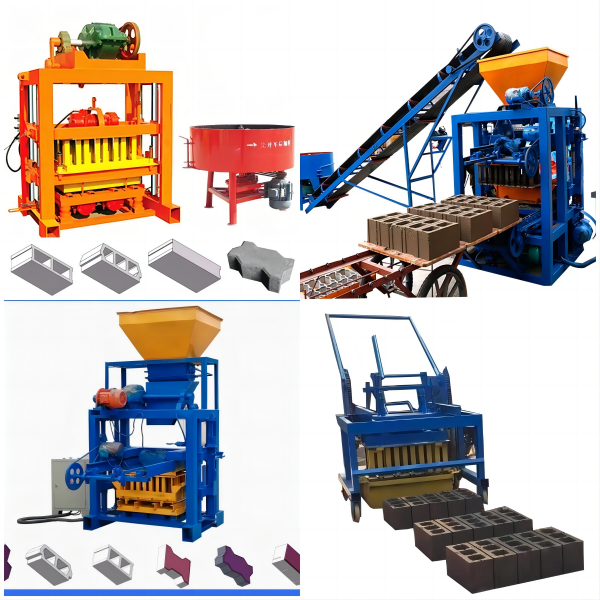
Analyse comparative des machines à blocs et des machines à briques
1. Production et spécifications du produit primaire
1.1. Distinctions dimensionnelles et structurelles
La différence la plus immédiate réside dans le produit. UneMachines à blocsest conçue pour produire des blocs de maçonnerie en béton (CMU), communément appelés parpaings. Ce sont des unités plus grandes, creuses ou pleines, généralement utilisées dans les murs porteurs. Les dimensions standard des blocs (par exemple 8x8x16 pouces dans le système américain) sont nettement plus grandes et plus lourdes que celles des briques. UneMachine à briquesÀ l'inverse, est conçue pour produire des briques—des unités plus petites et solides en argile ou en béton, principalement utilisées pour les parements, les cloisons et, dans le cas des briques en argile, cuites dans un four. L'accent est mis sur des unités plus petites et plus uniformes destinées à des applications non structurelles ou semi-structurelles.
1.2. Densité et composition du produit
Les blocs sont principalement fabriqués à partir de mélanges de béton sec à faible affaissement, avec des granulats grossiers (comme la pierre concassée ou le gravier). Le produit obtenu est dense et possède une résistance à la compression élevée. Les machines à briques, en particulier pour les briques d'argile, transforment un mélange plastique d'argile ou de schiste. Les machines à briques en béton utilisent un mélange de béton à granulats fins, plus lisse que celui des blocs. Le processus de cuisson des briques d'argile vitrifie le matériau, lui conférant des propriétés uniques distinctes de celles des produits en béton.
2. Procédé de fabrication de base et technologie
2.1. Le Principe du Compactage : Vibration vs. Extrusion
Il s'agit d'une divergence technologique critique. Une modernitéMachines à blocsfonctionne principalement sur le principe devibration à haute fréquence et compactage mécaniqueLe mélange de béton sec est versé dans un moule (palette) et soumis à une vibration intense sous une pression importante (souvent hydraulique). Ce processus de « vibro-compaction » consolide le mélange, élimine les poches d'air et produit une unité très dense, immédiatement démoulable. Les blocs sont ensuite durcis, souvent à la vapeur.
A Machine à briques for clay products primarily uses the extrusion method. The plastic clay mixture is forced through a die to form a continuous column of clay, which is then wire-cut into individual brick units. These “green” bricks are then dried and fired in a kiln. Concrete brick machines may use a similar compaction method to block machines but with much smaller molds and finer raw material.
2.2. Production Speed and Scale
Block machines are built for very high-volume output, commonly producing thousands of units per day in an automated plant setting. The process from raw material to palletized, cured product is continuous and integrated. Brick production, particularly clay brick, can involve slower, batch-oriented processes for drying and firing, which can take days or weeks. While automated concrete brick lines are fast, the overall industrial scale for block production is generally larger, catering to massive construction projects.
3. Market Application and Commercial Implications
3.1. End-Use in Construction
The end-use dictates the machine choice. Blocks are used for structural walls (foundations, load-bearing walls), retaining walls, and large-scale paving. They are the choice for speed and material economy in structural work. Bricks (especially clay) are favored for aesthetic facing, residential veneers, interior partitions, and projects where traditional appearance or specific architectural style is required. Concrete pavers, produced on a block-like machine but with different molds, serve the hardscaping market.
3.2. Investment and Operational Considerations for Clients
For your clients, the capital investment, plant footprint, and operational complexity differ. A full-scale block production plant requires significant space for raw material storage (aggregates, cement), the machine, curing racks or chambers, and a potent power supply for vibrators and hydraulics. It is a major industrial undertaking. A brick-making operation, especially a smaller clay brick unit, might have a smaller initial footprint but adds the complexity of managing a kiln (fuel, firing cycles, emissions). The choice hinges on the target product market’s size and needs.
Conclusion: Making an Informed Machinery Recommendation
The distinction between a block machine and a brick machine is not merely semantic; it is fundamental to the product, process, and business model they enable. For the B2B stakeholder, advising a client requires a clear diagnostic of their business vision: Are they aiming to supply the core structural material for housing developments and commercial infrastructure? If so, the high-output, aggregate-intensive world of block machinery is the appropriate path. Conversely, if the target is architectural finishing, heritage restoration, or a niche hardscape product, then brick-making technology (clay or concrete) must be explored. Understanding these differences—from the vibration of a block mold to the extrusion of a clay column—allows you to guide your clients toward the technology that aligns with their raw material access, capital capacity, and market ambition. This expertise transforms a distributor from a simple equipment seller into a valued strategic consultant in the construction materials value chain.
Foire aux Questions (FAQ)
Q1: Can one machine produce both high-quality blocks and bricks?
A1: Generally, no. The core technology is optimized for specific material consistencies and product sizes. A block machine uses a dry, coarse mix and high-pressure vibration unsuitable for plastic clay or fine brick mixes. Some machines can produce smaller “block” units like pavers, but a true, small-format clay or concrete brick requires a machine designed for that specific process and material flow.
Q2: Which type of machine typically has a higher production capacity?
A2: In terms of volume output (number of units per day), modern automated block plants generally have a higher potential capacity due to the larger size of the units and the highly mechanized, continuous curing process. Brick production, especially when involving kiln firing, can have a longer total cycle time, potentially limiting daily output volume despite fast forming.
Q3: From a distributor’s perspective, which business has a higher barrier to entry?
A3: The block production business usually has a higher barrier to entry due to the larger scale of the required machinery, greater power demands, higher raw material consumption (cement, aggregates), and the need for a larger operational site. Brick production, particularly smaller-scale or artisanal clay brick operations, can sometimes be started with a lower initial capital investment, though scaling up with tunnel kilns is also a major undertaking.
Q4: How does the choice of machine affect the client’s supply chain for raw materials?
A4: A block machine client must secure a reliable, bulk supply of coarse aggregates (gravel, crushed rock) and Portland cement. A brick machine client (for clay bricks) must have access to suitable clay deposits or sourced clay, as well as fuel for the kiln. This fundamentally different raw material base often dictates factory location and logistics partnerships.
Q5: Are the skills required to operate and maintain these machines different?
A5: Yes. Block machine operation focuses on concrete mix design, vibration mechanics, hydraulic systems, and often steam curing management. Brick machine operation, particularly for clay, requires expertise in clay preparation, extrusion die management, drying control, and kiln firing thermodynamics. The maintenance skill sets for the respective mechanical systems (heavy-duty vibrators vs. extruder screws) also differ significantly.