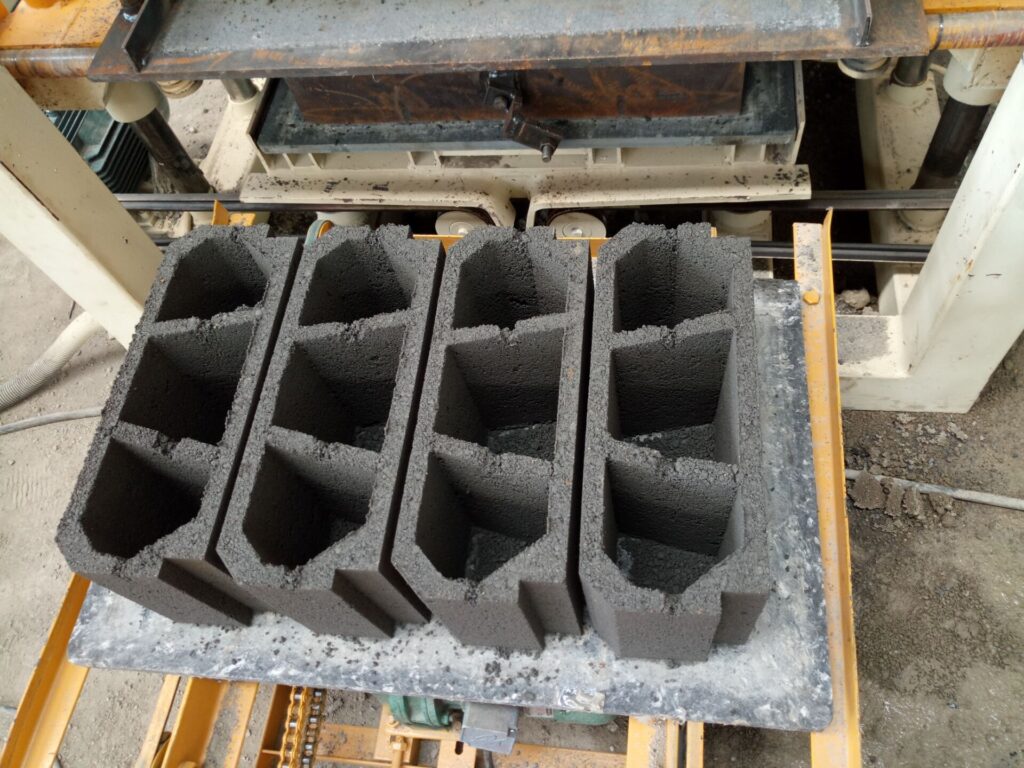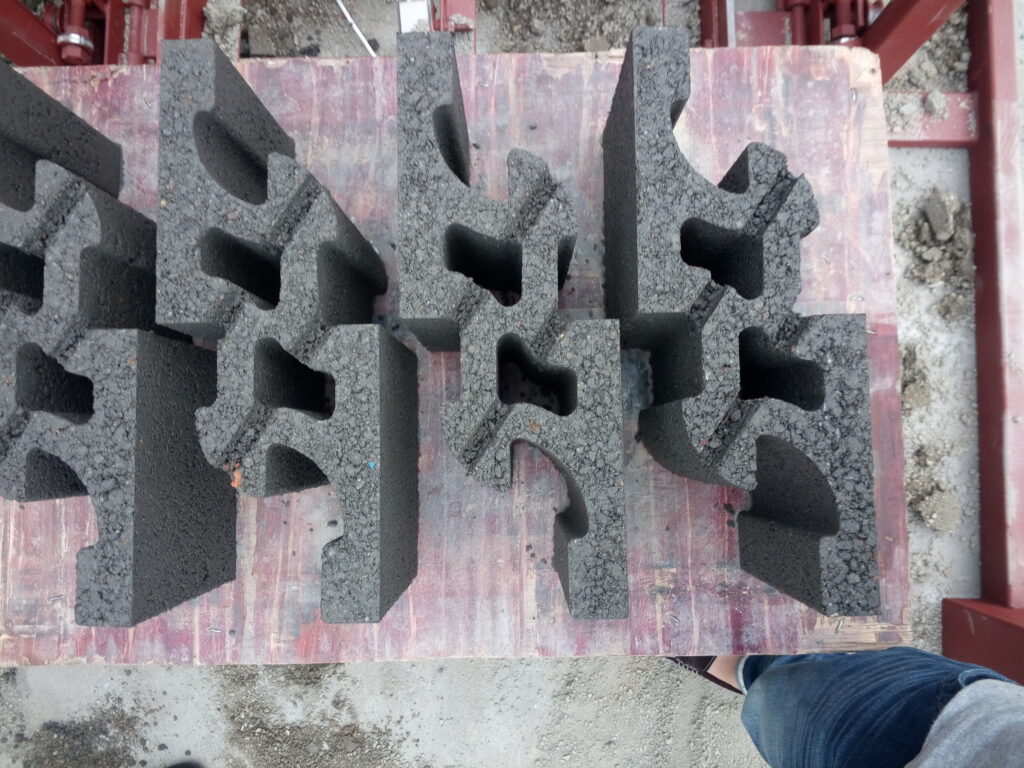
Input Material Specification and Control
Quality is not merely inspected into a product; it is built in from the very beginning. The consistency and properties of raw materials are the first and most critical control point.
1.1 Aggregate Gradation and Purity
The composition of the aggregate (sand, stone dust, gravel) forms the skeletal structure of the brick.
- Gradation Analysis: Optimal particle size distribution is rigorously controlled. A well-graded mix, with a balance of coarse and fine particles, minimizes voids, reduces the cement content needed for bonding, and enhances final density and strength. Sieve analysis is conducted regularly to ensure batch-to-burability and structural integrity.
1.3 Water Quality and Proportioning
Water is the activating agent for cement hydration. Its quality and quantity are precisely managed.
- Chemical Purity: Water must be free from excessive impurities, oils, or organic matter that could interfere with the hydration reaction or cause staining.
- Précision du Batching : The water-to-cement (w/c) ratio is a fundamental determinant of ultimate strength and porosity. Computer-controlled batching systems add water with high precision, often adjusted automatically based on the moisture content of the aggregates to maintain a consistent, optimal w/c ratio for the mix design.
Machine Calibration and Process Parameter Management
The manufacturing machine itself is a precision instrument whose settings must be meticulously maintained and monitored to produce consistent output.
2.1 Vibration and Compaction Dynamics
For machines utilizing vibration, the intensity, frequency, and duration are critical calibrated parameters.
- Optimized Compaction: Insufficient vibration leads to a porous brick with low strength and poor surface finish. Excessive vibration can cause segregation of aggregates, where heavier particles settle at the bottom, creating a weak, laminated structure. Optimal settings are determined for each mix design and product type and are locked into the machine’s control system.
- Uniformity Assurance: Modern machines are designed with vibration platforms that ensure even energy distribution throughout the mold, guaranteeing consistent density from the center to the edges of every brick.
2.2 Pressure Application and Control
In static press or hybrid machines, the applied pressure is a key variable.
- Pressure Profiling: The machine is calibrated to apply a specific pressure for a defined duration. This pressure must be sufficient to achieve the required green strength for handling but not so high as to cause elastic rebound or internal micro-fractures upon pressure release. Hydraulic pressure sensors provide real-time feedback to the control unit.
2.3 Mold Integrity and Maintenance
The mold is the literal shape of quality. Its condition is non-negotiable.
- Wear Monitoring: Molds are subject to abrasion from aggregates. Regular measurement of mold cavity dimensions is essential to prevent producing bricks that are out of dimensional tolerance. A rigorous schedule for mold refurbishment or replacement is a hallmark of a quality-focused operation.
- Finition de surface : The interior surface finish of the mold directly transfers to the brick. A smooth, polished mold surface produces a sharp, clean brick face, while a worn or pitted mold will result in a rough finish that can affect appearance and increase water absorption.
In-Process and Final Product Quality Verification
Real-time monitoring and final testing form the verification layer of the quality assurance system.
3.1 Dimensional and Visual Inspection
Consistency in size and appearance is the most immediate indicator of process control.
- Automated Gauging: Advanced production lines may incorporate laser or camera-based systems that measure brick dimensions (length, width, height) on-the-fly, rejecting or flagging units outside predefined tolerances.
- Visual Checks: Operators and quality inspectors routinely check for surface defects such as cracking, chipping, color variation, and poor edge definition. This is often done according to a standardized sampling plan (e.g., AQL – Acceptable Quality Level).
3.2 Destructive and Non-Destructive Testing
Quantitative validation of physical properties is conducted in a laboratory setting.
- Compressive Strength Testing: This is the paramount test. Sample bricks from a production batch are crushed in a controlled press to determine their load-bearing capacity, verifying they meet or exceed the relevant standard (e.g., ASTM C90 for concrete block). Testing is typically done at 7 and 28 days to confirm strength gain.
- Density and Absorption Tests: These critical tests determine the brick’s porosity and durability. Samples are weighed dry, saturated with water, and weighed again. Lower water absorption generally indicates higher density and better resistance to freeze-thaw cycles and chemical attack.
- Dimensional Tolerance Checks: Samples are measured with precision calipers to ensure compliance with industry standards for length, width, height, and face shell/thickness dimensions.
The Human and Systemic Factors: The Quality Management Backbone
Technology and machinery are enabled by robust systems and skilled personnel.
4.1 Standardized Operating Procedures (SOPs)
Every action, from raw material receiving to machine startup, mixing, curing, and testing, is governed by a detailed SOP. This eliminates variability introduced by individual operator judgment and ensures the process is performed identically every shift, every day.
4.2 Calibration and Preventive Maintenance Registers
All measuring and testing equipment—from weigh scales on the batching plant to the compression testing machine—are maintained on a strict calibration schedule traceable to national standards. Similarly, the production machine itself follows a computerized preventive maintenance plan to avoid unplanned downtime and process drift.
4.3 Traceability and Corrective Action
A key sign of a mature quality system is traceability. Each pallet of bricks can be traced back to the production date, shift, and even the specific raw material batches used. If a non-conformance is detected, a formal Corrective and Preventive Action (CAPA) process is triggered to identify the root cause (e.g., a faulty sensor, a drifted material property) and implement a systemic fix to prevent recurrence.
Conclusion
Ensuring the quality of bricks in a machine-based production environment is not a single action but a holistic, interconnected system. It is a continuous loop that begins with the chemistry of raw materials, is executed through the calibrated precision of machinery, is verified by rigorous testing, and is sustained by a culture of procedural discipline and continuous improvement. For the discerning distributor or procurement manager, evaluating a potential supplier requires looking beyond the machine’s output rating to interrogate this very system. Inquire about their material specifications, request calibration records, review their latest compressive strength test reports, and observe the order and discipline on the production floor. The supplier that can articulate and demonstrate this end-to-end quality framework is the partner who will deliver not just bricks, but consistent performance, reliability, and peace of mind—the true foundations of a successful and reputable supply business.
FAQ
Q1: As a distributor, what key documents should I request from a brick manufacturer to verify their quality claims?
A: You should request:
- Material Certificates: For cement and other key admixtures from their suppliers.
- Mix Design Approval: Documentation showing the approved recipe for the product line.
- Recent Third-Party Test Reports: Specifically for compressive strength, absorption, and density, performed by an accredited laboratory, ideally showing conformance to ASTM, ISO, or other relevant standards.
- Internal Quality Control Logs: Regular records of dimensional checks, raw material sieve analysis, and machine parameter audits demonstrate ongoing vigilance.
Q2: How can I perform a simple, initial quality check on a brick sample during a factory visit?
A: While not replacing lab tests, you can perform practical checks:
- The Strike Test: Hit two bricks together firmly. A clear, high-pitched ringing sound indicates good density and bonding. A dull thud suggests internal voids or poor compaction.
- Visual Inspection: Check for consistent color and texture, sharp arrises (edges), and the absence of visible cracks, especially hairline cracks around larger aggregate pieces.
- Measurement: Use a caliper or precise tape measure to check dimensions against the claimed size. Significant variation indicates poor mold maintenance or process control.
- Poids : Weigh several bricks from the same batch. Significant weight variation can indicate inconsistent density or mix proportioning.
Q3: What are the most common process-related defects in machine-made bricks, and what typically causes them?
A:
- Surface Scaling/Spalling: Often caused by improper curing (freeze-thaw damage on inadequately cured bricks) or the use of non-durable aggregates.
- Cracking: Can be due to excessive vibration (causing segregation), improper handling at the “green” stage, or rapid drying (insufficient curing).
- Dimensional Variation: Caused by worn molds, incorrect machine settings, or an inconsistent feed mixture.
- Low Strength: Primarily results from an incorrect water-cement ratio, use of substandard cement, inadequate compaction, or improper curing.
Q4: Does a higher degree of automation in the production line guarantee better quality?
A: Automation is a powerful enabler of consistent quality, but it is not an absolute guarantee. Automated batching and process control remove human error and variability, leading to superior consistency. However, the quality of the output is still dependent on the correctness of the input parameters (the mix design), the calibration of the automated systems, and the quality of the raw materials fed into them. A well-maintained, optimally programmed automated line is highly reliable, but it must be managed and overseen by skilled technicians.
Q5: How should a manufacturer handle a situation where a batch of bricks fails a quality test?
A: A professional manufacturer should have a clear, documented protocol:
- Immediate Quarantine: The entire suspect batch and any adjacent batches are immediately isolated and clearly marked.
- Root Cause Investigation: The quality team investigates the cause (e.g., testing error, raw material deviation, machine fault).
- Expanded Testing: A more extensive sampling from the quarantined batches is tested to determine the scope of the issue.
- Final Disposition: Based on the findings, the batch may be downgraded for alternative use, crushed and recycled as aggregate, or, in rare cases, destroyed. Crucially, the CAPA process is initiated to prevent recurrence, and affected customers are notified transparently if any non-conforming product was shipped.