
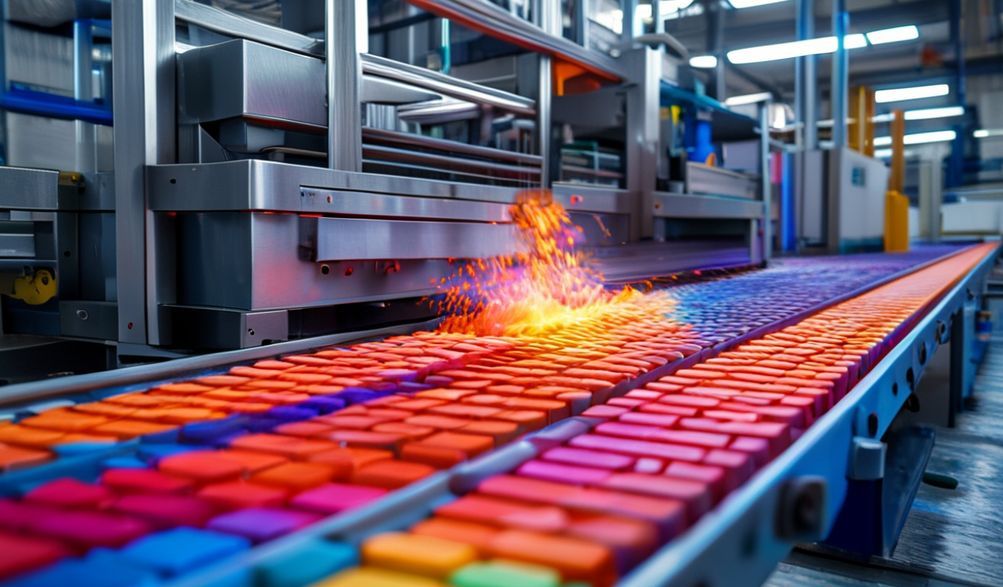
Prix des Machines à Pavés : Votre Guide d'Investissement 2026 par les Experts de l'Usine FUDA
Introduction
Investir dans une machine à pavés est une décision majeure pour toute entreprise de construction ou cour à blocs. Avec des prix allant de quelques milliers à plusieurs centaines de milliers de dollars, comment déterminer la machine adaptée à votre budget et à vos objectifs de production ? Le choc initial du prix peut être paralysant, mais le coût réel d'une mauvaise décision—en temps d'arrêt, factures de réparation et opportunités manquées—est bien plus élevé.
Chez FUDA Brick Making Factory, nous avons passé plus de deux décennies à concevoir, ingénier et fabriquer des machines robustes de fabrication de blocs pour des clients sur six continents. En tant qu'usine directe, nous avons été témoins de toute la gamme des décisions d'investissement. Ce guide est né de cette expérience. Notre objectif n'est pas simplement de lister des prix, mais de vous doter de la connaissance deQu'est-ce qui détermine ces prixNous allons disséquer les facteurs à l'origine du coût, de la technologie de base aux dépenses opérationnelles cachées, vous transformant d'un acheteur perplexe en un investisseur averti.
Ce guide est conçu pour vous : le propriétaire de petite ou moyenne entreprise souhaitant se développer, le chef de projet de construction visant le contrôle interne des matériaux, et l'entrepreneur prêt à capitaliser sur la demande croissante de pavés de qualité. À la fin, vous comprendrez comment évaluer une machine à fabriquer des pavés, non pas comme une dépense, mais comme un actif axé sur la valeur qui maximise votre retour sur investissement.
Comprendre les types et la technologie des machines à pavés en brique
The first step in understanding price is understanding the machine itself. The level of automation and production philosophy is the primary differentiator, creating distinct categories with corresponding price brackets.
Manual & Semi-Automatic Machines: The Entry-Level Choice
Ideal for startups, small-scale projects, or regions with very low labor costs, these machines represent the most accessible entry point.
- Opération : Manual machines require physical effort for feeding raw material, operating the lever for compression, and removing the finished block. Semi-automatic models introduce powered hydraulic compression and often automatic ejection, reducing labor strain and increasing consistency.
- Capacité de sortie : Production is highly operator-dependent. Expect a range from 500 to 2,500 blocks per 8-hour shift.
- Idéal pour : Testing a market, producing for a specific small project, or businesses with very limited capital. The lower price tag comes with higher physical labor requirements and lower overall output.
Fully Automatic Stationary Machines: The Workhorse for Steady Production
This is the category where most growing businesses find their sweet spot. These machines automate the entire cycle: feeding, mixing, compression, ejection, and often stacking.
- Opération : Once the raw material hopper is loaded, the PLC-controlled system takes over. It precisely measures, compresses, and ejects blocks onto pallets, often with an integrated stacker.
- Avantages : The primary advantages are significant labor savings (often requiring only 1-2 operators) and exceptional consistency in block density and dimensions, which is critical for professional paving projects.
- Idéal pour : Medium-scale businesses aiming for consistent, daily production to supply local retailers, contractors, or municipal projects.
Fully Automatic Mobile Block Machines: For Large-Scale & On-Site Production
Representing the pinnacle of paver brick manufacturing technology, these are complete production plants on wheels.
- Fonctionnalité clé : The machine moves on rails over a concrete slab, producing and laying blocks in a continuous line. This eliminates the need for pallets and extensive block handling.
- Capabilities: They boast the highest output rates and can effortlessly produce a vast array of interlocking paver patterns, colors (with integrated color feeders), and even custom designs.
- Idéal pour : High-volume factories supplying large regions and major infrastructure projects where setting up production directly on-site can save monumental logistics costs.
Key Factors Determining Paver Brick Machine Price
Two machines with similar output ratings can have vastly different prices. Here’s what you’re really paying for:
Spécifications principales de la machine
- Capacité de production (Blocs/Heure) : This is the most direct price driver. A machine rated for 1,000 blocks/hour will cost significantly less than one rated for 5,000 blocks/hour. Higher capacity requires a more powerful motor, a larger hydraulic system, and a sturdier frame.
- Niveau d'automatisation : Each jump in automation—from manual to semi-auto to full-auto—adds cost in the form of hydraulic components, electrical panels, PLCs, sensors, and conveyors. This cost is offset by long-term labor savings.
- Modèle et Taille de la Machine : The physical size and press power (measured in tons of pressure) determine the types and thickness of pavers you can produce. A machine capable of producing 80mm thick landscape slabs requires a more robust design than one for standard 60mm pavers.
Qualité des composants et de la construction
This is where “cheap” machines cut corners, leading to expensive problems.
- Cadre et Structure : A machine built from high-grade, welded steel plate will withstand years of constant vibration. A lighter, bolted-together frame will warp and misalign, causing poor block quality and chronic breakdowns.
- Système Hydraulique : The heart of the machine. The price reflects the quality of the pump, valves, and cylinders. Reputable brands (e.g., Siemens, Rexroth, Yuken) ensure smooth operation, precise pressure control, and longevity. Cheap, no-name hydraulics are the leading cause of failure.
- Moules et Pièces d'Usure : Molds made from high-chrome, heat-treated steel can produce over 1 million blocks before significant wear. Standard carbon steel molds may wear out 5-10 times faster, increasing your long-term consumable costs and risking production downtime.
Additional Features & Customization
The base model gets you started; features optimize your workflow.
- Color Feeder System: An add-on device that automatically sprinkles colored sand onto the block surface, enabling the production of attractive, durable colored pavers without dyeing the entire mix.
- Alimentation et Empilement Automatiques de Palettes : These systems fully automate material handling, moving empty pallets into position and stacking finished blocks, further reducing labor.
- Conceptions de Moulages sur Mesure : Creating a unique paver shape, texture, or company logo requires custom-engineered mold boxes, which is a specialized service.
- Système de Contrôle : A basic push-button panel is standard. An advanced, user-friendly touchscreen HMI (Human-Machine Interface) with diagnostic capabilities and recipe storage adds cost but simplifies operation and troubleshooting.
A Realistic Price Range Breakdown (2026)
Avertissement important : The following price ranges are indicative estimates for 2026 based on current trends and standard configurations. Final pricing is always subject to specific configuration, raw material cost fluctuations, and destination shipping costs. A direct, detailed quote from the factory is the only way to get an accurate price.
Entry-Level & Small Business Machines ($5,000 – $25,000)
- What’s Included: This range covers basic manual presses and simple semi-automatic machines. They are often sold as a core unit without extensive add-ons.
- Sortie idéale : Up to 1,500 blocks per day.
- Target User: The hands-on startup, the farmer or contractor producing for their own use, or a business in a very low-labor-cost environment.
Mid-Range Production Machines ($25,000 – $80,000)
- What’s Included: This is the most competitive and popular segment. It includes robust semi-automatic machines and fully automatic stationary machines with standard features like a basic PLC, vibration system, and maybe a simple stacker.
- Sortie idéale : 2,000 to 8,000 blocks per 8-hour shift.
- Target User: The established block yard looking to expand capacity, the entrepreneur launching a serious supply business, or a construction company bringing production in-house.
High-Capacity Industrial Machines ($80,000 – $250,000+)
- What’s Included: This tier encompasses large, fully automatic stationary plants with multiple feeders and advanced control systems, as well as mobile block making machines.
- Justification for Investment: The price is justified by unparalleled output (10,000+ blocks/day), maximum automation (minimal labor), and for mobile plants, the unique ability to produce on-site for massive projects, eliminating transport costs for finished goods.
Beyond the Sticker Price: The Total Cost of Ownership
The smartest buyers look past the initial invoice. The true cost of your machine is spread over its entire working life.
Shipping, Installation, & Training Costs
- Shipping: Terms like FOB (Free On Board) or CIF (Cost, Insurance, and Freight) matter. A CIF price to your nearest port includes shipping but is naturally higher. Machine size dictates container needs.
- Installation & Formation : Some suppliers leave you with a manual. At FUDA, we consider professional installation guidance (via detailed video, manuals, or even an engineer dispatched to your site) and thorough operator training as non-negotiable for ensuring your machine runs correctly from day one.
Operational Costs: Power, Labor, & Maintenance
- Consommation d'énergie : A fully automatic machine with a 30kW motor will have higher running costs than a 7.5kW semi-auto model. Calculate your local electricity rates.
- Économies de main-d'œuvre : This is where automation pays back. A $60,000 automatic machine that replaces 4 workers is a vastly different financial proposition than a $20,000 manual machine that requires 6 workers.
- Maintenance: Budget for routine maintenance (hydraulic oil, filter changes) and a spare parts inventory. A quality machine will have a clear maintenance schedule and readily available parts.
The Hidden Cost of a Poor-Quality Machine
This is the most critical calculation. A cheap machine can become a money pit.
- Temps d'arrêt : Frequent breakdowns halt production. If you’re supplying a contract, delays can mean penalties.
- Service Après-Vente Médiocre : If you can’t get a timely answer, a troubleshooting guide, or a critical spare part, your entire investment is at risk.
- The FUDA Promise: Our pricing reflects a robust build that minimizes unexpected downtime. More importantly, it includes access to our technical support network, comprehensive documentation, and a reliable spare parts supply chain. This ecosystem protects your investment and your business continuity.
How to Get an Accurate Quote from FUDA Factory
To move from a generic price list to a precise quotation, we need to understand your unique situation.
Information to Prepare
Having this information ready will allow our engineers to provide the most accurate and valuable proposal:
* Desired paver type, size, and thickness (e.g., 60mm interlocking, 80mm cobble).
* Realistic target daily or monthly output.
* Types of local raw materials available (sand, stone dust/aggregate, cement, potential fly ash).
* Available factory space (length, width, height).
* Local power supply (voltage, phase, e.g., 380V 3-phase).
The FUDA Consultation Process
We follow a structured process to ensure you get the right solution:
1. Inquiry: You contact us with your basic needs.
2. Technical Discussion: Our sales engineers will ask detailed questions (like those above) to understand your project fully.
3. Customized Proposal: We recommend a machine model and configuration that matches your output goals and budget—not necessarily the most expensive option.
4. Factory Tour (Virtual/In-Person): We invite you to see our manufacturing quality and machine testing firsthand, building confidence.
5. Final Quotation: You receive a detailed, formal quote with specifications, delivery terms, and support details.
FAQ Section
Q1: What is the cheapest paver brick machine I can buy?
A: The absolute cheapest are small, manual presses. However, we strongly caution against offers that seem “too good to be true.” Extremely low prices almost always indicate compromised material quality, lack of safety features, and zero after-sales support. This can lead to operational failure, safety hazards, and a total loss of your investment.
Q2: How long does it take to see a return on investment (ROI) on a paver machine?
A: ROI depends on your local market price for pavers, your production efficiency, and your machine’s cost. As a simplified example: If a machine costs $50,000 and you produce and sell 5,000 pavers per day at a net profit of $0.20 per paver, your daily profit is $1,000. Ignoring other costs, the machine would be paid off in 50 working days. Most businesses see ROI within 6 to 18 months.
Q3: Can FUDA machines use local raw materials?
A: Absolutely. A key part of our consultation is discussing your local materials. We often request samples to test in our lab. This allows us to advise on the optimal mix design (ratios of sand, cement, aggregate) to ensure your new machine produces high-quality, strong blocks with the materials you have.
Q4: What is included in your after-sales service?
A: Our standard support package includes: detailed installation manuals and videos, remote installation guidance via video call, comprehensive operation and maintenance manuals, lifelong online technical support via WhatsApp/Email, and access to our global spare parts supply chain. For larger machines, on-site engineer installation and training can be arranged.
Q5: Do you offer financing or payment plans?
A: As a factory, our standard payment terms are typically via T/T (Telegraphic Transfer) or L/C (Letter of Credit). We can provide all necessary proforma invoices and documentation to help you secure financing from your local bank or export credit agency, which often offer favorable rates for industrial equipment imports.
Conclusion
Choosing a paver bricks machine is a strategic investment. As we’ve explored, the “right” price isn’t the lowest one; it’s the one that delivers the greatest long-term value for your specific production goals and business vision. It’s the price that includes not just metal and motors, but durability, reliability, and the support to keep your business moving forward.
At FUDA Brick Making Factory, we combine over 20 years of engineering expertise with direct factory pricing—eliminating middleman markups. We build machines to last and stand behind them with a global support network.
Ready to move from ballpark estimates to a precise plan? Contact our sales engineers today for a free, no-obligation consultation and a customized quotation tailored to your project.
Want to see the quality for yourself? Watch our factory tour video to see our manufacturing processes and machines in action.
<