
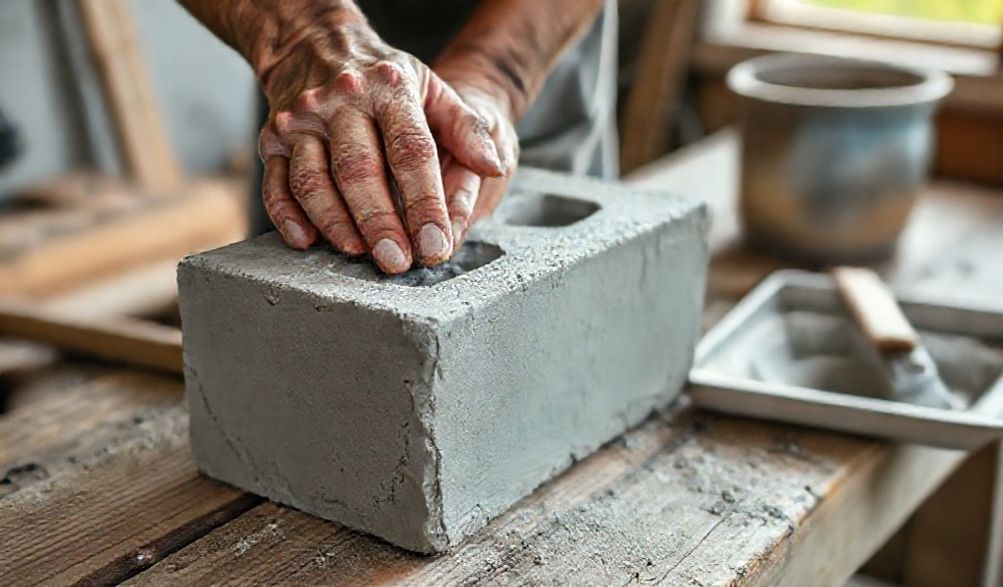
The Complete Guide to Making Cement Blocks: A Step-by-Step DIY Handbook
Introduction
Imagine building a sturdy garden wall, a rustic fire pit, or a durable shed base with materials you crafted with your own hands. Making your own cement blocks isn’t just a nod to self-sufficiency; it’s a practical, cost-effective way to take control of your small construction and landscaping projects. While the process is rooted in ancient building principles, modern DIYers can achieve professional-looking results with the right knowledge and care.
This guide is designed to demystify the process. We’ll move beyond vague advice to provide a clear, detailed, and safe walkthrough—from selecting your first bag of cement to the critical curing phase that transforms a wet mix into a strong, reliable block. Whether you’re a weekend warrior or a curious beginner, this handbook aims to equip you with the confidence to succeed.
A Critical Safety Disclaimer Before We Begin:
Working with cement and heavy materials requires respect and caution. Toujours wear the recommended safety gear. The techniques here are suitable for non-structural projects like garden borders or decorative features. For any load-bearing walls, foundations, or structures where safety is paramount, you must consult local building codes and a licensed structural engineer. Knowing the limits of a DIY project is the mark of a true craftsman.
Understanding the Basics: What Are Cement Blocks?
Before you mix a single ingredient, it’s crucial to understand what you’re actually making. This foundational knowledge separates a haphazard attempt from a methodical, successful project.
Cement vs. Concrete: Clarifying the Terminology
Let’s clear up a common point of confusion. Ciment is not concrete.
* Ciment is a fine, gray powder, primarily composed of limestone and clay. It acts as the “glue” or binder in the mix. Portland cement is the most common type.
* Béton is the finished composite material. It’s made by mixing cement with aggregates—like sand and gravel—and water.
When people say “cement block,” they are almost always referring to a Concrete Masonry Unit (CMU). Using the correct terminology helps when researching materials and ensures you get the right components for your mix.
Types of Blocks You Can Make at Home
With basic molds, you can create a variety of useful blocks:
* Blocs Pleins : Dense and heavy, ideal for projects requiring maximum mass and stability, like small retaining walls or bench bases.
* Hollow-Core Blocks: Created using a mold with a central void. They are lighter, use less material, and can be used for insulation or running cables in certain applications.
* Standard Building Blocks: The typical rectangular blocks (e.g., 8″x8″x16″ nominal size).
* Decorative/Cap Blocks: Smoother-faced blocks used as the top course of a wall for a finished look, or textured blocks for aesthetic garden features.
Essential Materials and Tools You’ll Need
Gathering everything before you start is the first step toward a smooth workflow. There’s nothing worse than having wet concrete in a wheelbarrow while you run to the hardware store.
The Concrete Mix: Getting the Recipe Right
The strength and durability of your block are born here. A standard, reliable mix for general-purpose blocks is:
1 part Portland Cement : 3 parts Sharp Sand : 1 part Gravel (Aggregate)
- Portland Cement: Type I/II is perfectly suitable for most DIY projects. Ensure it’s fresh and stored in a dry place.
- Sharp Sand: This is coarse, gritty sand with angular particles. It bonds much better than soft, rounded “builder’s sand.” Never use beach sand due to salt content.
- Gravel: Use clean, washed gravel (aggregate) often labeled as 3/8″ or 1/2″. This adds compressive strength. For smoother, finer blocks for detailing, you can omit gravel for a mortar-like “1:3” mix of cement to sand.
Conseil de Pro : Always measure your ingredients by volume (using the same bucket) for consistency across all your batches.
Must-Have Equipment
- Moulage :
- Commercial Block Molds: Steel or plastic molds from specialty suppliers offer best results and longevity.
- DIY Wooden Molds: You can build custom-sized molds from melamine-coated wood or dense plywood. Seal them well.
- Mélange :
- Wheelbarrow or Mortar Pan: Essential for small to medium batches.
- Hoe or Shovel: For hand-mixing.
- Mechanical Mixer (Optional): A rented or borrowed concrete mixer is a back-saver for projects requiring 20+ blocks.
- Essential Tools:
- Measuring buckets
- Mason’s trowel
- Rubber mallet or a wooden block for tamping
- Striking bar (a straight piece of wood or metal)
- Level
- Spray bottle or hose for curing
Non-Negotiable Safety Gear
Concrete work is messy and can be hazardous. Protect yourself with:
* Safety Glasses: Cement dust and splashes are corrosive.
* Dust Mask (N95 or better): Inhaling cement dust is harmful to your lungs.
* Heavy-Duty Rubber Gloves: Protects skin from abrasion and the caustic “wet” concrete.
* Sturdy Boots & Long Pants/Sleeves: Prevents skin contact and protects from dropped tools or materials.
Step-by-Step Process: Crafting Your First Block
Follow these steps in order for the best chance of success on your first attempt.
Step 1: Preparing Your Molds
Your work begins with the mold. Set up on a perfectly flat, stable, and level surface—a sturdy workbench or concrete slab is ideal.
1. Clean the mold of any old concrete debris.
2. Apply a thin, even coat of a release agent to every interior surface. This can be:
* Non-stick cooking spray
* Used motor oil (brushed on)
* A commercial mold release product
This step is critical to prevent the fresh block from bonding to the mold.
Step 2: Measuring and Mixing Dry Ingredients
Consistency is key. Using your measuring bucket, portion out your dry materials according to your chosen ratio (e.g., 1 bucket cement, 3 buckets sand, 1 bucket gravel).
* Dump them into your mixing container.
* Dry-mix thoroughly with your shovel or hoe until the color is completely uniform. No streaks of gray cement or patches of sand should be visible. This ensures even strength throughout the block.
Step 3: Adding Water and Achieving the Perfect Consistency
Now, form a crater in the center of your dry mix.
* Slowly add clean water. Start with about 3/4 of what you think you’ll need.
* Mix from the outside in, folding the dry mix into the water. Continue adding water gradually.
* The Goal: A “plastic” consistency. When you squeeze a handful, it should hold its shape firmly without water dripping out, and the surface should have a slight sheen. It should not be soupy or crumbly.
* Too wet? The block will be weak, prone to cracking, and hard to demold.
* Too dry? It won’t compact properly, leaving voids and a crumbly block.
Step 4: Filling, Compacting, and Leveling the Mold
This is where strength is built.
1. Fill in Layers: Shovel the mix into the mold in two or three equal layers.
2. Compact Each Layer: After each layer, use a rubber mallet to tamp the mix down firmly. You can also vibrate the table or mold to help settle the concrete and release trapped air bubbles. Thorough compaction is non-negotiable for a dense, strong block.
3. Overfill Slightly: Mound the final layer slightly above the top of the mold.
4. Strike Off: Use your straight striking bar in a sawing motion across the top of the mold to scrape off all excess material, leaving a flat, smooth surface flush with the mold edges.
Step 5: Demolding (Striking) the Block
Patience here prevents damage.
* Timing: Let the filled mold sit undisturbed for about 20-45 minutes. The exact time depends on humidity and mix temperature. The concrete should be firm enough to hold its shape but still impressionable (the “green” state).
* Le Processus : Carefully disassemble or lift the mold straight up and off the block. If it resists, wait another 10 minutes. Do not force it or wiggle it excessively, as this can distort the soft block.
The Critical Curing Process: Turning Mixture into Stone
This is the most overlooked yet vital phase. Curing isn’t just drying; it’s a chemical process.
Why Curing is Non-Negotiable for Strength
When water meets cement, a reaction called hydratation begins. This process forms crystals that interlock, binding the aggregates together. For these crystals to grow strong, they need a moist environment and time.
* Improper Curing Result: Blocks that are dusty on the surface, weak, prone to cracking, and will never reach their potential strength. A block cured for 7 days is only about 60-70% as strong as the same block cured for 28 days.
Best Practices for Home Curing
Your goal is to prevent moisture from escaping too quickly.
1. Initial Set (First 24-48 hrs): Keep the demolded blocks in a shaded, sheltered area. Cover them loosely with plastic sheeting or damp burlap sacks.
2. Water Curing (Next 5-7 days): For optimal strength, keep the blocks constantly moist. Lightly spray them with water 2-3 times a day, then re-cover them. You can also pond water around them on a non-porous surface.
3. Air Curing: After the initial week, they can air cure in a protected spot for the remaining time.
* Minimum Cure for Light Use (garden edging): 7 days.
* Full Design Strength for Building: 28 days. Mark your calendar.
Troubleshooting Common Problems
Don’t be discouraged by hiccups; they’re learning opportunities.
Blocks are Crumbling or Weak
- Causes: Insufficient cement in the mix, inadequate compaction (air pockets), using dirty or salty water, or, most commonly, poor curing (letting them dry out in the sun/wind).
Blocks are Sticking to the Mold
- Causes: Inadequate or no release agent, demolding too late (concrete has fully bonded), or a rough, porous mold interior that needs better sealing.
Surface Cracks or Irregularities
- Causes: “Plastic shrinkage” cracks are often due to too much water in the mix or the block surface drying out (from sun/wind) faster than the interior during the first few hours. Always cure in a shaded, protected spot.
Advanced Tips and Project Ideas
Once you’ve mastered the basics, you can start to expand your skills.
Adding Color or Texture
- Integral Color: Add liquid or powder concrete pigment to the mix during the dry-mixing stage. Test small batches first.
- Surface Texture: Press stones, tiles, or glass into the surface of the fresh block before it sets, or brush the surface with a stiff broom for a non-slip finish.
Scaling Up: Tips for Making Many Blocks Efficiently
- Create an assembly line: mixing station, molding station, curing station.
- Have multiple molds to work in cycles.
- Mix larger batches only if you can use them within 45 minutes before the concrete begins to set.
What to Build with Your Homemade Blocks
Your durable, custom blocks are perfect for:
* Raised garden beds
* Outdoor BBQ pits and pizza ovens
* Low garden retaining walls (under 2-3 feet)
* Decorative planters and garden benches
* Solid shed or workshop foundations
Reiterating a Critical Safety Note: The projects above are generally suitable for DIY. For any wall over a few feet tall, a retaining wall of any significant size, or any structural element of a building, you must consult a professional. Homemade blocks lack the engineered specifications of commercial CMUs.
Frequently Asked Questions (FAQ)
Q: What is the simplest cement mix for basic blocks?
A: For simple, non-structural garden blocks, a 1:3 mix of cement to sharp sand (no gravel) is sufficient. It’s easier to work with but won’t be as strong as a mix containing aggregate.
Q: How many blocks can I make with one 50kg bag of cement?
A: Using a standard 1:3:1 mix ratio, one 50kg bag of cement will yield approximately 15-20 standard-sized (8″x8″x16″) blocks, depending on your exact mold size and how tightly you compact.
Q: Can I use beach sand to make cement blocks?
A:Absolutely not. Salt in beach sand can cause severe efflorescence (white, chalky deposits), weaken the block over time, and corrode any metal reinforcement. Always use clean, washed sharp sand or concrete sand.
Q: How long must the blocks cure before I can build with them?
A: For a non-load-bearing garden wall, wait at least 7 days. For anything that needs to bear weight or withstand pressure (like a bench or a low retaining wall), a full 28-day cure is essential to ensure they have reached adequate strength.
Q: Is it cheaper to make my own blocks than to buy them?
A: For small projects, yes, you often save on per-unit cost and transportation. For large-scale projects, you must factor in the significant cost of your time, labor, and the consistency of your product. Commercial blocks offer guaranteed strength and uniformity, which is worth the price for critical applications.
Conclusion
Making your own cement blocks is a profoundly satisfying skill that blends practical engineering with hands-on craftsmanship. The journey from bagged powder to a solid, usable building component hinges on three pillars: a precise mix, thorough compactionetpatient, proper curing.
While the DIY approach offers immense gratification and control for garden projects and outdoor features, always pair your new skills with sound judgment. Start with a small test batch to refine your technique. We encourage you to share your results and questions in the comments below.
Finally, let’s end as we began: with a note on responsibility. For any project where safety and structure are paramount, the expertise of a professional engineer and adherence to local building codes is not just a suggestion—it’s a necessity. Build wisely, build safely, and enjoy the enduring fruits of your labor.
<