
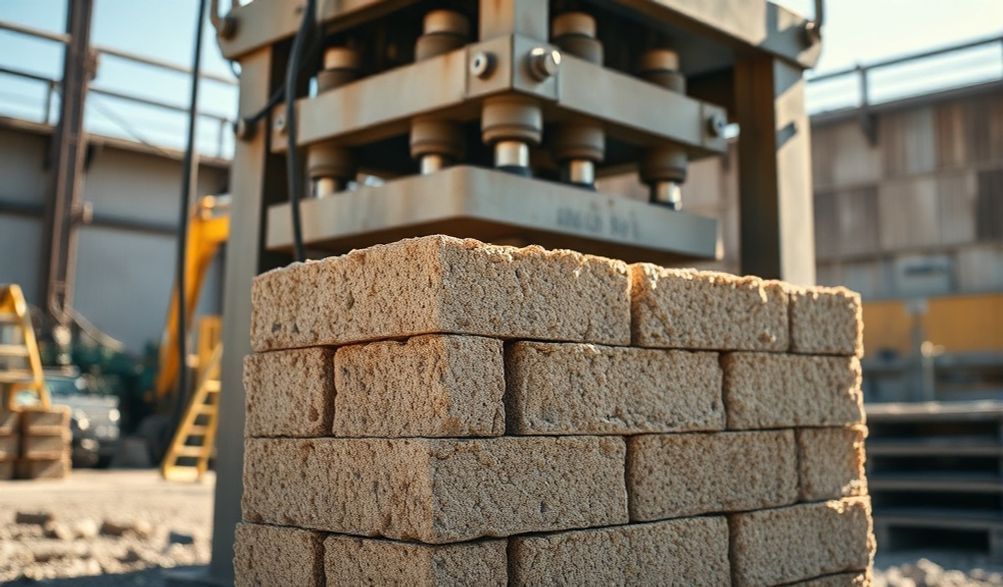
Votre Guide Ultime pour l'Achat d'une Machine à Fabriquer des Blocs de Mur de Soutènement à Vendre
Introduction
Vous êtes au beau milieu d’un projet d’aménagement paysager majeur. Le design est parfait, le client est impatient, et votre équipe est prête. Puis, vous recevez l’appel : la livraison de vos blocs de mur de soutènement est encore retardée. Ou pire, le devis des matériaux vient d’augmenter de 20 %. Pour les entrepreneurs, les paysagistes et les bricoleurs ambitieux, ce scénario est hélas trop familier. Les coûts élevés des matériaux et les chaînes d’approvisionnement imprévisibles ne sont pas de simples désagréments ; ils menacent directement votre rentabilité, vos délais et votre réputation.
Et si vous pouviez renverser la situation ? Imaginez avoir un contrôle total sur votre approvisionnement en blocs, produisant des unités de mur de soutènement de haute qualité à la demande, directement sur votre propre chantier ou dans votre cour. Ce n’est pas un rêve irréalisable ; c’est l’avantage concret que vous obtenez en investissant dans votre propremachine à fabriquer des blocs de mur de soutènement à vendre.
Ce guide est conçu pour démêler le vrai du faux dans les arguments marketing. Forts de notre expérience dans le secteur, nous vous offrons une ressource fiable et complète. Notre objectif est de vous donner les connaissances nécessaires pour prendre une décision d'achat éclairée et en toute confiance. Nous aborderons non seulement les machines disponibles à la vente, mais aussi les coûts réels, les fonctionnalités clés et les considérations stratégiques qui distinguent un investissement judicieux d'une erreur coûteuse. Entrons dans le vif du sujet.
Pourquoi Investir dans Votre Propre Machine à Blocs de Soutènement ? (La Proposition de Valeur)
L'achat d'une machine à fabriquer des blocs est une décision importante. Pour comprendre sa véritable valeur, il faut regarder au-delà de l'équipement lui-même et la considérer comme un outil stratégique pour votre entreprise ou vos projets.
Prenez le Contrôle des Coûts et de l'Approvisionnement
L'argument financier est convaincant.
* Épargne à long terme :L'achat de blocs préfabriqués implique de payer le produit fini, les matériaux, la main-d'œuvre et la marge bénéficiaire du fournisseur, tandis que produire les vôtres vous coûte principalement en matières premières (ciment, granulats, sable). À long terme, les économies peuvent être substantielles, en particulier pour les gros utilisateurs.
* Indépendance :Vous devenez insensible aux hausses de prix des fournisseurs et aux retards de livraison. Votre calendrier de projet est dicté par votre équipe et la météo, et non par un répartiteur tiers. Cette fiabilité est inestimable lorsque vous gérez plusieurs chantiers ou des délais serrés.
Libérez la Croissance et la Diversification de Votre Entreprise
Une machine à blocs n'est pas seulement un outil d'économie de coûts ; c'est un actif générateur de revenus.
* Augmentez vos opérations :Avec la production à la demande, vous pouvez vous lancer avec assurance dans des projets plus importants ou accepter plus de clients, sans vous soucier de la logistique des matériaux. Votre capacité à soumissionner et à réaliser des travaux augmente considérablement.
* Créer de nouvelles sources de revenus :Votre machine peut devenir un centre de profit à part entière. Vous pouvez :
* Vendez des blocs à d'autres entrepreneurs ou paysagistes de votre région.
* Proposer des blocs personnalisés directement aux propriétaires ou aux concepteurs.
* Blocs standard de détail provenant d'une petite cour ou expédition directe.
Atteignez une Personnalisation et un Contrôle de Qualité Inégalés
This is where owning your production truly shines.
* Solutions Sur Mesure : Need a specific color to match existing stone? A unique size for a tricky design? With interchangeable molds and control over your mix, you can create custom blocks that set your work apart and command a premium.
* Guaranteed Quality: You oversee the entire process—from the concrete mix design to the curing time. This direct control ensures every block meets your high standards for density, strength, and finish, leading to superior, consistent results and fewer callbacks.
Understanding the Types of Machines for Sale
Not all block machines are created equal. The right choice depends entirely on your production goals, budget, and operational capacity. Here’s a clear breakdown.
Manual or Hand-Operated Press Machines
These are the entry-point into block manufacturing.
* Idéal pour : DIY enthusiasts, very small-scale projects, startups testing the market with minimal capital.
* Avantages :
* Low Cost: The most affordable option to get started.
* Portabilité : Lightweight and can be moved by hand.
* Pas besoin d'électricité : Ideal for remote sites or areas without easy electricity access.
* Inconvénients :
* À forte intensité de main-d'œuvre : Requires significant physical effort to operate.
* Faible rendement : Production is slow, often measured in blocks per hour, not per day.
* Incohérence : Block quality can vary more with manual operation.
Semi-Automatic Electric/Hydraulic Machines
This category offers the best balance for most small to mid-sized businesses.
* Idéal pour : Growing landscaping companies, dedicated block-making startups, contractors with regular block needs.
* Avantages :
* Efficient Output: Uses electric or hydraulic power to compress the concrete, offering a good balance of speed and consistency.
* Improved Quality: Hydraulic pressure creates denser, stronger blocks with a professional finish.
* Réduction de la main-d'œuvre : One operator can typically manage the machine, which handles the heavy pressing work.
* Inconvénients :
* Higher Investment: Costs more than manual machines.
* Exigence de puissance : Needs a reliable electrical source (often 220V).
* Skill Needed: Requires basic training for efficient and safe operation.
Fully Automatic Production Line Systems
These are industrial-grade solutions for serious manufacturing.
* Idéal pour : Commercial block yards, large construction firms, and entrepreneurs focused solely on high-volume block sales.
* Avantages :
* Production de Grande Quantité : Can produce thousands of blocks per day with minimal human intervention.
* Maximum Consistency: Automated processes ensure every block is identical.
* Systèmes Intégrés : Often include automated concrete mixing, block stacking, and pallet handling.
* Inconvénients :
* Major Investment: Requires a significant capital outlay.
* Espace & Infrastructures : Needs a large, dedicated space and often three-phase power.
* Complex Maintenance: Requires more technical knowledge to maintain and repair.
Key Features to Evaluate Before You Buy
Once you’ve identified the machine type, dig into the specifications. These features will determine if a specific model fits your practical needs.
Capacité de Production (Blocs par Heure/Jour)
Don’t just look at the “maximum” output in ideal conditions. Ask for realistic, sustainable production rates.
* Match to Your Goals: Are you looking to supply one or two crews? Or stock a retail yard? Calculate your average daily or weekly block need and choose a machine that can meet 120-150% of that to allow for growth and efficiency.
Block Size and Mold Versatility
The machine is only as useful as the molds you can use with it.
* Moules Interchangeables: Ensure the machine supports easy mold changes. Can you produce standard straight blocks, interlocking blocks, and corner units?
* Maximum Dimensions: Check the platen size (the pressing area). It determines the largest block you can make. Think about future projects—will you want to make larger landscape blocks someday?
Machine Construction and Power Source
Durability here is non-negotiable.
* Qualité de construction : Look for a robust, welded steel frame. Inspect the quality of the hydraulic cylinder, hoses, and electrical components. A heavier machine often indicates better stability and longevity.
* Power Specifications: Confirm the exact voltage and amperage requirements (e.g., 220V single-phase vs. 380V three-phase). For sites without grid power, inquire about diesel engine options.
Operational Requirements: Space, Labor, and Skill
Be brutally honest about your operational capacity.
* Espace : You need room for the machine, a mixing station, a curing area (protected from sun and wind), and block storage. A semi-automatic setup can easily require 500-1,000 sq. ft. of organized space.
* Travail : While a semi-auto machine may need one operator, you’ll also need labor for mixing concrete and moving pallets. Factor this into your cost and planning.
* Skill: Operating and maintaining the machine requires basic mechanical aptitude and an understanding of concrete. Quality training from the seller is crucial.
Décomposition du coût réel : au-delà du prix affiché
The purchase price is just the first line item. A true financial assessment requires a full project cost analysis.
Initial Purchase Price Ranges
- Machines manuelles : $1,500 – $5,000
- Machines semi-automatiques : $8,000 – $25,000
- Systèmes entièrement automatiques : $30,000 – $100,000+
Essential Ancillary Equipment & Setup Costs
You cannot run a block operation with just the press.
* Bétonnière : A pan mixer or drum mixer suitable for dry concrete mixes ($1,000 – $5,000).
* Manutention des Matériaux : Wheelbarrows, shovels, a forklift or pallet jack for moving loaded pallets.
* Pallets & Racks: Hundreds of steel or wooden pallets for curing and storage.
* Curing Area: Materials for a covered, draft-free area (tarps, simple shelter).
* Additional Molds: Each custom mold can cost $500 – $2,000.
Operating Costs: Materials, Labor, and Maintenance
This is your ongoing cost-per-block calculation.
* Matériaux : Calculate based on your local prices for cement, sand, stone dust/aggregate, and any color pigments.
* Travail : The cost of the operator(s) and helpers.
* Maintenance: Budget 2-5% of the machine’s purchase price annually for routine maintenance, hydraulic fluid, and spare parts (like wear parts on the mold).
Calculating Your ROI (Return on Investment)
Here’s a simplified framework:
1. Calculate Your Cost Per Block: (Material Cost + (Labor Cost / Blocks Produced) + (Machine Depreciation / Blocks Produced)).
2. Know Your Local Market Price: What do pre-cast retaining wall blocks sell for in your area?
3. Determine Your Gross Profit Per Block: Market Price – Your Cost Per Block.
4. Estimate Payback Period: (Total Startup Investment / (Gross Profit Per Block * Monthly Production Volume)) = Months to Payback.
For example, if you save $2 per block and produce 1,000 blocks a month, you’re generating $2,000/month in savings/profit. A $20,000 investment would have a 10-month payback period.
Where to Find Reliable Machines for Sale & How to Vet Sellers
Your relationship with the seller is as important as the machine. Here’s how to find and vet a trustworthy partner.
Reputable Manufacturers vs. Equipment Distributors
- Manufacturers: Buying direct can mean better pricing and direct access to engineering support. However, they may be located overseas, posing challenges for shipping and time-zone support.
- Regional Distributors/Dealers: They often provide localized service, parts inventory, and sometimes on-site training. The price may be higher, but the convenience and support can be worth it.
The Used Equipment Market: Opportunities and Pitfalls
A used machine can offer great value but requires diligence.
* Inspection Points: Check for frame cracks, hydraulic leaks, worn mold liners, and rust in critical areas. Ask for a video of it running under load.
* Red Flags: Sellers who can’t demonstrate the machine working, lack maintenance records, or offer no warranty whatsoever.
Critical Questions to Ask Any Seller
- What is included in the warranty, and for how long?
- Do you provide installation guidance or on-site training?
- How readily available are spare parts, and what is the typical shipping time?
- Can you provide references from customers in a similar business?
- Do you supply detailed operation and maintenance manuals?
The Importance of Customer Support and Parts Availability
The machine will eventually need service. Choose a seller with a proven track record of responsive after-sales support. The ability to get a critical part in days, not months, is what keeps your business running.
Foire aux Questions (FAQ)
Q: What is the average cost range for a machine to make retaining wall blocks for sale?
A: Prices vary dramatically based on type and automation. You can find basic manual presses for under $2,000, capable semi-automatic machines between $10,000-$20,000, and full commercial production lines starting at $30,000 and going well over $100,000. The final cost is driven by production capacity, build quality, and brand.
Q: Can I make different styles of blocks with one machine?
A: Absolutely. Most machines are designed to work with interchangeable molds. This is a key feature to look for. You can typically purchase additional molds for different styles (interlocking, split-face, corner units). Remember to factor the cost of each additional mold into your budget.
Q: What kind of concrete mix is needed, and how strong are the blocks?
A: A standard dry-cast mix is used, typically with a ratio like 1 part cement to 3-4 parts combined sand and fine aggregate (stone dust). This low-water, zero-slump mix is compacted under high pressure. With proper vibration/compaction and a 28-day curing period, blocks can easily achieve compressive strengths of 3,000 PSI or more, exceeding many commercial standards.
Q: Is this a feasible business for a beginner?
A: Yes, but it requires a strategic approach. Starting small with a manual or semi-automatic machine is a low-risk way to validate the market. Success depends less on prior experience and more on conducting thorough local market research, committing to learning concrete fundamentals, and having a strong work ethic for production and sales.
Q: What are the most common mistakes first-time buyers make?
A:
1. Underestimating Space and Power Needs: Not having a proper, organized setup halts production.
2. Buying for Today’s Needs: Purchasing a machine at maximum capacity for current projects leaves no room for growth.
3. Neglecting the Curing Process: Blocks need proper curing to gain strength; rushing this step leads to product failure.
4. Choosing Based on Price Alone: Opting for the cheapest seller often means zero support, turning a minor breakdown into a major, costly disaster.
Conclusion
Investing in a machine à fabriquer des blocs de mur de soutènement à vendre is a powerful step toward independence, quality, and growth. The journey starts with clearly defining your needs—whether for personal project control or commercial ambition. From there, understanding the spectrum of machines, from manual presses to automatic lines, allows you to match a machine to your vision.
Remember to look beyond the initial price tag and calculate the total investment, including ancillary equipment and operating costs. Finally, your choice of a reputable, supportive seller is perhaps the most critical factor for long-term success and peace of mind.
You now have the blueprint. Use this guide as your reference to ask the right questions and evaluate your options with confidence. Your next logical step? Start by auditing your project volume or sales goals for the coming year, then contact 2-3 reputable manufacturers or distributors to request detailed quotes and specifications. With this thorough research as your foundation, you’re ready to make a smart, strategic purchase that will pay dividends for years to come.
<