
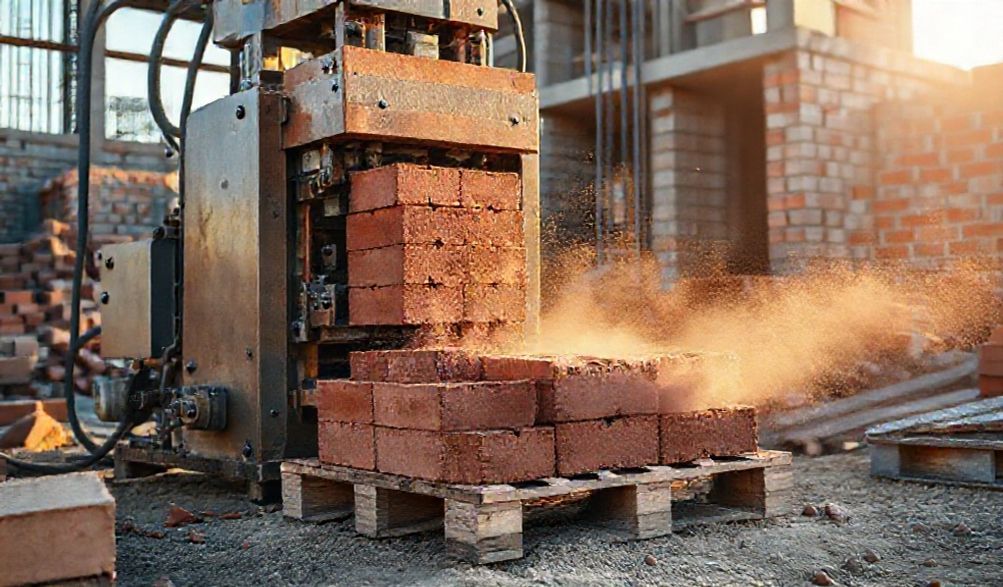
The Ultimate Guide to Brick Maker Machines: Types, Benefits & How to Choose
Facing high construction costs, slow project timelines, or inconsistent brick quality? The right brick maker machine could be your solution. In an industry where efficiency and reliability are paramount, automating your brick production isn’t just a luxury—it’s a strategic move for profitability and growth.
With over two decades of hands-on experience in construction machinery and on-site consultations, we’ve seen firsthand how the correct brick-making equipment can transform projects, from small rural workshops to large-scale urban developments. This guide is born from that practical, in-the-field experience.
We will provide a comprehensive look at modern brick maker machines, demystifying their operation, enumerating their substantial benefits, and breaking down the critical selection criteria. By the end of this guide, you’ll understand the different types of machines available, their key advantages, and have a clear, actionable framework to select the perfect model for your specific needs, scale, and budget.
What is a Brick Maker Machine? Core Function and Evolution
At its heart, a brick maker machine automates and mechanizes the age-old process of forming bricks from raw materials. It’s engineered to replace the labor-intensive, inconsistent, and slow methods of manual molding, offering precision, speed, and scalability.
Basic Operating Principle: From Raw Material to Finished Brick
The core process, while varying by machine type, generally follows these key stages:
- Mélange : Raw materials (like soil, cement, sand, or fly ash) are fed into a mixer, often with a precise amount of water, to achieve a homogeneous, workable consistency.
- Compactage & Moulage : This mixture is then transferred to a mold chamber. Here, a critical process occurs: high force de compression hydraulique or mechanical vibration compacts the material, removing air pockets. This compaction is what gives machine-made bricks their superior density and strength compared to hand-pressed versions.
- Éjection : The newly formed, compacted brick (often called a “green brick”) is ejected from the mold onto a pallet or conveyor belt.
- Guérison : The green bricks are then stacked and left to cure. For cement-based bricks, this involves keeping them moist for a set period to achieve full strength. For clay bricks, they may be fired in a kiln. Modern setups often include automated curing racks or chambers.
A Brief History: From Manual Molds to Automated Systems
The journey of brick making is a mirror to industrialization itself.
* Méthodes Traditionnelles : For millennia, bricks were formed by hand-packing mud or clay into wooden molds, then sun-dried or kiln-fired. Output was low, quality varied wildly with the worker’s skill, and the process was physically demanding.
* The Industrial Revolution: The 19th century introduced steam-powered machines, significantly increasing output. The invention of the extrusion process allowed for continuous production of brick columns that could be wire-cut to size.
* The Modern Era: Today’s brick maker machines are marvels of efficiency. They integrate electronic controls, high-pressure hydraulic systems, and sometimes full automation with robotic pallet handling. This evolution has shifted brick production from a craft to a precise engineering discipline, making consistent, high-strength bricks accessible for projects of all sizes.
Key Benefits of Using a Brick Maker Machine
Investing in a brick maker machine is not merely about buying a piece of equipment; it’s about investing in a more efficient, profitable, and sustainable operation. The advantages are tangible and multifaceted.
Unmatched Cost-Efficiency and ROI
While the initial investment requires consideration, the long-term financial benefits are compelling:
* Réduction Drastique des Coûts de Main-d'œuvre : One automated machine can replace dozens of manual laborers, slashing recurring wage expenses and dependency on labor availability.
* Minimisation des Déchets de Matériaux Precise mixing and compaction ensure almost all raw material is converted into a usable brick, unlike manual methods where spillage and breakage are common.
* Épargne à long terme : The consistent quality reduces project delays and costs associated with repairing or replacing substandard bricks. In our experience, a well-chosen machine typically pays for itself within 12-24 months for a medium-scale operation through these combined savings.
Qualité Supérieure et Constante des Briques
This is perhaps the most critical technical benefit. Machines eliminate human error.
* Uniformité : Every brick has identical dimensions, density, and weight, which simplifies bricklaying, improves structural integrity, and gives a professional finish.
* Force Contrôlée : The calibrated compression force ensures each brick meets or exceeds required strength standards (such as ASTM C67 or IS 1077). You get predictable, reliable performance.
Dramatically Increased Production Speed
The numbers speak for themselves. A skilled manual laborer might produce 300-500 bricks in a full day. In contrast:
* A basic manual press machine can produce 800-1,500 bricks per day.
* A semi-automatic brick maker machine can output 2,500-6,000 bricks per 8-hour shift.
* A fully automatic plant can produce 10,000 to 50,000+ bricks daily.
This speed accelerates project timelines and allows you to take on larger contracts with confidence.
Enhanced Versatility and Design Flexibility
Modern machines are not one-trick ponies. With interchangeable molds, you can produce:
* Various sizes: Standard, jumbo, or custom dimensions.
* Different shapes: Solid, hollow, interlocking (ideal for low-cost housing and retaining walls), and paving stones.
* Textured finishes: Some machines can create rustic or patterned faces directly during molding.
This allows you to diversify your product line and cater to niche markets.
Promoting Sustainable Construction
Automated brick making aligns perfectly with green building principles:
* Use of Local Materials: Machines can often utilize on-site or locally sourced soil, reducing transportation emissions.
* Incorporation of Industrial By-Products: Fly ash (from coal plants) and slag can be used as primary materials, turning waste into valuable building resources.
* Empreinte carbone réduite : Lower transport needs (producing on-site) and efficient material use collectively minimize the environmental impact of your construction project.
Types of Brick Maker Machines: A Detailed Breakdown
Choosing the right type of machine is the most crucial decision you’ll make. The market caters to every scale, from the hobbyist to the industrial manufacturer.
Machines à fabriquer des briques manuelles
These are human-powered presses, often using a lever or screw mechanism to compact material in a mold.
* Idéal pour : Small-scale projects, DIY enthusiasts, NGOs in community development, or as a very low-cost entry point for a startup to test the market.
* Avantages :
* Very low initial investment.
* No need for electricity or fuel.
* Simple à utiliser et à entretenir.
* Inconvénients :
* Very low production output.
* Labor-intensive and physically demanding.
* Quality can still vary with operator consistency.
Machines semi-automatiques de fabrication de briques
This category represents the “sweet spot” for many growing businesses. Key processes like mixing and compaction are mechanized (usually with an electric or diesel motor), but brick handling (feeding molds, removing finished bricks) is manual.
* Idéal pour : Medium-scale production, small to medium enterprises (SMEs), and contractors looking to balance cost with significantly improved output.
* Avantages :
* Excellent balance of affordability and productivity.
* Much more consistent quality than manual methods.
* More energy-efficient than full automatics for their output range.
* Inconvénients :
* Still requires a small crew for operation.
* Output is limited by the speed of manual handling steps.
Machines à fabriquer des briques entièrement automatiques
These are complete production lines. They feature automated material feeding, molding, compaction, brick ejection, pallet handling, and stacking. Often controlled by PLC (Programmable Logic Controller) systems.
* Idéal pour : Large-scale commercial brick manufacturing plants, government housing projects, and any operation with very high, consistent demand.
* Avantages :
* Maximum possible output with minimal labor (often just 1-2 supervisors).
* Ultimate consistency and quality control.
* Highest long-term profitability for high-volume scenarios.
* Inconvénients :
* Very high initial capital investment.
* Requires significant space and stable power supply.
* Complex maintenance requiring specialized technicians.
Usines de briques mobiles vs. usines de briques stationnaires
This is a crucial strategic choice:
* Unités de Production de Briques Mobiles : Mounted on a trailer, these are designed for on-site production. They eliminate brick transportation costs entirely, ideal for large, remote construction sites (e.g., dam construction, rural housing projects). They are typically semi-automatic.
* Plantes Stationnaires : Fixed installations at a factory or yard. They allow for optimized workflow, shelter from weather, and are suitable for supplying a local market or multiple projects from a central location. Can be semi- or fully automatic.
Critical Factors for Choosing Your Brick Maker Machine
Selecting a machine is not about buying the biggest or cheapest. It’s about finding the perfect tool for your specific job. Use this framework to guide your decision.
Évaluation de Vos Besoins de Production
Posez-vous ces questions :
* Quelle est ma production quotidienne/hebdomadaire requise ? Be realistic about current needs and future growth.
* What is the scale and duration of my project(s)? A one-off house build has different needs than a ongoing supply business.
* What type of bricks do I need to produce? (Solid, hollow, interlocking, pavers)? Ensure your chosen machine offers the appropriate molds.
Understanding Raw Material Compatibility
Not all machines work with all materials. This is a fundamental technical spec.
* Clay-Based Machines: Designed for soil with a certain clay content. May require a pugmill for mixing.
* Concrete (Cement) Block Machines: Use a mix of cement, sand, and aggregate. These are very common and versatile.
* Machines à briques de cendres volantes : Specifically engineered to use fly ash as a primary component, often with lime and gypsum.
* Stabilized Earth Machines: For soil stabilized with a small percentage of cement or lime.
Pro Tip from the Field: Always get your local raw material tested. We’ve seen projects stall because the soil composition wasn’t right for the machine purchased. A reputable supplier should guide you on this.
Power Source: Electric, Diesel, or Hydraulic?
- Électrique : Clean, quiet, and cost-effective to run where grid power is reliable. Requires a stable connection, often three-phase for larger models.
- Diesel : Offers complete independence from the electrical grid, essential for remote sites. Higher fuel and maintenance costs, and produces emissions/noise.
- Hydraulic: Refers to the compaction system, not the prime mover. Hydraulic systems provide immense, controllable pressure for high-strength bricks. The pump can be driven by an electric or diesel engine.
Budget Analysis: Initial Investment vs. Operational Costs
Think in terms of Coût Total de Possession (CTP):
1. Prix d'achat : The upfront cost of the machine.
2. Shipping, Installation, and Training: Often overlooked but significant.
3. Coûts opérationnels : Power/fuel, routine maintenance, spare parts (like wear parts on molds), and labor.
4. Potential Downtime Costs: This hinges on the next factor—supplier reliability.
A slightly more expensive machine from a reputable brand with local service support often has a lower TCO than a cheap, unsupported model.
Supplier Evaluation: A Checklist for Trustworthiness
This step is non-negotiable for protecting your investment. Vet your supplier thoroughly:
* Company History & Reputation: How long have they been in business? Search for their name online alongside keywords like “reviews” or “complaints.”
* Expertise Technique : Can they answer detailed questions about material compatibility and machine specifications? Do they offer site assessments?
* After-Sales Service & Warranty: What does the warranty cover (parts, labor, duration)? Is there a local service technician or a clear process for support?
* Disponibilité des pièces de rechange : Are wear parts (molds, liners, seals) readily available? How long does shipping take?
* Customer References: Can they provide contact information for past customers in a similar application? Always follow up on these references.
Operational Best Practices and Maintenance Tips
A machine is only as good as its operation and care. Following these guidelines ensures safety, longevity, and consistent output.
Essential Safety Protocols for Operators
- Always wear appropriate Personal Protective Equipment (PPE): safety glasses, gloves, and steel-toe boots.
- Never bypass machine guards or safety interlocks.
- Ensure the machine is completely powered down and hydraulic pressure is released before performing any cleaning or maintenance.
- Receive proper training on start-up, operation, and emergency shutdown procedures.
Routine Maintenance Checklist for Longevity
- Daily: Clean the mixer, mold, and hopper thoroughly to prevent material buildup. Check hydraulic fluid levels and for any leaks. Lubricate all moving parts as per the manual.
- Weekly: Inspect molds for wear or damage. Check belts and chains for tension and wear. Tighten any loose bolts or fittings.
- Monthly: Change hydraulic and engine oil filters as recommended. Conduct a more thorough inspection of the electrical system and compression system.
Troubleshooting Common Issues
- Poor Compaction/Weak Bricks: Likely caused by incorrect moisture content in the raw mix, insufficient compression force, or worn mold components. Check material mix and machine pressure settings first.
- Bricks Sticking in the Mold: Usually due to a dirty or damaged mold, or a mix that is too wet. Clean the mold thoroughly and adjust water content.
- Uneven Brick Height: This often points to an uneven feeding of material into the mold chamber or an issue with the pallet or feeding conveyor. Check for obstructions and leveling.
Frequently Asked Questions (FAQ) About Brick Maker Machines
Q1: What is the average production capacity of a standard brick maker machine?
Capacity varies enormously. A small manual press may produce 500-1000 bricks per day, while a semi-automatic model can produce 2,500-6,000, and large fully automatic lines can exceed 20,000 per day. Always define “standard” by your specific needs.
Q2: Can I start a brick-making business with a manual machine?
Yes, but with managed expectations. It’s a viable, ultra-low-cost way to validate your market and learn the basics. However, to run a profitable, scalable business, you will likely need to upgrade to at least a semi-automatic machine relatively quickly to meet demand and ensure consistent quality.
Q3: What is the typical payback period for investing in an automatic machine?
For a well-utilized semi-automatic machine in a steady market, the payback period is typically between 12 to 24 months. For fully automatic plants, the period is longer due to higher capital cost (2-4 years), but the overall profitability is greater. This depends heavily on local brick prices, demand, and operational efficiency.
Q4: How important is after-sales service when purchasing a machine?
It is critically important—often more so than a slight difference in purchase price. A machine is a long-term asset. Reliable after-sales service, available spare parts, and technical support are what keep your investment productive and profitable for years. A cheap machine with no support can become a very expensive paperweight.
Q5: What are the most common raw materials used, and can I use local soil?
The most common materials are cement, sand, and aggregate for concrete blocks, and fly ash for fly ash bricks. Using local soil is absolutely possible and encouraged for certain machine types (clay or stabilized earth machines), but the soil must have the right composition (clay/silt/sand ratio). A simple soil test is essential before purchase.
Q6: How much space is required to set up a small brick-making operation?
For a small semi-automatic operation, you should plan for approximately 2,000 to 5,000 square feet (200-500 sq. meters). This needs to accommodate the machine itself, raw material storage (sand, cement, etc.), a mixing area, space for green brick stacking/curing, and storage for finished bricks.
Conclusion
The journey to modernizing your brick production is a significant step, but as we’ve outlined, the benefits in cost-efficiency, consistent quality, and production speed are transformative. The key to success lies in the careful matching of the machine type—manual, semi-automatic, or fully automatic—to your specific production requirements, raw materials, and budget.
We cannot overstate the importance of thorough research and meticulous supplier vetting. Use the “Critical Factors for Choosing” section as your checklist. Your chosen brick maker machine is a long-term partner in your business or project’s growth; ensuring it comes with reliable support is paramount.
Ready to transform your brick production and build a more efficient, profitable future? Contact our team of experts today for a personalized consultation. We can help you analyze your specific requirements, raw materials, and goals to recommend the most reliable and efficient brick maker machine for your needs. [Link to Contact Page/Product Catalog].
Built on decades of direct industry experience, we’re here to ensure your investment delivers tangible, lasting results.
<