
The Ultimate Guide to Interlocking Block Machines: Cost, Types, and How to Choose
Introduction
In an era of soaring construction costs and growing environmental awareness, builders, entrepreneurs, and homeowners are actively seeking smarter, more sustainable solutions. The search for a method that is both cost-effective and reliable often leads to a pivotal question: Is there a technology that can empower self-reliance, reduce waste, and accelerate project timelines? The answer lies in a transformative piece of equipment that is reshaping landscapes from rural homesteads to urban developments: the interlocking block machine.
More than just a piece of machinery, this technology represents a paradigm shift in how we think about building. By turning locally available soil into sturdy, mortar-less construction blocks, it places the power of creation directly in the hands of the user. Whether you’re a DIY enthusiast dreaming of a backyard workshop, a social entrepreneur aiming to build affordable housing, or a commercial contractor looking to optimize margins, understanding this technology is your first critical step.
This comprehensive guide is designed to be your definitive resource. We will demystify how interlocking block machines work, break down their undeniable benefits, and provide a clear roadmap for navigating the market. Our goal is to equip you with the expert-driven knowledge needed to make an informed purchase decision, ultimately saving you significant time, money, and uncertainty. Industry trends clearly show a marked shift towards sustainable, localized construction methods, and mastering this technology positions you at the forefront of this movement.
What is an Interlocking Block Machine? Revolutionizing Modern Construction
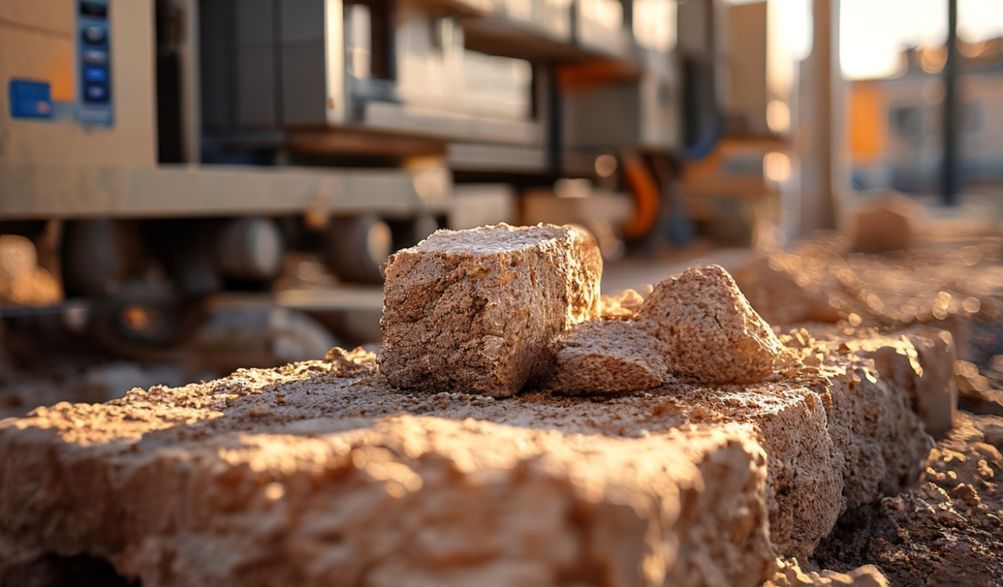
At its core, an interlocking block machine is a device that compresses a damp mixture of soil, sand, and a small percentage of cement into high-density building blocks. Its revolutionary aspect isn’t just compression, but the precision-designed molds that shape each block with a unique “tongue-and-groove” or puzzle-like pattern on its top, bottom, and sides. This ingenious design allows blocks to lock together seamlessly during construction, eliminating the traditional need for mortar binding.
Technologie de base et son fonctionnement
The process hinges on two well-established principles: soil stabilizationetdry-stacking.
- Préparation des matériaux : The primary raw material is locally sourced soil (often from the very construction site), which is sieved and mixed with a predetermined ratio of sand and a small amount (typically 5-10%) of ordinary Portland cement. Water is added to achieve optimal moisture content.
- Compression : This mixture is fed into the machine’s mold cavity. A powerful hydraulic ram (or manual lever) then applies immense pressure—often measured in tons—compacting the material and driving out air pockets. This compression creates a block of remarkable density and strength.
- Interlocking Formation: As the block is formed, the mold shapes its interlocking features. Once ejected, these blocks can be stacked directly, with the protrusions (tongues) of one block fitting securely into the indentations (grooves) of another, creating a stable, aligned wall without mortar.
Composants clés d'une machine standard
While complexity varies, a typical machine consists of:
* Hopper :Le point d'entrée pour le mélange de matières premières préparées.
* Moules/Matrices: The heart of the machine. These interchangeable steel forms define the block’s final shape, size, and interlocking pattern.
* Système de Compression :Cela peut être unhydraulic power pack (for automatic/semi-auto models) or a manual lever system, providing the force needed to compact the block.
* Système d'éjection : Mechanism to gently push the freshly formed block out of the mold onto a pallet or the ground.
* Frame & Control Panel: A robust steel frame houses all components. Automated models feature a control panel for managing the compression cycle, while manual machines rely on operator action.
Top Benefits of Using an Interlocking Block Machine
The advantages of this building system extend far beyond simple block production, impacting the entire construction lifecycle.
Efficacité des Coûts Inégalée
- Radically Lower Material Costs: Up to 80-90% of the block’s composition is locally available soil, virtually free. This drastically cuts the need for expensive quarried materials like fired bricks or concrete blocks.
- Elimination of Major Expenses: The dry-stacking method removes the cost of mortar and the skilled labor required for bricklaying, two of the most significant line items in traditional masonry.
- Low Operational Overhead: Once purchased, the machine runs on minimal electricity (or manual labor) and has straightforward maintenance needs, keeping ongoing costs predictable and low.
Superior Speed and Ease of Construction
- Production à la demande : Blocks are produced directly on-site, eliminating supply chain delays and transport costs for materials.
- Simplified Assembly: Stacking interlocking blocks is often compared to assembling LEGO bricks. It’s intuitive, requires less skilled labor, and allows for faster wall raising.
- Accelerated Project Timelines: The combination of instant material availability and faster assembly can reduce overall construction time by 30-50%, according to common reports from builders.
Exceptional Durability and Structural Integrity
- Haute résistance à la compression : Properly stabilized and compressed blocks can achieve compressive strengths ranging from 3 MPa to over 10 MPa, suitable for load-bearing walls in 1-3 story buildings as per engineering design.
- Enhanced Resistance: The dense composition offers excellent resistance to weathering, fire (earth does not burn), and pests like termites.
- Seismic Resilience: The interlocking design creates a monolithic wall structure that can flex and absorb energy, a feature that has shown promising performance in seismic zones compared to rigid, mortar-bound walls.
Plaidoyer pour une Construction Durable et Écologique
- Minimal Carbon Footprint: Drastically reducing cement use (a major CO2 emitter) and eliminating the need to fire bricks in kilns makes this one of the lowest-carbon construction methods available.
- Hyper-Local Sourcing: Using on-site soil cuts transportation emissions to near zero and minimizes landscape scarring from quarries.
- Zero-Waste Cycle: Production creates no waste, and blocks made with stabilized earth are fully recyclable—they can be crushed and remixed to form new blocks at the end of a building’s life.
Types of Interlocking Block Machines: Finding Your Perfect Match
Selecting the right machine is critical and depends entirely on your project scale, budget, and labor availability.
Manual vs. Semi-Automatic vs. Automatic Machines
- Machines manuelles : Operated entirely by human power using a lever. They are the most affordable entry point but have low output and require significant physical effort. Idéal pour : Very small-scale, personal DIY projects, demonstration purposes, or regions with unreliable electricity.
- Machines semi-automatiques : These use an electric motor to power the hydraulic compression system, but material feeding and block removal are manual. They offer an excellent balance of price, output, and energy efficiency. Idéal pour : Small-to-medium businesses (SMBs), housing cooperatives, and medium-scale community projects.
- Machines entièrement automatiques : Feature automated material feeding, compression, and block ejection, often with conveyor systems. They deliver the highest output with consistent quality and minimal labor but require a substantial investment. Idéal pour : Large-scale commercial production, established block-making businesses, and major development projects.
Machines Mobiles vs. Machines Stationnaires
- Machines Mobiles : Mounted on a trailer chassis, these can be towed directly to different job sites. This maximizes flexibility and is perfect for contractors who work in multiple locations or for producing blocks directly where they will be used.
- Machines stationnaires : Designed for fixed installation in a workshop or factory setting. They are typically more robust and can be part of a larger production line for the highest volume output.
Understanding Production Capacity (Blocks Per Hour/Day)
Capacity is the primary driver of scale and price. Always match the machine’s output to your realistic project needs.
| Machine Type | Ideal For | Approx. Output Range (8-hr shift) | Typical Power Source |
| :— | :— | :— | :— |
| Manuel | Homesteads, Garden Walls, Sheds | 200 – 500 blocks | Human Power |
| Semi-Auto | Small Homes, Business Ventures | 800 – 2,500 blocks | Electric (Single Phase) |
| Fully Auto | Housing Developments, Large Commercial | 3,000 – 10,000+ blocks | Electric (Three Phase) |
Facteurs Critiques à Considérer Avant d'Acheter
This decision requires careful analysis beyond just comparing price tags. Industry practice shows that due diligence here prevents costly mistakes.
Assessing Your Project Scope and Business Model
Demandez-vous :
* Volume : How many blocks do I need total? Per month or year?
* Purpose: Is this for a single personal project or an ongoing commercial enterprise?
* Structures: What will I build? (e.g., single-story homes, perimeter walls, multi-story buildings). This determines the required block strength and potentially the block design.
Soil Testing: The Non-Negotiable First Step
This cannot be overstated. The quality of your blocks is directly dependent on your soil’s composition. Before buying a machine, have your soil tested. You need to understand its:
* Clay Content: Provides cohesion but too much causes shrinkage cracks.
* Sand Content: Provides skeletal structure and stability.
* Silt Content: Fines that help with compaction.
An ideal soil is a “loam” – a balanced mix. Pure clay or organic topsoil is unsuitable and will require significant amendment or cannot be used.
Plongée approfondie dans les spécifications des machines
- Motor Power & Energy: Ensure the power requirements (HP/KW, Voltage, Single/Three Phase) match what is reliably available at your site.
- Block Dimensions & Molds: Standard block sizes exist, but check if the supplier offers customizable molds for unique designs or thicknesses.
- Qualité de construction : Inspect the steel grade (avoid lightweight frames), the quality of welding, and the thickness of the mold walls. A robust machine lasts decades.
- Support après-vente : This is a hallmark of a reputable supplier. Confirm the availability of spare parts, clarity of technical manuals, and the possibility of remote or on-site technical support.
Navigating Supplier Selection and Avoiding Scams
The market has reputable manufacturers and opportunistic resellers. Protect your investment by:
* Seeking Verified Manufacturers: Prefer companies with a long track record, a physical factory address, and professional documentation.
* Identifying Red Flags: Extremely low prices, refusal to provide a live video demonstration, lack of customer references, and pressure to pay via unsecured methods.
* Taking Actionable Steps: Always request a live video call to see the machine in operation. Ask for a list of past clients in your region and contact them. Verify any claimed certifications or patents.
Interlocking Block Machine Price Range and ROI Analysis
Global Price Breakdown by Machine Type
Prices vary widely based on capacity, automation, build quality, and shipping costs. Use these ranges as a guideline (in USD):
* Manual Interlocking Block Machine: $1,000 – $4,000
* Machine Semi-Automatique : $5,000 – $20,000
* Machine entièrement automatique : $25,000 – $80,000+
Note : A higher price often correlates with better durability, higher output, and stronger after-sales support. The cheapest option is rarely the most cost-effective long-term.
Calculating Your Return on Investment (ROI)
The ROI can be compelling. Consider this simplified framework:
(Cost of Traditional Construction - Cost with Interlocking Blocks) / Machine Investment = Time to ROI
Example Factors:
* Material Savings: 70%+ reduction in block material costs.
* Économies de main-d'œuvre : Up to 50% reduction in masonry labor.
* Project Value: The ability to undertake more projects or build your own property at a fraction of the cost.
For a small business, operational data suggests the machine investment can often be recouped within the first 1-3 projects.
Understanding the Total Cost of Ownership
The purchase price is just the beginning. Budget for:
* Coûts initiaux : Machine price, international shipping, import duties/taxes, and installation.
* Coûts opérationnels : Foundation/pad for the machine, raw materials (cement, soil transport if needed), labor, power, and routine maintenance.
* Future Costs: Replacement parts (like mold liners), potential training, and machine upgrades.
Foire aux Questions (FAQ)
Q1: What is the compressive strength of interlocking blocks?
A: Strength typically ranges from 3 MPa to 10 MPa or more, depending on the soil-cement mix design, compaction pressure, and curing. Properly produced blocks are suitable for 1-3 story load-bearing buildings. For any structural project, professional testing at a certified lab is mandatory.
Q2: Can I use any type of soil?
A: No. While the technology is adaptable, soil must be tested. Ideal soil is a mix of sand, silt, and a controlled amount of clay. Pure clay or organic soil is problematic and may require blending with other soils or stabilizers, or may be unsuitable.
Q3: Do I need special training to operate the machine?
A: Basic operational training is highly recommended and is often provided by reputable suppliers. The mechanical operation is generally straightforward. The more critical knowledge involves consistently preparing the correct soil mix, which is key to producing quality blocks.
Q4: Are buildings made with interlocking blocks approved by building codes?
A: Stabilized earth construction is gaining acceptance worldwide and is supported by organizations like UN-Habitat for sustainable building. However, approval is local. You doit consult with your local municipal building authority and a qualified structural engineer to ensure compliance with all regional codes and regulations before starting construction.
Q5: How do I maintain my interlocking block machine?
A: Maintenance is simple but essential:
* Clean the mold, hopper, and ejection plate thoroughly after each use to prevent material buildup.
* Lubricate all moving parts (pivots, guide rods) as per the manufacturer’s schedule.
* For hydraulic models, check fluid levels and filters regularly.
* Inspect the mold for wear or damage, as this affects block quality.
Conclusion
The interlocking block machine is more than a tool; it’s an empowerment technology. It democratizes construction, promotes profound environmental stewardship, and offers a tangible path to financial efficiency for projects of all scales. The journey from concept to completed structure hinges on the informed choices you make now: committing to thorough soil testing, meticulously researching machine specifications, and, most importantly, partnering with a credible and supportive supplier.
Use this guide as your roadmap. Move forward by contacting a shortlist of 2-3 reputable suppliers with your specific project details. Insist on live demonstrations and speak directly to their past customers. For your specific location, always engage a local construction engineer to validate your plans and ensure regulatory compliance.
Ready to take the next step? Start your journey toward efficient, sustainable, and cost-effective building today.
<