
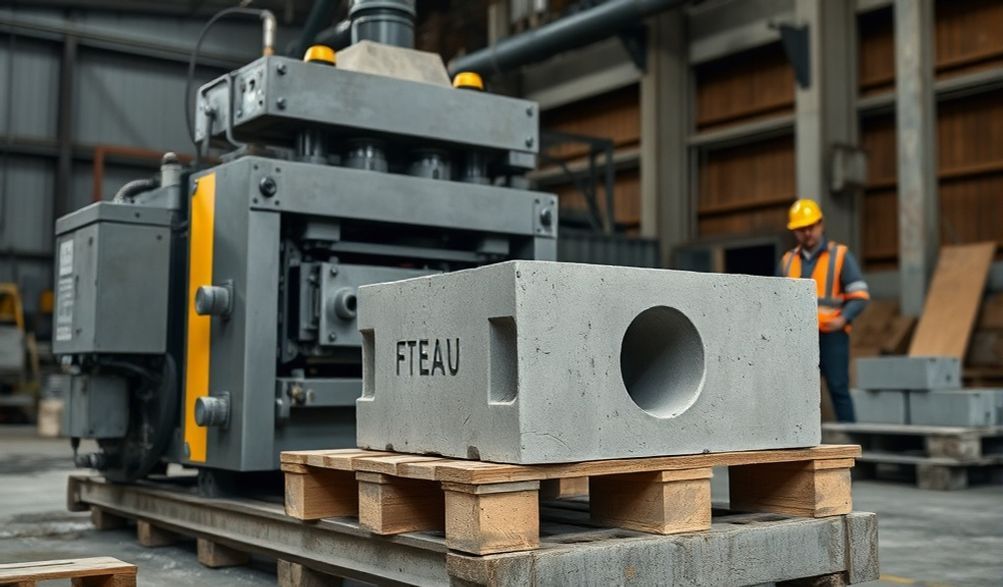
Le Guide Ultime de la Machine à Blocs QT4 : Votre Partenaire pour l'Efficacité en Construction
Dans le monde de la construction et de la fabrication de matériaux de bâtiment, l'efficacité et la fiabilité sont les fondements de la rentabilité. Pour les entrepreneurs et les entreprises de construction de petite à moyenne taille, trouver un équipement qui allie capacité et coût peut être une tâche ardue. Voici la machine à blocs QT4 — un cheval de bataille semi-automatique qui est devenu une norme mondiale pour la production de blocs de béton, de pavés et de bordures de haute qualité. Cette machine n'est pas seulement un équipement ; c'est un partenaire stratégique pour construire une entreprise durable à partir de zéro.
Ce guide complet est le fruit d'une analyse et d'une observation approfondies de l'industrie des machines à briques et blocs. Nous irons au-delà des spécifications commerciales de base pour vous offrir une compréhension pratique et approfondie de la QT4. Nous explorerons son cœur mécanique, vous guiderons à travers son fonctionnement efficace et sa maintenance critique, analyserons sa véritable valeur économique et vous armerons des connaissances nécessaires pour choisir la bonne machine auprès du bon fournisseur. Notre engagement est de vous fournir des informations fiables et exploitables, qui placent votre réussite opérationnelle et votre sécurité au-dessus de tout.
Comprendre la Machine à Blocs QT4 : Spécifications Essentielles et Conception
Le QT4 est classé comme une machine à blocs de type « stationnaire » ou « à ponte ». Contrairement aux machines mobiles qui se déplacent sur la zone de production, le QT4 reste en place, produisant des blocs qui sont ensuite déplacés manuellement ou semi-automatiquement vers une zone de durcissement. Cette conception est la clé de sa simplicité, de sa durabilité et de son accessibilité financière.
Spécifications techniques et composants clés
Au cœur du QT4 se trouve une machine d'une simplicité élégante, construite autour de quelques composants robustes. Comprendre ces éléments est essentiel pour son fonctionnement et sa maintenance.
- Système d'alimentation :Généralement disponible en configurations à moteur électrique (standard) et à moteur diesel. L'option diesel offre une mobilité essentielle pour les sites dépourvus d'une alimentation électrique fiable.
- Système de Vibration :Le cœur de la densité des blocs. Il utilise un puissant moteur à vibration équilibré, monté sur une table de vibration robuste. Cela garantit que le mélange de béton est parfaitement compacté pour éliminer les vides et créer des blocs solides.
- Cycle de Production :Un cycle standard – alimentation, compactage et soulèvement du moule – prend environ 15 à 20 secondes. Ce rythme permet une production régulière et gérable.
- Dimensions globales :Son encombrement réduit (généralement environ 2m x 1,5m) le rend adapté aux petites cours de production ou aux ateliers.
Décomposition des Composants Clés :
- Cadre robuste :Construit à partir de profilés et de plaques en acier robuste, conçu pour résister aux vibrations et pressions constantes sans déformation.
- Système de Moulage :Le moule interchangeable définit la forme du bloc. Des moules de haute qualité, soudés avec précision et dotés de revêtements remplaçables, sont essentiels pour assurer la cohérence du produit et une longue durée de vie.
- Système de PresseUtilise un mécanisme mécanique ou hydraulique pour appliquer une pression vers le bas sur le moule pendant la vibration, améliorant ainsi la densité des blocs et la finition de surface.
- Panneau de configuration :Un panneau simple et convivial abrite les démarreurs de moteur et les commandes des systèmes de vibration et de presse, permettant une utilisation facile.
Production Standard et Tailles des Blocs
La véritable polyvalence du QT4 réside dans l'interchangeabilité de ses moules. Avec une seule machine, vous pouvez produire un catalogue de produits diversifié pour répondre aux demandes du marché.
Commonly Produced Block Types & Sizes:
* Blocs creux : 400x200x200mm, 400x150x200mm (standard building blocks).
* Blocs Pleins : Various sizes for structural applications.
* Interlocking Paving Stones: 200x100x60mm, 225×112.5x60mm, and numerous decorative patterns.
* Bordures de trottoir et bordures de jardin : Standard and custom profiles.
* Formes Spécialisées : Through custom molds, it can produce bricks, grass pavers, and more.
Capacité de production :
* With a standard 400x200x200mm hollow block mold, the QT4 can produce approximately 2,000 – 3,000 blocks per 8-hour shift, depending on operator efficiency and workflow organization.
* Changing molds is a relatively straightforward process (taking 30-60 minutes), allowing a single operation to switch between product lines to fulfill different orders, maximizing market responsiveness.
Operational Workflow: How to Efficiently Run a QT4 Machine
A smooth operation is a profitable operation. Here’s how to run your QT4 machine efficiently from raw material to finished product.
Step-by-Step Production Process
- Préparation des matières premières : Success starts with a consistent concrete mix. A standard ratio is 1 part cement, 3 parts sand, and 3 parts aggregate (e.g., 6mm stone). Water content is critical—aim for a semi-dry mix that holds its shape when squeezed in your hand. A forced-action pan mixer is highly recommended for a homogeneous blend.
- Feeding the Hopper: The prepared mix is fed into the machine’s hopper. Consistency in the volume of each feed is key to producing blocks of uniform weight and dimensions.
- Compaction and Molding: The operator initiates the cycle. The mix is drawn into the mold cavity. The powerful vibration motor activates, simultaneously with the press head applying pressure. This dual action compacts the concrete, forcing out air and creating a dense, strong block.
- Demolding and Lifting: After vibration, the mold is lifted vertically, leaving the freshly formed block on the production pallet or directly on a concrete floor (if no pallet system is used). This “egg-laying” action gives the machine its nickname.
- Guérison : The fresh blocks are carefully moved (via pallet or lifting tool) to a curing area. They must be kept moist and covered with plastic sheeting for at least 24 hours to ensure proper hydration and strength development before being air-cured.
- Stacking and Storage: After initial curing, blocks are stacked and stored for the full 28-day curing period to reach their maximum compressive strength before sale or use.
Essential Maintenance for Longevity and Reliability
Proactive maintenance prevents costly downtime and extends your machine’s life by years.
Daily Checklist:
* Clean the machine thoroughly, removing all concrete residue from the mold, table, and hopper.
* Check for loose bolts and nuts, especially on the vibration motor mounts.
* Visually inspect hydraulic hoses and connections for leaks (if applicable).
* Lubricate all moving parts (guide rods, pivot points) as per the manual.
Weekly/Monthly Checklist:
* Inspect mold liners and the press head for significant wear or damage.
* Check the tension of drive belts (on mechanical models).
* Inspect electrical connections for tightness and signs of wear.
* Verify the performance of the vibration motor.
Common Wear Parts & Troubleshooting:
* Pièces d'usure : Mold liners, vibration motor bearings, hydraulic seals, and feed hopper scrapers are consumables. Keep spares on hand.
* Poor Block Density: Usually caused by incorrect concrete mix (too wet/dry), insufficient vibration time, or a worn vibration motor.
* Blocks Sticking in Mold: Often due to a damaged or poorly lubricated mold, or a concrete mix with too much fine sand and not enough release agent.
Analyzing the Advantages and Economic Viability
For the target market, the QT4 isn’t just a machine; it’s an accessible entry point into manufacturing with a clear path to return on investment.
Key Benefits for Small Businesses and Startups
- Faible investissement initial : The QT4 represents a fraction of the cost of a fully automatic production line, dramatically lowering the barrier to entry.
- Operational Economy: It has relatively low energy consumption and can be operated efficiently by a crew of just 2-3 people.
- Simplicity and Reliability: Its mechanical design is easy to understand, repair, and maintain, even with basic technical skills. Fewer complex electronics mean fewer things that can go wrong.
- Polyvalence remarquable : The ability to quickly change molds allows a small business to serve multiple market segments—from housing construction to landscaping—with one capital investment.
Cost-Benefit Analysis and ROI Projection
While numbers vary by region, a basic ROI framework can be established:
- Calculate Fixed Costs: Include the machine price, delivery, and essential accessories (e.g., mixer, pallets).
- Calculate Variable Costs Per Block: Sum the cost of cement, aggregates, sand, labor, and power for each block produced.
- Determine Local Selling Price: Research the market price for the blocks you intend to produce.
- Project Daily/Weekly Output: Be realistic based on a single-shift, efficient operation.
- Run the Numbers:
- Gross Profit per Block = Selling Price – Variable Cost.
- Daily Gross Profit = Gross Profit per Block x Daily Output.
- ROI Timeline = Total Fixed Cost / Daily Gross Profit.
Exemple : If your daily gross profit is $200 and your total fixed investment was $12,000, your simple payback period would be approximately 60 working days. This compelling economics is why the QT4 is a cornerstone of successful small-scale block yards worldwide.
Critical Factors for Selecting and Sourcing a QT4 Machine
Your choice of supplier is as important as your choice of machine. A reliable partner ensures long-term productivity.
Choosing the Right Supplier: A Buyer’s Checklist
- Reputation and Experience: Look for a manufacturer or exporter with a verifiable track record of at least 5-10 years. Search for independent customer reviews or testimonials.
- Service après-vente : Confirm what support is offered. This should include:
- Detailed installation manuals and video guides.
- Availability of comprehensive operation and maintenance documentation.
- A clear spare parts catalog with pricing.
- Access to technical support (via phone, email, or WhatsApp).
- Transparence : A trustworthy supplier will readily provide:
- Machine Test Videos: Before shipment, request a video of your actual machine running a production test.
- Customer References: Ask for contact information for previous buyers in a similar region or market.
Customization Options and Accessories
To enhance productivity and product range, inquire about these common add-ons:
- Color Mixer: For producing colored paving stones.
- Automatic Feeder: A conveyor system that feeds mix into the hopper, reducing manual labor and improving consistency.
- Block Stacker: A semi-automatic device to lift and stack fresh blocks onto curing racks.
- Conceptions de Moulages sur Mesure : Work with the supplier to create unique block or paver designs that can give you a competitive edge in your local market.
Safety Protocols and Operational Best Practices
Ignoring safety and quality protocols risks both your personnel and your business reputation.
Mandatory Safety Procedures for Operators
- Équipement de Protection Individuelle (EPI) : Safety glasses, steel-toe boots, hearing protection (vibration is loud), and heavy-duty gloves are non-negotiable.
- Lockout-Tagout (LOTO): Before performing un maintenance or clearing a jam, the machine must be powered off and the control panel locked with a personal padlock to prevent accidental startup.
- Safe Material Handling: Train staff on proper lifting techniques to move blocks and raw materials, preventing back injuries.
Ensuring Consistent, High-Quality Block Production
- Mix Consistency: Religiously control the water-to-cement ratio. Fluctuations here are the primary cause of weak or cracked blocks.
- Optimal Vibration: Adhere to the recommended vibration time (usually 10-15 seconds). Under-vibration causes weak blocks; over-vibration can lead to segregation of the mix.
- Proper Curing: Do not rush this process. Keep blocks covered and moist for the first 24-48 hours. This slow, controlled hydration is what gives concrete its strength. Skipping proper curing results in permanently inferior, crumbly blocks.
FAQ: Your Questions About the QT4 Block Machine Answered
Q: What is the difference between the QT4 and a fully automatic block making machine?
A: The core difference is in automation and output. The QT4 is semi-automatic, requiring operators to move and cure the blocks it produces. A fully automatic machine integrates a pallet circulation system, stackers, and sometimes robotic arms, creating a continuous production line with much higher output (e.g., 10,000+ blocks per shift) and less manual labor, but at a cost 5 to 10 times higher than a QT4.
Q: Can the QT4 machine produce interlocking paving blocks?
A: Yes, absolutely. By simply changing the mold, the QT4 can produce various styles of interlocking paving blocks, which are highly marketable for landscaping and driveway projects. This is one of its most popular applications.
Q: What kind of after-sales support should I expect from a reputable supplier?
A: A trustworthy supplier should provide detailed installation guidance (often via video), operator training manuals, a comprehensive parts catalog with diagrams, and prompt availability of technical support via communication channels like email or messaging apps. They should also guarantee the availability of genuine spare parts for a defined period.
Q: Is it possible to run a QT4 machine without a concrete mixer?
A: While technically possible to mix manually for very small batches, it is not recommended for any serious production. A concrete mixer (pan or planetary type) is essential for achieving a homogeneous, consistent mix. Inconsistent mixing leads to weak blocks, poor surface finish, and can cause damage to the machine’s mold and vibration system over time.
Conclusion
The QT4 block machine stands as a proven and pragmatic solution for entrepreneurs and construction firms looking to enter or solidify their position in the building materials market. Its genius lies in its balanced design—offering just the right level of automation to boost productivity without introducing overwhelming complexity or cost. It empowers businesses to create essential construction materials locally, reliably, and profitably.
Ultimately, your success will hinge on a triad of factors: the inherent quality of the machine, your commitment to diligent operation and maintenance, and, critically, your partnership with a credible and supportive supplier. By applying the insights from this guide—grounded in expertise and a commitment to trustworthy information—you are well-equipped to leverage the QT4 to build a solid foundation for your business, one perfectly formed block at a time.
<