
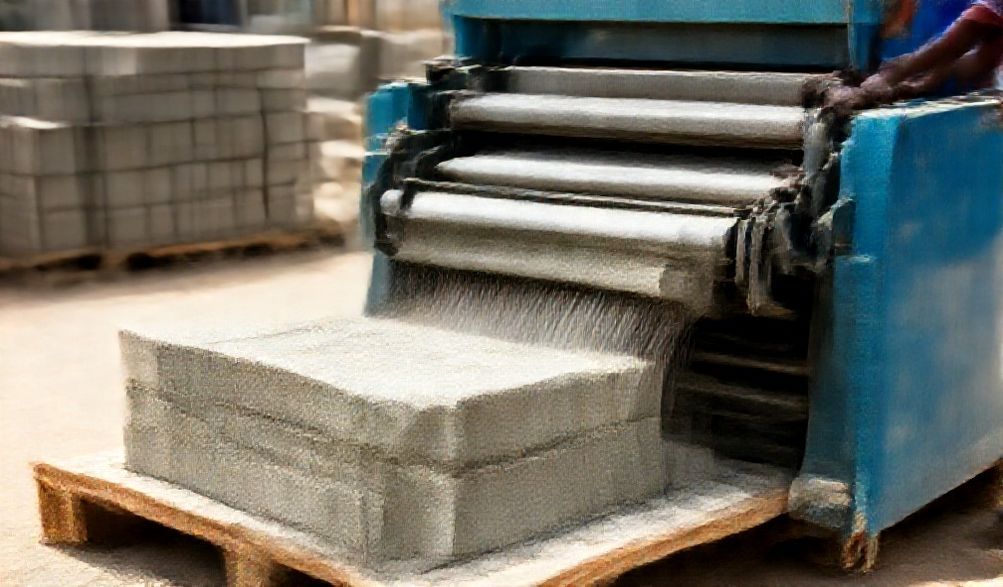
Votre guide pour des machines à fabriquer des briques abordables au Ghana : l'usine FUDA est-elle le bon choix ?
L'horizon du Ghana témoigne d'un boom de la construction qui ne montre aucun signe de ralentissement. D'Accra, trépidante, aux pôles régionaux émergents, la demande en logements et infrastructures de qualité et abordables est insatiable. À la base même de cette croissance se trouve un élément crucial : le modeste parpaing. Pour les promoteurs, les entrepreneurs et les investisseurs avisés, posséder les moyens de production — une machine à fabriquer des briques fiable — peut être la clé pour débloquer des profits substantiels et le contrôle des projets. Cependant, la quête d'une machine véritablement « bon marché » est semée d'embûches. De nombreux acheteurs sont confrontés à la dure réalité des promesses non tenues, des coûts cachés et d'un équipement qui cède sous l'exigeant soleil ghanéen.
Ce guide va droit au but. Nous allons analyser méticuleusement le marché des machines à fabriquer des briques à bas prix au Ghana, en allant au-delà des prix affichés pour révéler le véritable coût de possession. En guise d'étude de cas, nous mettrons particulièrement en lumière leUsine de Fabrication de Blocs FUDAun nom que l'on rencontre fréquemment lorsque l'on recherche des options abordables. Notre analyse s'appuie sur une connaissance du secteur, des comparaisons entre fournisseurs et les facteurs clés qui distinguent un investissement judicieux d'une erreur coûteuse. Commençons par poser les bases de la connaissance.
Comprendre le concept de « bon marché » sur le marché des machines à briques
Le mot "bon marché" est un aimant pour les acheteurs, mais dans le monde des machines, c'est un terme qui exige une clarification immédiate. Un prix d'achat bas peut être la décision la plus coûteuse que vous preniez s'il entraîne des temps d'arrêt chroniques, des blocs de mauvaise qualité et une absence totale de support.
Prix par rapport au Coût Total de Possession
Considérez votre achat de machine comme un partenariat à long terme, et non comme une aventure d'un soir. Le Coût Total de Possession (CTP) englobe toutes les dépenses, depuis la décision d'achat jusqu'à la mise hors service de la machine.
- Le Prix InitialCeci n'est que le prix d'entrée.
- Coûts cachés et récurrents :Elles paralysent souvent les budgets.
- Expédition, Douane et Dédouanement :Pour les machines importées, cela peut ajouter 30 à 50 % au prix de base.
- Installation & Assemblage :Le prix inclut-il un technicien pour l'installation ?
- Entretien et Réparations :Entretien régulier et pannes imprévues.
- Pièces de rechange :Leur coût et, plus important encore, leur disponibilité au Ghana.
- Coûts opérationnels :Consommation d'électricité/diesel et main-d'œuvre nécessaire pour le faire fonctionner.
- Coût d'opportunité :Le manque à gagner chaque jour où la machine est en panne.
Une machine qui coûte 10 000 GHS de plus initialement mais qui fonctionne de manière fiable pendant 5 ans offre une bien meilleure valeur qu'une machine "bon marché" qui passe la moitié de sa vie inactive, en attendant qu'une pièce soit expédiée depuis l'étranger.
Types de machines "bon marché" disponibles au Ghana
Le marché ghanéen propose un système de machines abordables à plusieurs niveaux :
- Manuel / Machines à Pondeuses d'Œufs :Voici les véritables champions d'entrée de gamme et économiques. Ils sont simples, mobiles et nécessitent un travail manuel important pour le mélange, l'alimentation et le retrait des blocs. Idéaux pour les projets de très petite envergure ou les start-ups qui testent le terrain.
- Petites Machines Semi-Automatiques :C'est le point idéal pour de nombreuses petites et moyennes entreprises. Elles utilisent l'électricité ou le diesel pour automatiser la vibration et le compactage, augmentant ainsi considérablement la production et la régularité tout en maintenant les coûts gérables. Des modèles comme le QMJ4-45 sont très répandus dans ce segment.
- Machines d'occasion/Reconditionnées :Ce chemin offre un investissement initial plus faible mais est à haut risque. Vous devez posséder l'expertise technique pour évaluer l'état réel de la machine. Ne l'envisagez que si vous avez un mécanicien de confiance ou si le vendeur propose une garantie significative.
Caractéristiques clés à comparer (au-delà du prix)
Lors de la comparaison des modèles, dépassez le prix et examinez attentivement ces spécifications :
- Capacité de production : Never go by “blocks per day” claims alone. Ask for the temps de cycle (e.g., 15-20 seconds per cycle) and calculate based on an 8-hour operational day with efficiency losses.
- Source d'alimentation : Electric is cleaner and cheaper to run if you have stable grid power. Diesel is essential for sites without reliable electricity. Hybrid models offer flexibility.
- Block Types & Molds: Can it produce the standard 6″, 5″, and 4″ blocks? What about interlocking blocks for estate developments? Check mold compatibility and cost.
- Required Manpower: How many people are needed to operate it efficiently? This directly impacts your labor costs.
Spotlight on FUDA Block Making Factory
FUDA Block Making Factory is a manufacturer, typically based in China, that positions itself as a supplier of affordable block making machinery to markets like Ghana. They are not usually a direct retailer in Ghana; their machines are sold through local dealers, importers, and agents. It is crucial to state that this overview is based on publicly available information, product catalogs, and market positioning. Conducting your own due diligence on the specific local dealer is non-negotiable.
Who is FUDA? Company Overview
FUDA presents itself as a specialized manufacturer with years of experience in producing concrete block machinery. Their market proposition is clear: offering a range of machines at competitive price points to make block production accessible. For the Ghanaian buyer, the relationship is almost never with “FUDA China” directly, but with the Ghana-based company that imports, sells, and (ideally) services their equipment.
Popular FUDA Machine Models for the Ghanaian Market
Through local dealers, several FUDA models are commonly advertised:
- FUDA QMJ4-45: A semi-automatic, electric-powered egg-layer mobile machine. It’s a popular “first step up” from manual machines.
- Est. Output: 1000-1500 solid blocks (6″) per 8-hour shift.
- Idéal Pour : Small construction firms, block yards supplying local communities.
- FUDA QCM4-30: A manual press machine, even more affordable, suitable for very low-budget startups or on-site production for a single project.
- FUDA ZN-900C: A more advanced, stationary semi-automatic machine with a higher production capacity and the ability to produce a wider variety of block types, including some interlocking designs.
Analyzing the Pros and Cons of Choosing a FUDA Machine
Potential Advantages:
- Competitive Upfront Cost: Their primary appeal is a lower purchase price compared to some premium international brands.
- Variety of Models: A range from manual to semi-automatic allows for scalability.
- Local Dealer Availability: Machines are often physically present in Ghana, allowing for viewing before purchase.
Potential Concerns & Critical Questions for Buyers:
The value of a FUDA machine is almost entirely dependent on the local dealer. You must investigate:
- After-Sales Service in Ghana: Is there a dedicated service center with trained technicians? Or is “support” just a phone number to a salesman?
- Disponibilité des pièces détachées : Are common wear parts (vibration motor bearings, hydraulic seals, mold liners) kept in stock in Ghana? What is the lead time and cost for parts not in stock?
- Build Quality & Durability: How does the steel thickness, welding quality, and component brand (e.g., Siemens vs. unknown Chinese electrical parts) compare to other brands? Ask for the machine’s weight—a heavier machine often indicates more robust construction.
- Warranty Realities: A “1-year warranty” is meaningless if claiming it requires shipping the machine back to China. Get the warranty terms in writing from the Ghanaian dealer, specifying what is covered, who performs repairs, and where parts come from.
How to Vet Any Supplier (Including FUDA) for Trust
Your research should focus 70% on the supplier and 30% on the machine specs.
Essential Due Diligence Steps
- Visit and Observe: Go to the dealer’s yard. Don’t just see a static machine; insist on seeing the exact model you want running under load, producing blocks.
- Demand Local References: Ask for contacts of at least 2-3 customers in Ghana who have owned the machine for over a year. Call them. Visit their site if possible. Ask about breakdowns and support response time.
- Inspect Documentation: Check for basic certifications. While not always comprehensive for all models, it shows a level of manufacturing standard.
- Decode the Quotation: Ensure your quote is detailed. Is it FOB (you pay all shipping/clearing)? Or CIF (includes sea freight to Tema port)? Or Ex-Works Ghana (machine is already cleared and in their yard)? The final landed cost is all that matters.
Must-Ask Questions Before Buying
- “Can I visit a current customer’s site tomorrow?”
- “Show me your spare parts store. Which parts for this model do you keep in stock?”
- “Who is your technician, and can I meet him? What training has he received?”
- “Walk me through a warranty claim scenario. If the vibration motor fails in month 3, what is the exact process?”
- “What is your most common service call for this model, and why?”
Exploring Alternatives to FUDA in Ghana
A smart buyer shops around. Visit dealers for other brands to benchmark.
- Other Chinese Brands: Companies like Hongfa, LonttoouWangda have similar market positions. Compare their local dealer strength.
- Local Assemblers: Some Ghanaian workshops assemble machines using imported components. This can offer fantastic local support but vet their engineering quality meticulously.
- Indian & European Brands:Marques commeZenith (German) or Ammann are premium but have established African networks. Their “cheap” models may be comparable in price to higher-end Chinese machines but with potentially better support.
The deciding factor in Ghana should rarely be the brand name on the brochure, but the service network and parts availabilityderrière cela.
Maximizing Your Investment: Tips for Success
Smart Financing and Budgeting
Plan your budget around the Total Cost of Ownership. Secure financing that allows you to purchase from a reputable dealer, even if it’s slightly more expensive. Factor in at least 15-20% of the machine cost for initial setup, training, and a spare parts buffer.
Proper Setup, Operation, and Maintenance
- Foundation is Key: Ensure the machine is placed on a perfectly level, solid concrete base as per manual specifications.
- Train Your Operator: A skilled, careful operator will prolong your machine’s life. Have the dealer provide training.
- Maintenance Préventive : Adhere religiously to the lubrication and cleaning schedule. Keep a logbook.
Calculating Your ROI with a Brick Making Machine
A simple framework:
1. Total Investment: Machine landed cost + setup + initial raw material stock.
2. Monthly Operating Cost: Labor + electricity/diesel + maintenance + raw materials (cement, sand, gravel).
3. Monthly Revenue: (Number of blocks produced per month x selling price per block).
4. Gross Profit: Monthly Revenue – Monthly Operating Cost.
5. Break-Even Point: Total Investment / Gross Profit per month = Number of months to recover your investment.
If a machine producing 10,000 blocks a month yields a gross profit of GHS 5,000, and your total investment was GHS 60,000, your break-even point is 12 months. This simple math highlights why machine uptime is profitability.
FAQ Section
Q1: What is the actual price range for a cheap, functional brick making machine in Ghana?
A: Prices vary wildly. A basic manual egg-layer can start from GHS 15,000 – GHS 30,000. A functional semi-automatic machine (like a QMJ4-45) typically ranges from GHS 45,000 – GHS 80,000 fully landed and installed. Large, fully automatic plants go into the hundreds of thousands. These are starting points; always get detailed, all-inclusive quotes.
Q2: Is it better to buy a brick machine directly from China (like FUDA) or from a local Ghanaian dealer?
A: For 99% of buyers, the local dealer is the safer choice. Importing directly might save 10-20% upfront, but you become your own importer, customs agent, and technical support. The local dealer’s premium is your insurance policy for faster service, parts, and local accountability.
Q3: What are the most common problems with budget brick making machines in Ghana?
A: Frequent issues include: failure of the moteur de vibration bearings due to dust and overuse, hydraulic oil leaks from seals, poor-quality molds that wear out quickly, and electrical control panel faults. A good local supplier should be able to fix all these within days.
Q4: Can FUDA machines produce interlocking blocks popular for estate development in Ghana?
A: Some of their more advanced stationary models (like the ZN series) can be fitted with interlocking block molds. You must confirm this specifically with the dealer, request to see the mold catalog, and ideally, see it producing the desired block type during a demonstration.
Q5: Where can I see a FUDA machine working in Ghana before I buy?
A: Any reputable dealer should be able to arrange a site visit to a current customer. This is a fundamental request. If a dealer cannot or will not provide this, consider it a major red flag and look elsewhere.
Conclusion
Finding a “cheap” brick making machine in Ghana is a balancing act between initial cost and long-term value. The true definition of cheap is a machine that stays running, produces quality blocks, and is backed by accessible support. As our spotlight on Usine de Fabrication de Blocs FUDA reveals, their machines offer a competitive entry point, but their suitability is almost entirely contingent on the competence and integrity of the local Ghanaian dealer or agent.
The final, trustworthy advice is this: Invest more time in researching the supplier’s reputation within Ghana’s construction industry than you do in comparing brochure specifications. Your goal is not merely to purchase a piece of equipment; it is to secure a productive, profit-generating asset for your business for years to come. Use the due diligence steps and critical questions in this guide as your checklist. Visit multiple dealers, consult with the Association of Ghana Industries, and make a decision that builds your business on a solid foundation.
<