
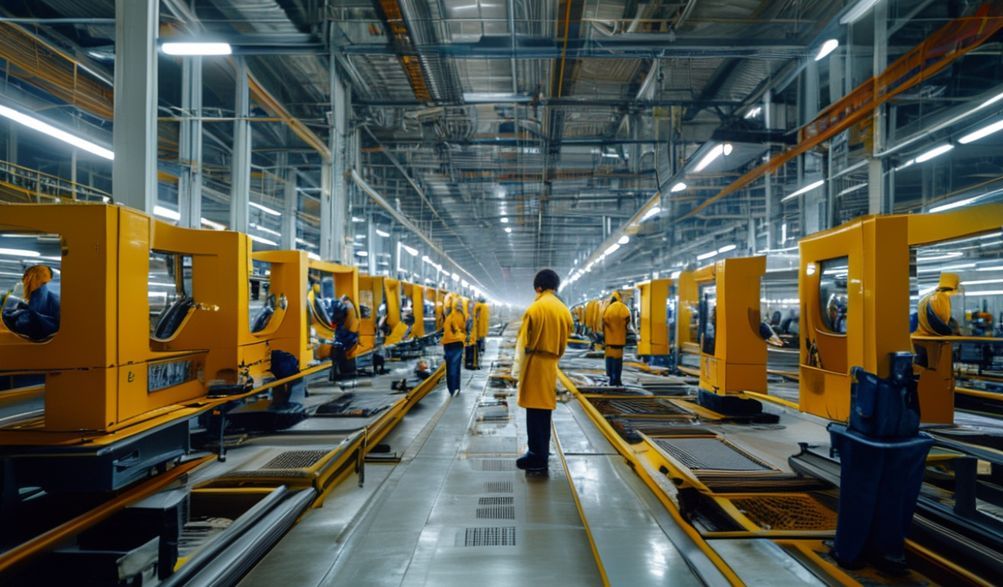
Your Ultimate Guide to Sourcing a Reliable China Blocks Making Machine Factory
Introduction :
The global construction block market is projected to reach staggering figures, driven by relentless urbanization and infrastructure development worldwide. Within this massive industry, one fact stands dominant: China manufactures a significant majority of the world’s block making machinery. For international buyers, this represents a tremendous opportunity for cost-effective, capable equipment. Yet, the very scale and distance of the Chinese market can turn sourcing into a daunting maze of uncertainty.
The core challenge isn’t a lack of options, but an overwhelming abundance paired with genuine risks. How do you distinguish a reputable, high-quality China blocks making machine factory from a subpar workshop or a faceless trading company? Concerns over machine durability, communication breakdowns, logistical nightmares, and after-sales service gaps are not just fears—they are frequent pitfalls for the unprepared buyer.
This guide is your definitive roadmap. Built on extensive industry expertise and practical, hands-on experience in navigating Chinese industrial procurement, it is designed to empower you. We will translate complex processes into actionable steps, equipping you with the knowledge to make confident, informed decisions.
If you are a construction business owner, a project manager overseeing a major development, a procurement specialist, or an entrepreneur entering the building materials sector, this resource is for you. We will leverage deep industry knowledge (the cornerstone of E-E-A-T—Experience, Expertise, Authoritativeness, and Trustworthiness) to guide you through vetting factories, ensuring quality, and managing a successful procurement journey from inquiry to installation.
Understanding the China Blocks Making Machine Market
Navigating the Chinese manufacturing landscape begins with a solid understanding of its structure and offerings. This isn’t a monolithic entity but a dynamic ecosystem with specialized hubs and a vast range of capabilities.
Market Overview and Key Manufacturing Hubs
China’s manufacturing might is organized into powerful industrial clusters, each with its own strengths and specializations. For block making machinery, key hubs include:
- Fujian Province (especially Quanzhou & Jinjiang): Often considered the heartland of China’s block machine manufacturing. This region boasts a dense concentration of factories, from large-scale OEMs to highly specialized component suppliers, creating an incredibly efficient and competitive ecosystem.
- Province du Shandong : Known for heavy industry and robust machinery production. Factories here often produce larger, more industrial-grade equipment with a focus on durability.
- Province du Guangdong : A leader in technological integration and automation. You may find advanced factories here that excel in producing fully automatic production lines with sophisticated control systems.
Understanding these hubs helps you contextualize a supplier’s location and its implications for their supply chain advantages and potential specializations.
Types of Machines Produced in China
Chinese factories produce an extensive array of equipment to meet every conceivable need. Key categories include:
- Concrete Hollow Block Machines: The workhorses of the industry, designed to produce standard, interlocking, and insulated hollow blocks used in walls and structures.
- Pavés et Machines à Blocs de Verrouillage : Specialized machines for producing paving stones, landscaping blocks, and interlocking tiles for driveways, walkways, and public spaces.
- Curbstone & Kerb Making Machines: Used for manufacturing concrete curbs, gutters, and other roadside elements.
- Machines à blocs pleins : For producing dense, solid concrete blocks used in foundations and heavy-load applications.
- By-Product Machines: Such as fly ash brick machines or cement brick machines, which utilize industrial waste materials.
Furthermore, machines are categorized by their level of automation:
* Manuel/Semi-Automatique : Lower initial cost, higher labor requirement. Ideal for small-scale startups or specific, low-volume products.
* Entièrement Automatique : Higher investment but delivers superior output, consistency, and labor efficiency. Suitable for medium to large-scale production.
* Machines à blocs mobiles : Portable units designed for on-site production, reducing transport costs for large projects.
Avantages de l'approvisionnement en Chine
The reasons for China’s dominance are clear and compelling:
- Rapport qualité-prix inégalé : Economies of scale, mature supply chains, and competitive domestic markets result in significantly lower capital expenditure for comparable machinery.
- Extensive Variety & Customization: No matter your block design, size, or output requirement, a Chinese factory likely has a solution or can engineer one. Customization of molds, production speed, and automation level is standard practice for reputable manufacturers.
- Mature Industrial Ecosystem: Decades of focus on manufacturing have created a deeply integrated network. This means easier access to spare parts, skilled technicians (for design and troubleshooting), and continuous innovation driven by intense competition.
How to Identify and Vet a Reputable Factory
This is the most critical phase of your journey. Diligent vetting separates successful, long-term partnerships from costly mistakes.
Essential Factory Credentials and Certifications
Certifications are your first objective filter. They are not guarantees, but they are strong indicators of a factory’s commitment to systematic processes.
- ISO 9001 : This is the baseline for a quality management system. It suggests the factory documents its processes and strives for consistency.
- Marquage CE : For exporting to Europe, this is mandatory. It indicates the machine meets EU safety, health, and environmental protection standards. Crucially, ask for the specific test reports from a notified body.
- Business License: A legitimate China blocks making machine factory will readily provide its official Chinese business license. Verify the scope of business includes “manufacturing” and “export.”
- Export History: Ask for references or evidence of past exports to your region or similar markets. Experience with international clients implies familiarity with export procedures and potential technical standards.
Conducting Effective Online Research
B2B platforms are a starting point, not the finish line.
- Beyond Platform Ratings: On sites like Alibaba or Made-in-China, look past the gold supplier status. Scrutinize the “Transaction History” and read both positive and negative reviews in detail. Pay attention to how the supplier responds to criticism.
- Analyze the Company Website: A professional, detailed website with comprehensive technical documentation, clear contact information (including a physical address), and a focus on manufacturing (showing workshop images, R&D teams) is a positive sign. A sparse site that only lists products is a potential red flag.
- Search for Independent Footprints: Use the factory’s Chinese and English names to search for news articles, industry forum discussions, or YouTube videos. A factory with a public profile beyond its own channels is often more established.
The Critical Role of Factory Audits and Communication
Nothing replaces seeing the operation for yourself.
Virtual Audits (Video Tours)
In today’s world, a live video tour is non-negotiable. Request to see:
* The Production Floor: Observe organization, worker skill, and the machinery being assembled.
* Quality Control (QC) Area: Look for testing equipment (like pressure testers for blocks) and active QC procedures.
* Raw Material & Parts Storage: Check the quality of steel, hydraulics, and electrical components in stock.
* Finished Goods Warehouse: See how completed machines are stored and prepared for shipment.
In-Person Audits
For large orders (e.g., a full production line), an in-person audit is a wise investment. It allows you to assess factory culture, meet the management team, and conduct more thorough technical discussions on the shop floor.
Effective Communication
Clear communication prevents 90% of sourcing issues.
* Be Technically Specific: Provide detailed block designs (with drawings), desired output (blocks per hour/day), and raw material specifications (cement grade, aggregate size).
* Request a Sample Mold or Block: Before ordering a full machine, ask if they can produce a sample block from a test mold. This tests their mold-making precision.
* Insist on a Clear Contract: The contract must detail machine specifications, payment terms (linked to milestones), delivery schedule (Incoterms), warranty terms, and after-sales support protocols.
Ensuring Quality and Avoiding Common Pitfalls
Knowing what defines quality and recognizing warning signs will protect your investment.
Key Quality Indicators for Block Making Machines
Quality is built into specific components. During negotiations, ask detailed questions about:
- Cadre et Structure : It should be made from high-grade, thick steel plate (e.g., Q235 or better), welded with precision and reinforced at stress points. This ensures longevity and vibration resistance.
- Système Hydraulique : The heart of the machine. Reputable factories use branded, reliable pumps, valves, and cylinders. Ask for the specific brands (like Rexroth, Yuken, or equivalent).
- Mold Precision & Material: Molds should be made from high-chromium alloy steel for durability and precise machining for smooth block surfaces and easy demolding.
- Système de Contrôle : Look for branded PLCs (Programmable Logic Controllers) from Siemens, Mitsubishi, or Schneider, with a user-friendly HMI (Human-Machine Interface).
- Structure du Service Après-Vente : A quality factory has a plan. Do they offer installation manuals, video guides, remote troubleshooting via video call, and a clear spare parts catalog with pricing?
Red Flags and Common Sourcing Risks
Stay vigilant for these warning signs:
- Price Too Good to Be True: A quote drastically lower than the market average almost always means corners are being cut on materials (e.g., inferior steel, used hydraulics).
- Vague or Evasive Communication: Inability or unwillingness to provide technical details, factory videos, or a proper contract.
- Pressure for Large Upfront Payments: Be wary of suppliers demanding 100% T/T (Telegraphic Transfer) before production. Secure payment terms protect both parties.
- The Trading Company vs. Factory Dilemma: Trading companies can offer convenience and language support. However, they add a layer of cost and may lack deep technical knowledge. If using one, insist on knowing and vetting the actual factory they represent.
The Importance of Samples and Trial Orders
Mitigate risk by starting small.
1. Request a Mold Sample: Ask the factory to produce and ship a single mold for your block design. This tests their engineering and craftsmanship.
2. Place a Trial Order: If possible, order a single machine or a key component before committing to a full container load. This is the ultimate test of product quality, packaging, and shipping reliability.
The Procurement and Logistics Process
A smooth process relies on clear expectations and professional management at every stage.
From Inquiry to Shipping: A Step-by-Step Guide
- RFQ (Request for Quotation): Send a detailed specification sheet to multiple shortlisted factories.
- Negotiation & Technical Clarification: Discuss quotes, clarify all specs, and agree on payment terms.
- Contract Signing: Finalize and sign a proforma invoice (PI) or sales contract with all agreed terms, especially Incoterms.
- Payment: Execute payment, typically a combination (e.g., 30% deposit to start production, 70% before shipment). Use secure methods like Letter of Credit (L/C) for large orders.
- Production & Updates: Request periodic updates (photos/videos) during the manufacturing process.
- Pre-Shipment Inspection (PSI): Hire a third-party inspector or conduct a final video inspection to verify the machine matches the order before it leaves the factory.
- Shipping & Customs: The factory (under CIF) or your freight forwarder (under FOB) handles sea/air freight. Ensure you have all correct documentation (Packing List, Commercial Invoice, Bill of Lading, Certificates) for smooth customs clearance in your country.
Navigating Logistics, Customs, and After-Sales Support
- Understand Incoterms: FOB (Franco à Bord) means you control and pay for shipping and insurance from the Chinese port. CIF (Coût, Assurance et Fret) means the supplier arranges and pays for shipping to your nearest port. Choose based on your control and cost preferences.
- After-Sales Agreement is Non-Negotiable: Your contract must explicitly state the warranty period (typically 12 months), what it covers, response time for technical support, the process for ordering spare parts, and the availability of installation drawings and electrical schematics.
Foire aux Questions (FAQ)
Q1: What is the average lead time for a block making machine from a China factory?
A: For a standard model, expect 25-40 days after deposit receipt. For fully customized or large automatic lines, lead times can extend to 60-90 days. Factors include the factory’s current schedule, complexity of customization, and sourcing time for specific components.
Q2: Can Chinese factories customize machines for my specific block design and production capacity?
A: Absolutely. Customization is a major strength. Reputable factories have in-house R&D and mold-making workshops. To get an accurate quote, you must provide detailed CAD drawings or samples of your desired block, along with your target hourly/daily output.
Q3: How do I handle machine installation and technician training if I can’t send my team to China?
A: Standard solutions include: 1) Detailed English installation manuals and video tutorials. 2) Real-time video call support during installation and commissioning. 3) The option to pay for the factory’s engineers to travel to your site for installation and training—this is highly recommended for complex lines.
Q4: What are the most secure payment methods when dealing with a new supplier?
A: Lettre de Crédit (L/C) is the most secure for large orders, as payment is contingent on shipping documents. Escrow Services (like Alibaba’s Trade Assurance) offer protection by holding payment until you confirm satisfactory delivery. Avoid large wire transfers (T/T) before seeing evidence of production.
Q5: How can I verify if a company is a real factory and not just a trading company?
A: Use a multi-step check: 1) Demand a live video tour of the production facility, not just a showroom. 2) Ask to see their raw material procurement invoices for a current project. 3) Check their business license—the “scope” should explicitly include manufacturing. 4) Request contact details for their technical department to ask in-depth engineering questions.
Conclusion :
Sourcing a China blocks making machine factory is a significant project that rewards meticulous preparation. The journey, as outlined, hinges on four pillars: developing a clear understanding of the market, executing diligent and multi-faceted factory vetting, maintaining an unwavering focus on technical quality indicators, and managing the procurement process with clear communication and contracts.
This guide, rooted in industry experience and expertise, underscores a fundamental truth: your success depends more on patience and due diligence than on finding the absolute lowest price. Building a relationship with a reliable supplier is an investment that pays dividends in machine performance, longevity, and support.
Your Call to Action: Begin your search with this guide as your checklist. Document your interactions, ask the hard questions, and trust the verification process. For those who prefer an expert intermediary, consider consulting a reputable, independent sourcing agent with a proven track record in heavy machinery. Have you sourced machinery from China before? Share your experiences or questions in the comments below to foster a community of shared knowledge and success.
<