
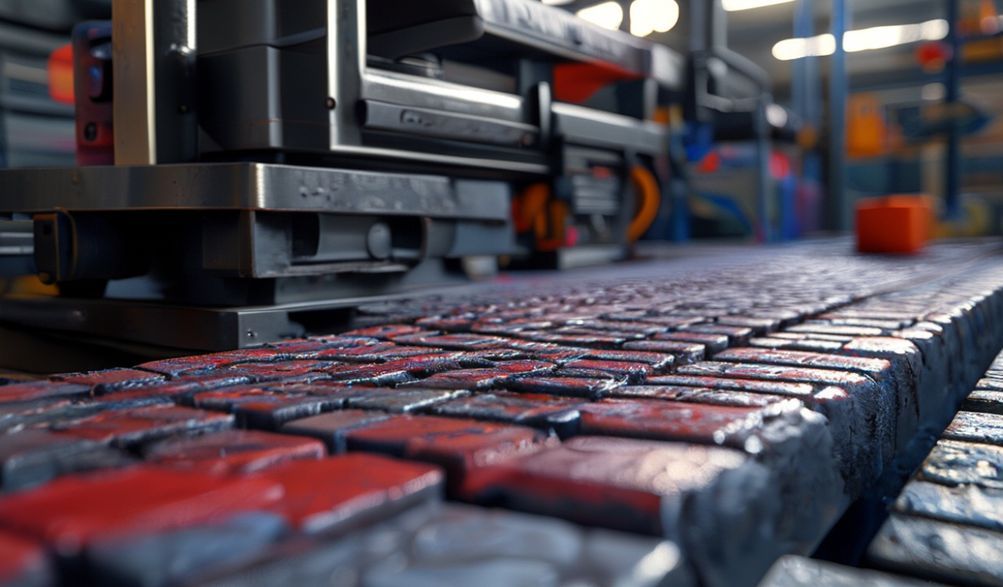
Farashin Injin Yin Tubalin: Jagorar Mai Siyayya na 2026 da Rarraba Farashi
Neman ingantaccen farashin na'urar bulo yana da takaici, tare da kaso daga dubban zuwa fiye da miliyan daloli. Wannan jagorar ta yanke rikici.
Idan kai mai kwangila ne, masana'anta, ko ɗan kasuwa, ka san cewa wannan siyayya yanke shawara ce mai mahimmanci. Bisa nazarin masana'antu, bayanan masana'anta, da fahimtar aiki daga ƙwararrun gine-gine, wannan jagorar tana ba da tsarin farashi mai bayyanawa. Ba za ka koya kawai farashin sitika ba, amma jimillar farashin mallaka, mahimman fasalulluka waɗanda ke shafar farashi, da kuma yadda za a zaɓi injin da ya dace da girman aikin ku da kasafin ku.
Ko kana dan kwangila kana neman fadada ayyuka, babban masana'anta kana neman haɓaka iyawa, ko kuma mai son yin kansa yana mai da sha'awa zuwa kasuwanci, fahimtar cikakken hoton kuɗi shine matakin farkon ku zuwa ga zuba jari mai riba.
Fahimtar Injinan Brikoki na Paver: Nau'uka da Aikace-aikace
Kafin mu tattauna lambobi, yana da mahimmanci a fahimci abin da kuke siye. Nau'in na'ura yana ƙayyade farashinsa, iyawarsa, da kuma yadda ake amfani da shi daidai. Zaɓar nau'in da bai dace ba shine kuskure mafi tsada da za ku iya yi.
1. Injinan Matsawa ta Hannu/Ta Ruwa
Waɗannan su ne mafi sauƙaƙan hanyoyin shiga samar da kwalta. Suna dogaro sosai da aikin hannu don haɗawa, ciyarwa, da matsi.
- Bayanin:Ana sarrafa su da leƙo na hannu ko kuma tsarin ruwa mai sauƙi, waɗannan injunan suna buƙatar ma'aikaci ya cika ginshiƙai, ya fara latsawa, da kuma cire tubalan da aka gama.
- Ayyukan Yau da Kullun da Amfani da su:Samarwa ta ƙasa da ƙasa, sau da yawa tana tsakanin 100 zuwa 500 bulogi a kowane zamu na awa 8. Sun dace da ƙwararrun ƙwararrun sana'o'i, ƙananan ƙananan kamfanoni masu farawa, ko samar da keɓaɓɓun samfuran al'ada inda ba a ba da fifiko ga yawan samfur ba.
2. Na'urorin Yin Kwalta Masu Sarrafa Kansu
Wannan rukuni yana ba da mafi kyawun daidaito don kasuwancin da ke girma, yana sarrafa mafi yawan sassan da ke buƙatar aiki yayin da yake kiyaye farashi mai iya sarrafawa.
- Bayanin:Hanyoyin mahimmanci kamar girgiza, takura, da fitarwa suna sarrafa kansu ta atomatik, sau da yawa ta hanyar na'urar sarrafawa mai sauƙi. Duk da haka, har yanzu ana buƙatar ma'aikaci don ciyar da cakuda na kankare kuma wani lokacin don cire pallets da aka gama.
- Ayyukan Yau da Kullun da Amfani da su: Output can range from 1,000 to 4,000 blocks per 8-hour shift, depending on model and crew efficiency. Perfect for small to medium-sized businesses with steady orders from local contractors, landscapers, or municipalities.
3. Fully Automatic Paver Block Machines
These are industrial production lines designed for maximum output with minimal human intervention.
- Bayanin: Equipped with Programmable Logic Controllers (PLCs), automated material feeders, pallet dispensers, and stackers. Once started, the machine performs the entire cycle—filling, vibrating, pressing, curing, and stacking—with maybe one or two supervisors.
- Ayyukan Yau da Kullun da Amfani da su: Output is measured in blocks per sa'a, not per day. Machines can produce from 2,000 to over 10,000 blocks per hour. This is the domain of large-scale manufacturers supplying regionally or fulfilling major infrastructure contracts.
4. Mobile vs. Stationary Plants
This is a critical strategic decision that significantly impacts price and operations.
- Bayanin: Mobile plants are mounted on trailers, allowing you to produce pavers directly on a large job site, eliminating transport costs for finished goods. Stationary plants are fixed installations in a factory or yard, optimized for efficient, high-volume production.
- Price & Operational Implications: Mobile plants offer flexibility but often command a premium for the engineering required. Their output is typically lower than a stationary plant of similar price. Stationary plants benefit from economies of scale and are generally more cost-effective for pure production but tie you to a single location.
Key Factors That Determine Paver Brick Machine Price
Why does one machine cost $30,000 and another $300,000? The price tag is a direct reflection of several engineering and commercial factors.
1. Ƙarfin Samarwa (Tubalan A Sa'a)
This is the most direct driver of cost. Higher output requires a more powerful motor, a larger and more robust vibration system, heavier-duty hydraulics, and a sturdier frame.
- A machine rated for 1,000 blocks per hour is built to different specifications than one rated for 5,000 blocks per hour, even if they look similar.
- Tambaya Mai Muhimmanci: Don’t just buy for today’s needs. Project your growth 2-3 years out. A machine operating at 80% of its capacity is more efficient and lasts longer than one running at 100% capacity constantly.
2. Automation Level and Technology
Every step of automation adds cost but reduces labor and improves consistency.
- Tsarin Gudanarwa na PLC: A basic relay system is cheaper than a touch-screen PLC with recipe memory for different block types.
- Tsarin Girgiza: The quality, number, and power of vibrators (frequently unidirectional vs. bidirectional) affect block density and finish, and thus, price.
- Tsarin Hydraulic: The brand, precision, and reliability of the hydraulic pump and cylinders are a major cost component. Reputable brands like Bosch Rexroth or Parker add to the cost but ensure longevity.
3. Machine Brand and Origin
Geography and reputation play a huge role in pricing structure.
- European Brands (e.g., Hess, Zenith): Often represent the premium tier. You pay for decades of engineering refinement, high-quality components, and (typically) comprehensive after-sales service and training. Prices are highest.
- Indian & Chinese Manufacturers: Offer highly competitive pricing and have made massive strides in quality. They dominate the mid-range market. The key differentiator here is often the supplier’s commitment to service, spare parts availability, and technical support. Thorough due diligence is essential.
4. Mold Type and Customization
The mold is the heart of your product. Its complexity directly impacts cost.
- Standard Molds: For common shapes like rectangles, cobbles, or fans are relatively inexpensive.
- Molds na Al'ada: For unique interlocking patterns, logos, or special designs require precise CNC machining and significantly higher-grade steel, increasing cost.
- Mold Material: Standard carbon steel molds are cheaper but wear faster. Hardened chromium steel or special alloy molds cost 50-100% more but can last 5-10 times longer, saving money in the long run for high-volume production.
5. Additional Features and Accessories
The base machine is just the start. Integrated options add functionality and cost.
- Color Feeder: Automatically sprinkles color powder on the block surface, ensuring consistency.
- Automatic Pallet Dispenser/Stacker: Eliminates manual pallet handling.
- Cube Splitter: For producing kerbstones or other large units.
- Mixer and Conveyor System: For a fully integrated plant.
2026 Paver Brick Machine Price Ranges (By Type)
Here is a transparent breakdown of current market price ranges. Remember: These are indicative estimates for 2026. Final quotes will vary based on configuration, brand, freight, and local taxes.
Entry-Level / Manual Machines
- Price Range: $3,000 – $15,000
- At this price, you are getting a simple, robust machine focused on the pressing function. It has minimal to no automation. Ideal for testing a market, producing specialty artistic pavers, or for a micro-business in a region with very low labor costs. Production will be limited.
Mid-Range / Semi-Automatic Machines
- Price Range: $25,000 – $80,000
- This is the most active and competitive market segment. For $40,000-$60,000, you can get a reliable semi-automatic machine from a reputable mid-tier manufacturer with decent output (e.g., 1,500-2,500 blocks per 8-hour shift). This range suits a serious small business aiming for steady growth.
High-Capacity / Fully Automatic Plants
- Price Range: $100,000 – $500,000+
- Here, you are buying a complete system, not just a machine. A price of $150,000 might get you a solid automatic machine with a basic mixer and conveyor. A $300,000+ investment gets you a high-speed production line with automated material handling, color feeding, and stacking—a true turnkey plant for industrial output.
Muhimmin Bayani: Always request a detailed, itemized quote from multiple suppliers. The cheapest initial price can lead to the highest long-term cost due to downtime, poor support, and rapid wear.
Beyond the Sticker Price: Calculating Total Cost of Ownership
The machine’s purchase price is only the first line item. A savvy buyer budgets for the full lifecycle cost.
1. Initial Purchase and Installation
- Machine Cost: The base price.
- Jigilar kaya & Gudanar da kaya Can be thousands of dollars for an international order, especially for a full container or heavy plant.
- Customs Duties and Taxes: Vary significantly by country. Factor in an additional 5-25%.
- Shigarwa & Kaddamarwa: Some suppliers include basic setup; for complex plants, professional installation is an extra cost.
2. Operational Costs (The Daily Grind)
- Amfani da Wutar Lantarki: A semi-automatic machine may run on a 15-20 HP motor; a full plant can require 80+ HP. Calculate your local electricity cost per running hour.
- Kayan Aiki: Cement, aggregates, sand, pigments, and release agent. This is often your largest recurring cost.
- Aiki Even automatic plants need supervisors, maintenance staff, and material handlers.
3. Maintenance and Spare Parts
- Scheduled Maintenance: Regular oil changes, filter replacements, and greasing.
- Sassaka Abubuwan Sawa Budget for replacing molds, vibrator mounts, hydraulic seals, and liners. Ask suppliers for a spare parts price list upfront.
4. Hidden Costs to Consider
- Factory Space: Does your site have the necessary power supply, strong flooring, and clearance?
- Operator Training: Improper operation is a leading cause of breakdowns.
- Downtime Cost: What is the financial impact if your machine is idle for a week waiting for a spare part? This highlights the value of local service support.
How to Get the Best Value for Your Investment
Shifting your mindset from “lowest price” to “best value” is the mark of a professional buyer.
1. Accurately Assess Your Needs
- Calculate your current and projected 3-year demand. Be realistic.
- Rule of Thumb: Choose a machine that can meet your peak demand without running 24/7. A 20-30% capacity buffer is ideal for maintenance and growth.
2. Research and Compare Suppliers
Create a vetting checklist:
* How many years has the company been manufacturing these machines?
* Can they provide references from clients in your region?
* What does their after-sales service network look like? Do they have local technicians or just a phone line?
* Request videos of the machine in operation at a client’s facility.
3. Request and Analyze Detailed Quotes
A professional quote should include:
* Detailed technical specifications sheet.
* Itemized list of all included and optional accessories.
* Clear warranty terms (parts, labor, duration).
* Delivery timeline and Incoterms (who handles shipping).
* List of recommended spare parts with prices.
4. Consider Financing and ROI
- Many equipment dealers offer financing plans. Explore options with your bank as well.
- Simple ROI Calculation: (Cost of Machine + Installation) / (Projected Annual Profit from Paver Sales) = Years to Payback.
- Projected Annual Profit = (Number of Blocks Sold per Year * Profit per Block).
- This exercise forces you to model your business, not just buy a machine.
Tambayoyin da ake yawan yi (FAQ)
Q1: What is the cheapest type of paver brick machine I can buy?
A: Manual or small hydraulic press machines are the least expensive, starting around $3,000-$5,000. However, they require significant manual labor and have very low output, making them suitable only for niche or artisanal production.
Q2: Can I get a good quality automatic machine under $50,000?
A: Yes, it is possible. Several manufacturers offer entry-level semi-automatic or basic automatic models in the $40,000-$50,000 range. The key is to focus on suppliers with a verifiable track record of reliability and service support, not just the lowest ticket price.
Q3: How much does it cost to run a paver brick machine per day?
A: Operational costs vary dramatically. A small semi-automatic machine might incur $50-$150 per day in electricity and raw materials (excluding labor). A fully automatic plant can easily exceed $500-$1,000 per day in running costs. A detailed project-specific analysis is essential.
Q4: Are used paver brick machines a good option to save money?
A: They can be, but they carry inherent risk. Only consider used machines from top-tier brands where you can get a complete service history. Always budget 10-20% of the purchase price for immediate repairs and part replacements. If possible, have an independent mechanic inspect it.
Q5: Besides the machine, what other equipment do I need to start?
A: At a minimum, you’ll need a concrete mixer (pan or planetary type), a covered space for curing blocks, and pallets. For automatic plants, you’ll need conveyors, a stacker, and often a raw material storage and feeding system (hoppers, feeders).
Ƙarshe
Navigating the “paver bricks machine price” landscape means understanding it’s a broad spectrum defined by type, capacity, and features. From a $5,000 manual press to a $500,000 automated plant, the right choice hinges entirely on your business objectives and production scale.
The final, most critical piece of advice is to adopt a “value over price” mindset. The most economical machine is the one that runs reliably, produces quality blocks consistently, and is backed by a supplier who answers the phone when you need help. It’s an investment in your business’s productive capacity.
Use this guide as a framework to prepare detailed questions for suppliers. Go beyond the brochure. Request live demonstrations or, even better, visit existing client sites to see the machines in operation. This due diligence, grounded in the transparent cost framework we’ve outlined, is what empowers you to make a sound, confident financial decision for your construction or manufacturing venture.
<