
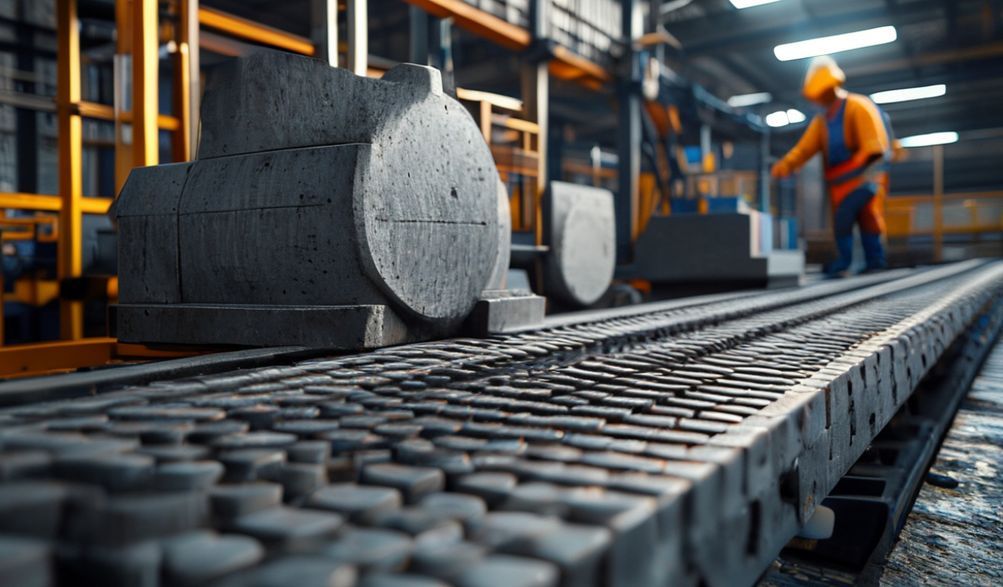
Your Guide to Buying the Right Cement Brick Machine: Sales, Selection & Success
Gabatarwa
Are you a construction entrepreneur tired of inconsistent brick quality and supply delays? Or an investor looking to capitalize on the booming construction materials sector? You’re not alone. The global demand for durable, affordable, and sustainable building materials is surging, driven by urbanization and infrastructure development. At the heart of meeting this demand is a critical piece of equipment: the cement brick machine.
But navigating the world of “sales cement brick machine” offers can be overwhelming. A quick search reveals a dizzying array of options, prices, and promises. This isn’t just a sales pitch. This is a comprehensive guide built on years of industry Kwarewada fasahaƘwarewa to help you make an informed, profitable decision. We’ll cut through the marketing jargon and focus on what truly matters for your business’s Aminci and long-term Matsayin Iko in the market.
By the end of this guide, you will know exactly how to:
* Understand the different types of machines and their core technologies.
* Evaluate critical factors like production capacity, quality, and automation.
* Navigate the sales process to identify a reputable, trustworthy supplier.
* Calculate true costs and maximize your return on investment (ROI) from day one.
Bari mu gina tushen nasarar ku.
Understanding Cement Brick Machines: More Than Just a Purchase
Buying a brick machine is not a simple transaction; it’s a strategic investment in your production capability. Understanding the basics empowers you to ask the right questions and avoid costly mistakes.
How Cement Brick Machines Work: The Core Technology
At its core, a cement brick machine automates the process of transforming a dry concrete mix into a dense, solid block. The quality of the final brick hinges on this process, which typically involves four key stages:
- Haɗawa: Cement, sand, aggregates (like crushed stone), and a small amount of water are combined to form a semi-dry mix. The consistency is crucial—too wet, and the brick will deform; too dry, and it won’t compact properly.
- Gyare-gyare: The mix is fed into a mold cavity, which defines the brick’s shape (solid, hollow, paver, interlocking).
- Ƙarfafawa: This is where the magic happens. Force is applied to eliminate air pockets and create a high-density block. The main systems are:
- Girgiza: High-frequency vibrations settle the mix densely into the mold. Common in smaller to medium machines.
- Matsawa. A mechanical press applies top-down pressure.
- Hidirali: A hydraulic ram applies immense, controlled pressure, often combined with vibration. This produces the strongest bricks and is standard in high-end automatic machines.
- Maganin Ciwon Ciki: The freshly ejected “green” brick is not yet at full strength. It requires a period of curing, typically by storing it in a moist environment for 7-28 days, to allow the cement to fully hydrate and harden.
Types of Machines: Matching the Machine to Your Project Scale
Your business scale and goals dictate the machine type.
-
Na'urorin Wucin Gadi/Na'urorin Wucin Gadi na Rago-Rago:
- Mafi kyau don: Startups, small-scale projects, custom brick production, or regions with very low labor costs.
- Aiki: Mixing and feeding are manual. The machine (often vibration-based) compacts the brick, but ejection and stacking are done by hand.
- Abubuwan da suka fi kyau: Lowest capital cost, simple operation, easy to move.
- Rashin Kyau: High labor dependency, lower and inconsistent output, physically demanding.
-
Cikakken Tsirrai na Tasha ta atomatik:
- Mafi kyau don: Medium to large-scale commercial production requiring consistent, high output.
- Aiki: From automatic batching and mixing to molding, compaction, stacking, and even palletizing, the process is conveyor-driven with PLC (Programmable Logic Controller) control.
- Abubuwan da suka fi kyau: High output (2,000-10,000+ bricks/hour), exceptional consistency, low labor requirement, optimal quality control.
- Rashin Kyau: High initial investment, requires significant space and stable 3-phase power, complex installation.
-
Na'urorin Yin Tubalin na Wayar Hannu:
- Mafi kyau don: On-site production for large construction projects (e.g., building a housing colony).
- Aiki: Mounted on a trailer, these are often hydraulic or compression-based. They produce bricks directly where they are needed.
- Abubuwan da suka fi kyau: Eliminates brick transport costs, ideal for remote sites, reduces material handling.
- Rashin Kyau: Output is generally lower than stationary plants, requires a flat, prepared site.
Key Output Metrics: Bricks Per Hour and Return on Investment (ROI)
A sales sheet might proudly state “2000 BPH” (bricks per hour). This is a vital metric, but it’s not the whole story.
- Translating Output to Revenue: If a hollow block sells for $0.50 in your market and your machine produces 1,000 per hour, that’s $500 of potential revenue per hour. Run an 8-hour shift, and that’s $4,000 per day. This simple math highlights the revenue potential.
- The ROI Lens: However, the true measure is Return on Investment. A cheaper machine with a lower output might seem attractive, but if it breaks down frequently (high maintenance costs) and produces inconsistent bricks (which you can’t sell), your ROI suffers. A more expensive, robust, automated machine with higher output and lower failure rates will often yield a better ROI in the long run. Always think in terms of total lifetime cost and profitability.
Abubuwan Muhimman Da Ya Kamata A Yi La'akari Da Su Kafin Ka Siyo
With the fundamentals clear, you can now drill down into the specifics that will define your daily operation.
Production Capacity & Brick Specifications
- Assess Real Demand: Are you supplying hollow blocks for residential construction, solid blocks for foundations, or decorative pavers for landscaping? Your target market dictates the brick type. A versatile machine that can produce multiple types with interchangeable molds future-proofs your business.
- Match Capacity to Sales: Don’t buy a 5,000 BPH plant if you can only sell 1,000 bricks a day. Conversely, under-capacity means leaving money on the table. Analyze your current and projected sales channels.
Machine Quality & Durability: What to Look For
This is where supplier ƘwarewakumaMatsayin Iko become critical. Inspect these components:
- Ginin Firam Look for heavy-duty, welded steel frames (minimum 8-10mm thickness). A flimsy frame will flex under load, leading to misalignment and rapid wear.
- Ingancin Ƙirƙira: The mold is the heart. It must be made from high-grade, hardened steel (e.g., Cr-Mn alloy) with precise machining. Poor molds wear quickly, produce bricks with rough edges, and require frequent, costly replacement.
- Vibration Motor/Hydraulic Pump: These are the core power units. Renowned brands (domestic or imported) with available service networks are a sign of quality. Ask for specifications like vibration frequency (Hz) or hydraulic pressure (PSI/MPa).
Automation Level: Balancing Cost with Labor Needs
Automation directly impacts operational costs and consistency.
- Ciyarwa da Hannu: Lowest machine cost, highest labor cost and variability in brick quality.
- Batching & Mixing ta Atomati: Ensures a perfectly consistent mix for every cycle, a key factor in producing uniform, high-strength bricks.
- Inji & Tsayawa Kayan Aiki ta Atomatik: Eliminates the most labor-intensive part of the process and minimizes brick damage during handling.
Power Requirements & Operational Costs
- Tushen Wutar Lantarki: Most semi-automatic machines run on standard 3-phase industrial power. Larger automatics require stable, high-capacity 3-phase connections. Some mobile units offer diesel engine options for complete off-grid operation.
- Running Cost Estimate: Factor in electricity/fuel consumption, daily labor wages, routine maintenance costs (grease, spare parts), and the cost of raw materials. A reputable supplier should help you model these operational expenses.
Navigating the “Sales” Process: Finding a Reputable Supplier
The sales process is your window into a supplier’s Aminci. A smooth, transparent process often indicates reliable after-sales support.
Manufacturer vs. Local Dealer: A Trustworthiness Check
- Buying Direct from a Manufacturer:
- Abubuwan da suka fi kyau: Typically lower price, direct access to technical teams, better understanding of machine design for troubleshooting.
- Rashin Kyau: Geographic distance may slow physical service response. Verification is key: Demand a virtual or in-person factory tour. Check business licenses and years in operation.
- Buying from a Local Dealer/Distributor:
- Abubuwan da suka fi kyau: Local spare parts inventory, faster on-site service, understanding of local market conditions.
- Rashin Kyau: Higher price (includes their margin), may have limited technical depth. Verify they are an authorized dealer with proper training from the manufacturer.
Essential Questions to Ask Any Sales Representative
Go beyond price. Ask these questions:
- “What is included in the warranty? Which parts are covered and for how long?”
- “Can you provide a list of client references in my region or a similar market?”
- “What does your after-sales service package include? (Installation supervision, operator training, manuals, video tutorials, remote support access)?”
- “What is the lead time for critical spare parts (like molds, vibration motors)?”
- “Do you provide foundation drawings and a complete site preparation checklist?”
Decoding the Quotation: Hidden Costs to Uncover
A transparent quotation should have a clear line-item breakdown:
- Machine Price
- Standard Spare Parts Kit (filter elements, seals, common tools)
- Cost of Additional Molds (for different brick types)
- Packaging & Shipping (FOB, CIF, or delivered?)
- Installation & Commissioning Fees (if offered)
- Operator Training Cost
A major red flag is a suspiciously low, all-inclusive price. It often indicates substandard materials, no after-sales support, or hidden costs that will appear later.
Maximizing Your Investment: From Delivery to Production
Your responsibility begins once the machine arrives. Proper setup and operation are non-negotiable for ROI.
Site Preparation and Installation
- Sarari: Ensure adequate space for the machine, raw material storage, brick curing, and finished goods yard. Include room for movement.
- Foundation: Most stationary machines require a solid, level concrete foundation as per the supplier’s drawings to absorb vibration and prevent settling.
- Utilities: Have the correct power supply (voltage, phase, amperage) ready at the connection point. A professional electrician should handle this.
Raw Material Quality: The Other Half of the Equation
The best machine cannot compensate for poor materials. Your bricks are only as good as your mix.
* Ratios: Follow recommended ratios (e.g., 1 part cement : 3 parts sand : 4 parts aggregate is common for hollow blocks). Consistency is key.
* Material Specs: Use clean, sharp sand and well-graded aggregates. Impurities or organic matter weaken the brick. The quality of cement is paramount—always use fresh cement from a reputable mill.
Operator Training and Safety Protocols
- Horarwa: Comprehensive, hands-on training from the supplier is a hallmark of their Aminci. Operators must understand daily checks, basic troubleshooting, and safety procedures.
- Safety: Ensure all guards are in place. Mandate the use of safety glasses, gloves, and steel-toe boots. Establish lock-out/tag-out procedures for maintenance.
Maintenance Schedule for Longevity
Preventive maintenance is cheaper than breakdowns.
- Kullum: Lubricate all moving parts as per the manual, check hydraulic oil levels, clean the machine of hardened concrete.
- Mako-mako: Inspect molds for wear, check belt tensions and electrical connections.
- Kowane wata: Thoroughly inspect vibration motors, hydraulic hoses, and cylinders.
Always source genuine or manufacturer-approved spare parts. Using cheap imitations will cost you more in downtime and collateral damage.
Tambayoyin da ake yawan yi (FAQ)
Q: What is the average price range for a good cement brick machine?
A: Prices vary dramatically based on type and capacity. A small manual machine can start around $3,000, a robust semi-automatic may range from $10,000 to $25,000, and a fully automatic production line can range from $50,000 to over $200,000. Focus on the machine’s capability and lifetime cost, not just the initial price tag.
Q: Can one machine produce different sizes and types of bricks?
A: Yes, most machines are designed to work with interchangeable molds. This is a key feature to inquire about. However, each additional mold is typically an extra cost. Ensure the machine’s pressure/vibration system is suitable for the different brick densities.
Q: What kind of after-sales support should I expect?
A: A trustworthy supplier should offer a clear warranty (e.g., 12-24 months on core components), provide detailed operation & maintenance manuals and video guides, and have a technical support team available via phone/email for troubleshooting. Willingness to provide client references is a strong positive signal.
Q: How do I calculate the potential profit and ROI?
A: Use this simplified model: (Selling Price per Brick - Total Cost per Brick) x Daily Production x Working Days per Year. Total cost includes raw materials, labor, power, maintenance, and depreciation. For example, if your profit per brick is $0.15 and you produce 5,000 bricks daily for 300 days, your annual gross profit is $225,000. Compare this to your total investment to gauge ROI timeframes.
Q: Are there any certifications or standards the machine should meet?
A: Look for international safety and quality certifications like CE (for the European market), which indicates compliance with essential health and safety requirements. Local industrial standards may also apply. Certification demonstrates the manufacturer’s commitment to Ƙwarewa and quality control processes.
Ƙarshe
Choosing the right cement brick machine is a multifaceted decision that balances technical capacity, build quality, supplier reputation, and the total cost of ownership. It’s the cornerstone of a profitable brick-making venture.
Remember, you’re not just buying a machine; you’re entering a partnership. The supplier’s role extends far beyond the sales transaction. Investing in a cement brick machine is investing in the foundation of your business. Choosing a partner with proven Kwarewa, demonstrable Ƙwarewa, industry Matsayin Ikoda gaskeAminci is not an option—it’s a necessity for your success.
Ready to move from research to results? Contact our team of engineering specialists today for a personalized consultation and a quote tailored to your specific project goals. Let’s build your success, brick by brick.
<