
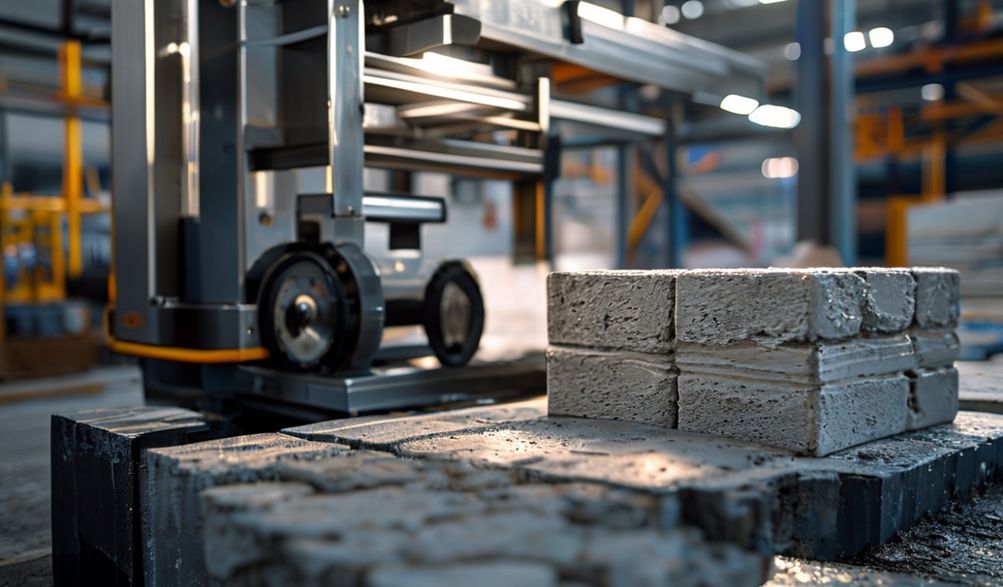
Jagora Mai Cike Game da Injin Molding Block & Jerin Farashin Tubali (2026)
Gabatarwa
Yin kewaya duniyar injunan gyare-gyaren toshe da farashin bulo na iya zama kamar warware lamba mai rikitarwa. Ka san kana buƙatar ingantacciyar kayan aiki da tsadar kayan aiki da za a iya hasashen, amma daga ina za ka fara? Bincike mai sauƙi a kan layi na "lissafin farashin injin gyare-gyaren toshe" sau da yawa yana haifar da ruɗani fiye da haske, tare da lambobi da ba su da alaƙa da juna. Babban kalubalen ba shine kawai samun farashin ba; shine fahimtar labarin da ke bayansa don yin saka hannun jari wanda ba zai yi barazana ga aikinka ko kasuwancinka ba.
Wannan jagorar an tsara ta ne don rage wannan hayaniyar. Ba za mu gabatar muku da wani jeri na lambobi na gama-gari ba. A maimakon haka, za mu ba da cikakken bayani na gaskiya, wanda ƙwararru suka yi, game da abubuwan da keƙaddarafarashi. Manufarmu ita ce mu ba ka iko—ko kai dan kwangila ne mai shirya gina karami, dan kasuwa mai kaddamar da sana’ar yin bulo, ko kuma manajan aiki na babban ci gaban kasuwanci—da ilimin da za ka iya tsara kasafin kudi da kyau da kuma zabar kayan aikin da suka dace da bukatun ka na musamman. A karshe, za ka fahimta.me yasafarashin yana bambanta sosai kuma yadda za ku sami ingantaccen bayani da za ku iya amfani da shi a yanayin ku.
Fahimtar Injinan Gina Tubalan: Nau'uka da Aikace-aikace
Kafin ka fahimci farashin, dole ne ka fahimci samfurin. Nau’in injin tubalin da kake buƙata shi ne babban abin da ke tafiyar da tsadar sa, kuma zaɓin nau’in da bai dace ba na iya zama kuskure mai tsada. Kowanne rukuni yana da manufarsa ta musamman, yana daidaita jarin farko da aiki, fitarwa, da ingantaccen aiki na dogon lokaci.
Na'urorin Ƙirƙira Tubalan da Hannu
These are the simplest and most fundamental type of block-making equipment. Operated entirely by human labor, they typically involve manually loading the concrete mix into a mold, using a lever to compress it, and then stripping the mold to release the fresh block.
- Amfani Mafi Kyau: Extremely small-scale projects, DIY home builds, remote locations with no power, or for producing specialty, low-volume blocks.
- Abubuwan da suka fi kyau:
- Lowest Initial Cost:Mafi arha shigarwa.
- Kulawa Mai Sauƙi: Few moving parts mean fewer things can break.
- Hauwa'u da 'Yancin Kai: No need for electricity, can be used anywhere.
- Rashin Kyau:
- Ma'aikata Mai Yawan Aiki: Output is directly tied to operator stamina and speed.
- Ƙarancin Fitowa: Typically produces only 100-500 blocks per day.
- Rashin Daidaiton Inganci: Relies heavily on operator skill for compaction and finish.
Matsin Injinan Yin Tubalin na Semi-Automatik
This category represents the sweet spot for many small to medium-sized businesses. These machines automate the core molding and compaction process (often via a hydraulic or mechanical vibration system) but require operators to feed raw materials and remove finished blocks.
- Amfani Mafi Kyau: Small block manufacturing businesses, steady supply for local construction projects, or medium-scale housing developments.
- Abubuwan da suka fi kyau:
- Optimized Balance: Offers significantly higher output than manual machines without the capital outlay of a full system.
- Ingantacciyar Daidaituwa: Automated compaction ensures more uniform block density and strength.
- Scalable: Many models allow for add-ons like feed conveyors or brick stackers later.
- Rashin Kyau:
- Requires Skill: Operators need training to manage the machine and mix ratios.
- Moderate Investment: Higher upfront cost than manual options.
- Power Dependent: Requires a reliable electrical connection.
Injinoyin Cikakken Atomatik na Yin Tubalin
These are complete production plants. They integrate mixing, conveying, molding, curing, and stacking into a single, computer-controlled system with minimal human intervention beyond supervision and maintenance.
- Amfani Mafi Kyau: Large-scale commercial block yards, major construction companies supplying their own materials, and high-volume manufacturing plants aiming for regional distribution.
- Abubuwan da suka fi kyau:
- Maximum Output: Can produce thousands of blocks per hour (e.g., 2,000 – 10,000+).
- Rashin Daidaito: Programmable logic controllers (PLCs) ensure every block is identical.
- Reduced Labor Costs: One operator can often manage the entire line.
- Rashin Kyau:
- High Initial Investment: The most significant capital requirement.
- Complex Maintenance: Requires skilled technicians and a ready supply of spare parts.
- Infrastructure Needs: Demands substantial space, stable high-capacity power, and often a concrete foundation.
Mobile vs. Stationary Block Plants
A key consideration is mobility. Mobile block plants are mounted on trailers, allowing you to bring production directly to a construction site, eliminating transport costs for finished blocks. They command a premium for this flexibility. Stationary plants are fixed installations, typically offering higher capacity and more robust construction for a lower cost per unit of output, but tie you to a single location.
Key Factors That Determine Block Molding Machine Prices
Two machines both labeled “semi-automatic” can have wildly different price tags. Here’s what you’re really paying for:
Ƙarfin Samarwa (Tubalan A Sa'a)
This is the most direct correlation. A machine rated for 1,000 blocks per hour will cost significantly less than one rated for 3,000 blocks per hour, even from the same manufacturer. Higher capacity requires more powerful motors, larger hydraulic systems, heavier-duty frames, and faster cycling mechanisms. Don’t overpay for capacity you’ll never use, but always factor in at least 20-30% growth potential for your business.
Level of Automation (Manual to Fully Automatic)
Each automated function adds cost—and value. Consider the process:
1. Manual Mixing vs. Automated Pan Mixer.
2. Manual Mold Filling vs. Hopper and Feeder Conveyor.
3. Lever Compression vs. Programmable Hydraulic Vibration.
4. Manual Block Removal vs. Automatic Pallet Transfer System.
5. Ground Curing vs. Automated Curing Rack and Stacker.
Every step you automate increases the machine’s price but decreases your long-term labor costs and improves product uniformity.
Machine Build Quality and Brand Reputation
This is where “cheap” can become very expensive. Key differentiators include:
* Steel Quality & Frame Construction: Heavy-duty, reinforced frames resist the immense stresses of constant vibration, ensuring longevity and alignment.
* Critical Components: The brand and quality of the hydraulic pumps, valves, vibration motors, and PLCs are crucial. Renowned brands (e.g., Siemens, Bosch Rexroth) cost more but fail less often.
* Manufacturer Credibility: An established company with a decade of proven installations offers more value than an unknown supplier, even at a higher price. This reputation is your assurance of engineering support, availability of spare parts, and technical documentation.
Additional Features and Customization
The base price often covers a standard setup. The following can increase it:
* Multiple/Interchangeable Molds: The ability to produce different block sizes (4″, 6″, 8″) or types (hollow, solid, paving) on the same machine.
* Tsarin Girgizarwa Na Ci-Gaba: Multi-directional or high-frequency systems for denser, stronger blocks.
* Color Dispensers & Mixers: For producing colored concrete pavers or facades.
* Special Pallet Sizes: Non-standard pallets for larger blocks or special products.
Comprehensive Brick and Block Price List Breakdown
Here is the practical “price list” information you came for, presented with the critical context needed to use it wisely.
Important Price Disclaimer
This cannot be overstated: The figures below are estimated ranges in USD for mid-2026. Actual prices are highly volatile and depend on:
* Geographic Region: Shipping, tariffs, and local market competition cause major variations.
* Farashin Kayan Aiki: Fluctuating global steel and component prices directly affect machine costs.
* Manufacturer & Specifications: The factors detailed in the previous section cause wide price bands.
* Currency Exchange Rates.
Always use this guide as a benchmark, not a quote. You must contact suppliers directly with your specific requirements for accurate pricing.
Estimated Price Ranges for Block Molding Machines (USD)
| Machine Type | Estimated Price Range (USD) | Key Determinants Within Range |
| :— | :— | :— |
| Jagora | $1,000 – $5,000 | Build quality, mold material (steel vs. alloy), single vs. multi-block output. |
| Semi-Automatik | $8,000 – $25,000 | Production capacity (500-2,000 blocks/hr), level of automation (basic to advanced), component brands. |
| Gaba Daya Mai Sarrafa Kansa | $30,000 – $150,000+ | Output capacity (2,000-10,000+ blocks/hr), degree of integration (with mixer, stacker, curing system), customization. |
Cost of Output: Price Ranges for Common Bricks & Blocks
The cost to produce a single block is primarily driven by local material prices (cement, sand, aggregate) and your operational efficiency. Below are estimated production cost ranges per unit. Your final sale price would include these costs plus labor, overhead, and profit margin.
- Hollow Blocks (4″, 6″, 8″): $0.50 – $1.20 per block
- Tubalan Siminti Masu Ƙarfi: $0.70 – $1.50 per block
- Paving Stones / Interlocking Pavers: $1.00 – $3.00 per sq. ft.
- Curbs & Garden Edging: $2.00 – $5.00 per linear foot
Misali: If cement costs are low in your region and you run an efficient semi-automatic machine, your 6″ hollow block cost might be at the lower end ($0.60). In a region with high cement costs and using a manual machine with higher labor, the same block could cost $1.10 to produce.
Beyond the Machine: Calculating Your Total Investment
A seasoned professional knows the machine invoice is just chapter one. A comprehensive budget is critical for success.
Raw Material Costs (Cement, Sand, Aggregate)
This will be your largest recurring expense. You must:
1. Source Reliably: Find consistent suppliers for quality sand (proper gradation) and aggregate.
2. Calculate Mix Ratios: Standard mixes (e.g., 1:6:4 – cement:sand:gravel) will determine your per-block material cost.
3. Factor in Waste: Account for spillage, mixing loss, and production rejects (typically 2-5%).
Land, Labor, and Operational Costs
- Land: You need space for the machine, raw material storage, block curing, and finished product inventory. Factor in leasing or purchase costs.
- Aiki Even automatic plants need a skilled operator, maintenance technician, and laborers for handling materials. Include wages, benefits, and training.
- Utilities: High-power motors and vibration systems consume significant electricity. Water is needed for mixing and curing.
Maintenance, Spare Parts, and Downtime
This is the hidden cost of choosing a cheap machine. Budget annually for:
* Preventative Maintenance: Regular lubrication, part inspections, and alignment checks.
* Critical Spare Parts: Keep a small inventory of wear items like mold liners, hydraulic seals, and vibration motor bearings.
* Downtime Cost: When the machine stops, production and revenue stop. Choosing a machine with local service support is invaluable.
How to Source Reliable Machines and Get Accurate Quotes
Armed with knowledge, your sourcing process should be strategic, not speculative.
Researching Reputable Manufacturers and Suppliers
- Check History: How long has the company been manufacturing these specific machines?
- Verify Customer Base: Ask for references or case studies from clients in a similar climate or market to yours.
- Investigate After-Sales Service: Do they have a local service network or trained technicians? What is their parts delivery guarantee?
Essential Questions to Ask Before You Buy
Use this checklist when speaking to suppliers:
* “What is included in the quoted price? (Delivery, installation, training?)”
* “What is the warranty period and what does it specifically cover?”
* “Can you provide a list of recommended spare parts for the first year?”
* “Do you offer operational and maintenance training?”
* “What is the lead time for critical spare parts?”
The Importance of Site Visits and Machine Demos
For any significant investment (semi- and fully-automatic), insist on:
1. Visiting the Factory: See the build quality and manufacturing process.
2. Visiting a Customer Site: See a machine of the model you want in operation. Talk to the owner about their experience.
3. Requesting a Live Demo: Have them produce blocks using a mix similar to what you plan to use.
Frequently Asked Questions About Block Machine Prices
Q: What is the cheapest type of block molding machine?
A: Manual block molding machines have the lowest upfront purchase price. However, their cost per block is often the highest when you factor in intensive labor and very low output.
Q: Can I get a good quality automatic block machine under $20,000?
A:Don gafully automatic, integrated production line, this is very challenging. In the $15,000 – $25,000 range, you are typically looking at high-quality, high-output semi-automatic machines that offer excellent value and a path to automation with add-ons.
Q: How much profit can I make from a block molding machine?
A: Profitability isn’t guaranteed by the machine; it’s determined by your business acumen. Key factors are your local market demand and selling price, your operational efficiency (controlling material and labor costs), and your sales volume. A basic framework is: (Selling Price per Block – Production Cost per Block) x Monthly Output – Overheads = Gross Profit.
Q: Are used block molding machines a good idea?
A: They can offer significant savings for a knowledgeable buyer. The risks are high, however. Only consider a used machine if you can have it thoroughly inspected by a qualified technician, verify its maintenance history, and confirm that spare parts are still readily available from the manufacturer or third parties.
Q: Where can I find the most up-to-date price list?
A: There is no universal, always-current list. The only way to get accurate pricing is to contact multiple reputable manufacturers or their authorized distributors directly. Provide them with your desired production capacity, block types, and level of automation to receive tailored quotations.
Ƙarshe
Navigating the “block molding machine brick pricelist” landscape is less about finding a single number and more about understanding a value equation. The “right” price is the one that aligns with your specific needs for scale, quality, automation, and long-term support. Remember, the cheapest machine can become the most expensive asset if it leads to constant downtime, poor quality blocks, and lost contracts.
Your key takeaway should be this: invest in knowledge first. Use this guide as a framework to define your requirements, ask informed questions, and evaluate suppliers not just on price, but on total value. Prioritize build quality, reliable after-sales service, and a manufacturer’s proven track record. By doing so, you’re not just buying a machine; you’re investing in the foundation of a profitable and sustainable operation.
Ready to take the next step? Begin your supplier research with confidence, using the checklist and factors outlined here to guide your conversations and secure the best possible investment for your future.
<