
Jagorar Cikakkiyar Ku Don Zaɓar Masana'antar Kera Tumatir Na Siminti
Gabatarwa
Ba wani abu ne kawai kuke saya ba; kuna yin muhimmin jari mai mahimmanci wanda zai ayyana inganci, ingantacciyar aiki, da ribar kasuwancin ku na tubalin shinge na shekaru goma masu zuwa ko fiye. Mafi mahimmancin yanke shawara da za ku yi ba shine zaɓin wane nau'in na'ura ba—shi newanda kera buloshin siminti na beneabin ku don gina shi.
A cikin masana'antar da ke cike da zaɓuɓɓuka, tun daga ɗakunan aikin bayan gida har zuwa kamfanonin ciniki masu sheki, gano ingantaccen masana'anta mai dogaro zai iya zama kamar tafiya cikin filin nakiyoyi. Zaɓin da bai dace ba zai iya haifar da tsayawar aiki na yau da kullum, ƙarancin ingancin tubalan, tsadar kulawa mai yawa, da kuma gazawar kasuwancin a ƙarshe. Wannan jagorar, wacce aka samo daga zurfin gogewar masana'antar, an tsara ta ne don rage hayaniyar.
Tubalan shinge sune ginshiƙan shimfidar birane na zamani, shimfidawa, da ababen more rayuwa. Bukatarsu ba ta ƙarewa. Masana'antar da ke gina layin samar da ku ita ce mai tsara nasarar ku. Wannan rubutu ya wuce ƙayyadaddun ƙayyadaddun bayanai da farashin kawai. Za mu ba ku tsarin da za ku bi don kimanta masana'antu bisa la'akari daƘwarewar masana'antu maras girgiza, ingancin na'ura maras sassauci, da kuma darajar dogon lokaci na haƙiƙanin haɗin gwiwa.Mu fara.
What Defines a Top-Tier Cement Paver Block Machine Factory?
Distinguishing a market-leading manufacturer from an average assembler requires looking beyond the brochure. Top-tier factories are defined by a culture of engineering excellence, rigorous quality control, and scalable, client-focused solutions.
Fahimtar Masana'antu na Asali da Ƙwarewar Fasaha
The soul of a great machine is forged on the factory floor. True expertise is demonstrated through vertical integration and mastery of the craft.
- In-House Engineering & R&D Capabilities: A leading factory doesn’t just assemble catalog parts. It employs a dedicated team of mechanical, hydraulic, and electrical engineers. They conduct continuous R&D to improve vibration efficiency, reduce energy consumption, and enhance automation. This is your assurance of innovation and custom problem-solving.
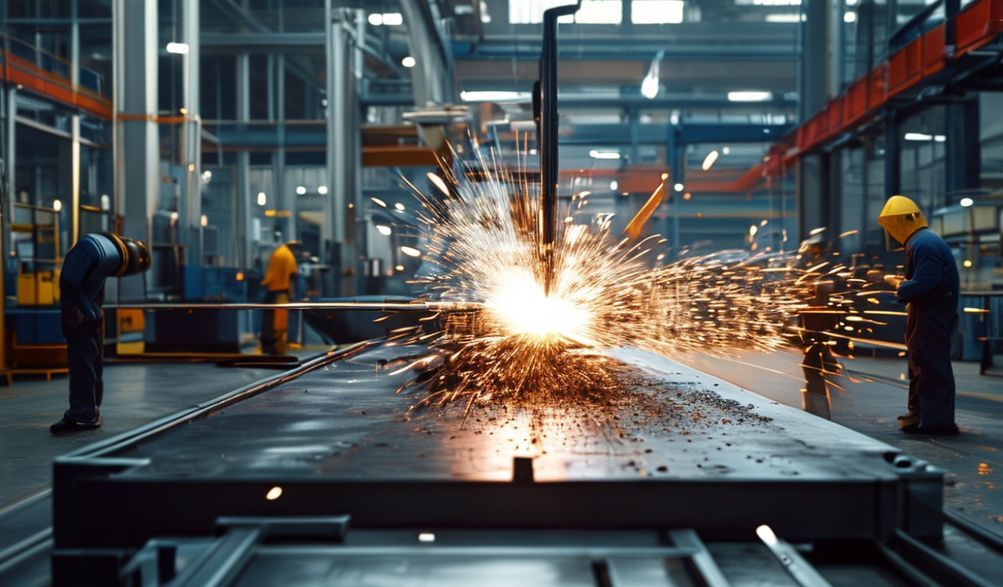
- Mastery Over Production Processes: Witness the journey from raw steel to finished machine. Look for advanced, computer-controlled cutting and welding stations. High-precision machining centers for critical components like mould boxes and vibration shafts are a hallmark of quality. The assembly line should be methodical, not makeshift.
- Use of High-Grade Materials: Insist on knowing the material pedigree. Structural frames should use ISO-rated steel (like SS400 or ST52) for strength and fatigue resistance. Hydraulic systems must feature reputed brand pumps, valves, and cylinders. Electrical panels should house premium PLCs (e.g., Siemens, Mitsubishi) and industrial-grade wiring. This is the foundation of durability.
Quality Assurance and Testing Protocols
A machine that isn’t tortured at the factory will fail at yours. Rigorous QA is non-negotiable.
- Stage-by-Stage Inspection Systems: Quality is built in, not inspected in. Each component—from a welded seam to a machined piston—should be checked against tolerances before proceeding to the next assembly stage.
- Rigorous Performance Testing: Before shipping, every machine must undergo a comprehensive live test. This includes:
- Load Testing: Simulating maximum production pressure.
- Vibration Frequency & Amplitude Testing: Ensuring optimal compaction for dense, strong blocks.
- Cycle Testing: Running the machine through hundreds of consecutive cycles to identify any early wear or hydraulic/electrical issues.
- Compliance with International Standards: While not always mandatory, certifications like ISO 9001 (Quality Management)kumaAlamar CE (for safety in certain markets) indicate a factory’s commitment to systematic, internationally recognized processes.
Production Scale and Customization Ability
Your needs are unique. Can the factory adapt?
- Capacity for Standard & Custom Designs: A professional factory will have a range of proven models but also the engineering bandwidth to modify them. Need a special pallet size, an extra vibration motor, or a unique automation sequence? They should be able to design it.
- Flexibility in Mold Design and Configuration: The mold is the heart of your product. The best factories have an in-house mold manufacturing division. This allows for seamless collaboration on custom paver designs (patterns, shapes, sizes) and ensures perfect compatibility with the host machine.
Key Machines to Expect from a Professional Factory
A full-spectrum manufacturer offers solutions for every stage of business growth. Understanding these core machine types is essential.
Vibrating Table Machines (Ideal for Startups & Small Scale)
- Operation Principle & Output: These are the most accessible entry point. A single mould is filled with concrete, placed on a vibrating table for compaction, and then manually removed for curing. Daily output is lower, typically 500 to 2,000 blocks, depending on model and crew size.
- Best Use Cases & Cost-Benefit: Perfect for entrepreneurs with limited capital, small municipalities, or projects with specific, low-volume custom block needs. They offer the lowest upfront investment and are simple to operate. The trade-off is higher labor intensity and lower consistency compared to automated systems.
Stationary Block Making Machines (Workhorse for Medium Scale)
- Siffofi: These are the industry workhorses. The mould is stationary, and a hydraulic press head descends to compact the concrete under high pressure and vibration. They are multifunctional—with a quick mold change, they can produce a vast array of blocks, pavers, kerbstones, and more.
- Nau'uka:
- Manual: Operator controls all functions; cost-effective but labor-driven.
- Semi-otomatik: Automated vibration and press cycles; operator feeds raw material and removes finished blocks. Excellent balance of output and cost.
- Gaba Daya Mai Sarrafa Kansa: Integrated with belt conveyors and automatic feeders. Delivers high, consistent output with minimal labor. Productivity can range from 4,000 to 10,000+ blocks per 8-hour shift.
Fully Automatic Paver Block Production Lines (For Large Scale & High Output)
This is the pinnacle of efficiency for serious commercial production.
- Components: A seamlessly integrated system:
- Matsar Pan: Produces a consistent, homogeneous concrete mix.
- Madaurin Madauri: Transports mix to the host machine.
- Mai masaukin baki: A high-speed, fully automatic block making machine.
- Mai Tattara Kaya ta Atom Robotically picks up cured blocks and stacks them onto pallets for transport.
- Fa'idodi: This setup maximizes labor efficiency (often requiring only 2-3 operators), guarantees exceptional product consistency, and achieves maximum output (15,000 to 30,000+ blocks daily). It represents a significant investment but offers the lowest cost-per-block and fastest ROI at scale.
Critical Evaluation Checklist for Your Factory Visit
A physical visit is mandatory. Do not buy based on videos or brochures alone. Use this checklist during your audit.
Factory Audit: What to Look For On-Site
- Organization, Cleanliness, and Safety: A clean, organized factory reflects disciplined management. Look for proper material storage, clear walkways, and workers using safety gear (helmets, gloves, goggles). Chaos on the floor often translates to chaos in the machine.
- Live Machine Demonstration: This is crucial. Bring a sample of your local raw materials (sand, aggregate). Ask them to run the machine you’re interested in using ka mix. Observe the block quality, cycle time, and machine stability. Listen for abnormal noises.
- Spare Parts & Tooling Workshop: Peek into their spare parts inventory. Is it well-organized and stocked? A dedicated tooling workshop for machining parts and manufacturing molds is a strong indicator of self-reliance and long-term support capability.
Assessing Technical Support and Service Terms
The relationship begins after the invoice is paid.
- After-Sales Service Scope: What is explicitly included? Installation supervision (engineers sent to your site)? Comprehensive operator training? A defined schedule for preventive maintenance checks?
- Warranty Clarity: A 1-2 year warranty on core parts (hydraulic system, vibration motors, PLC) is standard. Read the fine print. What is excluded? What are the response time guarantees for warranty claims?
- Takardar Bayanin Fasaha Request sample manuals. They should be clear, translated well, and include electrical schematics, hydraulic diagrams, and detailed troubleshooting guides.
Verifying Reputation and Track Record
Trust, but verify.
- Abokan Kasuwanci: Ask for 3-5 references for machines similar to your order, preferably in your region. Actually call them. Ask about machine performance, downtime, and the factory’s responsiveness to issues.
- Project Portfolios: Review case studies or photos of completed installations. Do they have experience with projects of your scale and complexity?
- Certifications & Awards: While not the sole factor, valid industry certifications and awards from trade bodies are tangible indicators of peer and institutional recognition.
Beyond the Machine: The Value of a True Manufacturing Partner
The best factories sell success, not just hardware. They become an extension of your team.
Comprehensive Training for Your Operators
- Structured Programs: Training should occur in two phases: On-factory training during commissioning to understand machine theory and disassembly/assembly, and on-site training during installation for hands-on production and troubleshooting.
- Skill Transfer: The goal is to empower your team with skills in daily operation, routine maintenance (greasing, filter changes), and basic diagnostic troubleshooting to minimize dependency on remote support.
Reliable Supply of Molds and Spare Parts
- In-House Mold Manufacturing: This is a massive advantage. It ensures faster turnaround for new designs, perfect fit, and direct accountability for mold quality and durability.
- Long-Term Parts Availability: A partner guarantees access to genuine spare parts—not just for 5 years, but for the entire lifespan of your machine. They should provide a detailed parts book with item codes.
Guidance on Raw Materials and Mix Design
- Mix Optimization: A knowledgeable factory will provide a recommended mix design (cement:sand:aggregate:water ratios) as a starting point. They should advise you on how to adapt it for your local material properties to achieve the optimal balance of strength, color, and surface finish.
- Expert Advice on Additives: They can guide you on the use of plasticizers, pigments, and sealers to enhance block quality, color vibrancy, and weather resistance, helping you create a superior product for your market.
Tambayoyin da ake yawan yi (FAQ)
Q1: What is the average lead time for a machine from order to delivery?
A: Lead times vary significantly. Standard stationary machines may ship in 15-30 days. Customized machines or large fully automatic lines require 60-90 days or more for manufacturing, testing, and sea freight preparation. A professional factory will provide a clear, written schedule upon order confirmation.
Q2: Can the factory help with factory layout and installation planning?
A: Absolutely. A full-service partner should provide you with foundational layout drawings showing machine placement, power points, and clearance areas. They will also typically dispatch installation engineers to supervise the setup, ensuring the machine is perfectly leveled and commissioned.
Q3: What is the typical lifespan of a well-maintained machine from a quality factory?
A: The core structure of a machine built with quality materials and proper engineering can last 15-20 years or more. Hydraulic and electrical components may require overhaul or replacement sooner, following a diligent maintenance schedule. The lifespan is directly tied to the factory’s build quality and your operational care.
Q4: How do I differentiate between a genuine manufacturer and a trading company?
A: Insist on a live video call from the production floor or, better yet, a physical visit. Genuine manufacturers have extensive workshops with raw steel, CNC machines, welding bays, assembly lines, and paint shops. Trading companies often operate from office showrooms with finished machines of various brands and cannot show you core manufacturing processes.
Q5: What post-purchase support is standard?
A: Standard support from a reputable factory includes: detailed installation drawings and remote guidance, on-site or on-factory operator training, a comprehensive warranty (12-24 months), lifelong access to technical consultation via phone/email, and a guaranteed supply of spare parts and molds.
Ƙarshe
Selecting your cement paver block making machine factory is a strategic decision that will resonate through your business for years. It is a choice between a transactional supplier and a strategic partner invested in your productivity.
As you move forward, let this guide serve as your due diligence framework. Remember, the lowest price often carries the highest long-term cost in downtime, poor quality, and lost opportunity. Prioritize demonstrable manufacturing expertise, transparent processes, and an ironclad commitment to after-sales support.
Take the next step with confidence. Visit your shortlisted factories, ask the hard questions from this guide, and choose the partner that doesn’t just sell you a machine, but equips you to build a thriving, sustainable business.
<