
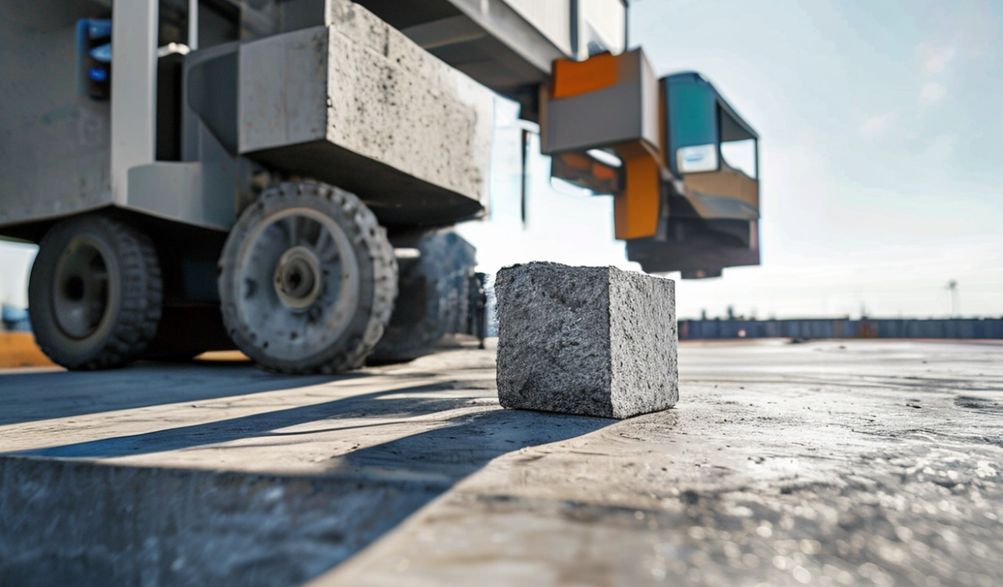
Jagora na Ƙarshe don Neman Na'urar Kankare Bulo Mai Rahusa U12-15 Ba Tare da Pallets Ba
Gabatarwa
Fara ko haɓaka kasuwancin samar da tubalan gini sau da yawa yana jin kamar kama-22. Kuna buƙatar ingantattun injuna masu araha don zama masu fafatawa, amma jarin farko na kayan aikin gargajiya na iya zama mai ban mamaki. Ɗaura da wahala, tsadar aiki, da kuma aikin sarrafa pallets, shingen shiga yana da alama ba zai iya wucewa ba ga yawancin kanana da matsakaitan kasuwanci.
Idan akwai na'urar da za ta magance matsalolin biyu kai tsaye? Ga na'urar yin bulo mai lamba U12-15 ba tare da pallet ba. Wannan na'urar ta zama ginshiƙi ga kamfanoni masu basira da ke neman shiga kasuwa ko faɗaɗa layin samar da su ba tare da tsadar kuɗi ko matsalolin aiki ba. Kalmomin "mai arha" da "dillali" suna da ban sha'awa, amma kuma suna tayar da tambayoyi masu mahimmanci game da inganci da dogaro.
Wannan jagorar an tsara ta ne don kawar da hayaniyar talla. Manufarmu ita ce samar da kwararru, marasa son rai, da cikakkiyar hanya don taimaka muku yanke shawarar siyayya da gaske. Za mu zurfafa a cikin bayanan fasaha, mu fassara ainihin ma’anar “daraja,” kuma mu ba ku takamaiman jerin abubuwan dubawa don tantance masu samar da kayayyaki. Wannan ba game da tallata wani takamaiman alama ba ne; game da ba ku karfin ilimi ne don nemo madaidaicin abin.U12-15 farashin injin yin tubali maras nauyi a kan palletdomin bukatunka na musamman.
A ƙarshen wannan labarin, za ku fahimci:
* Takamaiman iyawa da injiniyoyi na tsarin U12-15 mara pallet.
Yadda ake gane ingancin na'ura mai sauki da farashi mai sauki.
* A step-by-step process for finding and vetting trustworthy wholesale suppliers.
* Best practices to operate and maintain your machine for maximum longevity and profit.
Understanding the U12-15 Pallet-Free Block Machine: Capabilities and Specifications
Before you start comparing prices, it’s crucial to understand exactly what you’re buying. This section breaks down the machine’s core identity, technology, and hard specifications.
What Does “U12-15” Mean? Decoding the Model Number
In the block machine industry, model numbers are rarely arbitrary; they are a quick reference to the machine’s core capacity.
- The “U” Designation: Typically stands for “Universal,” indicating the machine’s ability to produce a variety of block types (hollow, solid, paving stones) by simply changing the mold. In some manufacturer lines, it may simply be a series identifier.
- The “12-15” Figures: This is the most critical part. It generally refers to the number of standard-sized blocks (commonly 400mm x 200mm x 200mm) the machine can produce in a single production cycle. Therefore, a U12-15 model produces between 12 and 15 blocks per cycle.
- Output Translation: With a typical cycle time of 15-20 seconds, this translates to a theoretical output of 2,500 to 4,000 blocks per 8-hour shift, depending on operational efficiency, raw material readiness, and worker speed. This makes it ideal for small to medium-scale production, supplying local construction projects, or starting a block yard business.
The “Pallet-Free” Advantage: How It Works and Why It Matters
This is the feature that fundamentally changes your cost structure and workflow. Let’s demystify it.
How It Works:
Unlike traditional block makers that require a steady stream of costly wooden or steel pallets to carry the freshly formed blocks through curing, a pallet-free system does it all in one place. The machine uses high-frequency vibration and substantial hydraulic pressure to compact the concrete mix directly into a stationary mold. Once compacted, the mold lifts vertically, and the block is ejected directly onto a concrete slab or steel plate on the ground, ready for curing.
Why It’s a Game-Changer:
- Eliminates Pallet Cost: You no longer need to purchase, repair, or replace thousands of pallets—a massive recurring expense.
- Reduces Labor and Complexity: No need for pallet handling systems, conveyors, or workers to feed and retrieve pallets. The process is simplified.
- Saves Space: You don’t need vast areas to store stacks of empty and filled pallets.
- Ƙananan Kulawa: Fewer moving parts compared to pallet-based systems often means less that can go wrong.
Standard Technical Specifications and Output
When requesting quotes, you should expect to see details like these. Use this as a benchmark.
| Specification | Typical Range for U12-15 Machines |
| :— | :— |
| Bukatar Wutar Lantarki | 18.5 kW – 22 kW (Three-phase electric motor) |
| Vibration Motor | 2 x 5.5 kW – 7.5 kW |
| Hydraulic Pressure | 16 – 21 MPa |
| Lokacin Zagayawa | 15 – 20 seconds |
| Max. Block Height | Up to 250 mm |
| Standard Block Size | 400x200x200mm (and similar) |
| Machine Dimensions (LxWxH) | ~3.5m x 1.8m x 2.8m |
| Ƙarfin Samarwa | 2,500 – 4,000 blocks/8 hours |
| Zaɓuɓɓukan Ƙirƙira | Hollow blocks, solid blocks, interlocking pavers, curb stones. |
Why “Cheap Wholesale” Doesn’t Have to Mean “Low Quality”
The allure of a low price is strong, but in heavy machinery, the cheapest option can become the most expensive mistake. Here’s how to find genuine value.
Breaking Down the Cost: What Makes a Machine “Cheap Wholesale”?
A lower price point is achieved through several legitimate factors, not just cutting corners:
- Direct Manufacturer Pricing (True Wholesale): Buying directly from the factory, cutting out middlemen and trading company markups.
- Design Efficiency: The pallet-free system itself is inherently less complex and uses fewer components than pallet-based machines.
- Daidaituwa: Opting for a standard model with common features, rather than requesting costly customizations.
- Samo Kayan Aiki: Manufacturers using efficient global supply chains for steel and components can reduce costs without sacrificing grade.
- Samar da Yawan Kaya: Factories producing many units of a standard model benefit from economies of scale.
Key Quality Checkpoints for a Budget-Friendly Machine
This is where your due diligence begins. A trustworthy supplier will be transparent about these components.
- Tsarin Girgiza: The heart of compaction. Look for high-quality, brand-name vibration motors (e.g., Italian or German-made) with proper rubber isolators. Weak vibration leads to poorly compacted, low-strength blocks.
- Tsarin Hydraulic: Check for reputed pumps and valves. The system should operate smoothly without leaks. Ask about the pressure rating and cylinder quality.
- Mold Construction: This is a wear item, but its initial quality is vital. Molds should be made from high-carbon, high-chrome steel and professionally heat-treated for durability and a smooth block finish.
- Frame and Welding: The frame must be made from thick, structural steel. Inspect welds in photos or videos—they should be clean, continuous, and even. A shaky frame will fail under constant vibration.
- Tsarin Gudanarwa: A simple, reliable PLC (Programmable Logic Controller) or electrical cabinet with clear labeling is better than an overly complex, unproven system. It should be dust-protected.
The True Cost of Ownership: Beyond the Purchase Price
Your calculation must include more than the invoice. Consider:
- Operating Costs: A more efficient motor may cost more upfront but save significantly on electricity over 5 years.
- Maintenance Ease: Can you easily access components for lubrication and service? Are common spare parts (seals, bearings) standard and available locally?
- Tsawon rayuwa: A machine built with 10mm steel plate will outlast one built with 6mm plate, even if the latter is 20% cheaper. Downtime is your biggest profit killer.
- Supplier Support: A supplier who provides clear manuals, video support, and a sensible warranty adds immense value that isn’t reflected in the initial price.
How to Vet Suppliers and Secure a Trustworthy Wholesale Deal
Finding the right partner is as important as finding the right machine. This process separates successful imports from costly nightmares.
Sourcing Options: Manufacturers vs. Trading Companies
- Direct from Manufacturer (Recommended for Wholesale):
- Abubuwan da suka fi kyau: Lowest possible price, direct technical communication, better understanding of customization limits, often more invested in long-term reputation.
- Rashin Kyau: May have higher minimum order quantities, language/communication barriers, less polished sales processes.
- Through a Trading Company:
- Abubuwan da suka fi kyau: Often easier communication, may handle logistics smoothly, can source from multiple factories.
- Rashin Kyau: Higher price due to markup, potential for miscommunication with factory, less direct control over build quality.
Essential Due Diligence Before You Buy
Treat this as your non-negotiable checklist:
- Verify Business Credentials: Request a business license and check for relevant certifications (ISO 9001 for quality management is a good sign). Use platforms like Alibaba’s “Verified Supplier” status as a starting point, not a guarantee.
- Request Detailed Media:Tambaya.recent, unedited videos of the exact model running. Watch for smooth operation, listen for abnormal noises, and ask for close-ups of the control panel, hydraulic fittings, and mold.
- Demand an Itemized Quotation: A professional quote should break down the machine price, mold prices, spare parts package, packaging cost, and shipping terms. Vagueness is a red flag.
- Ask for Customer References: Request contact information for 2-3 previous buyers in your region or a similar one. A credible supplier will have happy customers willing to share their experience.
- Clarify After-Sales Service: Get in writing what support is included:
- Installation guide or video.
- Online technical support (e.g., via WhatsApp/WeChat).
- Warranty period and coverage (e.g., 1 year on main parts).
- Availability and price list for common spare parts.
Navigating Communication and Logistics
- Be Specific: Use model numbers, technical terms from this guide, and send pictures of the blocks you want to produce.
- Understand Incoterms: Know what you’re paying for.
- FOB (Kyauta akan Jirgi): You pay for the machine loaded on the ship. You arrange and pay for sea freight, insurance, and customs clearance.
- CIF (Farashi, Inshora, da Kaya): The supplier arranges and quotes for shipping and insurance to your nearest port. You handle customs and inland delivery.
- Plan for Landing: Factor in port charges, customs duties, agent fees, and inland trucking to your site. These can add 15-30% to the landed cost.
Maximizing Your Investment: Operation and Best Practices
Your machine is an asset. Proper operation and care are what turn it into a profitable one.
Ideal Raw Material Mix for the U12-15 Machine
A consistent, well-graded mix is critical for block quality and machine health.
- Siminti: Use a fresh, standard Portland cement (e.g., Grade 42.5 or 52.5).
- Tari: A mix of coarse (5-10mm) and fine (0-5mm) aggregates. Ensure they are clean, hard, and free of clay or organic matter.
- Yashi: Sharp, coarse sand is preferable to fine, smooth sand for better interlocking.
- Rikodin Haɗawa: A common starting point is a 1:6 or 1:7 cement-to-aggregate ratio (by volume). Misali: 1 part cement, 2 parts sand, 4 parts coarse aggregate.
- Rabin Ruwa da Siminti: Aim for a low water content (just enough for full compaction). A slump of zero is ideal. Too much water weakens the block and can cause sticking in the mold.
Routine Maintenance Checklist for Longevity
Preventative care is cheap; repairs are expensive.
- Kullum:
- Clean the machine thoroughly after each shift, removing all concrete residue.
- Check hydraulic oil level and for any visible leaks.
- Inspect mold for wear or damage.
- Mako-mako:
- Tighten all bolts and nuts, especially on the vibration table and mold frame.
- Lubricate all guide pins and moving parts as per the manual.
- Kowane wata:
- Check the condition of vibration motor isolators.
- Inspect hydraulic hoses for cracks or wear.
- Clean or replace air filters on the control cabinet.
Troubleshooting Common Issues with Pallet-Free Systems
- Blocks Sticking in Mold: Usually caused by a worn mold, insufficient vibration, or a wet concrete mix. Check mold tolerance, ensure full vibration time, and reduce water content.
- Poor Compaction/Weak Blocks: Insufficient vibration time or power, incorrect raw material gradation, or low pressure. Verify vibration motor function and adjust the mix.
- Surface Cracks on Blocks: Often due to too much water (shrinkage cracks) or improper curing (drying too fast). Optimize water ratio and cover blocks with plastic sheeting after production.
Tambayoyin da ake yawan yi (FAQ)
Q1: What is the typical production output of a U12-15 machine per 8-hour shift?
A: With good operational flow, you can expect between 2,500 and 4,000 standard blocks (400x200x200mm) in an 8-hour shift, depending on cycle time and worker efficiency.
Q2: Can this machine produce interlocking paving blocks or only standard building blocks?
A: Yes, it can produce a wide variety of products. By changing the mold, the U12-15 can make interlocking pavers, hollow blocks, solid blocks, curb stones, and garden slabs.
Q3: How much can I save by not needing to buy pallets?
A: Significantly. You save 100% on pallet purchase costs (which can be thousands of dollars) and eliminate associated costs for pallet repair, replacement, and the handling equipment/space needed for them.
Q4: What is the lead time for delivery after ordering a wholesale machine?
A: For a standard model, typical production lead time is 15-30 days after deposit. Sea freight shipping can then take 30-45 days to most global ports, depending on the destination.
Q5: Is technical training or an installation team provided?
A: Most reputable suppliers provide detailed installation manuals, video guides, and ongoing online technical support. Sending an installation engineer is less common for budget machines but may be available at an additional cost.
Q6: What are the most common spare parts I should keep in stock?
A: It’s wise to have spare vibration motor mounts, hydraulic seals and O-rings, a set of mold liners (if applicable), and a spare set of bearings for the core shafts.
Ƙarshe
Finding a U12-15 farashin injin yin tubali maras nauyi a kan pallet is not about chasing the lowest number on a quote. It’s a strategic process of identifying a machine that offers robust construction, reliable performance, and is backed by a transparent and supportive supplier—all at a fair, wholesale price.
Success hinges on prioritizing total value and long-term reliability over short-term savings. Use the checklists in this guide to ask the right technical questions, demand proof of quality, and thoroughly vet your potential partners. Request multiple detailed quotations, compare the specifications and support offerings line by line, and remember that the supplier’s willingness to educate and assist you is a powerful indicator of their trustworthiness.
By making an informed decision, you’re not just buying a machine; you’re investing in the foundation of your business growth. The right U12-15 pallet-free machine will empower you to produce high-quality blocks efficiently, control your costs, and competitively meet the construction demands in your market for years to come.
<