
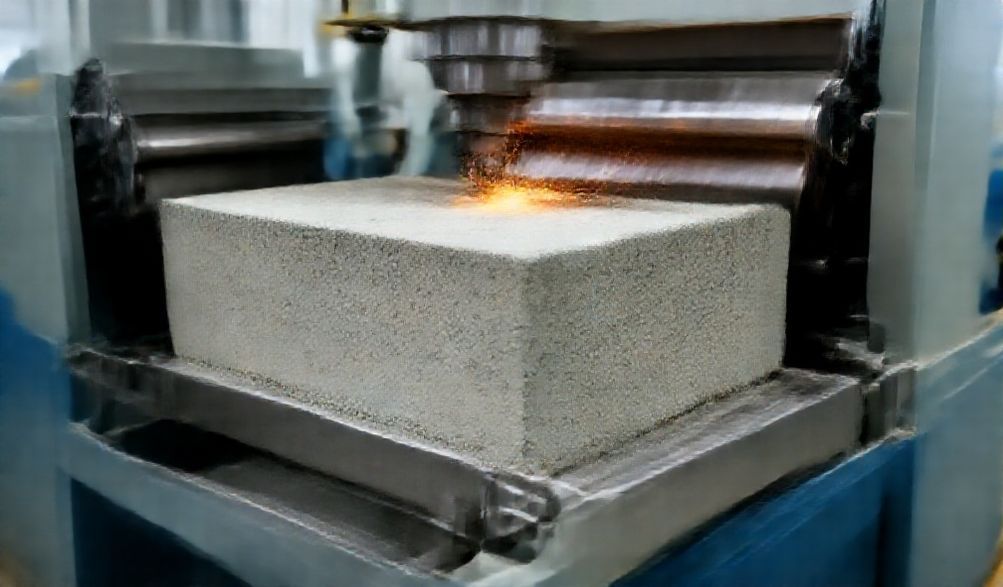
Your Ultimate Guide to Cement Brick Making Machines & Molds | Expert Insights from FUDA
The global construction industry is in a relentless pursuit of sustainability and cost-efficiency. At the heart of this movement are cement bricks and blocks—versatile, durable, and eco-friendly building materials. However, the quality and affordability of these bricks are not just a matter of cement and sand; they are fundamentally determined by the machinery that produces them. The choice between a profitable, smooth-running operation and one plagued by downtime and inconsistent output often comes down to two critical elements: the na'urar yin bulo na siminti and the precision tsatsa at its core.
This comprehensive guide is designed for block manufacturers, construction entrepreneurs, and project managers looking to make informed decisions. We will dissect the types of machinery, delve into the engineering of molds, and provide a clear framework for selecting a partner you can trust. The insights within are drawn from decades of hands-on industry experience at FUDDA, a leading block making factory and manufacturer. As a trusted name for robust and innovative production solutions worldwide, our expertise is built on a foundation of quality engineering, data-driven performance, and an unwavering commitment to customer success.
A cikin wannan jagorar, za ka koyi:
* How to navigate the different types of cement brick making machines and their ideal applications.
* The critical role of mold design and material science in brick quality.
* A practical checklist for evaluating a cement brick making machines mold manufacturer.
* Actionable strategies to optimize your production line for maximum efficiency and return on investment.
Let’s build a solid foundation for your success.
Fahimtar Injinan Yin Tubalin Siminti: Nau'uka da Fasahohi
Choosing the right machine is the first and most significant step in setting up a block yard. The correct choice balances your initial investment with long-term operational costs, labor requirements, and production goals.
Na'ura ta Hannu, Na'ura Mai Sarrafa Kansa, da Na'ura Mai Sarrafa Kansa Gabaɗaya
The level of automation defines your production ecosystem. Here’s a breakdown:
-
Na'urorin Hannu:
- Aiki: Entirely human-powered. Operators manually fill molds, compress bricks (often via a lever), and remove finished products.
- Zuba Jari & Fitarwa: Very low initial cost, but equally low output (typically 300-800 blocks per day). High labor intensity.
- Ya Dace Da: Small-scale, community-based projects, startups with minimal capital, or producing specialty bricks in very low volume.
-
Matsin Injin Mai Ƙaramin Gudanarwa:
- Aiki: A balanced hybrid. The core compaction process (via vibration and hydraulic pressure) is powered, but tasks like feeding raw material or moving pallets may require operator involvement.
- Zuba Jari & Fitarwa: Moderate investment. Output can range from 1,000 to 4,000+ blocks per 8-hour shift, depending on model and block size.
- Ya Dace Da: Small to medium-sized businesses (SMBs). They offer an excellent balance, providing higher quality and consistency than manual machines without the capital outlay of a fully automated system. They are the workhorse of the industry.
-
Matsarori Masu Sarrafa Kansu Gabaɗaya:
- Aiki: Computer-controlled production lines. Automated systems handle material batching, mixing, molding, curing, and stacking with minimal human intervention.
- Zuba Jari & Fitarwa: High initial investment, but the lowest cost-per-block in high-volume scenarios. Output can exceed 10,000 blocks per shift.
- Ya Dace Da: Large-scale block manufacturing plants, government infrastructure projects, and businesses focused on mass production for wholesale supply.
Mahimman Sassa na Injin da Ayyukansu
A reliable machine is more than the sum of its parts, but understanding those parts is key. Here are the core components:
- Hopper & Mai Ciyarwa: This is where raw material is loaded. A well-designed hopper ensures a consistent, uninterrupted flow to the mold, preventing voids in the bricks.
- Mixer (Optional on some models): Integrated pan or planetary mixers ensure a homogeneous blend of cement, aggregate, and water—critical for uniform brick strength.
- Tsarin Mold & Vibration: The heart of the machine. High-frequency, high-amplitude vibration tables densely compact the concrete into the mold cavity. A powerful, balanced vibration system is non-negotiable for producing strong, solid blocks.
- Tsarin Hydraulic: Provides the immense pressure needed for final compaction. Quality components (pumps, cylinders, valves) and efficient design translate to consistent brick density, lower energy consumption, and reduced maintenance.
- Kwamitin Sarrafawa: The brain of semi- and fully-automatic machines. From simple relay logic to advanced Na'urorin Sarrafa Ma'ana Mai Shirye-shiryewa (PLCs), this system governs cycle times, pressure, and sequences for repeatable precision.
Innovations in Block Making Technology
The industry is not static. Modern machines incorporate advancements that directly impact your bottom line:
- Tsarin Sarrafa PLC: Allow for precise programming of every production parameter. Operators can store recipes for different block types, ensuring flawless repeatability and simplifying operation.
- Energy-Efficient Hydraulics: Variable displacement pumps and optimized circuits reduce electricity consumption by up to 30% compared to older systems, a major saving over the machine’s lifespan.
- Automated Pallet Return Systems: In fully automatic lines, this creates a continuous loop, drastically reducing labor and streamlining workflow from molding to curing.
The Heart of Production: A Deep Dive into Cement Brick Molds
If the machine is the body, the mold is the soul. It is the negative space that defines every dimension, texture, and functional detail of your final brick. Compromising on mold quality guarantees production headaches.
Mold Materials and Durability: Steel, Chromium, and Special Alloys
The choice of material dictates wear resistance, lifespan, and brick surface finish.
- Mild Steel: A lower-cost option suitable for low-volume production or prototyping. It wears faster, leading to more frequent dimensional tolerance loss and a shorter service life.
- Hardened Carbon Steel: The industry standard for durability. Through heat treatment, it achieves a high surface hardness, resisting the abrasive nature of concrete. A quality hardened steel mold from a reputable manufacturer like FUDDA can last for hundreds of thousands of cycles.
- Chromium-Plated & Special Alloys: The premium choice. Chromium plating creates an extremely hard, low-friction surface that not only extends life but also produces bricks with a remarkably smooth finish that releases from the mold more easily. Special wear-resistant alloys are used for high-stress areas.
Custom Mold Design for Unique Brick Specifications
Standard solid blocks are just the beginning. The real value often lies in specialized products:
- Tubalin Haɗin Kai: Require molds with complex, precision-engineered tongues and grooves. Even minor wear can compromise the interlocking function.
- Tubalin Ƙofa: Mold design must account for the cores, ensuring even material distribution and strength around voids. The core pins must be exceptionally robust.
- Paving Stones & Landscaping Products: These can involve intricate patterns, textures, and varying thicknesses. Designing these molds requires advanced CAD/CAM expertise and an understanding of how concrete flows and compacts.
AFUDDA, our engineering team treats every custom mold request as a collaborative project, ensuring the design is both producible and optimized for longevity.
Mold Maintenance Best Practices for Longevity
A quality mold is an investment. Protect it with these expert-recommended routines:
- Daily Cleaning: Remove all concrete residue immediately after production using non-metallic brushes and air blowers. Never let concrete harden in the mold.
- Regular Lubrication: Apply a thin film of recommended mold-release agent or oil before each production run. This prevents sticking and reduces wear.
- Proper Storage: When not in use, store molds in a dry, clean environment. Apply a protective coating of oil to prevent rust.
- Scheduled Inspection: Periodically measure critical brick dimensions. Use a caliper to check the mold cavity itself for wear. Catching wear early allows for timely intervention or re-machining.
How to Choose the Right Manufacturer: A Buyer’s Checklist
Selecting your machinery partner is a strategic decision. Here is a framework to separate market leaders from mere suppliers.
Evaluating Manufacturer Experience and Industry Reputation
- Rikodin Aiki How long has the company been manufacturing? A history of 10, 15, or 20+ years suggests resilience and accumulated expertise.
- Kundin Abokin Ciniki: Ask for case studies or references from projects similar in scale to yours. A manufacturer with global clients has likely encountered and solved a wide array of production challenges.
- Transparency: Reputable companies are proud to show their manufacturing process. Be wary of those who are evasive.
Assessing Production Capability and Quality Control Processes
A website can promise anything. The factory floor tells the truth.
- Factory Visit (or Virtual Tour): Look for organized production lines, modern welding equipment (like submerged arc welding for structural integrity), and precision machining centers for mold making.
- Kula da inganci: Inquire about their protocols. Do they perform pressure tests on hydraulic systems? Do they run trial productions with customer-provided raw materials before shipment? At FUDA, every machine undergoes a rigorous 48-hour continuous run test before leaving our factory.
- Material Traceability: A trustworthy manufacturer can specify the grades of steel used in frames and molds.
After-Sales Support: Training, Warranty, and Spare Parts
This is the ultimate test of a manufacturer’s commitment. Consider it your insurance policy.
- Cikakken Takardu: You should receive detailed operation manuals, electrical diagrams, and parts catalogs.
- Operator Training: Does the supplier offer on-site or video training to ensure your team can operate and perform basic maintenance safely?
- Warranty Terms: Read them carefully. A clear, fair warranty on major components (hydraulics, motors, frames) is essential.
- Samun Kayan Gyara: The most common failure point is a lack of spare parts. Ensure the manufacturer maintains a robust inventory and can ship critical parts promptly. FUDA, as an integrated factory, manufactures most parts in-house, guaranteeing availability.
Optimizing Your Brick Production Line for Efficiency and Profit
The right machine is just the start. Optimizing your entire operation unlocks true profitability.
Calculating ROI: Machine Output vs. Operational Costs
A simple framework to guide your decision:
ROI = (Revenue from Blocks Produced - Total Operational Costs) / Initial Investment
- Revenue Side: Calculate based on your target output (blocks/shift) and local market price.
- Cost Side: Account for:
- Labor (number of operators)
- Energy consumption (machine power rating x hours run)
- Raw materials (cement, sand, aggregate)
- Preventive maintenance and mold wear/refurbishment.
A semi-automatic machine with higher upfront cost but lower labor and higher output often delivers a faster ROI than a cheaper, manual alternative.
Raw Material Preparation for Superior Brick Quality
The best machine cannot fix poor raw materials. Follow these expert tips:
- Mix Ratios: A standard ratio is 1 part cement, 3 parts sand, and 3 parts aggregate (1:3:3), but this varies based on desired strength. For structural blocks, precise ratios are critical.
- Danshin Ruwa: The water-cement ratio is paramount. Too little water causes poor compaction and weak bricks; too much leads to cracking during curing and reduced strength. The mix should be cohesive but not soupy.
- Mixing Technique: Ensure a uniform, consistent mix every time. All aggregates should be fully coated with the cement paste.
Streamlining Workflow from Mixing to Curing
Efficiency is about flow, not just speed.
- Plant Layout: Design your yard in a logical sequence: Raw Material Storage -> Mixing Area -> Machine -> Curing Area -> Finished Product Storage. Minimize the distance materials and bricks need to be moved.
- Tsarin Warkewa: Freshly molded bricks gain most of their strength in the first 7 days. Keep them moist and covered with plastic sheeting or by misting with water. Proper curing prevents cracks and ensures they meet compressive strength standards (like ASTM C90). A systematic stacking method allows for proper air circulation and efficient handling.
Tambayoyin da ake yawan yi (FAQ)
Q1: What is the average production capacity of a semi-automatic cement brick machine?
A: Capacity varies significantly by block size and machine model. A typical mid-range semi-automatic machine can produce between 1,000 to 4,000 standard hollow blocks (e.g., 400x200x200mm) in an 8-hour shift. Output for solid blocks or pavers will be higher. Always confirm capacity based on the specific brick you intend to produce.
Q2: How long does a standard cement brick mold typically last before needing replacement?
A: There is no single answer, as it depends entirely on material quality and maintenance. A standard hardened steel mold from a quality manufacturer can last between 50,000 to 200,000 cycles. Premium chromium-plated molds can exceed this. Consistent maintenance is the most significant factor in maximizing mold life.
Q3: Can one machine produce different brick sizes and styles?
A: Yes, this is a key feature of versatile block making machines. By using interchangeable molds, a single machine can produce hollow blocks, solid blocks, paving stones, and more. The changeover process—swapping the mold box—typically takes a trained crew 30 to 60 minutes.
Q4: What after-sales support should I expect from a reputable manufacturer?
A: You should expect comprehensive support, including: detailed installation manuals and videos, remote troubleshooting via phone or video call, a clear parts catalog with diagrams, a readily available inventory of wear parts (like seal kits and vibration motors), and ideally, the option for on-site technical service if needed.
Q5: How do I ensure the bricks produced meet local construction standards?
A: First, use high-quality, properly proportioned raw materials. Second, follow a consistent and correct curing process. Third, periodically test sample bricks for compressive strength at a certified lab. Partner with a machinery manufacturer like FUDDA that designs its equipment to produce blocks capable of meeting international standards, providing you with a solid foundation to achieve compliance.
Ƙarshe
Navigating the world of cement brick production requires a clear understanding of the symbiotic relationship between robust machinery, precision molds, and intelligent operation. The choice of your equipment and, more importantly, your manufacturing partner, will define the quality, efficiency, and profitability of your venture for years to come.
This guide has distilled decades of industry experience from the factory floor of FUDDA. We’ve moved beyond theory to provide the practical, actionable insights that matter. Our goal is not merely to supply a machine, but to empower your production success with engineering excellence, reliable performance, and unwavering partnership support.
Ready to build the foundation of your efficient block production line?
Contact the FUDA engineering team today for a personalized consultation and a detailed quote tailored to your specific output goals and brick specifications. Let’s discuss how our proven solutions can turn your raw materials into a thriving business.
Want to explore our technical specifications first? Download our detailed product catalog for an overview of our best-selling cement brick making machines and mold systems.
<