
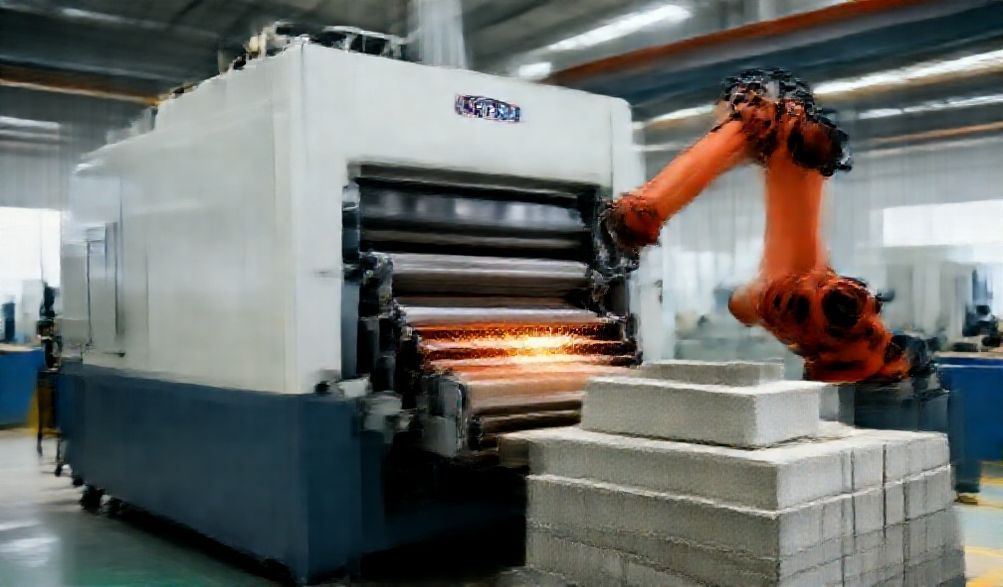
Jagorar Cikakke na Injin Yin Tubalin QT9-15 na China: Ingantacciyar Aiki, Farashi & Aiki
Gabatarwa
Ga kamfanonin gine-gine da masu kera bulo, haɓaka samarwa sau da yawa yana fuskantar ƙalubale masu tayar da hankali. Kalubalen gama gari ne: cimma samarwa mai yawa ba tare da yin baratun inganci ba, sarrafa hauhawar farashin ma'aikata, da kuma kiyaye daidaito a kowane bulo. Hanyoyin hannu ko na rabin atomatik kawai ba za su iya biyan buƙatun ayyukan ababen more rayuwa na zamani ba, suna barin riba da wa'adin ƙarshe a cikin haɗari.
Shigar da injin yin bulo na China QT9-15—ƙarfin aiki mai cikakken sarrafa kai, na'urar motsa ruwa da aka ƙera don canza waɗannan matsalolin masana'antu zuwa ingantaccen aiki mai riba. A matsayinsa na babbar mafita daga cibiyar masana'antu ta duniya, yana wakiltar babbar ci gaba a sarrafa kai don matsakaici zuwa manyan ayyukan samarwa.
Wannan cikakken jagora an gina ta ne bisa tushen nazarin fasaha, gogewar sayayya a masana'antu, da fahimtar aiki. Manufarmu ba siyar da ku na'ura ba ce, amma samar da cikakken albarkatu mara son kai wanda zai ba ku damar yanke shawara cikin kwarin gwiwa da cikakken sani. Za mu bincika cikakkun bayanai na QT9-15, mu fayyace ainihin farashinsa, mu zayyana fa'idodinsa na aiki, kuma mu ba ku muhimmin ilimin da ake bukata don tafiyar da tsarin sayayya cikin nasara.
A ƙarshen wannan jagorar, za ku fahimci iyawar QT9-15, yadda za ku tantance dacewarta da aikin ku, da kuma matakai masu mahimmanci na samun ingantacciyar inji daga wani abokin ciniki na kasar Sin mai aminci.
Menene Injin Yin Bulo QT9-15? Cikakkun Ƙayyadaddun Ƙira da Ƙira
Don fahimtar kimar sa, dole ne mu fara fahimtar abin da QT9-15 yake a ainihin sa. Wannan ba kawai mai yin bulo ba ne; tsarin samarwa ne da aka haɗa.
Nau'in Injin da Aikin Tsaki
QT9-15 an rarraba shi azamanna'ura mai sarrafa kankare ta atomatik, tsayayye ta hanyar amfani da ruwa mai matsa lambaAikin sa na farko shi ne samar da kayan siminti masu yawa da inganci da sauri. Ba kamar na'urorin da ke da rabin sarrafa kansu ba waɗanda ke buƙatar taimakon hannu akai-akai, wannan na'urar tana sarrafa duk zagayowar aiki—tun daga ciyar da kayan gini har zuwa fitar da tubalan da aka gama da tara su.
Yawan amfani da ita shine babban abin da ake tallatawa. Ta hanyar sauƙaƙan canza ginshiƙi, QT9-15 na iya samar da:
* Tubalin rami (na kauri daban-daban, misali, 4″, 5″, 6″, 9″)
* Tubali mai ƙarfi
* Dutsen shimfida da tubalan haɗin kai
* Kan iyakar hanya
* Tubalan dashen ciyawa
Ƙayyadaddun Ƙayyadaddun Fasaha na QT9-15
Lambar samfurin "QT9-15" ita kanta tana da bayani: sau da yawa tana nuna ikon samar da daɗaɗɗen bulo mai ramuka na inci 9 tare da lokacin zagayawa a cikin kewayon dakika 15-20. Ga ainihin ƙayyadaddun fasaha waɗanda ke ayyana aikinta:
- Samar da Kayayyaki:Kusan4,320 – 5,760 pieces of standard 9-inch (200x150x400mm) hollow blocks per 8-hour shift (theoretical capacity, based on a 15-20 second cycle).
- Lokacin Zagayowar Gyare-gyare: 15-20 seconds, depending on block type and raw material consistency.
- Bukatar Wutar Lantarki: Total installed power typically ranges between 45-55 kW. A stable three-phase power supply is essential.
- Girman Pallet:Girke-girken pallet na yau da kullun shine1100×540 mm, which dictates the maximum block footprint per cycle.
- Machine Weight & Dimensions: A robust machine weighing around 8-10 tons, with a large footprint requiring a prepared, solid factory floor.
- Tsarin Matsi: Features a high-pressure hydraulic system, often operating in the range of 21-31 MPa, ensuring highly compacted and strong bricks.
Standard Configuration and Components
A typical QT9-15 is more than just a press. It’s a system. A standard configuration usually includes:
- Tsarin Gudanarwa na PLC: The brain of the operation. A programmable logic controller automates the entire production sequence, allows for parameter adjustments, and provides fault diagnostics via a user-friendly touchscreen interface.
- Hydraulic Station: Comprises the oil tank, pumps, valves, and motors. It’s the muscle that provides the pressing force.
- Tsarin Girgiza: High-frequency, multi-directional vibration motors mounted on the mold table ensure the concrete mix is evenly distributed and compacted, eliminating voids.
- Mai Ciyarwa & Mai Tari na Pallet: Automatically feeds empty pallets into the machine and stacks finished blocks onto carts, enabling continuous operation.
- Conveyor & Mixer: While sometimes quoted separately, a complete “production line” includes a pan mixer or planetary mixer and a belt conveyor to feed the hopper, creating a closed-loop automated process.
Key Advantages of Choosing the QT9-15 Machine
Investing in a QT9-15 is a strategic decision. Here are the tangible benefits that drive its popularity in global markets.
High Production Efficiency and Automation
The automation provided by the PLC is transformative. Once parameters are set, the machine runs with minimal human oversight. This leads to:
* Drastic Labor Reduction: A single line often requires only 2-4 personnel for monitoring, feeding, and managing stacked blocks, compared to a dozen or more for equivalent manual output.
* Unwavering Consistency: Every cycle is identical, producing blocks with the same dimensions, density, and finish. This eliminates product variation that can plague construction projects.
* Maximized Uptime: Automated cycles are faster and can continue through shifts with breaks only for maintenance, dramatically increasing daily output.
Superior Product Quality and Versatility
Quality isn’t sacrificed for speed. The high hydraulic pressure compacts the raw material to an exceptional density, resulting in bricks with:
* Ƙarfin Matsi Mai Girma: Meeting and often exceeding international standards for load-bearing construction.
* Kyakykyawan Gamar Fage: Smooth, sharp edges and defined details, crucial for aesthetic applications like paving stones.
* Rapid Mold Change: The design typically allows for mold changes within 30-60 minutes, enabling manufacturers to switch production to meet diverse customer orders quickly, maximizing market responsiveness.
Robust Design and Durability
Chinese manufacturers have engineered the QT9-15 for the rigors of industrial use. Key durability features include:
* Frame na Karfe mai Ƙarfi:An haɗe shi da ƙarfe mai inganci don jurewa girgiza da damuwa na yau da kullum.
* Quality Hydraulic Components: Increasingly, suppliers use reputable brand pumps and valves (e.g., Rexroth, Yuken) for reliability.
* Corrosion-Resistant Treatments: Critical parts are often painted with industrial-grade finishes or treated to resist the harsh, damp concrete production environment.
Cost-Effectiveness and ROI
The initial investment is significant, but the return on investment (ROI) calculus is compelling:
* Ƙarancin Farashin Kowane Naúra: High output spreads fixed costs (machine depreciation, energy, labor) over thousands of blocks, reducing the cost per piece.
* Ragecin Kudaden Ma'aikata: The single largest variable cost in block making is dramatically reduced.
* Ragewar Sharar Gida: Consistent production minimizes defective blocks and material waste.
* Ingantaccen Amfani da Makamashi: Modern hydraulic and drive systems are designed to optimize power consumption per block produced.
Critical Considerations Before Purchasing a QT9-15
A successful purchase requires more than just transferring funds. Due diligence is your most important tool.
Assessing Your Production Needs vs. Machine Capacity
Don’t buy a machine based on its maximum spec sheet number. Ask:
* What is my current and projected 3-year demand? The QT9-15 is ideal for medium to large-scale operations.
* What mix of products will I sell? Ensure the machine’s quick-change system and available molds match your product catalog.
* Do I have the space and infrastructure? You need a large, level factory shed, three-phase power, and space for raw materials and block curing.
Understanding Total Cost: Beyond the Sticker Price
The FOB (Free On Board) price is just the beginning. Budget comprehensively for:
* Machine Price: The base quotation.
* Shipping & Insurance: Ocean freight (LCL or FCL), insurance, and port fees.
* Import Duties & Taxes: Vary significantly by country; consult a local customs broker.
* Shigarwa & Kaddamarwa: Costs for a technician from the supplier to travel and install (highly recommended).
* Horarwa: For your operators and maintenance staff.
* Spare Parts Kit: An initial inventory of common wear parts (seals, springs, filter elements).
Choosing a Reliable Chinese Manufacturer or Supplier
This step can make or break your investment.
Expert Tips for Vetting Suppliers:
* Verify Business Credentials: Use third-party verification on B2B platforms. A “Gold Supplier” or “Assessed Supplier” status on Alibaba is a basic filter.
* Request a Factory Audit: Hire a third-party inspection company (like SGS, BV) to visit the factory, check production capability, and quality control processes.
* Ask for Client References: A reputable supplier will provide contactable clients, preferably in your region. Actually call them.
* Demand Live Video: Ask for a live video call to see the machine running in their workshop, not a generic promotional video.
* Scrutinize the Contract: Ensure it clearly details payment terms, delivery Incoterms, warranty (scope and duration), and after-sales support obligations.
Red Flags to Avoid:
* A supplier unwilling to provide a direct phone number or factory address.
* Prices that seem too good to be true (they are—likely indicating inferior materials or hidden costs).
* Vague or evasive answers to technical questions.
* No clear warranty or after-sales policy.
Installation, Training, and After-Sales Support
The machine’s performance depends heavily on post-purchase support. Negotiate and confirm in writing:
* Kula da Shigarwa: That a qualified engineer will be provided to assemble, calibrate, and commission the machine at your site.
* Horon Cikakke: Hands-on training for your team on operation, routine maintenance, and basic troubleshooting.
* Warranty Terms: Standard is 12-18 months for parts (excluding wear parts). Clarify what is covered, who pays for labor, and how claims are processed.
* Tallafin Fasaha: Ensure they offer remote support (WhatsApp, Skype, TeamViewer) and have a policy for dispatching technicians if needed.
* Samun Kayan Gyara: Confirm they stock critical spare parts and can ship them via reliable couriers (DHL, FedEx).
Operational Guide and Maintenance Best Practices
Proper operation and maintenance are the keys to longevity and consistent output.
Basic Setup and Daily Operation Workflow
A standard workflow for a complete line is:
1. Rawa Material Batching: Cement, sand, aggregate, and water are measured and fed into the mixer.
2. Haɗawa & Isarwa: The mixer produces a homogeneous concrete mix, which is conveyed to the brick machine’s hopper.
3. Automatic Cycle: The PLC-controlled cycle begins: pallet feeding, mold filling, high-pressure vibration and compaction, mold lifting, block ejection.
4. Block Transfer & Stacking: The finished block on its pallet is conveyed out and automatically stacked onto a curing rack.
5. Maganin Ciwon Ciki: The stacked blocks are moved to a curing area (often a steam curing chamber for faster strength gain) for the required time.
Jadawalin Kulawa na Yau da Kullum
Preventive maintenance is non-negotiable.
- Kullum:
- Check hydraulic oil level and temperature.
- Lubricate all guide rods and moving parts.
- Clean the machine, especially the mold area and sensors.
- Inspect for any loose bolts or visible leaks.
- Mako-mako:
- Check and tighten all electrical connections.
- Inspect vibration motor mounts.
- Clean the hydraulic oil filter.
- Monthly/500 Hours:
- Test the hydraulic oil quality; plan for changes as per manufacturer schedule.
- Conduct a thorough inspection of all wear parts (mold liners, seal rings).
Troubleshooting Common Issues
- Block Surface Defects (Cracking, Chipping): Usually a raw material issue—check mix design (too much water, incorrect sand/aggregate ratio) or compaction pressure settings.
- Inconsistent Block Height: Likely caused by an uneven feed of concrete into the mold or wear on the mold liners. Check the feeder setting and mold condition.
- Hydraulic System Overheating: Check oil level, cleanliness, and the cooling system. Ensure the system is not operating above its designed pressure for extended periods.
- Machine Vibration or Noise: Inspect for loose bolts, worn vibration motor bearings, or an unlevel installation.
Crucial Rule: For any electrical or major hydraulic issue outside basic checks, stop the machine and contact your supplier’s technical support. Attempting complex repairs without expertise can cause further damage and void warranties.
Comparing the QT9-15: Is It Right for Your Project?
Context is everything. Let’s see where the QT9-15 fits in the broader equipment landscape.
QT9-15 vs. Smaller Semi-Automatic Machines
- Zuba Jari: QT9-15 requires a higher initial capital outlay.
- Aiki QT9-15 needs 2-4 workers; semi-automatics may need 6-10 for similar output.
- Output & Consistency: QT9-15 offers vastly higher, more consistent output with less fatigue-related variation.
- Mafi Kyau Don: QT9-15 is for businesses scaling up. Semi-automatics suit very small startups or markets with extremely low labor costs.
QT9-15 vs. Larger Fully Automatic Lines (e.g., QT10-15, Zenith 940)
- Sakamako: Larger lines (like the QT10-15) can have 20-30% higher output.
- Footprint & Investment: They require more space and a significantly higher investment.
- Complexity: Installation, maintenance, and operation are more complex.
- Mafi Kyau Don: The QT9-15 is the “sweet spot” for high-volume production without the extreme scale and cost of a mega-plant. Larger lines are for dedicated, massive block production factories.
Ideal Use Cases for the QT9-15
The QT9-15 is perfectly suited for:
* Growing Block Manufacturing Businesses: Ready to move from manual/semi-auto to serious automation.
* Construction & Real Estate Companies: Looking to produce blocks in-house for their own large housing or infrastructure projects, ensuring supply and quality control.
* Entrepreneurs Entering the Market: With a clear business plan targeting medium-scale demand in a developing construction sector.
* Government or NGO Projects: For large-scale, standardized housing or community development initiatives.
FAQ Section
Q1: What is the exact production capacity of the QT9-15 brick machine per day?
A: While the theoretical capacity is 4,300-5,700 blocks per 8 hours, a practical, sustainable output is closer to 3,500-4,500 blocks. This accounts for mold changes, maintenance pauses, and material handling. Always plan based on practical output.
Q2: What raw materials can it use?
A: It can process a standard concrete mix: Portland cement, sand (crushed or river), stone chips or gravel (3-10mm), fly ash (to reduce cement use), and a small amount of water. A precise, consistent mix design is critical for quality and machine health.
Q3: Does the price include a mixer and conveyor?
A:You must confirm this with every supplier. Some quote the “stand-alone block machine” only. Others quote a “complete production line” including mixer, conveyor, and sometimes a block stacker or cement silo. Always request a detailed equipment list with your quotation.
Q4: How many workers are needed to operate it?
A: For a complete line, a typical efficient crew is 3-4: one person managing raw material batching/mixer, one monitoring the machine and hopper, and one or two managing the block stacking and curing area logistics.
Q5: What is the lead time and shipping process from China?
A: Standard production lead time is 30-45 days after deposit. Shipping is typically arranged under FOB (you own goods once loaded on the ship) or CIF (supplier pays freight to your nearest port). You are responsible for customs clearance inland. Working with a experienced freight forwarder in your country is highly advised.
Ƙarshe
The China QT9-15 brick making machine stands as a testament to efficient, automated industrial manufacturing. It is a workhorse capable of elevating a block production business from a labor-intensive operation to a streamlined, high-volume enterprise. Its blend of robust construction, intelligent PLC control, and versatile output makes it a compelling investment for the serious manufacturer.
However, the machine itself is only one part of the equation. As we’ve emphasized, your success hinges on thorough self-assessment, meticulous supplier due diligence, and proactive planning for installation and long-term support. This guide provides the framework; your careful application of its principles will determine the outcome.
Use this information as your foundation. Prepare a detailed questionnaire for potential suppliers. Insist on live demonstrations and speak to their previous customers. The goal is to move from a hopeful buyer to an informed partner in your own business growth.
Ready to take the next step? Begin by clearly defining your project requirements and budget, then start your supplier search with the critical filters we’ve outlined. Your journey to automated brick production starts with informed action.
<