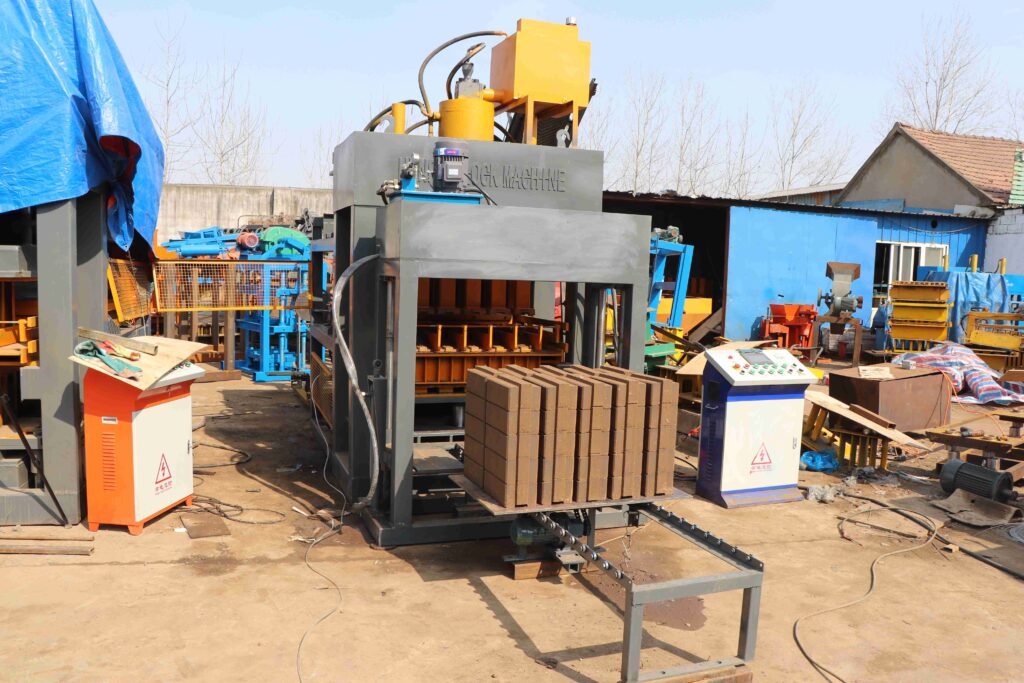
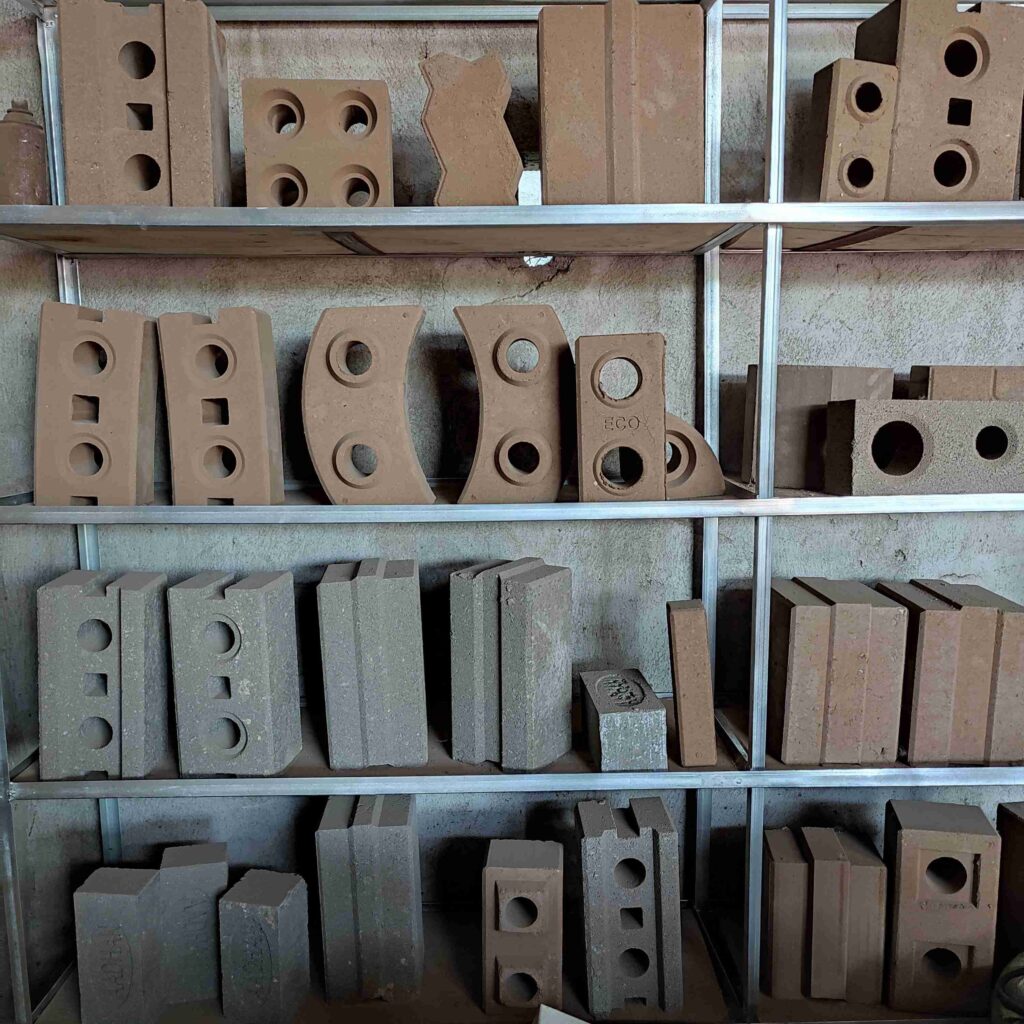
1. Gabatarwana'urar yin bulo na ƙasa ta hannu mai haɗin kai
A cikin yanayin gine-gine na duniya da ke ƙara bayyana ta hanyar sarrafa kai da na'urori masu tsada, wani yanki na kasuwa mai dorewa kuma mai mahimmanci yana bunƙasa akan ka'idoji na sauƙi, samun dama, da haɓaka gida.Na'urar Ƙera Tubalin Ƙasa ta HannuYana wakiltar wannan muhimmin fanni. Ga masu rarrabawa, ƙwararrun sayayya, da masu saka hannun jari masu mai da hankali kan ci gaba, wannan fasaha ba kayan tarihi ba ce na baya, amma kayan aiki ne mai dacewa da dabarun don yanzu da nan gaba. Tana magance muhimman buƙatu a kasuwanni inda abubuwa kamar ƙarancin ababen more rayuwa, ƙarancin jari, wuraren ayyuka masu nisa, da yawan ma'aikatan gida suka haɗu. Wannan labarin yana ba da cikakken bincike mai mai da hankali kan kasuwanci ga ƙwararrun B2B, yana motsawa sama da bayanin samfur na asali don bincika ingantattun tsarin kasuwancin da injinan tubalin haɗin kai na hannu ke ba da damar. Za mu bincika ainihin fasahar, gano aikace-aikacen kasuwa masu riba, nazarin tsarin aiki da na kuɗi, da kuma zayyana tsari don nasarar tura da rarraba wannan kayan aiki na musamman mai ba da ƙarfi.
2. Ma'anar Fasaha: Ka'idodi na Asali da Ikon Aiki
2.1. Bayanin Tsarin Dannawa da Hannu
Ba kamar injinan matsi na ruwa ko na lantarki, injin na hannu yana aiki bisa ka'idar amfani da ƙarfin ɗan adam kai tsaye ta hanyar lever. Tsarin ainihin injin ya ƙunshi ƙaƙƙarfan firam ɗin ƙarfe wanda ke ɗauke da ƙirar ƙirar matsi da aka ƙera daidai. Ana cusa gaurayawan ƙasa, yumbu, da ƙaramin kaso na abin daidaitawa (sau da yawa siminti ko lemun tsami) da hannu cikin ƙirar. Sai ma'aikacin ya ɗauki tsarin lever, wanda ta hanyar fa'idar injiniya—sau da yawa yana amfani da hadadden lever ko matsi mai taimakon ƙugiya—yana yin matsi mai isa (yawanci daga tan 2 zuwa 5) don matsawa kayan zuwa ginshiƙi mai haɗaka, mai haɗa juna. Ƙirar ƙulli da tsagi na haɗa juna an haɗa su cikin ƙirar, ba sa buƙatar ƙarin sarrafawa.
2.2. Bambance da Tsarin Mai Sarrafa Kansa da Na Raba-Sarrafa Kansa
Siffar ta musamman ita ce rashin amfani da ƙarfin inji don matsawa. Wannan yana ba da fa'idodi na musamman kuma yana sanya takamaiman iyakoki:
- Fadada:Rashin amfani da makamashi, sauƙin ɗauka sosai (sau da yawa ana hawa akan ƙafafu), ƙarancin farashin saye, ƙarancin kulawa (babu na'urorin motsa ruwa, injuna, ko PLCs), da sauƙin aiki na asali.
- Iyaka:Ƙarancin yawan aiki na kowane ma'aikaci, ƙarin buƙatun aikin jiki, da mafi girman matakin dogaro da ingancin samfur akan ƙwarewar ma'aikaci da daidaito.
2.3. Bayanin Ma'adanai Masu Kyau: Dacewar Ƙasa da Yumbu
Ingantacciyar injin tana da alaƙa ta asali da kimiyyar kayan aiki. An ƙera ta musamman donGinin ƙasa da aka daidaitaAbin da ake buƙata na asali shine ƙasa mai daidaitaccen abun da ke ciki:
- YumbuYana aiki azaman mai ɗaure na halitta.
- Laka da Yashi: Provide the skeletal structure.
- Gravel: Is typically screened out.
A simple sediment jar test determines soil suitability. A small percentage (3-8%) of Portland cement or lime is commonly added as a stabilizer, chemically reacting with the soil to significantly enhance compressive strength, durability, and water resistance, creating Tubalan Ƙasa Masu Ƙarfafawa da Matsi (CSEBs).
3. Market Analysis: Demand Drivers and Niche Applications
3.1. Target Demographics and Geographic Applicability
This technology finds its strongest foothold in:
- Rural and Peri-Urban Areas: Where access to centralized brick kilns is limited and transport costs for conventional bricks are prohibitive.
- Regions with Low-Cost Labor Availability: Where the economic equation favors human effort over expensive machinery and fuel.
- Development and Humanitarian Sectors: NGOs, government housing schemes, and self-help community projects focused on affordability and skill transfer.
- Eco-Conscious Building Markets: Where there is demand for low-embodied-energy, thermally efficient, and natural building materials.
3.2. Key Market Sectors and Project Types
Primary applications include:
- Affordable Single-Story Housing: The core application for load-bearing walls in residential units.
- Abubuwan Al'umma: School buildings, clinic walls, community centers, and sanitation blocks.
- Agricultural and Estate Construction: Storage sheds, boundary walls, animal shelters, and staff housing on farms or plantations.
- Landscaping and Architectural Features: Garden walls, pergola bases, and other non-structural elements where aesthetics of earth tones are desired.
3.3. The Value Proposition for B2B Stakeholders
For distributors and investors, the value extends beyond unit sales:
- Low-Barrier Market Entry: Enables entrepreneurs with limited capital to start a brick-making enterprise, creating a network of micro-businesses.
- Portfolio Diversification: Complements higher-end automated equipment lines, allowing a distributor to service the entire market spectrum.
- Project-Based Solution Selling: Ideal for contractors undertaking specific projects in remote locations; the machine becomes a portable factory.
- Strong Development Alignment: Positions the distributor as a partner in sustainable, community-led development, often qualifying for tenders in public and NGO sectors.
4. Technical Specifications, Production Workflow, and Output Metrics
4.1. Machine Anatomy: Critical Components and Build Quality
A high-quality manual press is defined by its durability and precision:
- Frame: Constructed from heavy-duty steel plate and sections, welded and reinforced at stress points to withstand repeated cyclic loading.
- Mold Box & Interlocking Head: Made from high-carbon or alloy steel, precision-machined and often hardened to resist abrasion from soil. The interlocking geometry must be exact to ensure block compatibility.
- Leverage/Press Mechanism: A robust system of levers, bearings, and a compression plate. The mechanical advantage ratio is key to achieving sufficient pressure with manageable human effort.
- Pallet and Base Plate: A flat, steel pallet upon which the block is formed and cured.
4.2. The Step-by-Step Production Cycle
- Shirya Kayan Aiki: Soil is sieved, mixed with the correct proportion of stabilizer (cement/lime), and moisture content is adjusted to optimal levels (typically near Proctor Optimum).
- Mold Charging: A measured amount of the damp mix is placed into the mold cavity.
- Matsawa. The operator engages the lever, applying steady, full pressure, often with a “dwell” time at maximum compression.
- Fitarwa: The lever is released, the mold is opened, and the newly formed block is carefully ejected onto a pallet.
- Maganin Ciwon Ciki: Blocks remain on their pallets for 24-48 hours, are then carefully stacked, kept moist, and shaded for a minimum of 21-28 days to achieve full stabilized strength.
4.3. Realistic Capacity, Labor Requirements, and Quality Parameters
- Sakamako: A skilled 3-person team (mixer, feeder, press operator) can realistically produce 200-400 standard blocks per 8-hour day, depending on block size and workflow organization.
- Aiki Requires physically fit, trainable labor. Consistency in filling and pressing is more critical than brute strength.
- Inganci: Well-produced CSEBs from a good manual machine can achieve compressive strengths of 4-10 MPa, more than adequate for single-story load-bearing construction. Dimensional accuracy is contingent on mold quality and operator care.
5. Commercial Viability and Strategic Deployment Framework
5.1. Cost-Benefit and ROI Analysis for Low-Capex Ventures
The financial model is compelling due to minimal overhead:
- Capital Cost: Very low, often a fraction of a motorized system.
- Primary Costs: Raw materials (soil, ~5% cement), labor, and site overhead.
- Break-Even Point: Can be achieved after producing and selling a few thousand blocks, making ROI periods as short as a few months for an active project.
- Tsayayyar Ƙima: The final block cost is typically 30-50% lower than fired clay bricks or concrete blocks in remote areas when transport is factored in.
5.2. Business Models: From Direct Sales to Community Franchising
- Direct Equipment Sales: To individual entrepreneurs, small contractors, or farms.
- Project-in-a-Box Packages: Selling the machine along with training, soil testing kits, and a starter supply of stabilizer for a turnkey operation.
- Community Cooperative Model: Partnering with NGOs to equip community groups, providing training and a shared resource for neighborhood development.
- Rental or Lease-to-Own Schemes: For contractors with a specific, time-bound project.
5.3. Risk Assessment and Mitigation Strategies
Key risks and mitigations include:
- Risk: Poor block quality due to unsuitable soil or incorrect mixing.
- Mitigation: Provide simple soil testing guides and rigorous mixing procedure training.
- Risk: Market resistance to earth-based construction.
- Mitigation: Create demonstration walls, provide technical data on performance, and connect clients with successful case studies.
- Risk: Wear and tear on molds from abrasive soils.
- Mitigation: Supply high-quality, hardened molds and offer a clear spare parts supply chain.
6. Conclusion
The interlocking manual soil clay brick machine is a potent example of appropriate, scalable technology. For the astute B2B stakeholder, it represents far more than a simple tool; it is an enabler of decentralized, sustainable, and economically inclusive construction. Its success hinges not on brute force automation, but on the intelligent application of leverage, material science, and human enterprise. By understanding its precise operational niche, the viable business models it supports, and the critical importance of training and quality control, distributors and investors can tap into a resilient and growing market segment. In an era focused on sustainability and local resilience, this machine provides a foundational solution for building communities from the ground up, literally and figuratively, offering a commercially sound and socially impactful avenue for growth.
7. Frequently Asked Questions (FAQ) for Business Partners
Q1: How does the strength and durability of these manual pressed earth blocks compare to fired clay bricks or concrete blocks?
A: Properly made Compressed Stabilized Earth Blocks (CSEBs) using cement stabilization exhibit excellent durability. While their compressive strength (4-10 MPa) is typically lower than high-grade concrete blocks, it is fully sufficient for single and two-story load-bearing walls as per many international codes. They offer superior thermal mass and moisture regulation compared to concrete. Durability against rain requires proper soil selection, adequate stabilization, and a protected plastered finish, much like traditional earth construction worldwide.
Q2: What is the typical business setup required for a client purchasing this machine?
A: The setup is remarkably lean. Key requirements are: a flat, shaded working area (approx. 50-100 sqm); access to a suitable soil source; a reliable supply of stabilizer (cement); basic tools (shovels, sieves, watering can); and a trained team of 2-4 individuals. No grid power is needed. The model is highly adaptable, from a backyard family operation to a more organized small enterprise.
Q3: Can these machines produce different block designs, and how is this achieved?
A: Yes, but with a key difference from automated systems. To change the block design (e.g., from a standard block to a corner block or a paving stone), the entire mold assembly must be replaced. Reputable manufacturers offer a range of compatible mold sets. The process is manual and takes 10-20 minutes. Therefore, production runs are best planned for a single block type per session to maintain efficiency.
Q4: What are the most common reasons for production failure or poor-quality blocks with this method?
A: Failures almost always stem from incorrect material preparation, not machine failure:
1. Unsuitable Soil: Too much clay (causes shrinkage cracks) or too much sand (lacks cohesion).
2. Incorrect Moisture Content: Too dry leads to weak blocks that crumble; too wet causes deformation.
3. Insufficient or Uneven Stabilization: Inadequate cement/ lime or poor mixing.
4. Inconsistent Compression: Operator not applying full lever pressure every cycle.
Solution: Comprehensive, hands-on training is the single most important factor for success.
Q5: Is there a viable after-sales revenue stream for distributors of this relatively simple machine?
A: Absolutely. While the machine itself has few moving parts, recurring revenue streams include:
* Sale of Additional Mold Sets for different block profiles.
* Replacement Wear Parts: High-wear items like specific mold liners, compression faces, and lever pins.
* Ancillary Products: Soil testing kits, professional block hammers, curing tarps, and moisture meters.
* Training and Certification Services: Offering certified on-site training programs for clients’ operators. This builds long-term loyalty and transforms a transaction into a consultancy relationship.