
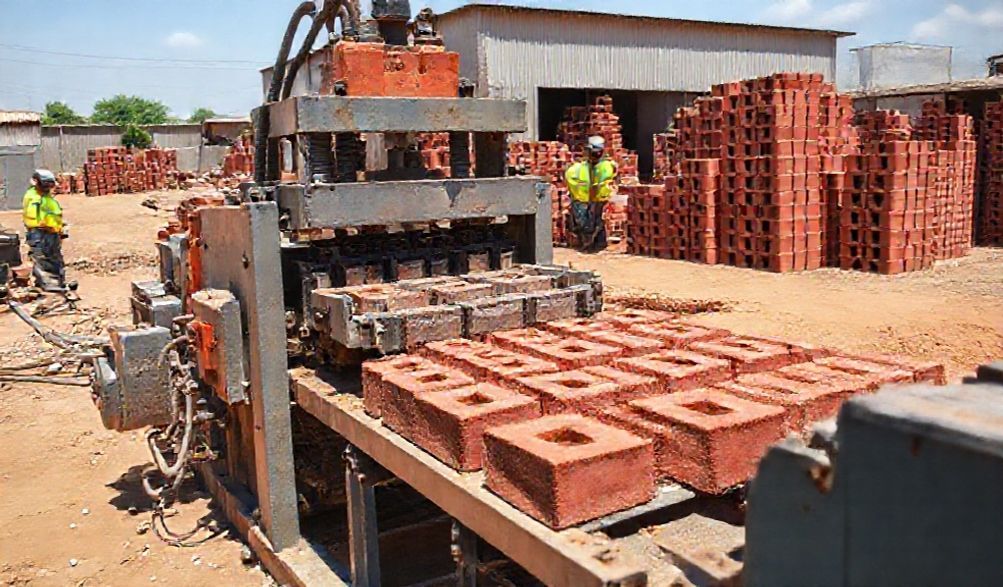
The Ultimate Guide to Brick Making Machines in Ethiopia: Boosting Construction & Economy
Gabatarwa
Ethiopia is building its future. From the soaring skyline of Addis Ababa to the sprawling industrial parks and vital road networks connecting regions, the nation is in the midst of an unprecedented construction boom. This surge is fueled by rapid urbanization, ambitious government infrastructure projects, and a critical need for affordable, quality housing. Yet, this very growth is straining the foundational element of all construction: the humble brick.
For generations, Ethiopia has relied on traditional clamp-burning methods—a labor-intensive, seasonal, and environmentally taxing process. The result? Inconsistent quality, unpredictable supply, and an inability to scale. As demand skyrockets, this manual approach is becoming a bottleneck to progress.
Shiga zamaniEthiopia brick making machine. This isn’t just a piece of equipment; it’s a scalable solution for entrepreneurs, a quality-assurance tool for construction firms, and a potential catalyst for sustainable economic growth. This comprehensive guide cuts through the noise. Built on industry analysis and practical insights tailored for the Ethiopian context, our goal is to provide you with an expert, unbiased resource. You will learn about the different types of machines, their costs, key suppliers, and the essential steps to building a viable business. Whether you’re an aspiring entrepreneur or a project manager, this guide will help you make an informed decision to harness the power of mechanization.
Why Ethiopia is Investing in Brick Making Machinery
The shift towards mechanized brick production is not a trend; it’s a strategic response to national imperatives. Understanding the “why” reveals the immense opportunity.
The Construction Boom: Drivers and Demand
The demand for construction materials has never been higher, driven by multiple powerful forces:
- Government-Led Mega-Projects: Initiatives like the Grand Ethiopian Renaissance Dam (GERD), the Addis Ababa Light Rail, and numerous road and airport expansions require vast quantities of standardized building materials.
- Urban Explosion: Cities like Addis Ababa, Hawassa, and Dire Dawa are expanding rapidly. The government’s integrated housing development programs and private real estate ventures are creating an insatiable demand for housing units.
- Ci Gaban Masana'antu: The establishment of industrial parks across the country necessitates fast, reliable construction of factories and worker facilities.
Limitations of Traditional Brick Making (Clamp Burning)
The traditional method, while deeply rooted, presents significant challenges in the modern context:
- Rashin Daidaiton Inganci: Manual molding and uneven firing lead to bricks of varying size, shape, and compressive strength, compromising structural integrity.
- Environmental Damage: The process is highly inefficient, consuming large amounts of wood or coal, contributing to deforestation and air pollution.
- Low Productivity & High Labor: It is extremely labor-intensive and weather-dependent, unable to meet the scale and pace of current demand.
- Social Impact: It often involves poor working conditions and is not conducive to creating stable, skilled employment.
National Benefits of Mechanization
Adopting brick-making machinery offers transformative advantages:
- Economic Catalyst: It creates jobs not just in operation, but in machine maintenance, raw material supply, logistics, and sales. It empowers Small and Medium Enterprises (SMEs) to become key players in the construction value chain.
- Dorewar Muhalli: Modern machines can utilize alternative materials like fly ash (a byproduct from the Reppi coal plant), reducing waste. They also promote more efficient use of resources and can be designed for cleaner production.
- Quality & Speed: Mechanization produces uniform, high-strength bricks (hollow blocks, solid blocks) that enable safer, faster, and more cost-effective construction, directly supporting national development goals.
Types of Brick Making Machines Suitable for Ethiopia
Choosing the right machine depends entirely on your scale, budget, and target market. Here’s a breakdown of the most suitable types for the Ethiopian context.
Na'urorin Buga Tubali na Hannu da Na Raba-hannu
- Bayanin: These are entry-level machines. Manual versions use a lever system to compress material into a mold, while semi-automatic models use a small electric or diesel engine to power the compression. They require significant manual labor for material handling and brick removal.
- Mafi Kyau Don: Micro-enterprises, individual entrepreneurs with very limited capital, or small-scale community projects in rural areas where labor is more available than capital.
- Abubuwan Da Suke Da Kyau Da Kuma Wadanda Ba Su Da Kyau:
- Abubuwan da suka fi kyau:Jari na farko mai ƙarancin ƙima, mai sauƙin fahimta da gyara, ƙarancin amfani da wutar lantarki.
- Rashin Kyau: Very low production output (200-500 bricks per day), physically demanding, product consistency relies heavily on operator skill.
Cikakkun Masana'antu na Kera Bulo ta Atomatik
- Bayanin: These are industrial-grade production lines. Often hydraulic press machines, they automate the entire process—feeding, mixing, compacting, and ejection. They are computer-controlled for precise operation and high output.
- Mafi Kyau Don: Large-scale commercial block factories aiming to supply major construction companies, government contractors, or the wholesale market in big cities.
- Abubuwan Da Suke Da Kyau Da Kuma Wadanda Ba Su Da Kyau:
- Abubuwan da suka fi kyau: Very high production capacity (thousands of bricks per hour), exceptional consistency and quality, requires less manual labor per brick produced.
- Rashin Kyau: Very high capital investment, requires reliable three-phase power, needs skilled technicians for operation and maintenance, significant space requirement.
Na'urorin Kera Tubali na Wayar Hanka
- Bayanin: These are compact, trailer-mounted units designed for on-site production. They are a subtype of semi- or fully-automatic machines built for portability.
- Mafi Kyau Don: Large infrastructure projects in remote locations—such as dam construction, road building, or rural hospital projects—where transporting finished bricks is prohibitively expensive.
- Abubuwan Da Suke Da Kyau Da Kuma Wadanda Ba Su Da Kyau:
- Abubuwan da suka fi kyau: Eliminates or drastically reduces brick transport costs, allows for just-in-time production, ideal for fixed-duration projects.
- Rashin Kyau: Generally has a lower production capacity than stationary plants of similar cost, requires setting up and moving support infrastructure.
Mahimman Ƙayyadaddun Na’ura da Ya Kamata a Yi La’akari Da Su
When comparing models, look beyond the price tag. Focus on these core specs:
- Ƙarfin Samarwa: Don’t just look at “bricks per cycle.” Calculate bricks per 8-hour shift under realistic conditions, accounting for loading, curing, and maintenance downtime.
- Nau'in Bulo: What does your market want? The machine must be able to produce:
- Hollow Concrete Blocks (most common for walls)
- Tsari Mai Ƙarfi
- Interlocking Paving Stones (for driveways, walkways)
- Different sizes (e.g., 15cm, 20cm)
- Tushen Wutar Lantarki: This is critical in Ethiopia. Electric models are cleaner but vulnerable to grid instability. Diesel-powered models offer independence but have higher fuel costs and emissions. Hybrid models offer flexibility.
Critical Factors for Choosing a Machine in Ethiopia
Success depends on factors far beyond the machine’s brochure. Here’s what you must evaluate.
Initial Investment and Total Cost of Ownership
The machine’s price is just the beginning. Create a comprehensive budget that includes:
- Machine Price: Get formal quotations (FOB, CIF).
- Import Costs: Import duty, VAT, shipping, port clearance, and inland transportation. These can add 35-50%+ to the CIF price.
- Setup Costs: Foundation work, installation, electrical connection (or generator purchase), and initial operator training.
- Running Costs: Regular expenses for spare parts, preventive maintenance, power/fuel, and raw materials.
Local Availability of Raw Materials
Your machine is only as good as the materials you feed it.
- Soil Testing is Non-Negotiable: Before buying kowa machine, test your local soil (clay, sand). Its composition determines the optimal mix (with cement) and the machine pressure required. Ethiopian universities or the Geological Survey can assist.
- Cement Supply: Factor in cement cost volatility and reliable access. Build relationships with multiple suppliers.
- Alternative Materials: Explore using Tozar ƙura from the Reppi plant. It can reduce cement content, lower costs, and produce stronger, eco-friendly bricks. Crushed stone (aggregate) is also a key component.
After-Sales Support and Service
This is arguably the most critical factor for long-term success. A machine without support is a future scrap metal.
- Local Presence: Does the supplier have a local agent, technician, or spare parts warehouse in Ethiopia? This is invaluable for quick repairs.
- Warranty & Training: What does the warranty cover and for how long? Does the purchase include proper training for your operators in Ethiopia?
- Reference Checks: Always ask for and contact previous customers in East Africa. Ask about machine reliability and the supplier’s responsiveness to problems.
Power Supply and Fuel Considerations
Conduct a realistic assessment of your site’s utilities.
- Grid Reliability: If choosing an electric model, what is the historical power outage frequency? You may need an automatic backup generator.
- Diesel Option: For areas with poor grid access, a diesel-powered machine may be the only viable option. Calculate fuel consumption and long-term costs.
- Operational Planning: Your production schedule may need to align with reliable power availability.
Leading Suppliers & Market Overview
Navigating the supplier landscape requires careful strategy.
International Manufacturers (China, India, Europe)
- Overview: China and India dominate the global market for affordable machinery, offering a vast range. European machines are often premium-priced for advanced technology and build quality.
- Abubuwan da suka fi kyau: Competitive pricing, wide selection, access to latest technology.
- Rashin Kyau: Geographic distance can make communication, shipping, and after-sales support challenging. Quality can vary wildly between manufacturers.
- Due Diligence is Key: If importing directly, insist on video calls, factory audit reports, and a detailed contract. If possible, visit the factory or hire a sourcing agent to inspect on your behalf.
Local Ethiopian Distributors and Agents
- The Local Advantage: A reputable local distributor handles importation, holds spare parts inventory, and provides in-country technical service. This reduces your risk and downtime.
- Yadda Ake Tantancewa: Check their business license, visit their showroom or workshop, and physically inspect a working machine. Demand a list of local client references and visit those production sites unannounced to ask about their experience.
Sourcing Advice: Import Directly vs. Buy Locally
- Import Directly: Potentially lower unit cost. Suitable for: Large buyers with strong technical knowledge, ability to manage international logistics, and tolerance for risk. You are responsible for everything after the ship leaves port.
- Buy from a Local Distributor: Higher unit price, but includes import services, local warranty, and (ideally) support. Suitable for: Most SMEs and first-time buyers. The premium is essentially insurance for peace of mind and business continuity.
Building a Viable Brick Making Business in Ethiopia
The machine is a tool; the business is the engine. Here’s how to build it.
Business Plan Essentials
Treat this with seriousness. Your plan should include:
- Market Analysis: Who are your competitors? What are their prices and quality? Who are your target customers (individuals, contractors, government)?
- Financial Projections: Detailed 3-year projections. Calculate your break-even point: (Total Fixed Costs) / (Price per Brick – Variable Cost per Brick). Understand your ROI timeline.
- Legal Structure: Register your business with the relevant authorities (e.g., city trade bureau). Check if your project requires an environmental impact assessment from the EPA.
Site Selection and Setup
Location is a strategic decision.
- Land: You need ample space not just for the machine shed, but for raw material storage, brick curing, and drying yards. Proximity to your target market reduces transport costs.
- Access: Ensure reliable access to water (for mixing), a public road for material delivery and product dispatch, and, of course, power.
Operational Best Practices
Quality and efficiency are built on daily discipline.
- Standardized Mix Ratio: Based on your soil test, establish and strictly follow a cement-soil-aggregate-water ratio. Consistency in input = consistency in output.
- Tsari Mai Kyau Na Gyaran Ginin: Do not rush this. Bricks must be kept moist (often by covering with plastic sheeting) for at least 7-14 days to achieve their designed strength. Sun-drying alone produces weak bricks.
- Kula da Kariya: Create and follow a daily, weekly, and monthly maintenance checklist for your machine as per the manual. Lubrication and bolt-tightening prevent major breakdowns.
FAQ: Brick Making Machines in Ethiopia
Q1: What is the average price range for a brick making machine in Ethiopia?
A: Prices vary dramatically. A basic manual machine can start from ETB 50,000, while a semi-automatic model may range from ETB 200,000 to ETB 800,000. Fully automatic plants can cost ETB 2 million to ETB 10 million+. Remember, the final landed and installed cost will be significantly higher due to import duties, taxes, and setup.
Q2: Can I get a loan or financing for a brick machine in Ethiopia?
A: Yes, options exist. Commercial banks, the Development Bank of Ethiopia (DBE), and government SME support programs may offer financing. You will typically need a strong business plan, collateral, and sometimes a down payment of 20-30%. Present your project as a viable business, not just an equipment purchase.
Q3: What is the most popular type of brick produced by machines in Ethiopia?
A: Hollow Concrete Blocks (15cm and 20cm) are the market standard for wall construction due to their strength, lightness, and insulation properties. Dutsen shimfida mai haɗaɗɗe are also growing in popularity for landscaping and commercial paving projects.
Q4: How do I ensure the quality of bricks produced?
A: Perform simple field tests: a drop test (a good brick shouldn’t break when dropped from waist height) and a water absorption test (soak a brick for 24 hours; weight gain should not exceed 20%). For official projects, send samples to a construction materials lab for compressive strength testing.
Q5: Are there training programs for operating these machines?
A: Reputable suppliers should provide initial training. For formal education, consider Technical and Vocational Education and Training (TVET) colleges that offer courses in manufacturing technology, mechanics, or small business operation. The Ethiopian Construction Works Corporation may also have resources.
Ƙarshe
The journey from traditional clay pits to modern brick yards symbolizes Ethiopia’s broader path of development. Brick making machines in Ethiopia represent more than just efficiency; they are engines for job creation, pillars for quality infrastructure, and a pathway to sustainable industrial growth.
Your journey should begin not with a purchase order, but with research. Start with soil testing and a clear-eyed business plan. When selecting a machine, prioritize long-term reliability and after-sales support over the lowest upfront price. The right partner—whether a diligent local distributor or a verified international manufacturer—is as important as the machine itself.
We hope this guide empowers you to make a confident, informed decision. For further insight, consider connecting with industry associations or seeking mentorship from established brick manufacturers. The foundation for a stronger Ethiopia is being laid, brick by brick. Your venture can be part of building it.
Ready to take the next step? Refine your plan, start visiting suppliers, and turn this potential into a thriving reality.
<