
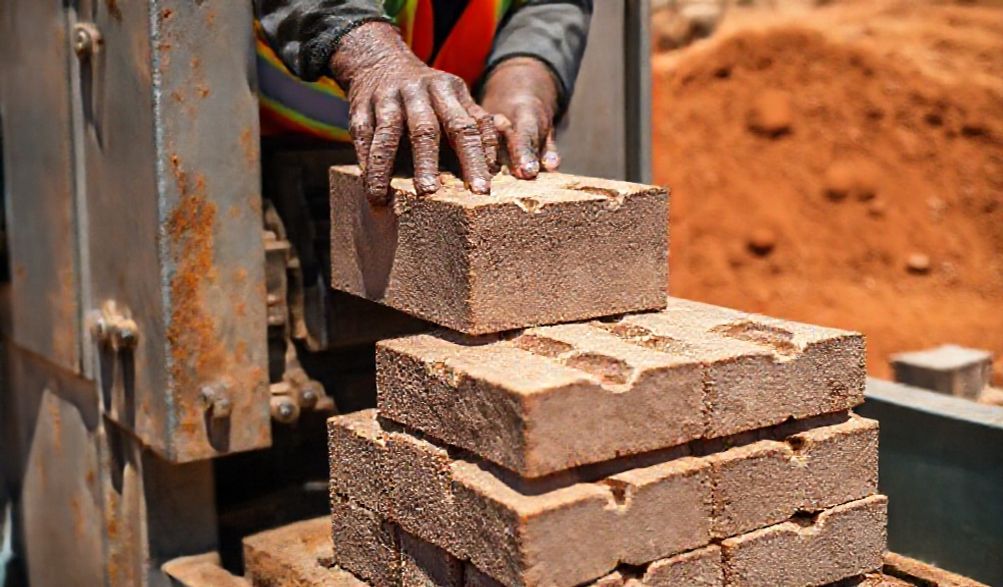
Your Ultimate Guide to Buying a Brick Making Machine for Sale in Kenya (2026)
Gabatarwa
Kenya is building. From the ambitious affordable housing projects in Nairobi and Kisumu to the sprawling private estates and critical infrastructure developments, the construction sector is a powerhouse of the national economy. This boom has ignited an unprecedented demand for quality, affordable building materials. At the heart of this demand lies a simple, essential component: the brick.
For entrepreneurs, contractors, and forward-thinking investors, this presents a pivotal opportunity. Moving beyond the limitations of manual production or the unpredictability of third-party suppliers, investing in your own brick making machine is a strategic step toward control, quality, and profitability. However, navigating the market for brick making machines in Kenya can be complex, with options ranging from simple manual presses to fully automated plants.
This guide is designed to be your comprehensive, trustworthy resource. We’ll cut through the noise, providing industry-informed insights to empower you to make a confident, informed purchase that aligns with your budget, scale, and business vision for Kenya’s dynamic market.
Understanding the Kenyan Brick Making Landscape
To make a smart investment, you first need to understand the environment in which your machine will operate. Kenya’s construction narrative is one of rapid growth and evolving standards.
The Demand for Quality Bricks in Kenya’s Construction Sector
The numbers speak for themselves. Kenya faces a significant housing deficit, estimated to be in the millions of units, which government initiatives and private developers are racing to address. Concurrently, large-scale infrastructure projects under the Vision 2030 blueprint are constantly underway. This dual demand creates a consistent and growing market for building materials.
There’s a clear shift in this market: a move from traditional, often inconsistent, manually-produced bricks toward standardized, high-strength machine-made blocks. Engineers and builders are increasingly specifying compressed stabilised earth blocks (CSEBs), interlocking blocks, and high-quality pavers for their durability, cost-effectiveness, and aesthetic appeal. Supplying this demand requires reliable, mechanized production.
Amfanin Saka Hannun Jari a Injin Yin Bulo
Why take on the production yourself? The advantages are compelling:
- Tasiri Mai Tsada: Over time, producing your own bricks is significantly cheaper than purchasing them from a supplier, especially for large projects. You eliminate the middleman’s margin.
- Rigakafin Ingancin Kayayyaki Ba Tsare-tsare: You decide the raw material mix, compression, and curing process. This ensures every brick meets the specific strength and dimensional standards required for your project or your customers.
- Supply Chain Independence: Never delay a project due to brick shortages or unreliable deliveries. You produce on your own schedule.
- A Tangible Business Venture: Beyond personal use, a brick making machine is a revenue-generating asset. You can supply contractors, real estate developers, and individual homeowners, tapping directly into the construction boom.
Types of Brick Making Machines Available in Kenya
The Kenyan market offers a spectrum of machines. Your choice hinges on your required output, budget, and level of desired automation.
Na'urorin Yin Tubali na Hannu
- Bayanin & Aiki: These are lever or hand-press operated machines. Soil-cement mix is loaded into a mold, and physical force is applied to compress it into a block.
- Ya Dace Da: Ideal start-ups, very small-scale projects, community-based organizations, or as a secondary, low-volume production line.
- Abubuwan da suka fi kyau:
- Lowest upfront investment cost.
- Simple to use with minimal technical training.
- No electricity or fuel required.
- Easy maintenance.
- Rashin Kyau:
- Labor-intensive and slow (typically 300-800 blocks per day).
- Output depends heavily on operator strength and consistency.
- Not suitable for commercial-scale production.
Matsarori na Yin Bulo na Semi-Automatic
- Bayanin & Aiki: These machines use an electric or diesel engine to power a hydraulic system. Operators feed the raw material, but the compression, vibration, and ejection are mechanized.
- Ya Dace Da: Small to medium-sized businesses, contractors building multiple projects, and entrepreneurs supplying a local market.
- Abubuwan da suka fi kyau:
- Excellent balance between cost and output (1,000 – 5,000 blocks per day).
- Consistent brick quality due to mechanized pressure.
- More efficient than manual machines, requiring less physical labor per block.
- Rashin Kyau:
- Requires a power source (mains electricity or generator).
- Farin farashi na farko fiye da injinan hannu.
- Needs basic technical knowledge for operation and maintenance.
Injinoyin Gina Tubali Masu Sarrafa Kansu Gabaɗaya
- Bayanin & Aiki: These are high-output industrial plants. They feature automated feeding systems, conveyor belts, and programmable logic controllers (PLCs). Raw material goes in one end, and finished, stacked blocks emerge from the other with minimal human intervention.
- Ya Dace Da: Large-scale commercial block yards, major construction firms, and investors targeting regional supply.
- Abubuwan da suka fi kyau:
- Very high production capacity (8,000 – 20,000+ blocks per day).
- Exceptional consistency and quality.
- Maximum efficiency and lowest labor cost per block.
- Rashin Kyau:
- Babban jarin babban birni.
- Requires significant space, stable three-phase power, and skilled operators.
- Complex maintenance that may require specialist technicians.
Mobile vs. Stationary Brick Making Plants
- Mobile Plants: Mounted on a trailer, these can be towed directly to a construction site. This eliminates brick transportation costs—you produce exactly where the bricks are needed. Perfect for large, remote projects like schools, dams, or ranch developments.
- Tsire-tsire Masu Tsayawa: Set up in a fixed location, typically a dedicated yard. Allows for optimized workflow, shelter for curing blocks, and establishment of a recognized local business presence. Best for supplying a town or region.
Key Features to Consider Before You Buy
Look beyond the basic type. These features will determine your machine’s suitability for your specific Kenyan operation.
Production Capacity (Blocks Per Day)
Don’t just buy the biggest machine you can afford. Be realistic.
* Match the output to your projected demand with room for growth.
* Consider a machine that can operate for a single 8-hour shift to meet your daily target, rather than one that must run 24/7.
* Factor in Kenya’s rainy seasons—your effective production days per year may be less than 365.
Brick Types and Sizes
Versatility can future-proof your investment.
* Standard Solid/Hollow Blocks: The mainstream market staple.
* Interlocking Stabilised Soil Blocks (ISSBs): Growing in popularity for their cost-saving (less mortar needed) and structural benefits.
* Pavers and Kerbstones: For landscaping and road projects, often commanding higher profit margins.
* Tambaya Mai Muhimmanci: Does the machine come with interchangeable molds? Can you purchase additional molds later from the supplier?
Power Source: Electric, Diesel, or Hybrid?
This is a critical decision based on your location.
* Lantarki: Cleaner, quieter, and cheaper to run per hour—idan you have a reliable grid connection. Consider a stabilizer to protect against voltage fluctuations common in some areas.
* Dizal: Offers complete independence from the grid. Essential for sites without electricity or areas with frequent outages. Higher fuel cost and maintenance.
* Hybrid (Electric/Diesel): Offers the flexibility to switch between power sources. The ideal, albeit more expensive, solution for mitigating Kenya’s power reliability challenges.
Durability and After-Sales Support
This is non-negotiable. A machine is a long-term asset.
* Ingancin Gina Look for robust steel frames, high-quality hydraulic cylinders, and hardened steel molds. It must withstand dusty, sunny, and sometimes harsh conditions.
* The Critical Point: Local After-Sales Support. Your relationship with the supplier is paramount. Verify:
* Do they have a physical workshop/showroom in Kenya (Nairobi, Mombasa, etc.)?
* Do they stock common spare parts (seals, pipes, wear plates) locally?
* Do they offer installation, commissioning, and on-site operator training?
* What is the warranty period and what does it cover?
* A slightly more expensive machine from a supplier with a strong service network is almost always a better investment than a cheap import with no local support.
Navigating the Kenyan Market: Suppliers and Costs
Where to Find Reliable Sellers in Kenya
- Established Local Dealers: Reputable distributors in industrial areas of Nairobi (e.g., along Mombasa Road, in Athi River), Mombasa, Kisumu, and Eldoret are your best starting point. They have already navigated importation and provide local service.
- Direct Importation: Sourcing directly from manufacturers (e.g., in China, India) can seem cheaper. However, you must manage shipping, customs clearance (and its associated costs and delays), VAT, and KEBS certification. The risk of receiving a sub-standard machine with zero local support is high.
Price Range Breakdown for Brick Making Machines in Kenya
Prices vary widely based on brand, capacity, and automation. Use these 2026 estimates as a guide (1 USD ≈ 130 KES).
* Na'urorin Hannu: KES 30,000 – KES 120,000
* Matsin Injin Mai Ƙaramin Gudanarwa: KES 250,000 – KES 1,200,000
* Tsire-tsire Masu Sarrafa Kansu Gabaɗaya: KES 1,500,000 – KES 5,000,000+
Red Flags and How to Avoid Scams
- Too-Good-To-Be-True Prices: If a price is far below market rate, it’s a major warning sign.
- Supplier with No Physical Address: Be wary of sellers who only operate online or via WhatsApp with no verifiable office or workshop.
- Pressure to Pay Full Amount Upfront: Reputable dealers often require a deposit, with balance on delivery/installation.
- No Demonstration or References: Always insist on seeing the exact model you want in operation. Ask for contact details of previous customers.
- Vague Warranty Terms: Get all warranty and service promises in writing.
Maximizing Your Investment: Setup and Operation
Site Preparation and Basic Requirements
- Sarari: You need space for the machine, raw material storage (soil, sand, cement), mixing area, block curing area, and finished product storage. Ensure good drainage.
- Foundation: Most stationary machines require a level, reinforced concrete foundation to absorb vibration.
- Utilities: Secure your chosen power source (grid connection or generator fuel supply). Access to clean water for mixing is essential.
Raw Materials: Soil/Cement Mix Ratios for Kenya
The quality of your bricks starts here.
* Soil Test: Ideally, test your soil for clay, silt, and sand content. A good block-making soil typically has 15-30% clay.
* General Mix: A common starting point for CSEBs is 1 part cement to 8-10 parts of sieved soil (by volume). For concrete blocks, a standard mix is 1:3:6 (cement:sand:aggregate).
* Maganin Ciwon Ciki: Keep freshly produced blocks under damp sacks or plastic sheeting for at least 7-14 days. This slow curing process is crucial for achieving maximum strength.
Basic Maintenance for Longevity
A simple daily and weekly routine prevents costly breakdowns.
* Clean the machine thoroughly at the end of each shift to prevent hardened concrete buildup.
* Check hydraulic oil levels and look for leaks.
* Grease all moving parts (pivots, bearings) as per the manual.
* Inspect mold liners for wear and tear.
Training and Skilled Operation
Never assume operation is intuitive. Ensure you and your staff receive proper training from the supplier on:
* Safe startup and shutdown procedures.
* Correct material feeding and mix consistency.
* Basic troubleshooting for common issues.
* Mold changing and machine adjustments.
Tambayoyin da ake yawan yi (FAQ)
What is the cheapest brick making machine available in Kenya?
Manual hand-press machines are the most affordable, starting from around KES 30,000. They are suitable for very low-volume, personal-use projects.
Can I get a loan or financing for a brick making machine in Kenya?
Yes. Many commercial banks offer asset financing or SME loans for such equipment. Additionally, development finance institutions and some SACCOs provide agri-business or enterprise loans that can be used for this purpose. Prepare a solid business plan.
What is the profit margin for a brick making business in Kenya?
Margins vary based on scale, location, and efficiency. A simplified example: If producing a standard block costs KES 25 (materials, labor, power) and you sell it for KES 40, your gross profit is KES 15 per block. A semi-automatic machine producing 2,000 blocks/day could generate a gross profit of KES 30,000 per day.
How do I choose between an interlocking and a standard brick machine?
Consider your target market. Interlocking blocks are excellent for cost-conscious projects (they use less mortar) and are popular for certain architectural styles. Standard blocks have the widest, most traditional market. Many machines offer molds for both.
Are there any government regulations or standards for brick production?
Yes. The Kenya Bureau of Standards (KEBS) provides guidelines for compressed earth blocks and concrete blocks (e.g., KS 95-1:2004). Adhering to these standards enhances your product’s marketability, especially when supplying government or large commercial projects.
What is the typical delivery and installation process from a local supplier?
After purchase, a reputable supplier will deliver the machine to your site. They should then provide or supervise installation on your prepared foundation, commission the machine (test run it), and conduct comprehensive training for your operators. This is a key part of the service you are paying for.
Ƙarshe
Investing in a brick making machine in Kenya is more than a purchase; it’s a strategic entry into the foundational layer of the country’s growth. It offers a path to greater control, significant cost savings, and a viable, profitable business venture. The key to success lies in thorough research, a clear assessment of your needs, and, most importantly, partnering with a reputable supplier who offers robust machinery and unparalleled after-sales support.
Use this guide as your roadmap. Visit the showrooms of established dealers in Nairobi, Mombasa, or Kisumu. Ask the detailed questions outlined here, demand demonstrations, and verify service networks. With due diligence, your investment in a brick making machine can build not just walls, but a stronger, more prosperous future.
<