
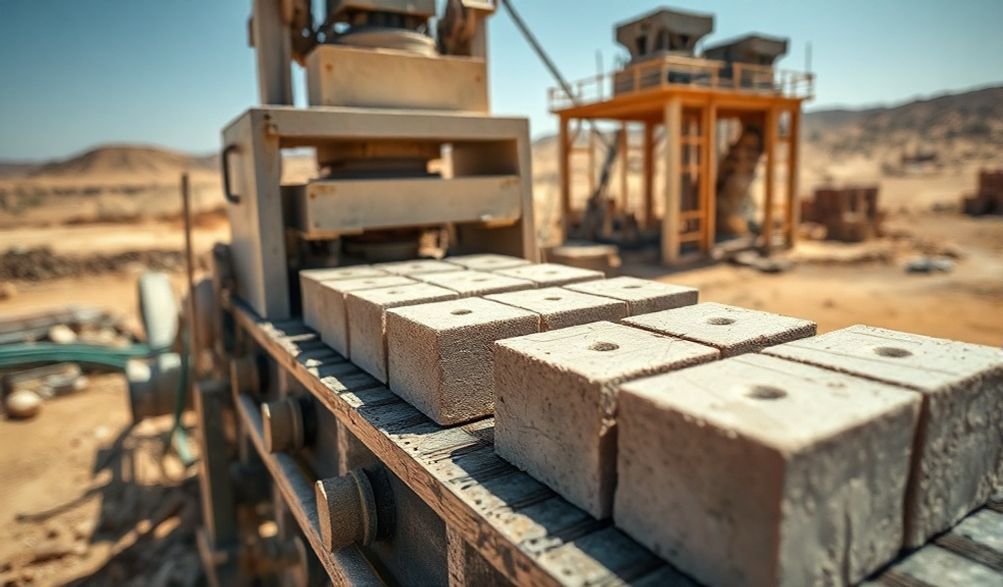
Jagorar Cikakke Kan Farashin Injin Yin Tubalin Siminti a Libya (2026)
Gabatarwa
Libiya na cikin wani muhimmin lokaci. Tare da sake mai da hankali kan sake gina ƙasa, gyara ababen more rayuwa, da ci gaban birane, buƙatar ingantattun kayan gini, masu dogaro, da waɗanda aka samo a cikin gida ba ta taɓa yin girma ba. A tsakiyar wannan yunƙurin sake gina, akwai wani muhimmin sashi: bulo na siminti.
Ga masu kwangila, magina, da 'yan kasuwa na Libya, samun na'urori don samar da waɗannan tubalan mahimmanci mataki ne na farko mai mahimmanci. Duk da haka, kewaya kasuwa don nemo bayanai masu haske, amintacce kan farashin na'urorin yin tubalin siminti a Libya babban kalubale ne. Farashi ya bambanta sosai, farashin ɓoyayye ya yi yawa, kuma rikitattun matsalolin shigo da kayayyaki cikin Libya na iya mai da wani al'amari da ake ganin yana da kyau ya zama wahala mai tsada.
Wannan jagorar an tsara ta ne don rage hayaniyar da ake yi. A matsayinta na cikakkiyar ƙwaƙwaiyar hanya mai zurfi, za ta fayyace yanayin farashin na'urorin yin bulo na siminti musamman ga kasuwar Libya. Za mu wuce gaba da farashi mai sauƙi don bincika mahimman abubuwan da ke ƙayyade farashin ƙarshe, mu yi nazarin nau'ikan na'urori daban-daban da kuma abubuwan da suke bayarwa, kuma mu samar da tsari mai amfani, mataki-mataki don yin sayayya cikin ilimi. An gina ta ne bisa nazarin yanayin masana'antu na yanzu, yanayin masu kayan aiki, da kuma gaskiyar tattalin arziki da dabaru na musamman na Libya, wannan jagorar tana da nufin zama amintacciyar ƙawarki a cikin wani muhimmin yanke shawara na saka hannun jari.
Fahimtar Kasuwannin Injin Yin Tubalin Siminti a Libya
Kasuwannin kayan aikin gini a Libya yana da ƙarfi, wanda ke motsa shi da buƙatu mai gaggawa kuma yana da ƙalubale na musamman na gida. Fahimtar wannan mahallin yana da mahimmanci kafin a bincika kowane jerin farashi.
Halin Kasuwa na Yanzu da Abubuwan Da Ke Haifar da Buƙata
The primary engine of demand is clear: large-scale, post-conflict reconstruction. From rebuilding damaged housing and public facilities to developing new infrastructure projects, the appetite for construction materials is immense.
This has catalyzed a strategic shift towards localized production. Establishing a brick-making plant is no longer just a business opportunity; it’s a move towards supply chain resilience and cost-efficiency. Producing bricks locally reduces dependency on imported materials, mitigates transportation costs for finished goods, and creates much-needed local employment. For entrepreneurs, this represents a venture with both commercial and national developmental value.
Key Challenges for Buyers in Libya
While the opportunity is significant, Libyan buyers face distinct hurdles that directly impact the total cost and success of their investment:
- Logistics and Shipping: Getting a heavy machine from a manufacturer’s yard to your site in Libya involves complex logistics. Shipping costs to ports like Tripoli, Benghazi, or Misrata can be substantial. Furthermore, inland transportation from the port to the final destination requires careful planning and adds to the expense.
- After-Sales Service & Support: Perhaps the most critical challenge. A machine is a long-term investment. The availability of technical support, routine maintenance, and—crucially—spare parts within Libya or from a responsive international supplier is a make-or-break factor. A low upfront price means little if the machine sits idle for months awaiting a repair.
- Economic & Regulatory Factors: Currency fluctuations can affect the final cost between quotation and payment. Navigating Libyan import regulations, customs clearance procedures, and potential tariffs requires either expertise or a reliable local agent. These are not just paperwork exercises; they are cost and time variables that must be factored in.
Breakdown of Cement Brick Making Machine Types and Price Ranges
The term “brick making machine” encompasses a wide spectrum of technology. Your choice directly dictates the price, and aligning the machine type with your project scale is the first rule of smart purchasing.
Na'urorin da ake sarrafawa da hannu
- Bayanin: These are the most basic units, requiring significant manual labor for mixing, feeding, and brick ejection. They are typically single-mold machines, ideal for very small-scale projects, community initiatives, or as a low-risk entry point for a startup.
- Price Range (Estimated in USD): $500 – $3,000
- Abubuwan Da Suke Da Kyau Da Kuma Wadanda Ba Su Da Kyau:
- Abubuwan da suka fi kyau: Very low initial investment, simple to understand, minimal maintenance, no need for electricity in some models.
- Rashin Kyau: Extremely labor-intensive, low and inconsistent output (100-500 blocks per day), product quality heavily depends on operator skill, not suitable for commercial production.
Matsinoriyar Masu Sarrafa Kansu
- Bayanin: This category offers a balance, automating the critical compression and vibration processes while often requiring manual feeding of raw material or removal of finished blocks. They are the workhorse for small to medium-sized enterprises (SMEs) and serious construction firms.
- Price Range (Estimated in USD): $5,000 – $25,000
- Abubuwan Da Suke Da Kyau Da Kuma Wadanda Ba Su Da Kyau:
- Abubuwan da suka fi kyau: Significantly higher and more consistent output than manual machines (500-2,000 blocks per hour), better brick density and uniformity, reasonable investment for the capability.
- Rashin Kyau: Requires a stable power supply, needs basic operator training, initial cost is a step up from manual options.
Matsakaitan Kera na Gina Tubalan Cikakken Kansa
- Bayanin: These are industrial-grade production lines. They feature automated material feeding, high-pressure compression, curing systems, and pallet conveyors. They are designed for uninterrupted, large-scale commercial production with minimal manual intervention.
- Price Range (Estimated in USD): $30,000 – $100,000+
- Abubuwan Da Suke Da Kyau Da Kuma Wadanda Ba Su Da Kyau:
- Abubuwan da suka fi kyau: Very high output (2,000-10,000+ blocks per hour), exceptional product consistency and quality, high return on investment for established businesses.
- Rashin Kyau: Substantial capital investment, requires skilled operators and technicians, needs a reliable and powerful electricity connection (often three-phase), complex installation.
Na'urorin Kera Tubali na Wayar Hanka
- Bayanin: These self-contained units can be towed directly to a large construction site. They produce bricks on-location using local soil or imported raw material, eliminating the cost and hassle of transporting finished bricks.
- Price Range (Estimated in USD):$15,000 – $50,000
- Abubuwan Da Suke Da Kyau Da Kuma Wadanda Ba Su Da Kyau:
- Abubuwan da suka fi kyau: Eliminates brick transport costs, ideal for mega-projects like housing developments or remote infrastructure, offers flexibility.
- Rashin Kyau: Serves a specific use-case, output is generally lower than stationary automatic lines, still requires significant setup and raw material handling on-site.
5 Major Factors Influencing the Final Price in Libya
The listed price of the machine is just the starting point. For Libya, these five factors are critical in determining your final landed and operational cost.
1. Ƙarfin Injin & Fitowar (Tubalan A Kowane Sa'a)
Capacity is the primary price driver. A machine that produces 1,000 blocks per hour will cost exponentially less than one producing 5,000. Accurately match capacity to your realistic sales or project needs to avoid over or under-investing.
2. Level of Automation & Technology
Every step of automation—from hydraulic systems and programmable logic controllers (PLCs) to automated pallet feeders—adds to the cost. More automation means higher efficiency, better consistency, and reduced labor costs over time, justifying the higher initial price for the right user.
3. Brand Reputation & Country of Origin
- Chinese Machines: Dominant in the market due to competitive pricing and wide variety. The key is diligent supplier vetting, as quality and service support can vary greatly.
- Turkish & European Machines: Often positioned in the mid-to-high price range, with a strong reputation for durability, engineering, and better after-sales service networks, which is a vital consideration for Libya.
- Indian Machines: Offer a balance, often seen as a cost-effective alternative with decent quality and growing regional support.
4. Shipping, Customs, and Logistics to Libya
This is a major and often underestimated cost component. The price quoted as FOB (Free on Board) means you own the machine once it’s loaded on the ship, and you are responsible for all subsequent freight, insurance, and port charges. A CIF (Cost, Insurance, Freight) quote to a Libyan port includes these sea freight costs, providing more cost certainty. Always clarify the Incoterms.
5. After-Sales Service Package & Warranty
A machine with a comprehensive warranty, a supply of critical spare parts, and—most importantly—a clear plan for remote technical support or the availability of local technicians is inherently more valuable. A supplier who offers this may have a slightly higher price but delivers far greater long-term value and lower risk.
A Step-by-Step Guide to Buying in Libya
Navigating the purchase process methodically is your best defense against poor decisions and hidden costs.
Step 1: Accurately Assess Your Production Needs
Be brutally realistic. Calculate your current and projected 2-3 year demand in blocks per day. Consider your available space, power supply (voltage, phase), and workforce skill level. This assessment will point you to the correct machine type and capacity.
Step 2: Research and Shortlist Reputable Suppliers
Focus your search on suppliers with demonstrable experience exporting to North Africa or, ideally, Libya. Look for case studies, client testimonials from the region, and active engagement in answering your specific logistical questions. Online B2B platforms are a start, but deep due diligence is required.
Step 3: Get Detailed Quotations (CIF/FOB Explained)
Request itemized quotations from at least 3-4 shortlisted suppliers. The quote must specify:
* Machine model and detailed specifications.
* Clear Incoterms (e.g., FOB Shanghai or CIF Tripoli).
* Detailed breakdown of machine price, shipping, insurance, and estimated port charges.
* Warranty period and scope.
* List of included spare parts.
* Terms of payment.
Step 4: Verify Supplier Credentials and Request References
Ask for the company’s business license, visit their website for professionalism, and insist on contact details for past clients in similar markets. A video call to see their factory floor can be very revealing.
Step 5: Plan for Installation, Training, and Maintenance
- Installation: Who will guide it? Do you need to prepare a special foundation?
- Horarwa: Is operator training included, on-site or remotely?
- Maintenance: What is the recommended preventive maintenance schedule? How do you order spare parts, and what is the typical delivery time to Libya?
FAQ: Cement Brick Making Machine Price in Libya
Q1: What is the cheapest type of brick making machine available for Libya?
The absolute cheapest option is a manual, hand-operated press, with prices starting around $500. However, its extremely low production capacity makes it unsuitable for any commercial venture. For a serious start, a semi-automatic machine (from $5,000) offers the best balance of cost and capability.
Q2: Are Chinese machines a good option for Libya, considering the price?
Yes, they are a very popular option due to their affordability and wide selection. The critical factor is supplier vetting. Prioritize Chinese manufacturers or exporters who:
* Have verifiable experience shipping to Africa.
* Offer comprehensive English/Arabic documentation and communication.
* Provide a clear warranty and have a responsive service team for online support.
* Can supply a robust set of commonly needed spare parts with the initial shipment.
Q3: Besides the machine price, what other costs should I budget for?
Create a comprehensive budget that includes:
* International shipping and marine insurance.
* Libyan port handling fees and customs clearance (use a reliable clearing agent).
* Local transport from port to your site (requires a flatbed truck).
* Foundation and site preparation for the machine.
* Electrical setup (possible transformer or generator costs).
* Initial stockpile of raw materials (cement, sand, aggregate).
* A starter kit of essential spare parts.
Q4: How can I ensure I get reliable after-sales service in Libya?
This requires proactive negotiation:
1. Choose a supplier who emphasizes service in their proposal.
2. Request a service-level agreement (SLA) outlining response times for remote support.
3. Ensure detailed machine manuals and troubleshooting guides are provided in Arabic or clear English.
4. Inquire if they have a partnered technician or agency in Tunisia, Egypt, or Turkey that can potentially travel to Libya for critical issues.
5. Buy a recommended inventory of critical spare parts upfront.
Q5: Can I get a loan or financing for this equipment in Libya?
This is highly dependent on the local financial climate and your business’s standing. It is recommended to:
* Consult with Libyan commercial banks about equipment financing or business loans.
* Investigate if any government-backed initiatives or development funds support small and medium enterprises (SMEs) in the industrial or construction sectors.
* Some international suppliers may offer financing plans or partnerships with export credit agencies—this is worth asking about during negotiations.
Ƙarshe
The journey to ascertain the true “libya cement brick making machine price” reveals that there is no single answer. The price is a variable, shaped by your chosen machine’s type, capacity, technological level, and origin. In the Libyan context, the farashin mallakar gaba ɗaya—encompassing logistics, installation, and, above all, long-term service support—is infinitely more important than the initial sticker price.
Our final recommendation is to invest more time in supplier due diligence and precise needs analysis than in chasing the lowest quote. Prioritize suppliers who demonstrate an understanding of the Libyan market through clear communication, transparent logistical costing, and a realistic, actionable plan for after-sales support.
Use this guide as your framework. Approach multiple vetted suppliers with detailed, specific inquiries about your Libyan project. Supplement this research by consulting with local chambers of commerce or construction industry associations for ground-level insights. A careful, informed approach today will lay the strongest possible foundation for your success tomorrow.
<