
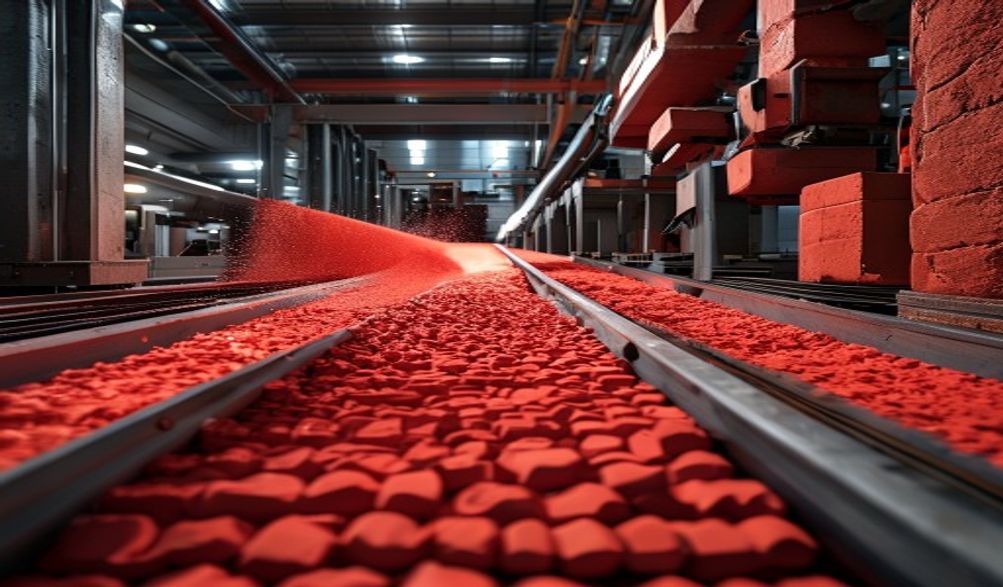
Yadda za a Zaɓi Na'urar Kera Tubalin Laka Mai Cikakken Aiki: Jagorar Mai Siyowa ta 2026
Masana'antar kera tubalin gini na ci gaba da samun sauyi a hankali. Zamani na dogaro da aikin hannu kawai da rashin daidaiton samar da kayayyaki ya wuce. A yau, tushen wani shahararren masana'antar tubali mai riba shine sarrafa kansa ta hanyar fasaha. Zaɓin na'urar kera tubalin yumbu ta atomatik cikakke shi ne muhimmin shawarar saka hannun jari da za ku yanke—wanda ke shafar ingancin samfurin ku, farashin aiki, da ci gaban kasuwancin ku na shekaru masu zuwa.
Wannan jagorar an tsara ta ne don fayyace wannan zaɓi. An haɗa shi daga mafi kyawun ayyuka na masana'antu, nazarin fasaha mai zurfi, da mai da hankali kan dorewa na dogon lokaci, yana ba da tsari mai tsari, mataki-mataki. Za mu wuce bayan ƴan kasidu masu kyau kuma mu mai da hankali kan abubuwan da suka shafi aiki, kuɗi, da fasaha waɗanda ke raba jarin hikima daga kuskure mai tsada. Mu gina tushe don nasarar ku.
Fahimtar Bukatun Samar da Ku (Tushen)
Kafin ka kalli ko da takamaiman na’urar daya, dole ne ka duba cikin kai. Na’urar da ta dace da babban mai sayar da kayayyaki a birni, tana da yawa ga wata sana’a a karkara, kuma akasin haka. Wannan binciken cikin gida shine matakin farko wanda ba za a iya tsallakewa ba.
Ƙididdigar Ƙarfin Samfur na Kullum/Shekara
Nufin samar da kayayyakin ku shine babban abin da ke tabbatar da girman na'ura da kuma farashinta.
- Yi lafiyar buƙatu na gaske. Don’t guess. Analyze your market demand, existing orders, and realistic growth projections. Calculate required output in bricks per shift, per day, and per annum.
- Shirin Ci Gaba: A common pitfall is buying a machine that meets only today’s needs. Consider a model that can operate at 70-80% of its capacity initially, allowing you room to grow into it without immediate reinvestment.
- Shift Planning: Will you run one 8-hour shift or three? A machine’s rated capacity is often for continuous operation. Ensure your choice can handle your intended operational hours with buffer for maintenance.
Defining Your Brick Product Portfolio
What will you actually produce? The versatility of your machine depends on this answer.
- Nau'ukan Tubali: Identify your core products:
- Tubalin Ƙaƙƙarfan. For high-strength structural work.
- Hollow or Perforated Bricks:Mai sauƙi, tare da ingantattun kaddarorin rufewa.
- Tubalin shimfida hanya: Requiring high density and precise dimensions.
- The Mold Factor: Each brick type and size requires a specific mold. Investigate:
- Mold Changeover: How quickly and easily can molds be swapped? A complex, day-long process kills flexibility and productivity.
- Molds na Al'ada: Can the manufacturer produce custom molds for niche or architectural bricks? What is the lead time and cost?
Raw Material Analysis: Clay Type and Properties
The machine must be a partner to your clay, not fight against it. Your local clay’s behavior dictates the machine’s configuration.
- Key Properties: Analyze your clay’s:
- Plasticity: How well does it form and hold shape?
- Ragewa: How much does it shrink during drying and firing?
- Tsantsantsan. Does it contain hard minerals that will wear down machine parts quickly?
- Bukatar Shiri Kafin Aiki Poor clay often requires investment beyond the brick machine itself. You may need:
- Crushers to break down hard lumps.
- Mixers & Ageing Systems to homogenize and improve plasticity.
- Feeders to ensure a consistent supply to the main machine.
Key Technical Specifications to Scrutinize
This is where your technical due diligence begins. Understanding these specs separates informed buyers from those swayed by sales talk.
Core Machine Mechanism: Extrusion vs. Hydraulic Pressing
Most fully automatic clay brick machines use one of two primary methods.
- Extrusion (with Vacuum De-Airing): This is the most common method for high-volume clay brick production.
- Tsari: Clay is forced through a die (the mold) by a powerful auger inside a vacuum chamber.
- Babbar Fa'ida:Thevacuum de-airing system is critical. It removes air pockets, dramatically increasing the brick’s density, plasticity, and final strength by up to 30%.
- Mafi Kyau Don: High-volume production of a wide range of hollow, perforated, and solid bricks from most clay types.
- Matsi na Ruwa:
- Tsari: Clay is fed into a mold and compressed under extremely high, static hydraulic pressure.
- Babbar Fa'ida: Produces bricks with very sharp edges, high dimensional accuracy, and ultra-high density.
- Mafi Kyau Don: Paving bricks, refractory bricks, or where local clay is better suited to pressing than extrusion.
Matakin Sarrafawa da Tsarin Gudanarwa
“Fully automatic” can mean different things. Clarify exactly what is included.
- Bakan Kayan Aiki na Sarrafa Kansa: A true, modern fully automatic line handles:
- Automated feeding of raw material.
- Automatic cutting of the extruded column to precise brick lengths.
- Automatic setting/stacking onto curing pallets or kiln cars.
- Automatic pallet transfer and return systems.
- The Brain: PLC & HMI: The sophistication of the control system is paramount.
- PLC (Programmable Logic Controller): This is the industrial computer that runs the entire line. Look for reputable brands (Siemens, Allen-Bradley, Mitsubishi) for reliability.
- HMI (Human-Machine Interface): This is the touchscreen panel for the operator. It should be intuitive, allowing for easy parameter adjustments (e.g., cutting speed, pressure), diagnostics, and production data tracking.
Power Requirements and Energy Efficiency
The purchase price is just the beginning; operational costs are forever.
- Total Connected Load: Don’t just look at the main extruder motor. Sum the power (in kW or HP) of all components: main drive, vacuum pump, conveyor motors, mixer, etc. This determines your electrical infrastructure needs.
- Efficiency Drivers: Inquire about energy-saving technologies:
- Variable Frequency Drives (VFDs): These allow motors to run only at the needed speed, reducing energy consumption significantly.
- Efficient Gearboxes and Pumps: Higher-quality components often have better efficiency ratings.
- Long-Term Math: A machine that costs $10,000 more upfront but saves 20% in energy consumption can pay for that premium in a few years of operation.
Beyond the Machine: Ancillary Systems and Support
No machine is an island. Its performance is tied to the ecosystem it operates within.
The Integrated Production Line
The brick machine is the heart, but it needs a complete circulatory system.
- Essential Support Equipment: Ensure your quote and plan include:
- Mai Ciyarwa & Mai Gauraya: For consistent clay supply.
- Bel ɗin Watsawa: To transport bricks between stages.
- Automatic Stacker/Robotic Setter: This is often the most expensive ancillary but critical for labor savings.
- Pallet Handling System: For moving loaded and empty pallets.
- System Integration: All components must be compatible and synchronized. The best scenario is sourcing the entire line from a single, responsible manufacturer or a turnkey supplier who guarantees integration.
Drying and Kiln Considerations
Your production line is only as fast as your slowest link, which is often the drying and firing stage.
- Capacity Alignment: There is no point in a machine producing 50,000 bricks per day if your kiln can only fire 20,000. Conduct a holistic capacity review of your entire plant.
- Setting Patterns: Discuss with the machine manufacturer and your kiln expert how the automatic stacker will arrange bricks on the kiln car. Proper spacing is essential for efficient, even drying and firing.
Manufacturer Support and Service
This is the single most critical factor for long-term success and peace of mind.
- Pre-Sale Support: A reputable manufacturer will offer to test your clay samples and recommend the optimal machine configuration.
- Post-Sale Critical Services:
- Shigarwa & Kaddamarwa: On-site supervision by factory engineers is invaluable.
- Horon Cikakke: For your maintenance staff and machine operators.
- Manunai Daki-daki: Clear parts catalogs, electrical diagrams, and maintenance schedules.
- Long-Term Partnership:
- Warranty: What is covered, and for how long (aim for 12-18 months on core components)?
- Kayan Gyara: What is their policy? Is there a local warehouse, or are all parts shipped from abroad with long lead times?
- Tallafin Fasaha: Is 24/7 remote support available? What is their average response time?
Financial Analysis and Supplier Evaluation
Now, with your needs and specs defined, you can evaluate the financial and commercial aspects clearly.
Total Cost of Ownership (TCO) Calculation
Move decisively beyond the sticker price.
- Farashin Farko: Machine price, shipping, insurance, customs duties, installation, and foundation work.
- Kudin Aiki: Energy, water, labor, routine maintenance supplies (lubricants, grease).
- Lifecycle Costs: Replacement costs for high-wear parts (augers, liners, cutter heads), expected every 6-24 months depending on clay abrasiveness. Request a wear parts list and price list upfront.
- Hasashen Koma Kudin Zuba Jari: Model your investment. Based on your output capacity, local brick selling price, and calculated operational costs, project your payback period. A more expensive, reliable, and efficient machine often has a better ROI than a cheap, problematic one.
Vetting Potential Manufacturers and Suppliers
Due diligence on the supplier is as important as due diligence on the machine.
- Binciken Masana'antu: Insist on a visit (or a detailed virtual tour) to the manufacturing facility. Assess their workshop quality, testing procedures, and technical team.
- Abokan Kasuwanci: Ask for contact details of 3-5 clients in a region similar to yours. Ask them about machine performance, reliability, and the quality of after-sales support.
- Takaddun Shaida & Tarihi:
- Takaddun shaida: ISO 9001 for quality management is a strong indicator. CE marking for machines sold in many international markets.
- Tarihin Kamfani How long have they been building these specific machines? A long track record is a good sign of stability and accumulated expertise.
Safety, Compliance, and Operational Workflow
Machine Safety Features and Standards
Protecting your workforce is a legal and moral imperative.
- Essential Features: All moving parts (gears, chains, drive shafts) must have fixed guards. Multiple, easily accessible emergency stop buttons are mandatory. Safety interlocks should prevent the machine from operating if a guard is open.
- Yin biyayya: The machine should be designed and built in compliance with international machinery safety standards (e.g., ISO 12100, EN 60204-1). Request the machine’s risk assessment and declaration of conformity.
Planning for Installation and Daily Operation
Prepare your site and team for success.
- Site Preparation: The manufacturer will provide a foundation layout drawing. Ensure your floor can bear the significant weight and vibration. Confirm all utility connections (high-voltage power, water, compressed air) are available at the required specifications.
- Staffing: A fully automatic line reduces labor but requires higher skills. You will need trained machine operators, a dedicated electrician familiar with PLCs, and maintenance technicians. Factor training costs into your budget.
Tambayoyin da ake yawan yi (FAQ)
Q1: What is the average price range for a fully automatic clay brick making plant?
A: Prices vary enormously based on capacity and automation level. A small-to-mid capacity line can range from \$80,000 to \$250,000. Large, high-capacity, fully integrated plants can exceed \$500,000. Always insist on a detailed, itemized quotation based on your specific requirements.
Q2: Can one machine produce multiple brick types and sizes?
A: Yes, but with a crucial caveat: mold interchangeability. The key is how quickly and easily the mold (die) and cutter settings can be changed. Some systems allow for changeovers in under an hour, while others may take half a day. Discuss this explicitly with the manufacturer.
Q3: What is the typical lead time from order to commissioning?
A: Typically 4 to 8 months. This includes manufacturing time (8-14 weeks), ocean shipping (4-8 weeks), and on-site installation and commissioning (2-4 weeks). Customs clearance in your country can add additional time.
Q4: How do I ensure the machine is suitable for the clay in my region?
A: This is non-negotiable. Send 50-100 kg of your representative clay sample to your shortlisted manufacturers. They should conduct lab tests and provide a formal report on suitability and recommended machine settings. Some may even run a production trial.
Q5: What are the most common maintenance issues?
A: Wear and tear on components in direct contact with abrasive clay is the primary issue. This includes the extruder auger, liner, de-airing chamber, and cutter wires. A strict, scheduled lubrication regimen for all bearings and gearboxes is the best preventative measure. Training your in-house staff to perform daily checks and basic maintenance is crucial.
Ƙarshe
Choosing the right fully automatic clay brick making machine is a multi-faceted process that blends technical understanding with strategic business planning. It begins with a clear-eyed assessment of your own production needs and raw materials. It demands a deep dive into technical specifications, focusing on the core mechanism, true automation, and energy footprint. Crucially, it requires evaluating the entire system and the manufacturer’s ability to support you for the next 15-20 years.
The most economically viable choice is rarely the one with the lowest initial price tag. It is the machine that offers the optimal balance of robust engineering, reliable output, efficient operation, and unwavering manufacturer support. Use this guide as your definitive checklist. Before you speak to any supplier, prepare your clay report, output goals, and budget framework. Armed with this knowledge, you can engage in productive, informed discussions that will lead to an investment not just in a machine, but in the future of your business.
<