
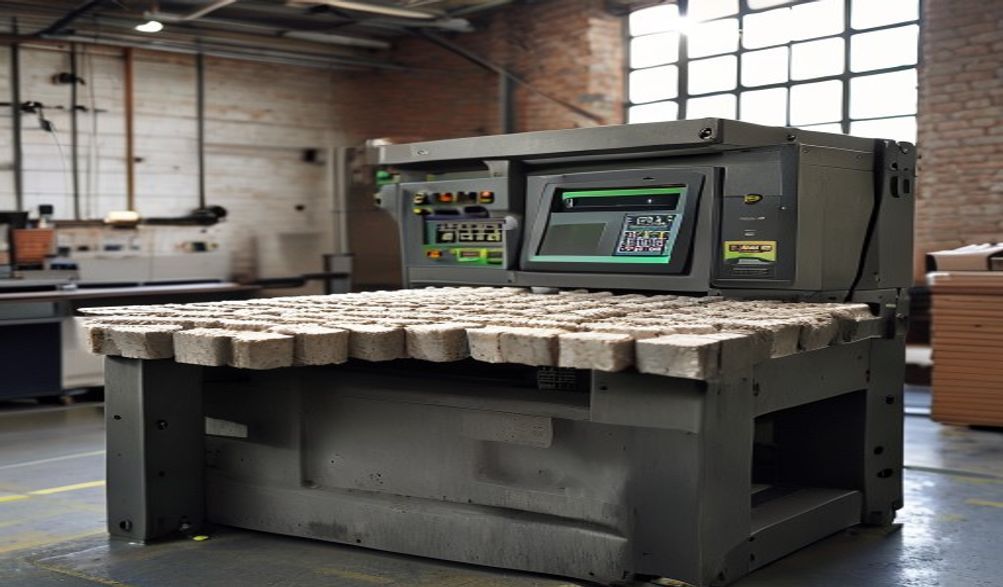
Yadda Ake Zaɓar Injin Kera Tubali na Lantarki: Jagorar Mai Sayi Cikakkiya
Gabatarwa
Yanayin gine-gine yana canzawa. Tare da matsin lamba na duniya zuwa ga dorewa da kuma buƙatar gidaje masu araha da ababen more rayuwa akai-akai, masu ƙirƙira suna koma ga samar da ƙananan ƙira a wurin aikin. Mabuɗin wannan juyin juya halin shiru shine na'urar yin tubalin wutar lantarki—kayan aiki mai ƙarfi wanda ke canza albarkatun gida zuwa tubalan gini masu inganci da dorewa. Amma tare da kasuwar da ta cika da zaɓuɓɓuka, yin zaɓin da ya dace na iya zama mai rikitarwa.
Wannan cikakken jagorar an tsara shi ne don rage hargitsi. Manufarmu ita ce samar muku da ƙwararrun shawarwari masu amfani waɗanda aka samo daga ilimin masana'antu da la'akarin injiniyoyi masu amfani. Ba mu kawai jera bayanan fasaha ba; muna ba ku ƙarfin yanke shawara mai kyau, mai inganci wanda ya dace da takamaiman manufofin ku. A ƙarshen wannan labarin, za ku fahimci mahimman bayanan fasaha, ku san tambayoyin da za ku yi wa masu sayar da kayayyaki, kuma ku iya tantance ainihin darajar injin na dogon lokaci. Za ku koyiyadda ake zaɓar injin yin tubalin lantarkiwanda ke daidaita farashi, inganci, da sakamako ga aikin ku na musamman.
Fahimtar Bukatar Ku da Iyakokin Aikin (Tushe)
Kafin ka kalli takardar bayani ko farashi guda ɗaya, dole ne ka duba cikin zuciyarka. Kuskuren da ya fi yawa kuma mai tsada shine siyan na'ura bisa ga fasali mai kyawu ko farashi mai jan hankali, kawai sai ka ga bai dace da ainihin aikin ka ba. Wannan mataki na tushe yana raba jarin dabara daga wani abu mai tsada wanda ba ya aiki.
Ƙayyade Manufofin Samarwa
Fara da tabbatar da cikakken fahimtar abin da kake buƙatar samarwa.
- Bukacewar fitarwa ta Kullum/mako-mako: Be realistic. Are you producing bricks for a single home build, a community project, or a commercial venture? A machine that makes 500 bricks per hour is overkill for a small homestead but insufficient for a growing business. Calculate your project’s total brick count and work backward to determine your needed daily output.
- Type of Bricks or Blocks: The product dictates the machine. Common types include:
- Tubalin Ƙaƙƙarfan. For standard masonry.
- Tubalin Ƙofa:Mai sauƙi, tare da ingantattun kaddarorin rufewa.
- Tubalin Haɗin Kai: Require no mortar, enabling faster construction.
- Tsaku-tsaku na Kwalta:Don kayan ado da kayan gini.
Ensure the machines you consider offer the specific molds for your desired products.
- Raw Material Analysis: This is critical. Not all soil is created equal. The composition of your local soil—its clay, sand, and silt content—directly affects which machine will work best. Some machines require a very specific, consistent mix (often involving cement stabilization), while others are more tolerant of variation. Get a soil test. It’s a small upfront cost that prevents massive headaches later.
Assessing Your Operational Environment
Where and how will the machine run?
- Power Supply & Infrastructure: “Electric” is in the name for a reason. You must have reliable access to the required power.
- Check the voltage (e.g., 220V, 380V) and phase (single or three-phase) requirements.
- Ensure your wiring can handle the load. An unstable power supply can damage sensitive electronics in automated systems.
- Don’t forget the physical space: you’ll need a solid, level floor (often reinforced concrete), adequate headroom, and space for raw material storage, curing, and finished product palletizing.
- Skill Level of Operators: Who will run the machine? A fully automatic machine with a PLC (Programmable Logic Controller) might produce more with less labor, but it requires someone who can understand and troubleshoot the control system. A simple, robust semi-automatic machine might be the perfect fit for a novice operator with basic training.
Mahimman Ƙayyadaddun Fasaha Don Ƙima
Now, with your needs defined, you can dive into the technical details. This is where you separate marketing fluff from mechanical reality.
Core Machine Mechanics and Power
- Pressure System (Hydraulic vs. Mechanical/Vibration):
- Tsarin Hydraulic: Use fluid pressure to compact the raw material. They offer superior, adjustable pressure, resulting in very dense, high-strength bricks with a smooth finish. They tend to be quieter but require maintenance of the hydraulic seals and fluid.
- Mechanical/Vibration Systems: Use a vibrating table and mechanical force to compact the mix. They are often simpler and may have lower maintenance, but can be noisier and may not achieve the same consistent density as a high-quality hydraulic press.
- Motor Power & Efficiency: Measured in kW or HP, this is the heart of the machine. Higher power generally correlates with higher pressure and faster cycle times. However, a well-designed machine does more with less. Focus on efficiency—a modern electric drive should provide consistent power with lower energy consumption than comparable diesel alternatives.
- Matsayin Sarrafa Kansa: This is a major cost and capability driver.
- Na Hannu/Ya Ƙunshi Hannu: The operator feeds material and may remove finished bricks. Lower initial cost, higher labor requirement, more variable output quality.
- Gaba Daya Mai Sarrafa Kansa: The machine handles feeding, compaction, and ejection, often via conveyor belts. Higher output, exceptional consistency, but a significantly higher investment and need for technical know-how.
Output Capacity and Mold Versatility
- Cycle Time & Bricks Per Hour: This is the manufacturer’s favorite number to highlight. A “cycle time” is how long it takes to produce one brick or a set of bricks. Be skeptical of theoretical maximums. Ask for real-world, proven output figures under normal working conditions. A machine that claims 2000 bricks per hour might only sustain 1200 in a typical 8-hour shift with material loading and minor stops.
- Tsarin Ƙirƙira: Your ability to produce different products depends on the molds.
- How easy is it to change molds? A quick-change system can save hours of downtime.
- Can the supplier provide custom molds for unique block designs?
- What is the quality and cost of replacement molds? Molds are wear items and will need replacing.
Quality, Durability, and Safety Features
This is where you assess the build for long-term value. A cheap machine that breaks down in six months is no bargain.
Construction and Material Quality
- Frame and Critical Components: The frame should be made from heavy-duty, reinforced steel—it absorbs immense pressure. Inspect the quality of the welding. For hydraulic machines, the cylinder is paramount. For vibration machines, the motor and vibration assembly are key.
- Brand Reputation & Component Sourcing: Research the manufacturer. How long have they been in business? Do they use reputable, brand-name components? Machines boasting “German hydraulics” or “Japanese bearings” are signaling a commitment to quality parts that last longer and are easier to source replacements for.
Essential Safety and Control Systems
Never compromise on safety. A brick machine exerts tremendous force.
- Safety Guards and Emergency Stops: All moving parts, especially compression areas, must have physical guards. Multiple, easily accessible emergency stop buttons are non-negotiable.
- Control Panel & User Interface: It should be logically laid out, with clear labeling. On automatic machines, a PLC interface allows for programming different brick types and monitoring machine status. Look for intuitive controls that reduce operator error.
The Total Cost of Ownership (Beyond the Sticker Price)
The purchase price is just the entry fee. An experienced buyer budgets for the full lifecycle of the machine.
Initial Investment vs. Long-Term Costs
- Machine Price: The obvious cost. Use it as a starting point for comparison, not the finish line.
- Shipping, Installation, and Training: These are often hidden. Will the machine be delivered DDP (Duty Paid) to your site? Do you need a crane or special equipment to unload and install it? Is on-site operator training included, or is it an extra fee?
Operational and Maintenance Costs
- Amfani da Makamashi: Based on the motor’s kW rating, you can estimate your daily electricity cost. A 10kW machine running 8 hours a day uses 80 kWh. Multiply that by your local electricity rate for a daily running cost.
- Maintenance Requirements & Spare Parts: All machines need upkeep.
- What is the recommended maintenance schedule (e.g., greasing bearings, checking hydraulic fluid)?
- How available and expensive are spare parts like seals, hoses, and mold liners? A supplier with a local parts depot is worth a premium over one where you must ship everything from overseas with a 6-week lead time.
Supplier Selection and Post-Purchase Support
You’re not just buying a machine; you’re entering a relationship with the supplier. Their support is your insurance policy.
Vetting the Manufacturer or Supplier
- Company History and Reviews: Check their business registration, how long they’ve been operating, and look for third-party reviews or testimonials. Ask for references from past clients in a similar region or industry and actually contact them.
- Factory Visits or Detailed Demos: If possible, visit the factory. If not, insist on a live video demonstration of the exact model you’re considering, showing it producing bricks from a raw mix. Pre-recorded marketing videos prove nothing.
The Importance of Support Contracts
- Warranty Coverage: Read the fine print. What is covered (parts, labor, shipping)? For how long? A 1-year warranty on the entire machine is better than a 5-year warranty that only covers the frame.
- Technical Support & Service Network: When a critical component fails at 10 AM on a Monday, who do you call? Is there a local technician, or must you rely on video calls with a 12-hour time difference? Understand the support channels and typical response times.
- Availability of Training and Manuals: Ensure you receive comprehensive, clear operation and maintenance manuals (in your language). Professional on-site training for your team is invaluable for safety, efficiency, and machine longevity.
Tambayoyin da ake yawan yi (FAQ)
Q1: What is the average price range for a good quality electric brick making machine?
A: Prices vary dramatically based on capacity and automation. A small, manual/semi-automatic machine can start from $3,000 to $10,000. Mid-range semi-automatic to automatic models typically fall between $15,000 and $50,000. Large, fully automatic production lines can exceed $100,000. Focus on the total cost of ownership and value, not just the lowest sticker price.
Q2: Can I use local soil directly in an electric brick machine?
A: Rarely directly. Most machines require a specific mix for optimal results, commonly a blend of soil, sand, and a stabilizer like cement (often 5-10%). The exact ratio depends on your soil’s properties. We strongly recommend a soil test to determine the ideal mix formula for your location and machine type.
Q3: How much technical skill is needed to operate and maintain one?
A: It’s a spectrum. Basic semi-automatic machines require good mechanical aptitude for routine operation and maintenance like greasing and mold changes. Fully automatic machines with PLCs require an operator who can understand the control system, input parameters, and perform basic troubleshooting. In all cases, quality supplier training is essential to bridge the skill gap.
Q4: What is the typical lead time from order to delivery and installation?
A: This is highly variable. For standard models, expect 30 to 90 days. Customization, shipping distance, and customs clearance in your country can extend this timeline. Always get a detailed, written delivery schedule from your supplier and factor this into your project planning.
Q5: How do I compare machines from different suppliers effectively?
A: Create a comparison matrix or spreadsheet. List each machine and compare: Key specs (pressure, motor power, output), total landed cost (machine, shipping, duties), warranty terms and length, and supplier credibility (years in business, reference checks). This side-by-side view makes the best value proposition clear.
Ƙarshe
Choosing the right electric brick making machine is a significant decision that hinges on four pillars: precisely defining your production needs, meticulously evaluating technical specs and build quality, honestly calculating the total cost of ownership, and diligently selecting a reputable supplier with robust support.
Use this guide as your definitive checklist. Let it empower you to move beyond glossy brochures and engage with suppliers from a position of knowledge. Remember, in this investment, prioritizing long-term reliability, safety, and support will always yield a better return than opting for short-term savings on an unsuitable or poorly supported machine.
Ready to take the next step? Download our free, detailed comparison checklist to use as your guide when contacting suppliers and evaluating your options.
<