1. Gabatarwa
Sashen gine-ginen Kenya yana fuskantar ci gaba da ba a taɓa ganin irinsa ba, wanda ya samo asali ne daga haɓakar birane, ci gaban ababen more rayuwa, yunƙurin gidaje masu araha, da kuma karuwar buƙatar kayan gini masu dorewa. Tubalin da ke haɗa kai da kai—wanda aka sani da karko, tsada mai araha, da kuma dacewa da muhalli—sun zama zaɓi na fifiko a madadin tsoffin tubalin da ake gasa, wanda ya haifar da ƙaƙƙarfan kasuwa don injinan yin tubalan haɗin kai. Ga masu rarrabawa, masu rarrabawa, da masu siye da ke aiki a Kenya, fahimtar yanayin farashin waɗannan injinan yana da mahimmanci don yin shawarwari na kasuwanci da aka sani ba tare da bin jagororin farashi na gaba ɗaya ba, wannan labarin ya zurfafa cikin abubuwan musamman waɗanda ke tsara farashin injinan tubalan haɗin kai a Kenya, gami da farashin albarkatun gida, harajin shigo da kayayyaki, ababen more rayuwa na wutar lantarki, da bambance-bambancen buƙatun kasuwa a yankuna kamar Nairobi, Mombasa, Kisumu, da kwarin Rift. Ko dai kai mai rarrabawa ne na gida kana nemo injuna don ƙananan kwangila, manajan sayayya ne na babban kamfini na gine-gine, ko kuma mai kayan shigo da kaya na ƙasashen waje yana shiga kasuwar Kenya, wannan jagorar tana ba ku ilimin da za ku bi don kewaya rikitattun farashi, inganta farashi, da kuma cin gajiyar damammaki masu tasowa. Tun daga raba farashi ta nau'in injin zuwa nazarin dabarun ceton kuɗi da yanayin kasuwa na yanki, kowane sashe an tsara shi don magance takamaiman ƙalubale da abubuwan da suka fi ba da fifiko ga ƙwararrun masana'antu a Kenya.
2. Jiki
2.1 Bayanin Farashin Injin Tubalin Haɗin Kai a Kenya
Farashin injinan bulo masu haɗaka a Kenya sun bambanta sosai dangane da ƙarfin injin, fasaha, tushen wutar lantarki, da nau'in mai siyarwa. A ƙasa akwai cikakken bayani game da farashin, wanda aka keɓance ga kasuwar Kenya, don taimaka wa masu rarrabawa da masu siye su daidaita kasafin kuɗinsu da bukatun kasuwancinsu.
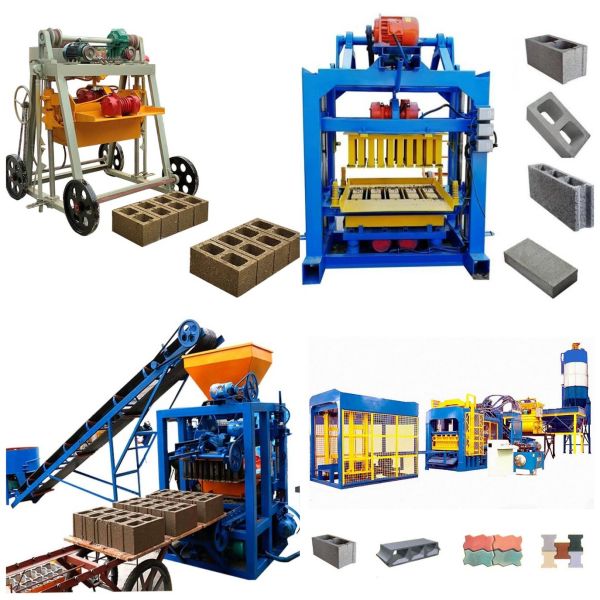
2.1.1 Ƙananan Injunan Ƙarfi (500-2,000 Tubali A Cikin Sa'a)
Na'urorin ƙananan ƙananan ƙananan na'urori ne mafi shahara a Kenya, waɗanda ke ba da hidima ga ƴan kasuwa ƙanana, ƙananan kwangila, da masu yin bulo na karkara. Waɗannan na'urorin suna da ƙanƙanta, sauƙin sarrafawa, kuma an ƙera su don ƙarancin yawan samarwa, wanda ya sa su dace da ayyukan gidaje, gidaje na karkara, da ƙananan ci gaban kasuwanci.
- Farashin FarashiKES 250,000 – KES 800,000 (kimanin $1,600 – $5,200 USD, bisa farashin musayar kuɗi na 2024).
- Siffofin Mahimmanci Masu Tasiri akan Farashi:
- Tushen Wutar LantarkiNa'urorin da ake sarrafawa da hannu ko na rabin atomatik (ba su da wutar lantarki/dizal) sune mafi arha, suna tsakanin KES 250,000 – KES 400,000. Samfuran da ke amfani da wutar lantarki (5-10 kW) suna kusan KES 450,000 – KES 600,000, yayin da na'urorin dizal masu ɗaukuwa (3-5 HP) ke tsakanin KES 550,000 – KES 800,000.
- MatsaloliInjinoni masu naɗewa-firam, ƙira mai sauƙi (500-1,000 kg), da sauƙin jigilar su ta motocin ɗaukar kaya suna samun ƙarin farashi na kashi 10-15% saboda dacewarsu da yankunan nesa masu ƙarancin hanyoyi.
- Yawan Amfani da KwalInjinoni masu ƙirar ginshiƙai 1-2 (misali 200x100x60 mm, 250x125x80 mm) sun fi arha, yayin da waɗanda ke da tsarin ƙirar ginshiƙai na zamani (waɗanda ke ba da damar sauyi cikin sauri don nau'ikan bulo daban-daban) suna tsada da kashi 15-20%.
- Buƙatar KasuwaBuƙatu mai yawa a yankunan karkara, matsugunan da ba na yau da kullun ba, da ƙananan garuruwa kamar Nakuru, Eldoret, da Machakos. Ana sayi waɗannan injinan sau da yawa ta hanyar mutane da ke fara kasuwancin yin bulo, saboda suna buƙatar ƙaramin jari na farko kuma suna ba da saurin dawowar jari (watanni 6-12).
2.1.2 Injinan Tsaka-tsaki na Tsarin Kwanciyar Kai (2,000-5,000 Tubali A Cikin Sa'a)
Na'urorin matsakaiciyoyin girma an tsara su ne don ƙananan masana'antun kera bulo zuwa matsakaita, kwangila masu ɗaukar ayyuka masu matsakaicin girma (misali gine-ginen gidaje, makarantu, hanyoyin gida), da masu rarrabawa waɗanda ke hidimar kasuwannin birane da na kewayen birane. Suna ba da ƙarfin samarwa mafi girma, ingantacciyar inganci, da ƙarin fasali na ci gaba fiye da ƙananan nau'ikan.
- Farashin FarashiKES 800,000 – KES 2,500,000 (kusan $5,200 – $16,200 USD).
- Siffofin Mahimmanci Masu Tasiri akan Farashi:
- Matakin SarrafaInjin na rabin-awtomatik tare da ciyarwa da cirewa ta kai ta atomatik suna kimanin KES 800,000 – KES 1,500,000, yayin da waɗanda ke da iko na PLC na ɓangare (don daidaita sigogi) suna tsakanin KES 1,500,000 – KES 2,000,000.
- Fasahar Haɗa ƙasaInjin matsi na inji (10-30 MPa) sun fi arha (KES 800,000 – KES 1,200,000), yayin da na'urorin matsi na hydraulic (30-60 MPa) suna kimanin KES 1,200,000 – KES 2,500,000 saboda ƙarfin matsi da ƙarfin bulo.
- Ƙarfin Kayan AikiInjinoni masu IE3 ko na'urorin sarrafa mitar (VFDs) suna rage amfani da wutar lantarki da kashi 15-20%, kuma suna da tsada da kashi 10-12%. Wannan yana da matukar muhimmanci a Kenya, inda farashin wutar lantarki ya fi tsada (KES 20-25 a kowace kilowatt awa ga masu amfani na kasuwanci).
- Buƙatar KasuwaBuƙatu mai ƙarfi a birane manya kamar Nairobi, Mombasa, da Kisumu. Masu siye sun haɗa da ƙananan masana'antun bulo, kamfanonin gine-gine irin su Davis & Shirtliff (tunani gabaɗaya na masana'antu, ba mai da hankali kan alamar kasuwanci ba), da ƙungiyoyi masu zaman kansu da ke shirin ayyukan gidaje masu araha.
2.1.3 Injin Masu Sarrafa Kansu na Girmansa (5,000+ Tubali A Cikin Sa'a Guda)
Manyan injunan atomatik sun dace da masana'antun kera bulo na masana'antu, manyan kamfanonin gine-gine, da ayyukan ababen more rayuwa (misali manyan tituna, filayen jiragen sama, gidaje). Suna ba da babbar ƙarfin samarwa, cikakken atomatik, da ci-gaba fasali kamar haɗin IoT da tsarin kula da inganci.
- Farashin FarashiKES 2,500,000 – KES 8,000,000 (kusan $16,200 – $52,000 USD).
- Siffofin Mahimmanci Masu Tasiri akan Farashi:
- Sarrafawa da SarrafawaInjinonin masu sarrafa kansu gaba ɗaya tare da tsarin PLC, ciyarwa/tari na mutum-mutumi, da kuma sa ido daga nesa suna kimanin KES miliyan 4 – KES miliyan 8. Ƙirar atomatik na asali (ba tare da mutum-mutumi ba) suna daga KES miliyan 2.5 – KES miliyan 4.
- Matsi na Matsawa: High-pressure hydraulic systems (60-100 MPa) for producing load-bearing bricks (15-20 MPa strength) are more expensive, as they require durable components and precision engineering.
- Customization: Machines tailored for specific projects (e.g., permeable bricks for road construction, decorative bricks for high-end housing) cost 20-30% more due to custom mold design and system adjustments.
- Buƙatar Kasuwa: Limited but growing demand, primarily from large construction firms, government contractors, and industrial brick manufacturers in Nairobi, Mombasa, and the Rift Valley. These machines are often purchased for long-term projects or large-scale production, with ROI ranging from 12-24 months.
2.2 Key Factors Influencing Interlocking Bricks Machine Prices in Kenya
Several unique factors shape interlocking bricks machine prices in Kenya, from import duties and logistics costs to local raw material availability and power infrastructure. Distributors and purchasers must understand these factors to negotiate better prices, avoid hidden costs, and select machines that offer the best value for money.
2.2.1 Import Duties and Taxation
Kenya relies heavily on imported interlocking bricks machines, as local manufacturing capacity is limited. Import duties and taxes significantly impact final prices:
- Import Duty: The Kenya Revenue Authority (KRA) imposes a 25% import duty on construction machinery (HS Code 8474). This is a major cost component for imported machines, increasing the base price by a quarter.
- Value Added Tax (VAT): A 16% VAT is applied to the CIF (Cost, Insurance, Freight) value plus import duty. For example, a machine with a CIF value of $10,000 would incur $2,500 in import duty and $1,920 in VAT, totaling $4,420 in taxes—44.2% of the base price.
- Other Fees: Port handling fees (KES 5,000 – KES 20,000), clearing agent fees (KES 15,000 – KES 50,000), and inspection fees (KES 10,000 – KES 30,000) add to the total cost. For large machines, shipping costs (sea freight) can range from $1,000 – $3,000, depending on the supplier’s location (China, India, Turkey are major sources).
- Cost-Saving Tip: Distributors can reduce tax burdens by importing in bulk (10+ machines), as some suppliers offer CIF discounts. Additionally, registering as a licensed importer with KRA can streamline the clearing process and reduce delays, minimizing storage fees.
2.2.2 Power Infrastructure and Energy Costs
Kenya’s power infrastructure—characterized by frequent blackouts in some regions and high electricity costs—impacts machine design and pricing:
- Power Source Preference: Diesel-powered machines are more expensive than electric models (10-15% higher) but are in demand in rural areas or regions with unreliable grid access (e.g., Northern Kenya, parts of Western Kenya). Electric machines are preferred in urban areas with stable power but require additional investment in backup generators (KES 100,000 – KES 300,000) to mitigate blackout risks.
- Energy Efficiency Premium: Machines with energy-efficient motors (IE3/IE4) or VFDs cost 10-12% more but save KES 5,000 – KES 15,000 per month in electricity bills for medium-scale operations. This makes them a cost-effective choice for urban-based purchasers despite the higher initial investment.
- Diesel Price Fluctuations: Diesel prices in Kenya (KES 150 – KES 180 per liter in 2024) impact the operational costs of diesel-powered machines. Purchasers in regions with high diesel costs often opt for dual-power machines (electric + diesel), which cost 15-20% more than single-power models but offer flexibility.
2.2.3 Local Raw Material Compatibility
Kenya’s diverse geography means raw material availability varies by region, influencing machine design and pricing:
- Aggregate Availability: Regions with abundant sand, gravel, or crushed stone (e.g., Coastal Kenya, Rift Valley) require machines with standard compaction systems, which are cheaper. Regions with limited aggregates (e.g., arid areas) need machines that can process alternative materials (e.g., laterite, recycled construction waste), which cost 10-15% more due to modified feeding and compaction systems.
- Fly Ash and Industrial Byproducts: Kenya has several coal-fired power plants (e.g., Lamu Coal Power Station) producing fly ash, a common additive for interlocking bricks. Machines designed to handle fly ash mixtures cost 5-10% more than standard models but reduce raw material costs by 20-25% for end-users.
- Moisture Content Adaptability: Kenya’s climate ranges from arid to humid, affecting raw material moisture content. Machines with adjustable moisture control systems (e.g., water sprayers, drying chambers) cost 8-10% more but ensure consistent brick quality across regions, making them valuable for distributors serving multiple areas.
2.2.4 Supplier Type and After-Sales Support
The type of supplier (international manufacturer, local distributor, or importer) and after-sales support offerings impact prices:
- International Manufacturers: Direct imports from manufacturers in China, India, or Turkey offer lower base prices (10-15% cheaper than local distributors) but require higher minimum order quantities (5+ machines) and longer lead times (8-12 weeks). They also lack local after-sales support, forcing purchasers to rely on third-party technicians.
- Local Distributors: Local distributors (e.g., based in Nairobi or Mombasa) add a 15-25% markup to cover logistics, storage, and after-sales support. However, they offer shorter lead times (2-4 weeks), local spare parts, and on-site training—critical for purchasers with limited technical expertise.
- After-Sales Support Premium: Machines sold with 12-24 month warranties, local technical support, and spare parts availability cost 10-15% more. This premium is worth paying, as downtime due to lack of support can cost end-users KES 5,000 – KES 20,000 per day in lost production.
2.3 Regional Price Variations Across Kenya
Interlocking bricks machine prices vary across Kenya’s regions due to differences in demand, infrastructure, and economic activity. Distributors and purchasers must understand these variations to target the right markets and set competitive prices.
2.3.1 Nairobi and Peri-Urban Areas (Kiambu, Kajiado, Machakos)
Nairobi is Kenya’s economic hub, with high construction activity, making it the largest market for interlocking bricks machines:
- Farashin Farashi: 5-10% higher than national averages. Small-scale machines cost KES 275,000 – KES 880,000, medium-scale KES 880,000 – KES 2,750,000, large-scale KES 2,750,000 – KES 8,800,000.
- Key Drivers: High demand for medium and large-scale machines from construction firms, brick factories, and affordable housing projects (e.g., government’s Boma Yangu initiative). Urban purchasers prioritize energy efficiency, automation, and after-sales support, justifying higher prices.
- Market Trends: Growing demand for IoT-enabled machines and permeable brick production equipment, driven by Nairobi’s focus on sustainable urban development and stormwater management.
2.3.2 Coastal Region (Mombasa, Kilifi, Kwale)
The coastal region’s construction sector is driven by tourism, port development, and residential projects:
- Farashin Farashi: 3-5% lower than Nairobi. Small-scale machines cost KES 240,000 – KES 760,000, medium-scale KES 770,000 – KES 2,400,000, large-scale KES 2,400,000 – KES 7,600,000.
- Key Drivers: Demand for small and medium-scale machines for beach resorts, residential developments, and road projects. Coastal purchasers prefer corrosion-resistant machines (due to high humidity) and diesel-powered models (to handle power outages in rural coastal areas).
- Raw Material Impact: Abundant sand and gravel reduce the need for specialized machines, keeping prices lower than in inland regions.
2.3.3 Rift Valley Region (Nakuru, Eldoret, Naivasha)
The Rift Valley is Kenya’s agricultural and industrial heartland, with growing construction activity:
- Farashin Farashi: 5-8% lower than Nairobi. Small-scale machines cost KES 230,000 – KES 740,000, medium-scale KES 750,000 – KES 2,300,000, large-scale KES 2,300,000 – KES 7,400,000.
- Key Drivers: High demand for small-scale machines from rural entrepreneurs and medium-scale machines for agricultural warehouses, schools, and road projects. The region’s reliable power supply (from geothermal plants) makes electric machines more popular, keeping prices lower than diesel alternatives.
- Market Trends: Growing demand for machines that process laterite (abundant in the region) and recycled agricultural waste (e.g., maize stalk ash), reducing raw material costs for end-users.
2.3.4 Western and Nyanza Regions (Kisumu, Kakamega, Kisii)
These regions have a growing construction sector, driven by urbanization and infrastructure projects:
- Farashin Farashi: 8-12% lower than Nairobi. Small-scale machines cost KES 220,000 – KES 700,000, medium-scale KES 720,000 – KES 2,200,000, large-scale KES 2,200,000 – KES 7,000,000.
- Key Drivers: Price sensitivity is high, with most purchasers opting for affordable small-scale and medium-scale machines. Demand is driven by residential projects, local roads, and small commercial buildings.
- Challenges: Poor road infrastructure increases logistics costs for large machines, limiting demand for high-capacity models. Purchasers prioritize portability and low maintenance to cope with remote locations.
2.4 Cost-Saving Strategies for Distributors and Purchasers in Kenya
Navigating Kenya’s pricing landscape requires strategic planning to minimize costs without compromising quality. Below are actionable strategies for distributors and purchasers to optimize their investments.
2.4.1 Bulk Purchasing and Negotiation
- Bulk Discounts: Distributors can negotiate 5-15% discounts by purchasing 10+ machines from international manufacturers. For example, a medium-scale machine costing $10,000 per unit can be reduced to $8,500 – $9,500 with bulk orders.
- Long-Term Partnerships: Establishing long-term relationships with suppliers (1+ years) can lead to preferential pricing, reduced lead times, and free spare parts. Suppliers often offer 5-10% discounts to repeat customers.
- Negotiate Tax Incentives: For large orders (20+ machines) or machines used for government-approved projects (e.g., affordable housing), distributors can apply for tax exemptions or reduced import duties through KRA’s Export Processing Zones (EPZ) or Special Economic Zones (SEZ) programs.
2.4.2 Opting for Local Assembly and Customization
- Local Assembly: Some suppliers offer knock-down kits (machine components shipped unassembled) at 10-15% lower prices than fully assembled machines. Distributors can partner with local workshops to assemble the machines, creating jobs and reducing import duties (knock-down kits may qualify for lower duty rates).
- Local Mold Production: Instead of importing custom molds (costing $500 – $3,000 per set), distributors can partner with local metal fabricators to produce molds for KES 20,000 – KES 100,000 per set. This reduces costs by 30-40% and ensures faster mold replacement.
- Adaptation to Local Materials: Work with suppliers to modify machines for local raw materials (e.g., laterite, fly ash) instead of purchasing specialized imported models. Local adaptations cost 10-15% less than fully customized international machines.
2.4.3 Leveraging Government Initiatives and Financing
- Affordable Housing Schemes: The Kenyan government’s Boma Yangu and Affordable Housing Program (AHP) offer subsidies and low-interest loans (8-10% interest rate) for construction equipment, including interlocking bricks machines. Purchasers can access these loans through banks like KCB or Equity Bank to reduce upfront costs.
- Export Promotion Councils: Distributors exporting machines to neighboring countries (Uganda, Tanzania, Rwanda) can access incentives from the Kenya Export Promotion and Branding Agency (KEPROBA), including tax rebates and market development grants.
- Microfinance Partnerships: For small-scale purchasers (e.g., micro-entrepreneurs), distributors can partner with microfinance institutions (MFIs) like Equity Group or Co-operative Bank to offer installment plans (12-24 months) with low down payments (10-20% of the machine price). This expands the customer base and increases sales volume.
2.4.4 Minimizing Operational and Maintenance Costs
- Ƙarfin Kayan Aiki: Invest in machines with IE3/IE4 motors and VFDs to reduce electricity costs. For a medium-scale machine operating 8 hours/day, 6 days/week, energy-efficient models save KES 60,000 – KES 180,000 per year.
- Preventive Maintenance: Train end-users on basic maintenance (e.g., lubrication, mold cleaning, filter replacement) to reduce repair costs. Distributors can offer maintenance contracts (KES 10,000 – KES 30,000 per year) to ensure regular upkeep, minimizing downtime.
- Spare Parts Stocking: Distributors should stock common spare parts (molds, seals, filters) locally to reduce replacement lead times and costs. Partnering with local suppliers for spare parts can reduce costs by 20-30% compared to importing.
2.5 Market Trends and Future Price Projections in Kenya
The interlocking bricks machine market in Kenya is evolving, driven by government policies, technological advancements, and changing construction trends. Understanding these trends helps distributors and purchasers make long-term investment decisions and anticipate price movements.
2.5.1 Growing Demand for Sustainable and Eco-Friendly Machines
- Trend: The Kenyan government’s focus on sustainable construction (e.g., green building standards, waste reduction) is driving demand for machines that use recycled materials and reduce carbon emissions.
- Price Impact: Sustainable machines (e.g., those processing recycled construction waste, solar-powered auxiliary systems) command a 15-20% premium but are eligible for government subsidies and tax incentives, offsetting the higher cost.
- Projection: By 2027, sustainable machines are expected to account for 30-40% of the market, with prices stabilizing as production scales up.
2.5.2 Increased Local Manufacturing
- Trend: The Kenyan government’s “Buy Kenya, Build Kenya” initiative is promoting local manufacturing of construction equipment. Several local firms are partnering with international manufacturers to assemble interlocking bricks machines locally.
- Price Impact: Local assembly reduces import duties and logistics costs, lowering machine prices by 10-15% compared to fully imported models. For example, a locally assembled medium-scale machine costs KES 720,000 – KES 2,250,000, compared to KES 800,000 – KES 2,500,000 for imported models.
- Projection: By 2026, 25-30% of interlocking bricks machines sold in Kenya will be locally assembled, leading to overall price reductions of 5-10%.
2.5.3 Technological Advancements and Automation
- Trend: Urban-based purchasers are increasingly adopting automated and IoT-enabled machines to improve efficiency and reduce labor costs (Kenya’s minimum wage is KES 15,000 – KES 20,000 per month for unskilled labor).
- Price Impact: Automated machines cost 20-30% more than manual models but reduce labor costs by 30-50%, offering faster ROI. IoT-enabled machines (with remote monitoring) cost an additional 10-15% but reduce downtime by 20-25%.
- Projection: By 2028, 50% of medium and large-scale machines sold in Kenya will be automated, with prices declining as technology becomes more accessible.
2.5.4 Infrastructure Development and Affordable Housing
- Trend: The Kenyan government’s investment in infrastructure (e.g., roads, railways, airports) and affordable housing (targeting 500,000 units per year) is driving demand for high-capacity interlocking bricks machines.
- Price Impact: Large-scale machines are expected to see price increases of 5-8% annually due to high demand, while small-scale machines will remain stable as supply increases.
- Projection: The interlocking bricks machine market in Kenya is expected to grow at a CAGR of 12-15% between 2024-2028, with total market value reaching KES 5 billion by 2028. Prices for large-scale machines will rise by 20-25% over this period, while small and medium-scale prices will increase by 10-15%.
3. Conclusion
Interlocking bricks machine prices in Kenya are shaped by a unique mix of factors, including import duties, power infrastructure, raw material availability, and regional market dynamics. For distributors, distributors, and purchasers, navigating this pricing landscape requires a deep understanding of local conditions, customer needs, and emerging trends. Small-scale portable machines offer an affordable entry point for micro-entrepreneurs and rural-based businesses, while medium and large-scale models cater to urban construction firms and industrial brick manufacturers. By leveraging cost-saving strategies like bulk purchasing, local assembly, and government incentives, industry professionals can optimize their investments and improve profitability.
Regional variations in prices and demand highlight the need for targeted strategies—distributors should focus on affordable, portable machines in rural areas and automated, sustainable models in urban centers. As Kenya’s construction sector grows, driven by infrastructure development and affordable housing initiatives, the demand for interlocking bricks machines will continue to rise, presenting significant opportunities for those who understand the market.
Future trends like local manufacturing, sustainability, and automation will reshape the pricing landscape, with prices for specialized machines stabilizing as production scales up. By staying informed about these trends and adapting to local needs, distributors and purchasers can position themselves for long-term success in Kenya’s dynamic interlocking bricks machine market.
4. FAQ
4.1 What is the average price of a small-scale interlocking bricks machine in Kenya?
The average price of a small-scale portable machine (500-2,000 bph) in Kenya is KES 250,000 – KES 800,000 ($1,600 – $5,200). Manual models are cheapest (KES 250,000 – KES 400,000), while electric-powered models cost KES 450,000 – KES 600,000, and diesel-powered models range from KES 550,000 – KES 800,000. Prices are 5-10% higher in Nairobi and peri-urban areas.
4.2 How do import duties and taxes affect machine prices in Kenya?
Import duties and taxes add 44.2% to the base price of imported machines: 25% import duty (KRA) + 16% VAT (on CIF + duty) + port handling/clearing fees. For example, a machine with a CIF value of $10,000 incurs $2,500 in import duty, $1,920 in VAT, and $500 in fees, totaling $4,920 in additional costs. Bulk imports (10+ machines) can reduce per-unit tax costs by 5-10%.
4.3 Are there any government subsidies or financing options for purchasing interlocking bricks machines in Kenya?
Yes, the Kenyan government offers subsidies and low-interest loans through the Affordable Housing Program (AHP) and Boma Yangu initiative. Loans are available from banks like KCB, Equity Bank, and Co-operative Bank at 8-10% interest rates, with repayment periods of 2-5 years. Microfinance institutions (MFIs) offer installment plans for small-scale purchasers with 10-20% down payments.
4.4 What is the difference in price between electric and diesel-powered machines in Kenya?
Diesel-powered machines cost 10-15% more than electric models. For example, a medium-scale electric machine (2,000-5,000 bph) costs KES 800,000 – KES 1,500,000, while a diesel-powered model of the same capacity ranges from KES 880,000 – KES 1,725,000. Diesel models are preferred in rural areas with unreliable power, while electric models are more cost-effective in urban areas with stable grid access.
4.5 How do regional prices vary across Kenya?
Prices are highest in Nairobi (5-10% above national average) and lowest in Western/Nyanza regions (8-12% below national average). Coastal and Rift Valley regions have prices 3-8% lower than Nairobi. Regional variations are driven by demand, infrastructure, and raw material availability—urban areas prioritize automation and energy efficiency, justifying higher prices.
4.6 What is the ROI for interlocking bricks machines in Kenya?
ROI varies by machine type: small-scale machines offer 6-12 months, medium-scale 12-18 months, and large-scale 18-24 months. ROI depends on production volume, brick selling price (KES 15 – KES 30 per brick in Kenya), and operational costs. For example, a small-scale machine producing 1,000 bricks/day (sold at KES 20 each) generates KES 600,000 per month, with operational costs of KES 300,000 – KES 400,000, leading to quick ROI.
4.7 Can I get locally assembled interlocking bricks machines in Kenya, and how much do they cost?
Yes, several local firms assemble interlocking bricks machines in Kenya, often in partnership with international manufacturers. Locally assembled machines cost 10-15% less than fully imported models: small-scale (KES 225,000 – KES 720,000), medium-scale (KES 720,000 – KES 2,250,000), large-scale (KES 2,250,000 – KES 7,200,000). They also come with local after-sales support and shorter lead times (2-4 weeks).
4.8 What factors should I consider when choosing between a cheap and expensive machine in Kenya?
When choosing between cheap and expensive machines, consider:
- Tsawon rayuwa: Cheap machines (e.g., <KES 300,000) use low-grade materials and have shorter lifespans (2-3 years), while expensive models (KES 500,000+) use high-tensile steel and last 5-10 years.
- Operational Costs: Expensive energy-efficient machines save KES 5,000 – KES 15,000 per month in electricity/diesel costs.
- After-Sales Support: Cheap imported machines lack local support, leading to costly downtime, while expensive models from local distributors include warranties and on-site training.
- Buƙatar Kasuwa: If targeting high-end urban projects, invest in expensive automated/sustainable machines; for rural markets, opt for affordable portable models.