
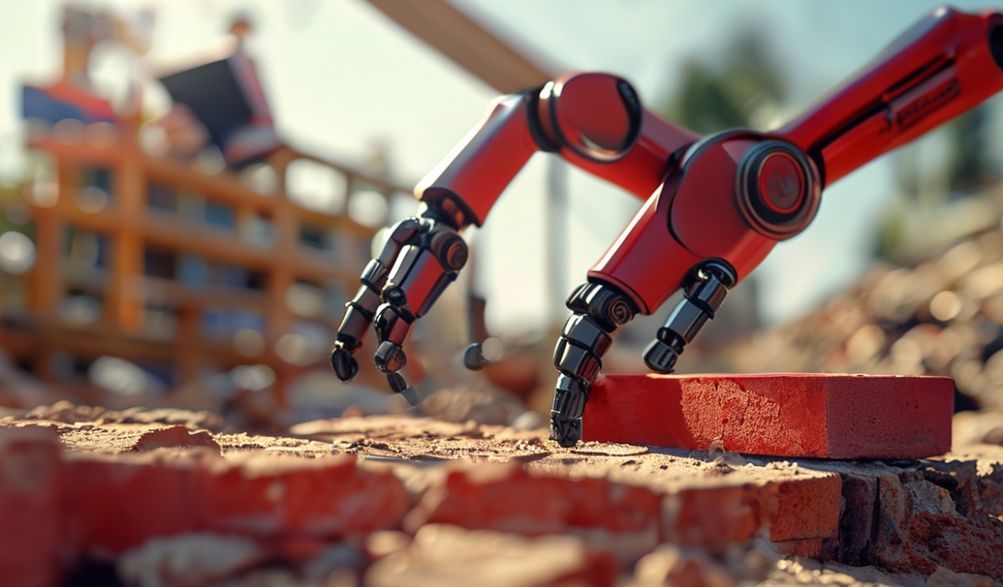
The Machine That Lays Bricks: Revolutionizing Modern Construction
For centuries, the iconic image of construction has been the mason: a skilled artisan, trowel in hand, meticulously placing brick upon brick. It’s a craft defined by patience, physical endurance, and hard-won expertise. Today, that timeless scene is being joined—and in some cases, transformed—by a new archetype: the rhythmic, unwavering arm of a machine that lays bricks. This isn’t science fiction; it’s the current reality on forward-thinking job sites worldwide. Automated bricklaying machines are addressing some of the construction industry’s most persistent challenges, from crippling skilled labor shortages to tight deadlines and budget overruns.
This technological leap promises more than just novelty; it offers a tangible solution to systemic problems. For contractors, project managers, and developers, understanding this technology is no longer a glimpse into a distant future—it’s a strategic consideration for the present. This comprehensive guide will serve as your expert resource. We’ll demystify how these robotic systems work, analyze their profound benefits and honest limitations, survey the current market leaders, and explore what the future holds. Our goal is to provide you with the authoritative insights needed to evaluate whether an automated masonry system could be the key to unlocking greater efficiency, precision, and scalability in your projects.
What is a Bricklaying Machine? Beyond Science Fiction
At first glance, an automated bricklayer might seem like a futuristic fantasy. In practice, it’s a sophisticated piece of engineering designed to execute one of construction’s oldest tasks with unprecedented consistency.
Ma'anar Tsaki da Aiki
A bricklaying machine, often termed a bricklaying robot or automated masonry system, is a robotic apparatus designed to autonomously or semi-autonomously place bricks, blocks, or pavers with high precision. Unlike general material-handling equipment like forklifts or cranes, these systems are purpose-built for the specific sequence of picking, buttering, and positioning masonry units. They translate digital building designs into physical structures, layer by layer, with minimal human intervention in the repetitive laying process.
A Brief History: From Concept to Construction Site
The dream of automating bricklaying is over a century old, with patents for rudimentary devices appearing in the early 1900s. However, the path to practical application was long:
* Mid-20th Century: The first functional prototypes emerged in the 1960s and 70s, but were limited by the era’s computational and mechanical capabilities.
* The 21st Century Breakthrough: Advances in robotics, computer vision, and software integration finally made commercial viability possible. Pioneering companies like Construction Robotics in the US (with their SAM100) and FBR Ltd (Fastbrick Robotics) in Australia (with the Hadrian X) brought the first widely recognized systems to market in the 2010s.
* Juyin Halitta na Zamani: Today, the technology is rapidly evolving from novel prototypes into refined tools, with a growing ecosystem of manufacturers developing solutions for different market segments.
Abubuwan Maɗaukaki da Yadda Suke Aiki Tare
While designs vary, most advanced bricklaying robots integrate several core subsystems:
* Robotic Arm or Gantry System: The primary mover. It can be a fixed industrial arm or a mobile, truck-mounted system for greater mobility.
* Material Handling & Feeding System: This includes conveyors, pallet dispensers, or magazines that continuously supply bricks or blocks to the robot’s end-effector.
* Mortar/Adhesive Applicator: A critical head that precisely dispenses traditional mortar, thin-bed adhesive, or specialized glue onto the brick or substrate.
* Machine Vision & Laser Guidance: The “eyes” of the system. Cameras and lasers scan the work area to ensure each brick is placed in the exact correct position, compensating for minor variances.
* Control Software & BIM Integration: The “brain.” This software imports 3D CAD/BIM models, calculates the optimal laying pattern, and generates the machine code that drives the entire operation.
How Does a Bricklaying Robot Actually Work? The Process Demystified
The operation of these machines is a fascinating dance of digital instruction and mechanical precision. It’s a highly structured process that turns a virtual model into a straight, plumb, and level wall.
Step 1: Digital Blueprint to Machine Instruction
Everything begins long before the machine arrives on site. The construction team’s architectural CAD or Building Information Modeling (BIM) file is imported into the machine’s proprietary software. This software is not just a viewer; it performs a critical translation. It analyzes the wall design, plans the sequence of brick placement, calculates the required quantity of materials, and generates the precise set of coordinates and movements for the robotic arm. The machine is an impeccable executor, not a designer.
Step 2: Material Handling and Preparation
On-site, the system requires a steady flow of materials. Bricks or blocks are typically delivered on pallets and loaded into the machine’s feeding apparatus. Simultaneously, mortar or adhesive is mixed and pumped to the applicator head on the robot’s arm. This setup ensures the robotic cycle is not waiting for materials, maximizing its operational uptime.
Step 3: The Laying Cycle: Pick, Place, and Perfect
This is the core repetitive action that defines the machine’s productivity advantage.
1. Zaɓi: The end-effector (gripper) on the robotic arm selects a single brick from the feeder.
2. Butter: The brick is rotated to the applicator head, which deposits a perfectly measured amount of mortar onto its bed face (and sometimes head joints).
3. Place: The arm moves to the target location and sets the brick with millimeter accuracy.
4. Verify: Sensors (often laser-based) immediately check the brick’s position. This closed-loop feedback allows for real-time micro-adjustments, ensuring every course is perfectly level and aligned.
Step 4: Human-Machine Collaboration
It’s a misconception that these machines work in total isolation. They augment and elevate the human crew. Skilled workers are essential for:
* Setup & Calibration: Positioning the machine, ensuring a level base, and initializing the system.
* Supervision & Maintenance: Monitoring operation, troubleshooting, and performing routine maintenance.
* Complex Tasks: Building corners, installing lintels and wall ties, and handling intricate detailing that falls outside the machine’s standard programming.
* Site Work: All preparatory and finishing work—foundations, roofing, electrical, plumbing, and cleanup—remains firmly in human hands.
Key Benefits: Why Consider a Bricklaying Machine?
The adoption of bricklaying automation is driven by a compelling set of advantages that directly impact the bottom line and project quality.
Saurin da Ba'a Kama Shi ba da Ƙaruwar Aiki
The most cited benefit is sheer output. While a human mason’s pace can vary, a bricklaying robot works at a relentless, consistent speed.
* Data Point: Systems like the SAM100 are reported to place 300-400 bricks per hour, working continuously. In contrast, a highly productive human mason might lay 500-600 bricks in an 8-hour day, accounting for breaks, setup, and fatigue.
* Tasiri: This can compress wall erection timelines by 50% or more on suitable projects, allowing for faster enclosure of structures and progression to subsequent trades.
Superior Precision, Consistency, and Reduced Waste
Robots eliminate human variables like fatigue, distraction, or skill variance.
* Daidaitaccen Jigo: Every brick is placed according to the digital model, resulting in laser-straight walls, perfectly consistent mortar joints, and exact dimensional accuracy.
* Tanadin Kayan Aiki: Precision placement means less mortar squeeze-out and fewer damaged or misplaced bricks. Industry reports from active projects using automation often note a reduction in mortar waste by up to 30%.
* Tabbatar da Ingantacciyar Inganci: The result is a structurally sound, aesthetically flawless wall that requires less inspection and minimal rework.
Addressing Labor Shortages and Enhancing Safety
The construction industry’s skilled labor gap is a well-documented crisis. Bricklaying machines act as a force multiplier.
* Labor Strategy: One machine, operated by a small crew, can output the work of several masons, mitigating dependency on a scarce and aging workforce.
* Safety First: The system removes humans from the most physically taxing and injury-prone aspects of masonry: constant heavy lifting, repetitive bending, and trowel work. This leads to a safer worksite and reduced risk of musculoskeletal disorders.
Long-Term Cost Implications (ROI Analysis)
The financial case requires a long-term perspective.
* High Initial Investment: The upfront cost is significant, often ranging from several hundred thousand to over a million dollars, depending on the system.
* Tanadin Ajiya Na Dogon Lokaci: The ROI is realized through faster project completion (lower overhead costs), reduced labor expenditure per brick laid, less material waste, and minimized costs from delays and rework.
* Muhimman Abubuwan da Ya Kamata A Yi La'akari Da Su: The return is most pronounced for companies specializing in large-scale, repetitive masonry work, such as suburban housing developments, commercial block walls, or institutional buildings.
Limitations and Current Challenges
A balanced view is crucial. Bricklaying machines are powerful tools, but they are not a universal panacea for every construction challenge.
High Initial Capital Investment
This remains the single largest barrier to entry, particularly for small and medium-sized contracting firms. The cost extends beyond the machine itself to include training, potential site modifications, and specialized transportation.
Site and Project Suitability
These machines excel in specific environments:
* Ya Dace Da: Long, repetitive, straight wall sections with minimal openings. Think warehouse exteriors, subdivision home exteriors, or perimeter walls.
* Challenging For: Complex layouts with numerous corners, small custom homes, intricate decorative brickwork, or sites with severe space constraints or difficult access. Significant site preparation, including a perfectly level and stable working platform, is mandatory.
The Need for Skilled Operation and Maintenance
Paradoxically, while reducing the need for manual masons, the technology creates demand for new skills. Operating and maintaining these complex systems requires:
* Technicians trained in robotics and software.
* Operators who understand both masonry principles and machine interfaces.
* Reliable service and support networks from the manufacturer, which may not be globally ubiquitous.
Material and Design Adaptability
Most systems are optimized for standard, widely available brick or block sizes and shapes. Using special or non-standard units may require custom programming or gripper attachments, adding complexity and cost. While adaptability is improving, it is not yet limitless.
Leading Machines and Manufacturers in the Market
The automated masonry landscape features different approaches tailored to various needs.
Fully Automated Robotic Systems
These are the most advanced, “set-and-forget” systems.
* FBR Hadrian X: A truck-mounted robotic arm known for its dynamic stabilization technology, which compensates for movement like wind or vibration. It uses a specialized construction adhesive and is designed for rapid, on-site construction of entire wall structures from the vehicle.
* Construction Robotics SAM100 (Semi-Automated Mason): A stationary robotic arm that works alongside a human mason, who feeds it bricks and manages mortar. It handles the repetitive placement of bricks in the middle of a wall, significantly increasing the mason’s productivity.
Semi-Automated and Assistive Machinery
This category focuses on augmenting human labor rather than fully replacing it.
* Tiger Stone Pavers: A wheeled, conveyor-like machine that lays interlocking pavers for roads and walkways. Workers place bricks on the feed belt, and the machine sets them in a perfect pattern on the prepared bed.
* Mortar-Applying Robots: Some systems focus solely on the precise application of mortar or adhesive to substrates before humans place the bricks, speeding up the process and improving consistency.
How to Evaluate and Choose the Right System
Selecting a system requires a careful internal audit:
1. Project Profile: What is the typical scale and wall design of your projects?
2. Kayan aiki: What brick or block types do you primarily use?
3. Kasafin kuɗi: What is your capital expenditure capability and expected ROI timeline?
4. Technical Capacity: Do you have or can you train staff to operate and maintain sophisticated equipment?
5. Support: Is the manufacturer’s dealer and service network accessible in your operating regions?
The Future of Automated Masonry
The technology is on a rapid development trajectory, promising even deeper integration into the construction workflow.
Integration with Broader Construction Tech Ecosystems
Future job sites will see bricklaying robots as one node in a connected digital network. Imagine drones conducting daily site scans to update progress in a BIM model, which then automatically adjusts the robot’s laying instructions. IoT sensors on the machine could stream real-time data on production rates and material usage to project management dashboards.
Advances in AI, Machine Vision, and Flexibility
The next generation will leverage artificial intelligence to handle more complex tasks. Enhanced machine vision could allow robots to identify and adapt to imperfect bricks or unforeseen site obstructions in real-time. The goal is increased flexibility to manage more varied designs and patterns without extensive manual reprogramming.
Sustainability and Green Building Contributions
Precision inherently promotes sustainability by minimizing material waste. Looking ahead, these machines could be key enablers for using novel, sustainable building materials—such as larger, thermally efficient blocks or bricks made from recycled content—by providing the consistent, careful handling they may require.
FAQ Section
Q: Can a bricklaying machine build an entire house by itself?
A: No. It is a highly specialized tool for constructing masonry wall structures. Human crews are absolutely essential for all other tasks: laying foundations, installing roofing, framing, electrical and plumbing work, interior finishes, and handling complex masonry details like arches or ornate corners.
Q: How fast is a bricklaying robot compared to a human mason?
A: While speeds vary by model and conditions, a fully operational robotic system can typically place bricks at a rate 3 to 5 times faster than a crew of human masons over a sustained period. Its key advantage is continuous, unbroken work without fatigue.
Q: Are bricklaying machines putting masons out of work?
A: This is a shift in job roles, not a pure elimination. The demand is moving from manual bricklaying to machine operation, programming, supervision, and maintenance. The industry will need fewer traditional masons but more tech-savvy equipment operators and robotics technicians. It’s an evolution of the skillset required.
Q: What is the typical cost range for these machines?
A: As a major capital investment, prices for full robotic systems generally start in the high hundreds of thousands of US dollars and can exceed one million dollars, depending on configuration and capabilities. For accurate and current pricing, it is essential to contact manufacturers directly with your specific project parameters.
Q: Can they work with all types of bricks and blocks?
A: Most machines are designed and optimized for specific, common sizes and materials (e.g., standard clay bricks or CMUs). Using non-standard materials often requires custom tooling (grippers) and software programming, which may involve additional time and cost. Always verify material compatibility with the manufacturer.
Ƙarshe
Themachine that lays bricks is far more than a technological curiosity; it represents a fundamental shift in how we approach one of construction’s most fundamental tasks. By offering transformative benefits in speed, precision, and safety, it presents a compelling solution for large-scale projects struggling with labor constraints and tight schedules. However, it is not a magic bullet. Its value is maximized on repetitive, large-format masonry work, and its adoption requires significant investment and a willingness to adapt operational practices.
The future of construction is undeniably intertwined with automation. Bricklaying robots are at the forefront of this change, pointing toward an industry that is more efficient, less wasteful, and safer. For forward-thinking contractors, the question is no longer idan this technology will become mainstream, but whenkumayaya to integrate it into their strategic planning. The wall of the future is being built today—by a seamless partnership of human ingenuity and robotic precision.
Ready to explore how automated masonry could impact your next project? We encourage you to dive deeper: research the leading manufacturers, watch detailed demonstration videos of systems like the Hadrian X or SAM100 in action, and most importantly, consult with construction equipment specialists to conduct a thorough analysis of the potential return on investment for your specific business model and project pipeline.
<